Nestled in the heart of northeastern Europe, Lithuania is a captivating blend of rich history, vibrant culture, and stunning natural beauty. It is the southernmost and largest of the three Baltic states. Whether you’re wandering through the cobblestone streets of its capital, Vilnius, soaking in the tranquility of its thousands of lakes, or immersing yourself in the local art scene, Lithuania promises an enriching journey of discovery. Its diverse landscape, unique cuisine, and the warm hospitality of its people make it an off the beaten path destination for any avid traveler.
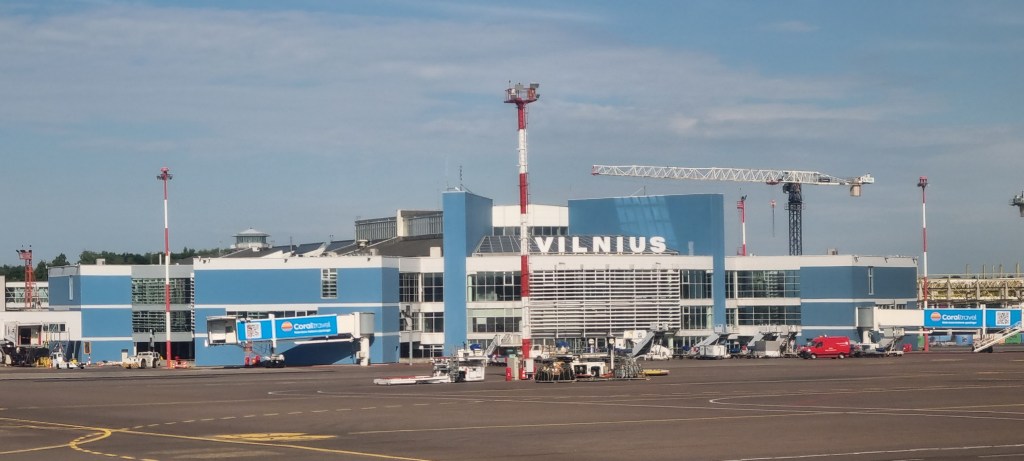
Our journey in Lithuania began at Vilnius Airport, the gateway to a city steeped in history and culture. Vilnius, the capital of Lithuania, is nestled in the southeast part of the country, at the confluence of the Neris and Vilnia rivers. The city is renowned for its Old Town, a UNESCO World Heritage site, which is one of the largest surviving medieval old towns in Northern Europe. The city’s history is a rich tapestry of diverse influences, from its establishment in the 14th century, through periods of Polish and Russian rule, to its present-day independence. Vilnius is a city where different cultures, religions, and styles coexist harmoniously, reflected in its architecture, which ranges from Gothic to Renaissance, Baroque to Neoclassical.
Our first stop was the Artagonist Art Hotel, a boutique hotel located in the heart of the city. The hotel is a modern boutique, blending contemporary design with a nod to Lithuania’s rich history. Each room is uniquely decorated by local artists, making it a living art piece. The staff are friendly and attentive, ensuring a comfortable and memorable stay. The hotel’s location is a major plus, with major attractions like the Vilnius Cathedral and Gediminas Tower just a short walk away. Some other hotels I recommend are Hilton Garden Inn Vilnius City Centre, Grand Hotel Kempinski Vilnius, Relais & Châteaux Stikliai Hotel and St Palace Hotel.
For lunch, we headed to Bistro 18, a multi-cuisine restaurant near our hotel. The Indian curry was a delightful surprise, with a perfect spicy blend of spices that transported us to the streets of Delhi. The beetroot risotto was a standout, with the earthy beetroot perfectly complementing the creamy risotto. The pasta was cooked to al dente perfection, and the salad was fresh and vibrant.
After a leisurely stroll around town, soaking in the city’s charm, we retreated to our hotel for some rest before heading out for dinner at Cozy cafe. The cafe lived up to its name, with a warm and inviting atmosphere. Their signature cold beetroot soup was a revelation, a refreshing blend of flavors that was both comforting and exciting. The salads were fresh, the pizza was cheesy and delicious, the pasta was flavorful, and the shakshuka was a hearty end to the meal.
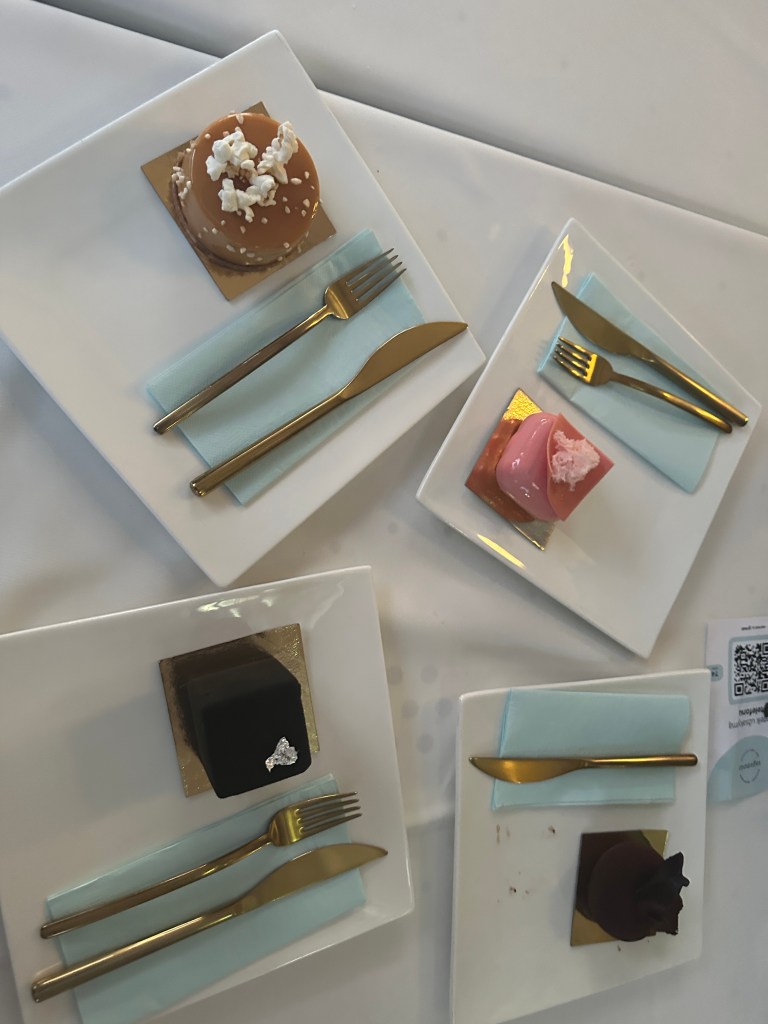
Our sweet tooth led us to Sugamour, a quaint dessert shop in the center of the city. This place is a must-visit for dessert lovers. The assortment of entremets and ice creams were a feast for both the eyes and the palate. Each dessert was a work of art, with complex layers of flavors and textures that were both unique and delicious. The shop’s cozy ambiance and friendly staff added to the overall experience.
My second day in Vilnius began with an early cup of coffee at Brew. The hand brew was a revelation, a fruity concoction that was a perfect start to our day. Our breakfast at the Artagonist was a delightful spread of local and international dishes, setting us up for the day’s adventures.
The walking tour of Vilnius was an enlightening journey through time, where each monument we visited was a testament to the city’s rich history and cultural heritage. Our first stop was the Old Town, a UNESCO World Heritage site, which is one of the largest surviving medieval old towns in Northern Europe. The cobblestone streets, the charming old buildings, and the vibrant atmosphere made me feel like I was stepping back in time. It was fascinating to see how the city has preserved its heritage while also adapting to the modern world. During this stop, I also grabbed a Batch brew and Tiramisu from Backstage coffee, which was nice and the tiramisu was quite soft and tasty.
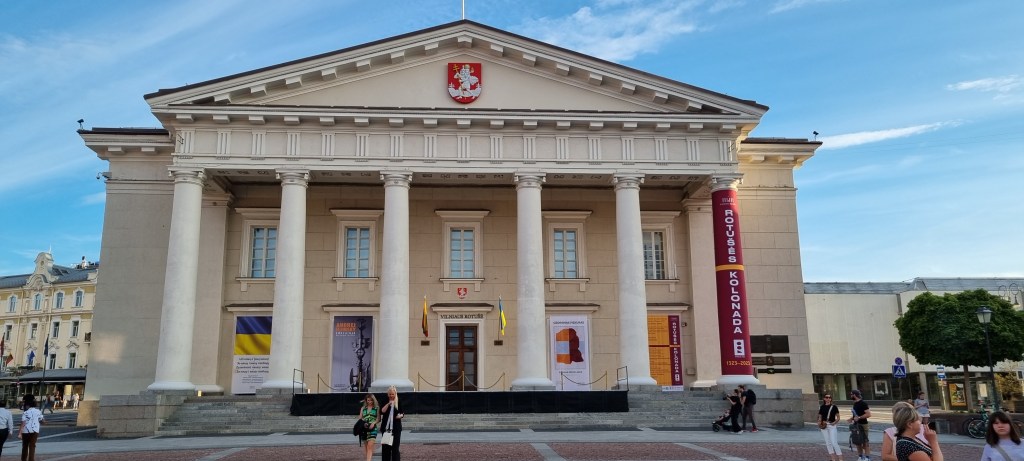

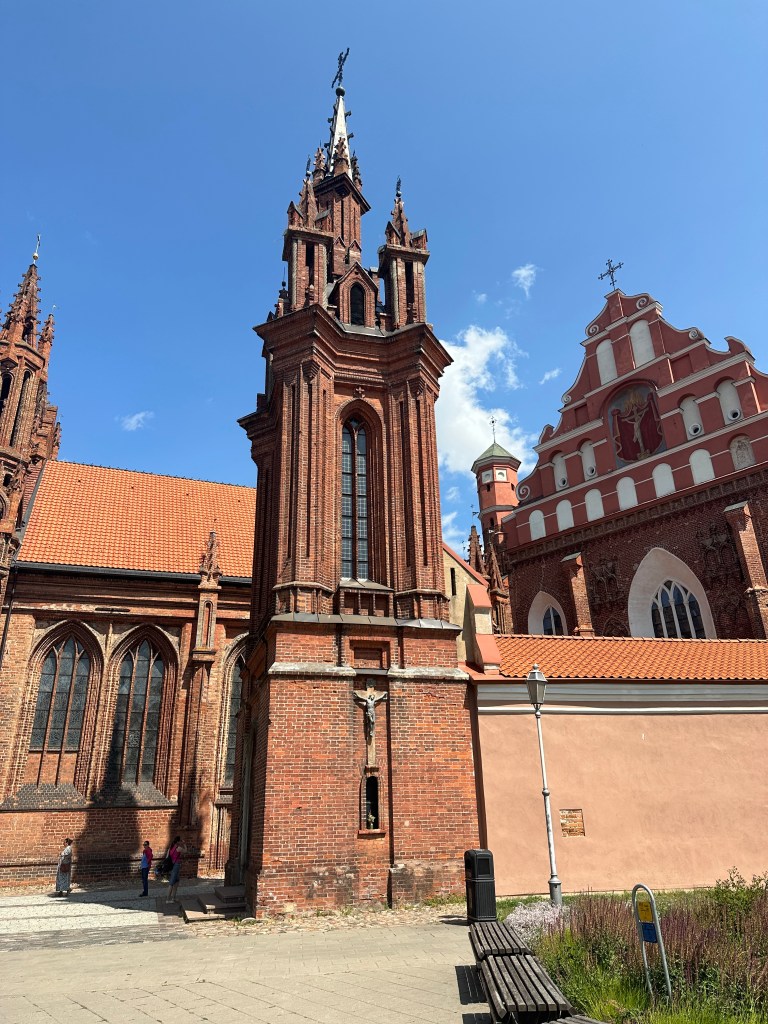
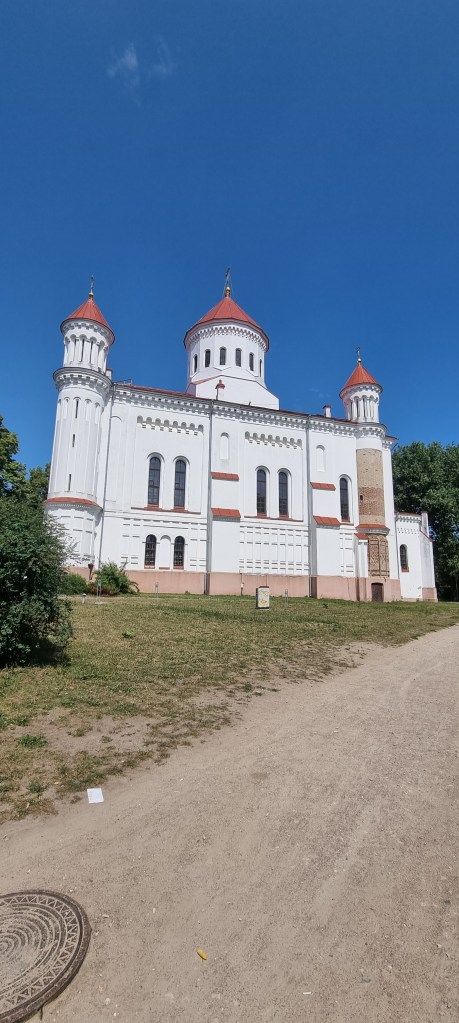
Next, we visited the Gates of Dawn, one of the most important religious, historical, and cultural monuments in Vilnius. Today, it is a significant site of Catholic pilgrimage in Lithuania. We then visited St. Anne’s Church, a stunning example of Gothic architecture. The intricate brickwork and the beautiful stained glass windows of the church were a sight to behold. The first floor is a cafe and above is the church. Onwards to the Church of St. Constantine and St. Michael, a Russian Orthodox church built in 1913 to commemorate the 300th anniversary of the Romanov dynasty. The church’s dazzling exterior and modest interior were a stark contrast. Despite being relatively ‘young’ compared to the other monuments, the church held its own charm and historical significance.

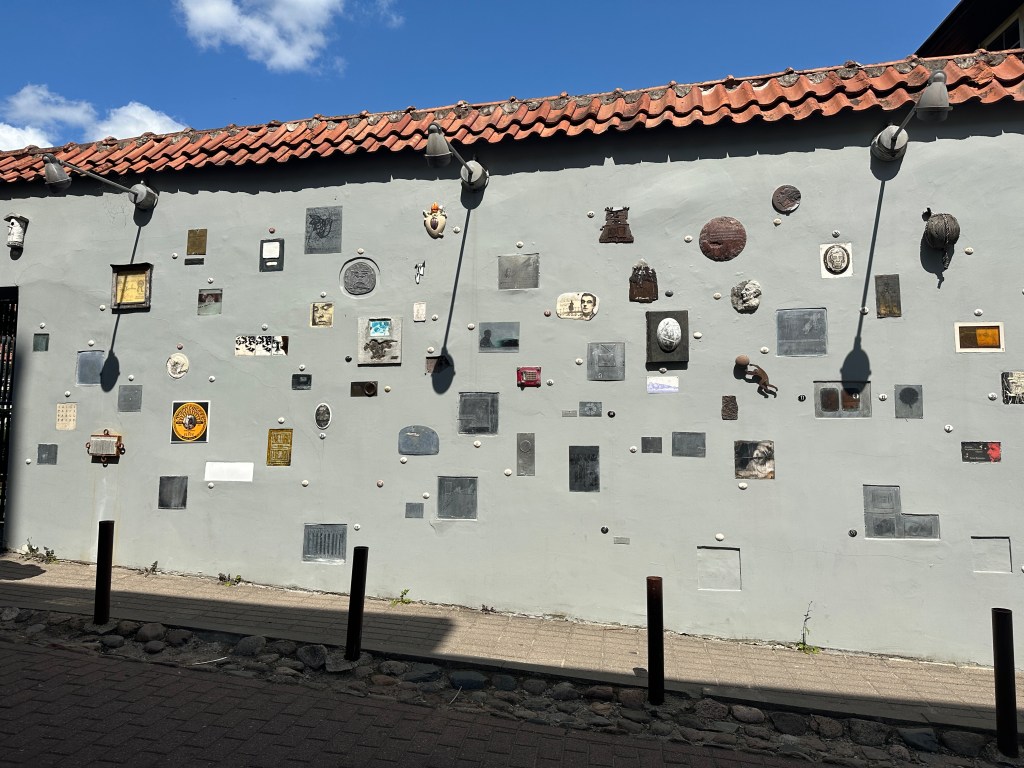
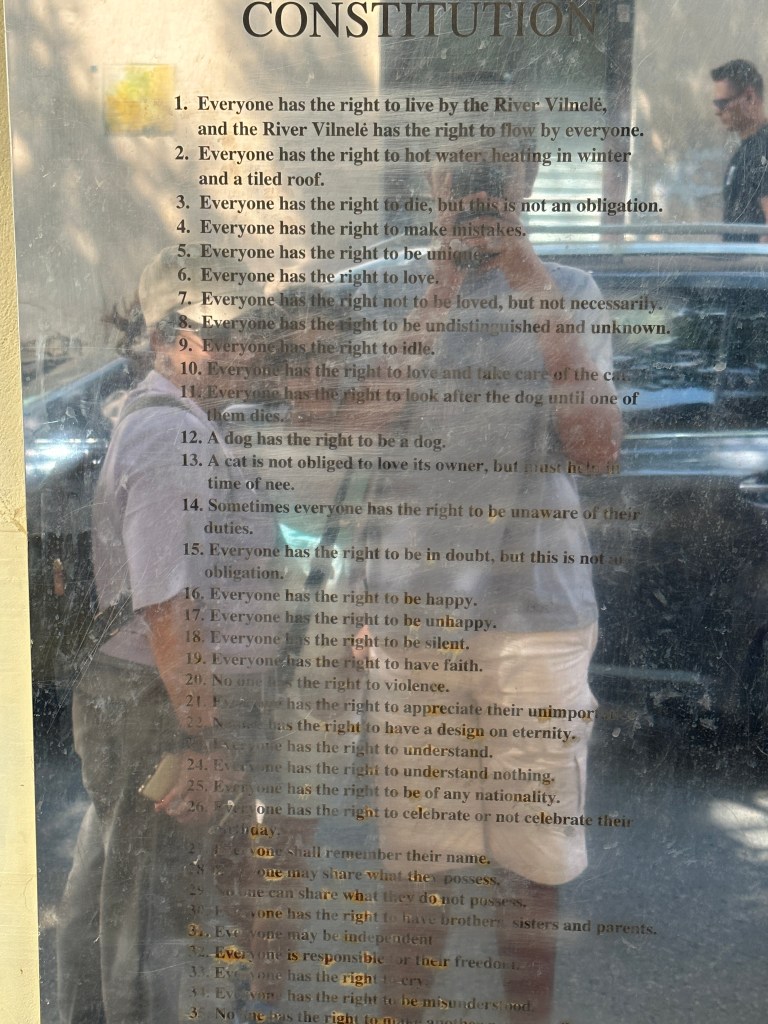
Our detour to Uzupis, a district of artists, was a delightful surprise. Declared as an independent republic by its inhabitants in 1997 as a prank on April Fools, Uzupis has its own constitution, president, throne, currency, and even a national day, which is the 1st of April. The bohemian spirit of Uzupis, its vibrant art scene, and the unique and comical constitution (which includes rights like “Everyone has the right to understand nothing” and “Everyone has the right to be unique”) made it a memorable part of our tour. It was like stepping into a different world, where creativity and freedom of expression were celebrated. I highly recommend reading the points in the picture below as it will definitely make you laugh.
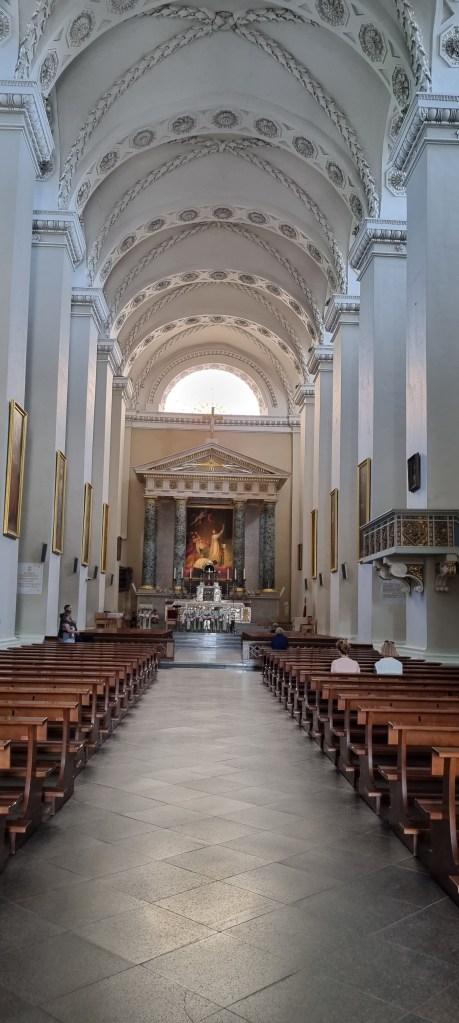
Our tour then led us to the final stop, the Vilnius Cathedral, a magnificent structure that has stood the test of time. The cathedral has been rebuilt several times due to frequent fires, wars, and unstable soil under its foundation. The grandeur of the cathedral, its beautiful architecture, and the peaceful atmosphere inside was beautiful.

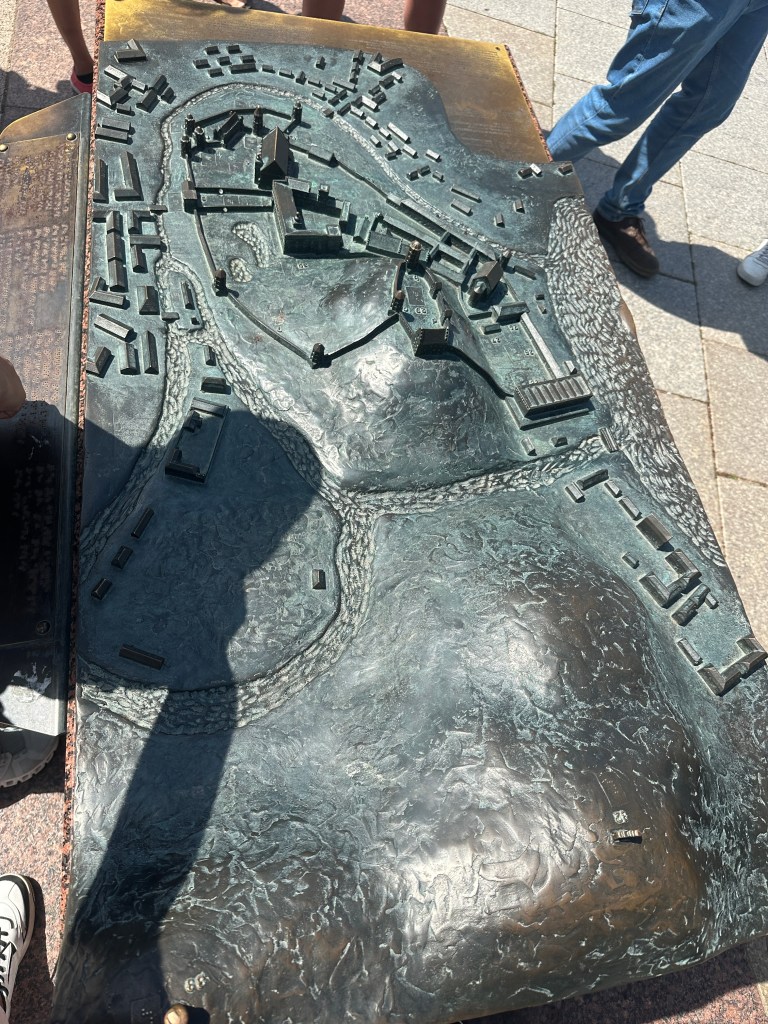
The walking tour of Vilnius was a journey through time, a celebration of its history, culture, and spirit. It was a reminder of the city’s resilience, its ability to preserve its heritage while embracing the new, and its unique charm that makes it a unique destination.
For lunch, we headed to Rosehip, a vegan restaurant that served up hearty salads, wraps, and fries with homemade dips. The portions were generous, and the food was a refreshing change from our usual fare.
Post lunch, we explored the Gediminas Castle and Tower. The tower, the only remaining part of the Upper Castle, offers panoramic views of Vilnius. The castle’s history dates back to the 14th century, and it has served various purposes over the centuries, including being used as the city’s first observatory. The 360 degree view from the top was breathtaking, and we captured some memorable pictures against the backdrop of the city’s skyline.

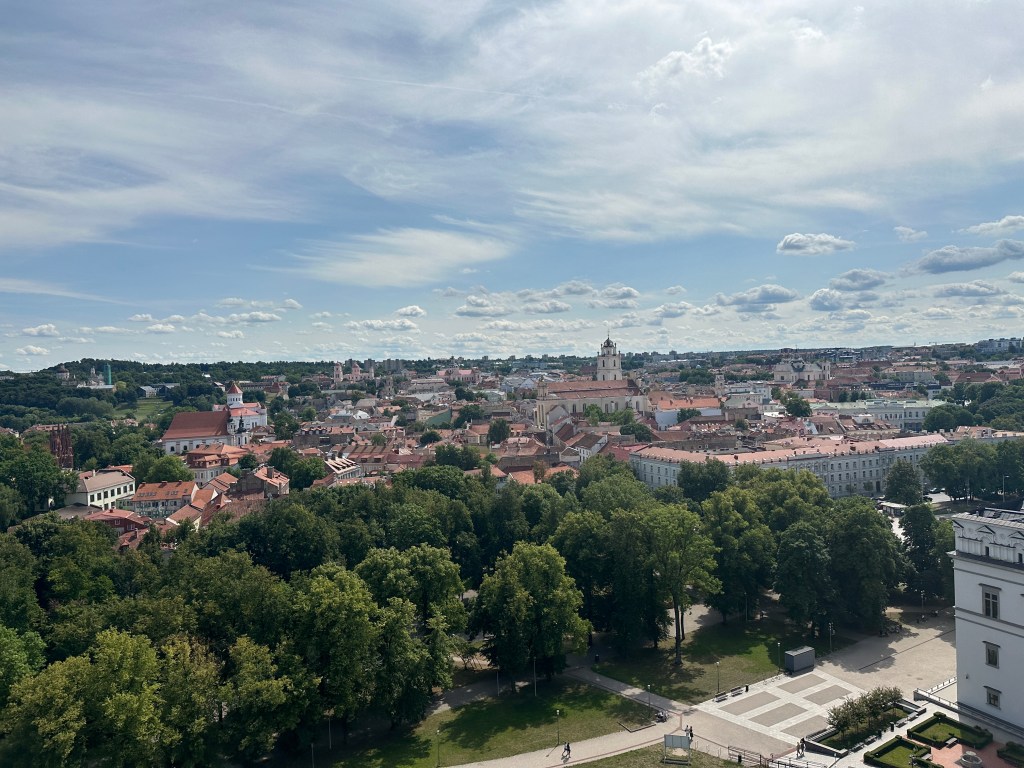
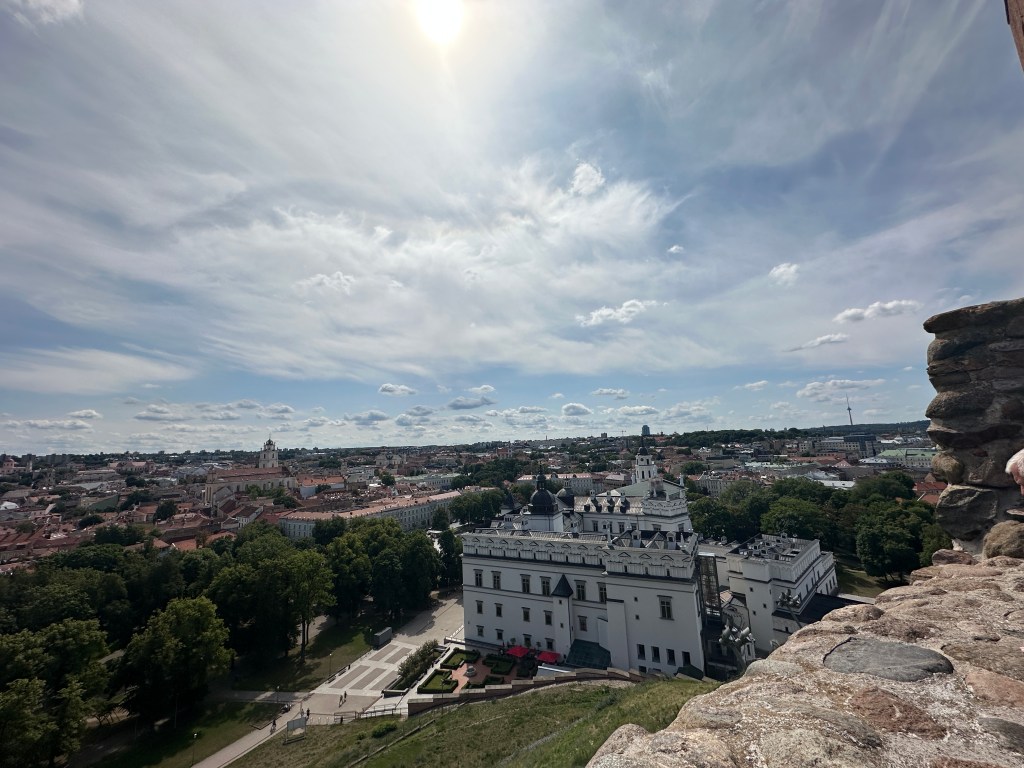
Our next stop was the KGB Museum, housed in the former KGB building where the crimes of the Soviet regime were planned and executed for fifty years. The exhibits were a chilling reminder of the atrocities committed during the Soviet occupation. The prison cells and interrogation rooms were particularly haunting.
For dinner, we headed to Casa La Familia, a vegetarian pizza place that offered a cozy family dining experience. We were seated on the floor in a private area, which added to the homely ambiance. The pizzas were amazingly fired in their wood fired oven, but the standout dishes were the beet carpaccio and the portobello mushroom. The flavors were unique and left us wanting more. After dinner we went for another round of desserts and ice cream at Sugamour as the food was simply to die for.
The next leg of our journey took us from Vilnius to Klaipeda, with enriching stops at Trakai Castle and Kaunas along the way.
We began our day with a drive to Trakai, a picturesque town located about an hour from Vilnius. Trakai is renowned for its stunning island castle, set amidst tranquil lakes. The Trakai Castle, a red-brick fortress dating back to the 14th century, is a symbol of Lithuania’s grand history. We explored the castle and walked around it, taking some of the best pictures of the entire trip. The serene tranquil beauty of Trakai, coupled with its historical significance, made for a memorable visit.
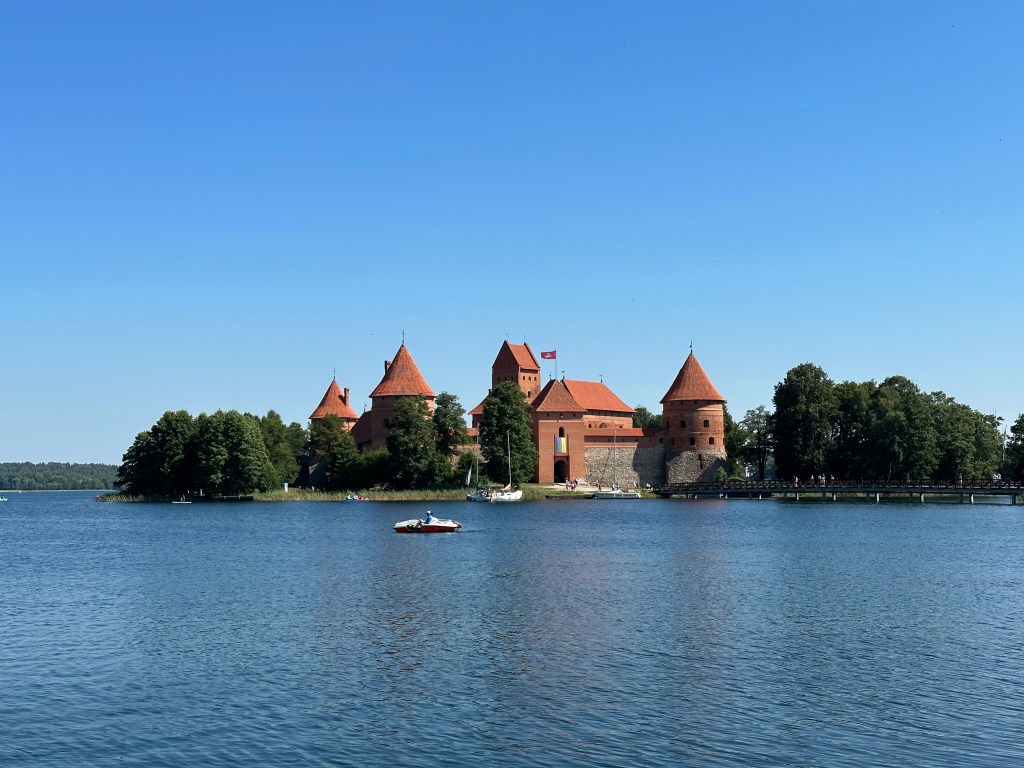
Next, we headed to Kaunas, Lithuania’s second largest city, about an hour and a half from Trakai. Kaunas’s blend of Gothic, Renaissance, and Baroque styles added to the city’s charm. We explored the Kaunas Castle and visited the Church of St. Michael the Archangel, a stunning Neo-Byzantine structure. The grand domes, intricate frescoes, and spiritual ambiance of the church were awe-inspiring. Kaunas’s lively streets, artistic vibe, and historical richness made our exploration engaging and fulfilling.

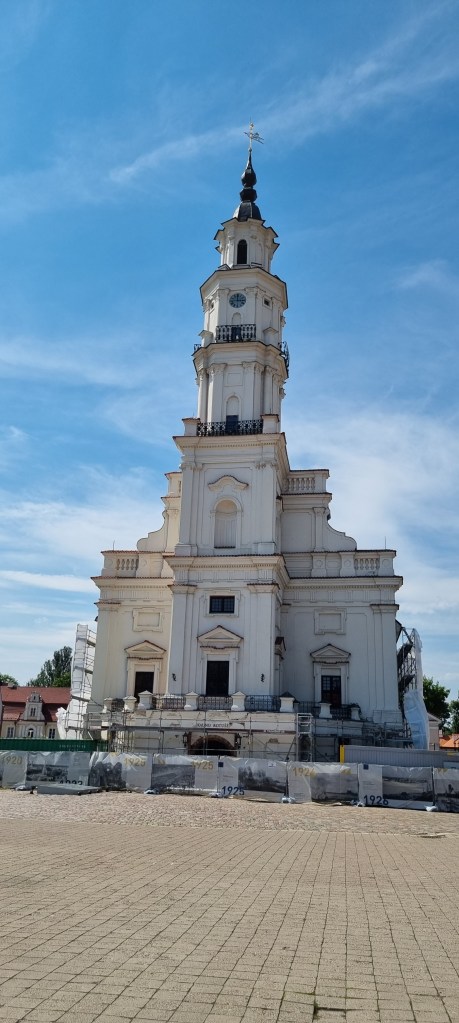
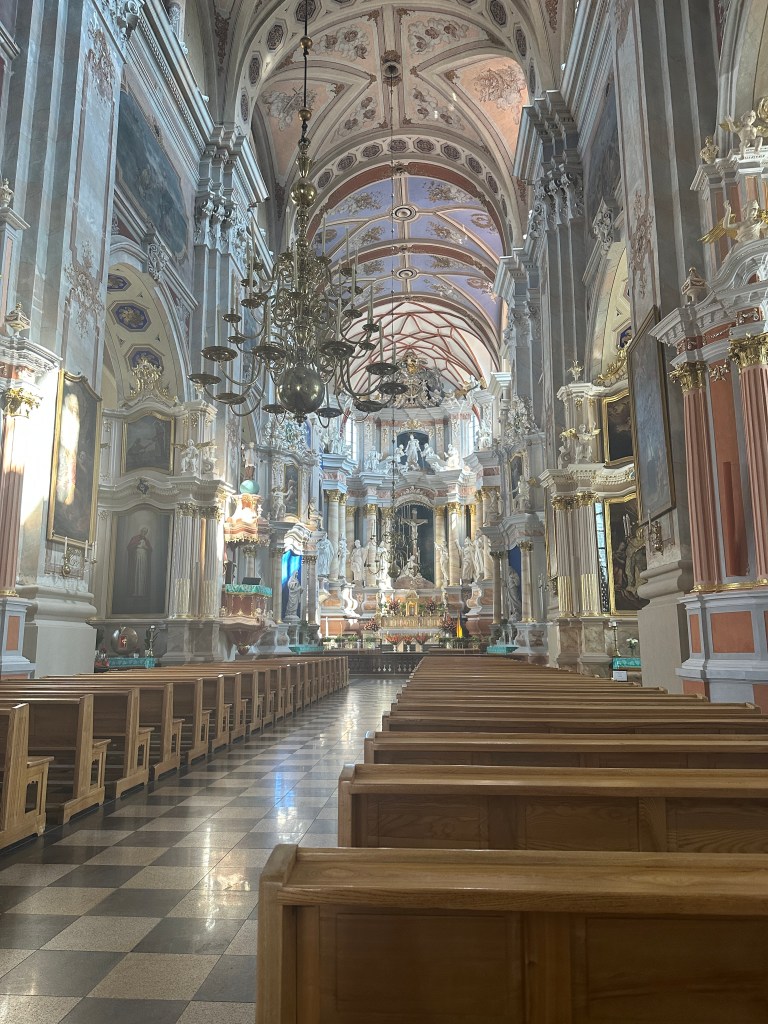
Lunch in Kaunas was at Agave, where the vibrant colors and flavors of Mexican cuisine delighted our taste buds. The homemade fajitas, well-spiced quesadillas, and delicious salads added a flavorful twist to our day. The lively atmosphere of the restaurant and the taste of authentic Mexican food in the heart of Lithuania made this meal a highlight.
From Kaunas, we continued to Klaipeda, a port city on the Baltic Sea, about two hours away. The maritime vibe, cobblestone streets, and historical buildings gave the city a unique charm. We checked into the Amberton Hotel, which turned out to be quite average. The staff was not particularly welcoming, and the overall experience was mediocre. The rooms were okay, but I would instead recommend Victoria or Michelson Hotel for a more comfortable stay.
Dinner was at Devi, where we enjoyed home-style Indian food. Though it took some time to arrive, the food was delicious and soulful, ending our day on a comforting note.
The next day’s adventure was the Curonian Spit, a UNESCO World Heritage site known for its unique landscapes. We explored Juodkrante where we cycled and had an exhilarating experience, with nature’s beauty unfolding at every turn. We were set to explore the Hill of Witches, Sand Dunes, Nida, and however, our day took an unexpected turn when we faced a medical emergency. It was a stark reminder that travel is not always comfortable and enjoyable, and hardships can arise. Thankfully, we managed to handle the situation.
Lunch was at Manami (Asian Fusion), located in a nearby mall. The food was extraordinary! From the sushi to the best noodles I’ve ever had, the spring rolls, amazing drinks, and delicious starters like mushroom, eggplant, and edamame, everything was perfect.
We spent the evening exploring the mall and later walked along the canal in Klaipeda. Before that we made a quick visit to the Klaipeda beach, where we explored the beach and had some time there enjoying the breeze and the sound of waves. The beach was majestic and the water was cold, not ideal to bathe at this time.
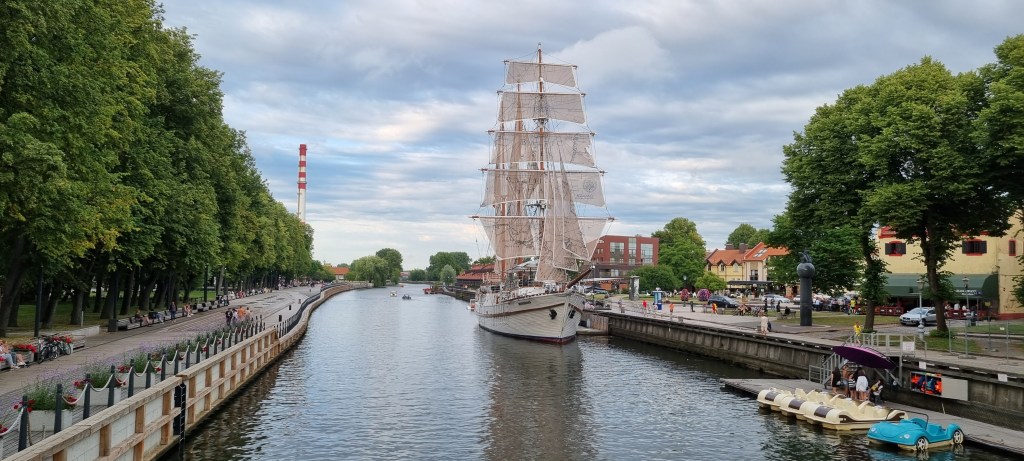

Dinner was at a Lithuanian place called Agnostikas. We indulged in their signature dish, fried bread, the best cheese balls which were soft and gooey, sweet potato fries served with goat cheese and a lemon aioli, hummus, salads, and traditional Lithuanian vegetarian dishes. The flavors were authentic, and the ambiance was cozy and the riverside ambience made the experience thousand times better.
The next day marked our transfer to Riga, but I began my day with a morning walk to have some specialty coffee at Musungas. The coffee was amazing and the ambience was better. I had a fruity citrusy coffee from Ethiopia which was to die for and brewed perfectly.
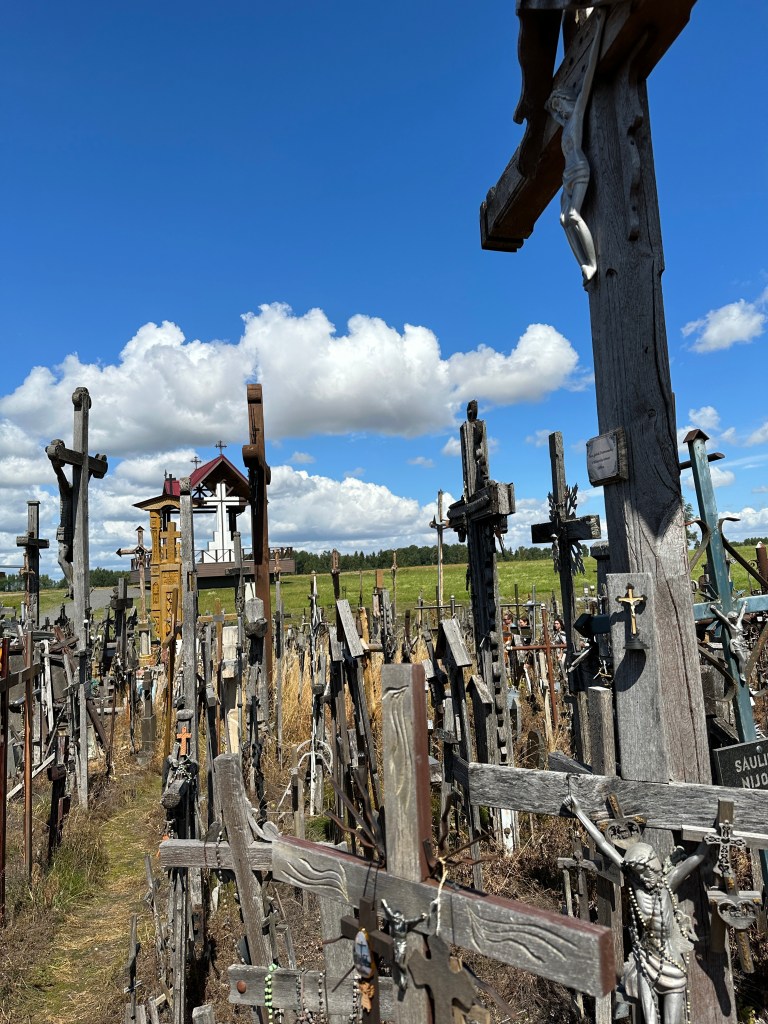
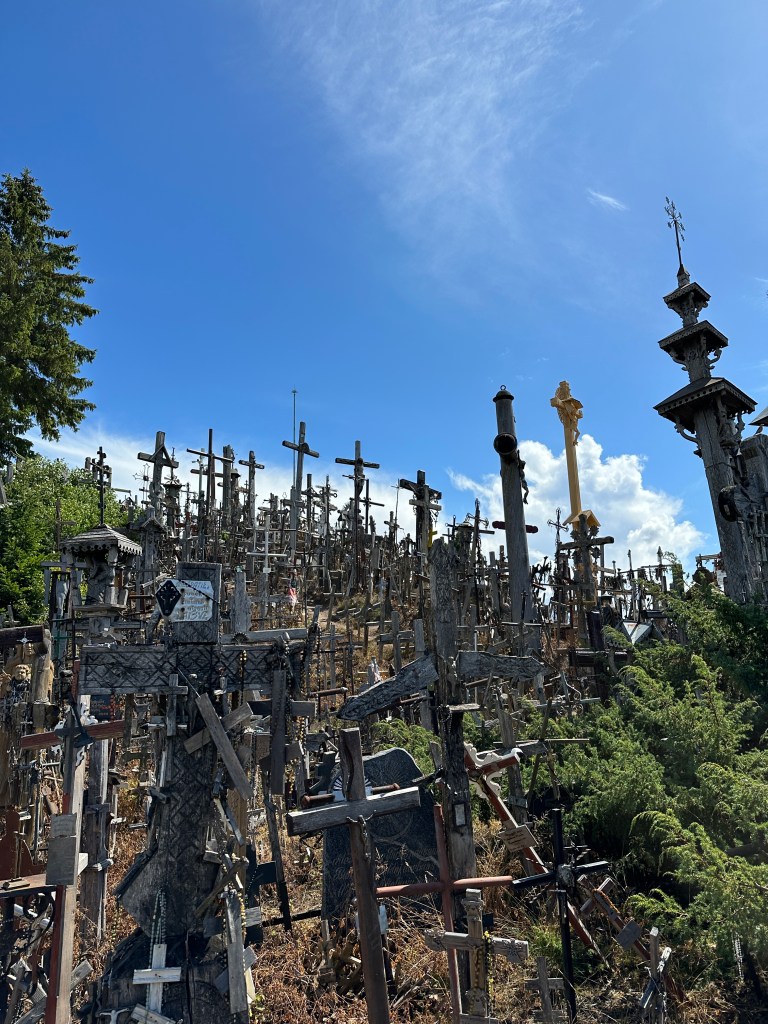
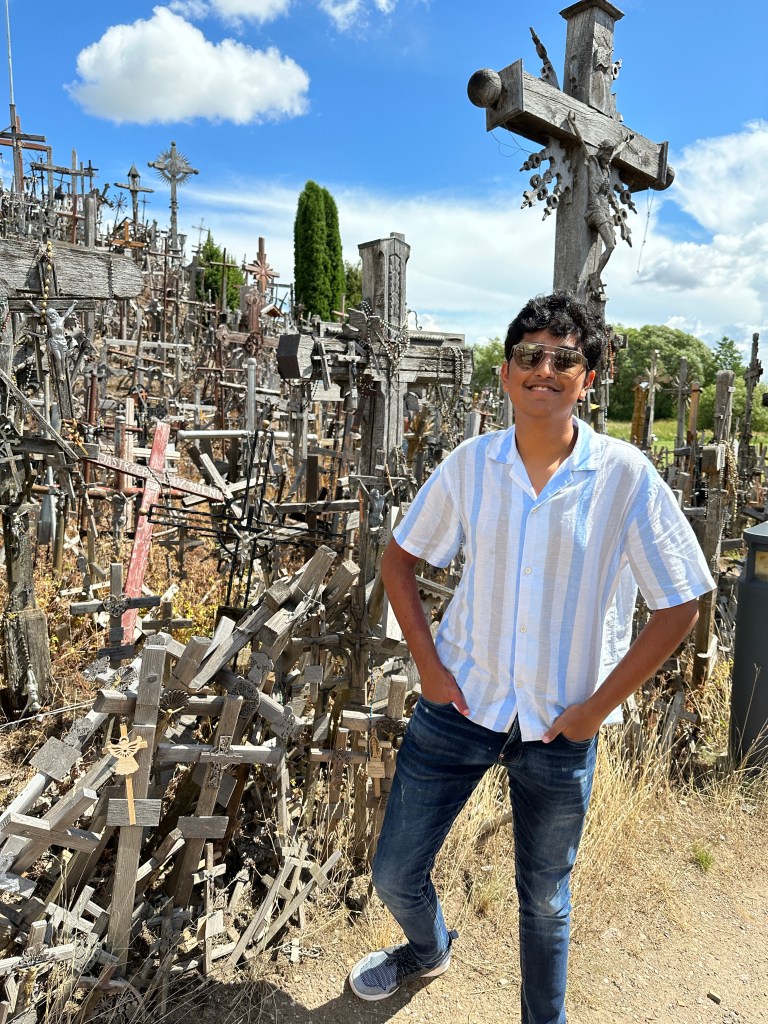
Our stop in our transfer to Riga was at the Hill of Crosses, a site of pilgrimage with thousands of crosses, each telling a story of faith, hope, and resilience. The sight of the hill, covered in thousands of crosses, was both humbling and inspiring. We took our time to walk among the crosses, reflecting on their symbolism and feeling a profound connection to the collective faith they represented. At the moment the exact number of crosses is not known, but the estimated number is over 150,000! But this number is growing every day, because many visitors leave a cross in memory. The whispers of prayers, the gentle rustle of the wind, and the deep sense of spirituality made the Hill of Crosses an unforgettable experience.
Our journey through Lithuania was a rich tapestry of historical explorations, culinary delights, unexpected challenges, and spiritual reflections.

 Travel Footprints