“Start Small, Stay Curious“
Speaking to Gunnar Garfors felt less like interviewing a record-holding traveller and more like sitting down with someone who has allowed the world to shape him with an unusual openness. Gunnar is the first person to visit every country in the world twice, he’s written books that have redefined how people think about travel, and he holds several world records that sound outrageous even when said out loud. Yet, when our conversation began, what struck me most was his simplicity. He didn’t decide to become a world traveler. There was no dramatic moment where he declared, “This is my life.” He said it almost casually: he just loved travel from an early age — out of curiosity, out of the joy of seeing new places, and out of the thrill of discovering that Norway wasn’t the center of the universe. “Everywhere else is completely different,” he told me, and realizing that was powerful enough to keep him going.
Gunnar spoke about travel not as something that changed him, but something that revealed him. And the first thing it revealed, he said, was privilege. Coming from Norway — a stable democracy with strong passports, high living standards, and the luxury of long holidays — he understood early on how fortunate he was. Recognising that shaped the way he travels. When you move through the world knowing you’re privileged, you naturally approach people with more humility, more patience, more willingness to learn. “Everyone grows up believing they’re from the center of the universe,” he said, “but then you travel and see others believe the same — and they’re also right in their own way.”
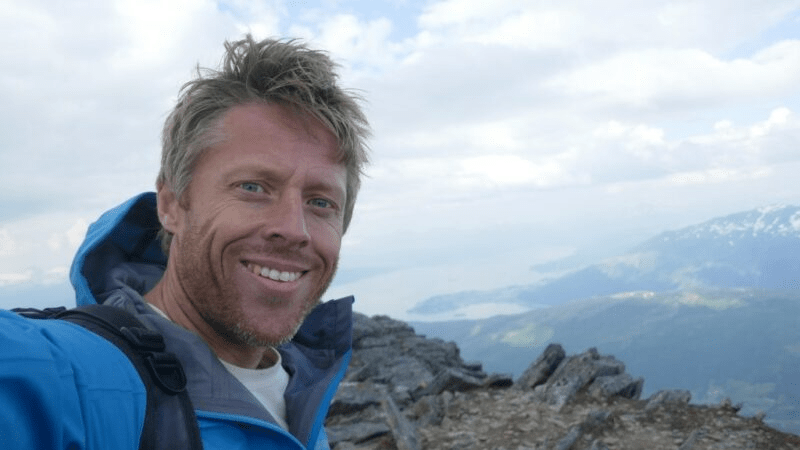
A theme that kept resurfacing was his belief that travel is not observation — it is participation. Too many travellers today, he said, move through places with the objective of taking the perfect photograph, recreating the same scene they saw on Instagram. “Copycat tourism,” he calls it. Stunning photos show people alone in breathtaking locations, but in reality, those spots are overflowing with crowds. And rather than discovering the world, travellers are simply repeating each other. Gunnar isn’t against photography — far from it. He believes you get better photographs when you talk to locals, when you are guided to the most meaningful corners of a place. Travelers rely on Google Maps and TripAdvisor reviews written by other travellers, but the true experts are always the people who live there, the locals.
He talked about language barriers, shyness, cultural differences, religion — all the things that stop people from interacting with locals. Those are just merely excuses. “Just smile. It’s free”.And he’s right. A smile opens doors. A simple hello opens conversations. Even without language, there are drawings, gestures, and body language. He told me a funny story of ordering food in Iran by drawing cows, sheep, and bread in his notebook because no one spoke English. The restaurant understood immediately. I related this deeply — in Tokyo, a local friend took me into a hidden lane to eat authentic soba noodles I would never have discovered on my own. Experiences like that don’t come from maps; they come from people.
Naturally, I had to ask him about going to every country twice. Most people dream of visiting all countries once, but doing them twice sounds impossible. When you like something, you revisit it as his response. You don’t go to your favorite restaurant once; you return. Countries evolve, cultures shift, atmospheres change. If you revisit after ten or fifteen years, you notice transformations in people, cities, energy. And sometimes, you simply go back to meet people again, because travel is made of relationships. But the challenge, he said, is always choosing between going back to a place you love or seeing something new.
We spoke about why travellers should go beyond hotspots and explore lesser-visited countries — something he knows well, having written a book about the twenty least visited nations called “Elsewhere: A Journey to the World’s Least-visited Countries”. He sees mass tourism becoming a real problem, driven by the influencer mindset where people chase the same experiences. That’s why he believes travellers should intentionally explore offbeat regions. Not only do you get richer experiences, but you help distribute tourism money to villages, towns, and families who genuinely benefit from it — instead of pouring money into global hotel chains where profits leave the country. He also highlighted how staying in local hotels and eating local food makes travel more rewarding and helpful for local and the global economy. My own stay at a lady’s riad in Meknes (Morocco) came to mind where I had the most authentic local experience — no Marriott could replicate that.
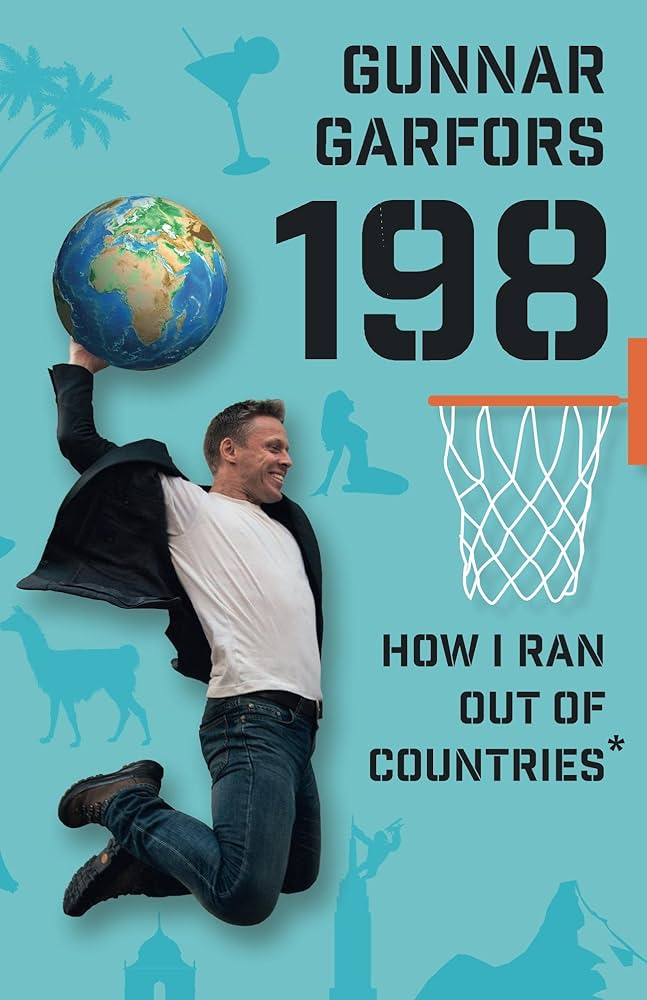

When I asked him which regions he feels especially connected to, he spoke fondly of Kerala in India which is a state in the southwest — exploring the backwaters, eating local food, and even accidentally stealing coconuts with his brother before paying the farmer. Hardly anyone outside India truly understands how magical Kerala is, he said. He described Central Asia with admiration — vast landscapes, sincere hospitality, and the warmth of being treated like a guest, not a walking bag of cash. Africa, too, holds a special place for him. His wife is from Sudan, a country with some of the kindest people he has ever met, despite its current conflict. Madagascar, with its terrible roads but unmatched natural wonders, left a deep impression. And then there’s Norway — his own home — which many tourists misunderstand by sticking to Oslo alone. “The real Norway,” he said, “is in the fjords, in northern villages, in the midnight sun and the northern lights.”
We also spoke about his world records — visiting six continents in one calendar day, nineteen countries in twenty-four hours, and 23 US states in 24 hours. But he refuses to call these achievements “travel.” They are logistical challenges, fun to do with friends, but lacking cultural experience. “You don’t speak to anyone, you don’t eat local food, you don’t learn anything,” he said. They’re accomplishments, yes, but not travel. And he finds it amusing when people count airport transits as country visits. “If you don’t meet the people or taste the food, what’s the point?” I agreed completely as it is my philosophy as well.
Later in our conversation, I asked what he would do if dropped into a completely unknown country with no plan. He would simply walk. Walking is how he maps a place — by absorbing its smells, sounds, and rhythms. It’s how he figures out which neighborhoods feel alive, which ones feel peaceful, where markets are, where local life happens.
Hardships are natural in a journey as extensive as Gunnar’s, so I asked him how he overcame difficult moments. “By being humble,” he said. “By remembering how privileged I am to travel at all.” He believes attitude influences outcomes. When I asked what came after visiting every country twice, he said there doesn’t need to be a next big goal. “There’s always something new to see, even in my own village,” he said. I found that beautiful — the idea that wonder is not tied to grand achievements but to everyday curiosity.
Before ending, I asked the one question I always ask world travelers: What advice would you give to young travelers like me? His answer was simple and one I’ll remember for sure: “Start small. Don’t travel far at first. Try it. See if you really like it. Not everyone does. Be humble. Talk to locals. Build friendships. That’s what travel is about.”
As we said goodbye, he told me to visit Norway soon. I smiled because my lock screen is literally a picture of Norway’s fjords — and because, like him, I believe the world is too big, too beautiful, and too full of stories to ever stop exploring. Talking to Gunnar didn’t just inspire me. It reshaped the way I want to travel next — with more curiosity, more patience and more humility.

 Travel Footprints
Visiting every country 2 times is a wild accomplishment. He also said that tasting the local food is important, and I totally 100% agree. Food is part of their culture and one of the main reasons I love to travel. Not just italian food but even Spanish and other cuisines have many more flavours to unlock. I feel exploring local cuisine should be always be included in our travel plans.
Like he said , “theres always something new to see”. Forget city, I don’t think I have even explored my locality fully.
What you have written has really gotten me thinking how different people travel and how much i’m truly missing out on.
❤️ Awesome read ❤️
LikeLike