Maldives

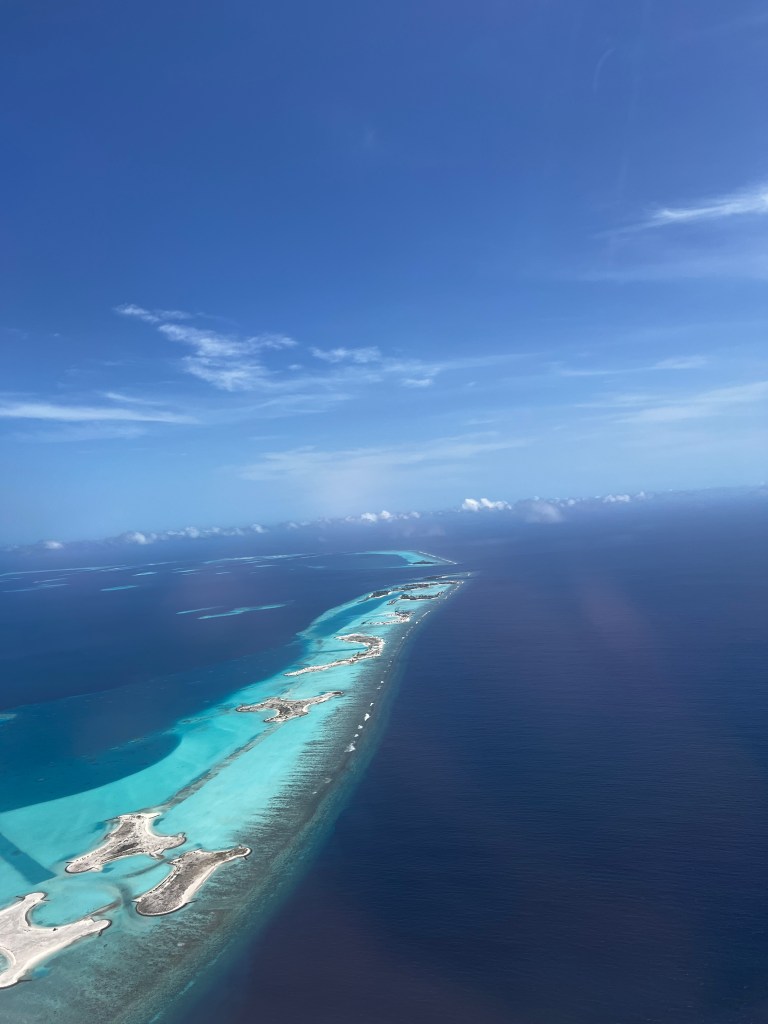
The Maldives is a tropical paradise known for its clear blue waters, white sandy beaches, and luxurious resorts. Located in the Indian Ocean, the Maldives is made up of 26 atolls and has a rich history as a key maritime hub. I’ve had the pleasure of visiting twice, in 2021 and 2022, staying at Lily Beach and Waldorf Astoria, each offering unforgettable experiences. This blog begins with a general overview of the Maldives, followed by insights from my two trips, and concludes with a comprehensive analysis of hotels across all price ranges, drawn from my personal experiences and thorough research.

Overview

Best Time to Visit the Maldives – The best time to visit the Maldives is between November and April. This period is the dry season, offering sunny weather, calm seas, and perfect conditions for beach and water activities.

Transfers: Most resorts are located on private islands and are accessible via speedboats or seaplanes from Malé, the capital. The mode of transfer depends on the resort’s distance from the airport. I have traveled to Maldives twice, and reached my resort once via yacht and once via seaplane. 

About Malé: Malé is the bustling capital city, offering a mix of local culture, markets, and history. While not a tourist hub, it’s worth exploring briefly if you arrive early or depart late. In my two visits, I didnt get a chance to explore male. 

Recommended Days: A 4 to 7 day stay is ideal for enjoying the luxury, activities, and relaxation the Maldives offers without feeling rushed.

Prices: The Maldives is a luxury destination, with prices ranging from $400 to $1500+ per night for villas, depending on the resort. Transfers and meals are often additional, especially on premium properties.

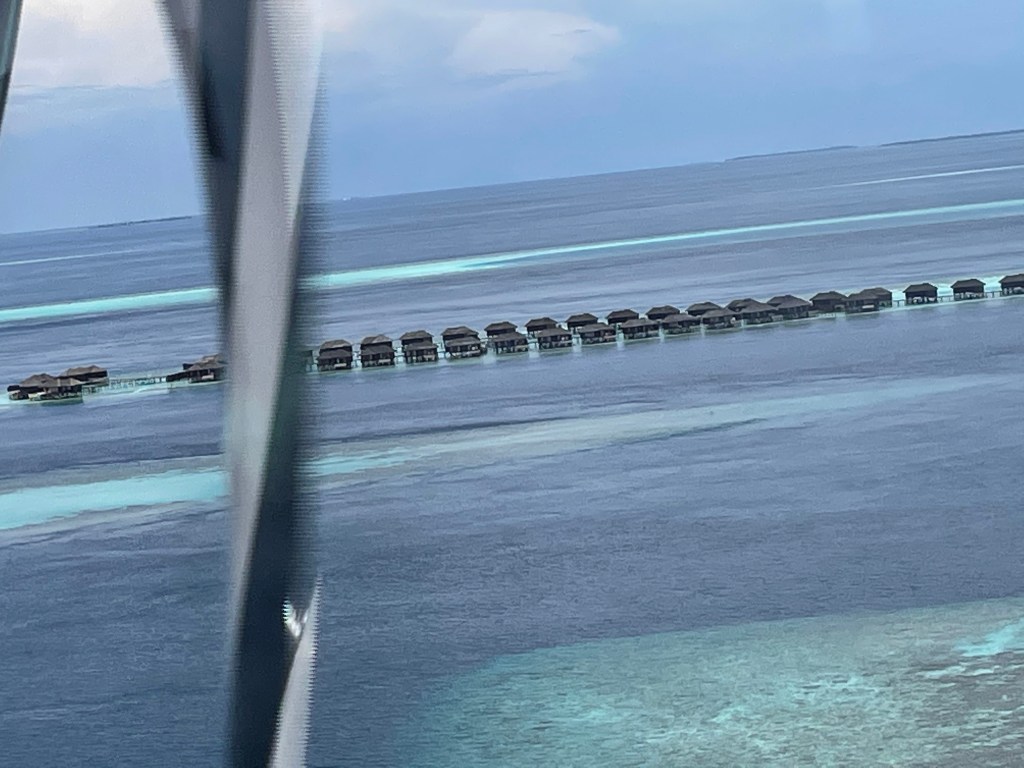
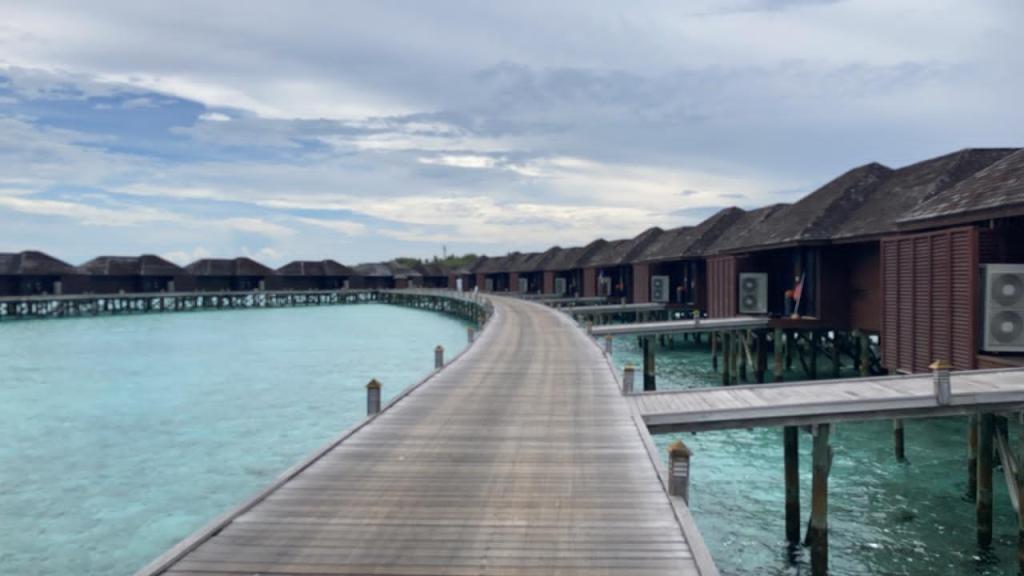
Villa Section: Overwater villas are iconic in the Maldives, offering stunning ocean views and direct access to the lagoon. Beach villas are another great option for those who prefer staying on land but still want privacy and luxury.

Where to Stay? – consider factors like cost, location and accessibility, who you’re traveling with, accommodation type (beach villas, water villas, etc.), package options (all-inclusive, bed and breakfast, etc.), island size, the quality of the house reef for snorkeling/diving, and niche options like eco-tourism or luxury travel when choosing where to stay.

Who Is It For? The Maldives is perfect for honeymooners, luxury seekers, scuba diving enthusiasts, and travelers looking for a tranquil, tropical getaway. However, families and solo travelers can also find resorts that cater to their needs.

My visits 

Lily Beach Spa & Resort

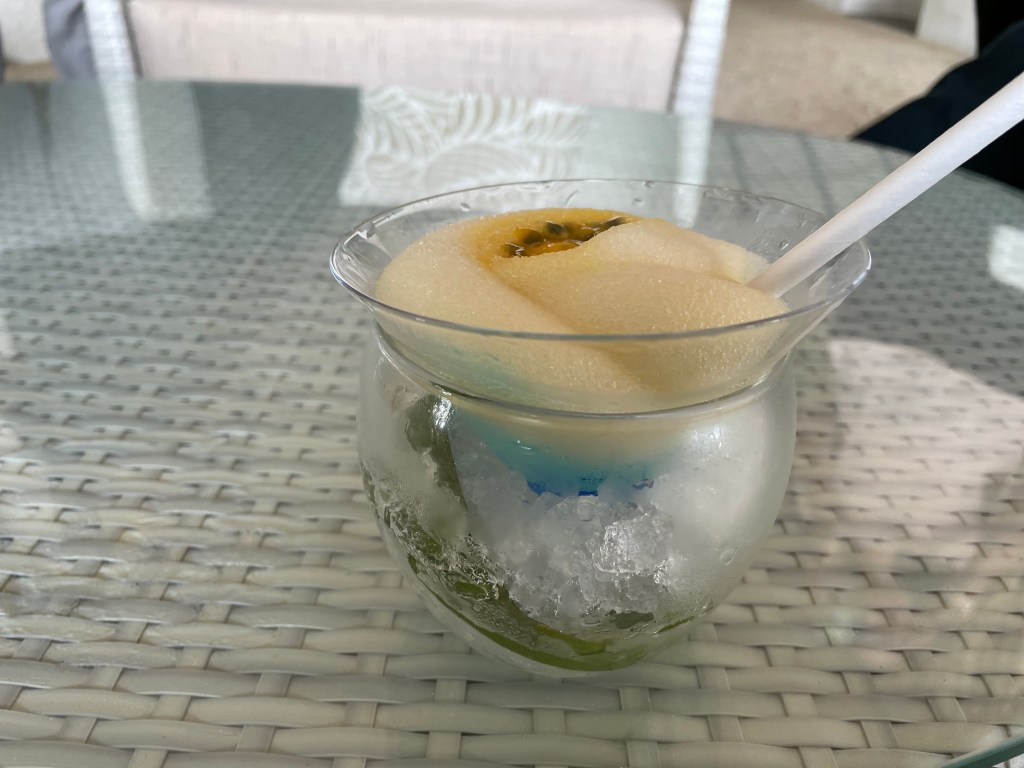
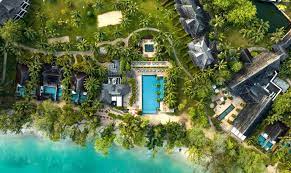
Arriving in Malé, we were quickly swept into the rhythm of Maldives island life. After a 40-minute seaplane journey with the world’s largest seaplane fleet, TMA, we found ourselves descending into paradise—Lily Beach Resort in South Ari Atoll. From the very moment we set foot on the island, we were greeted with refreshing slushies—booze for the adults—setting the tone for a laid-back yet indulgent escape.

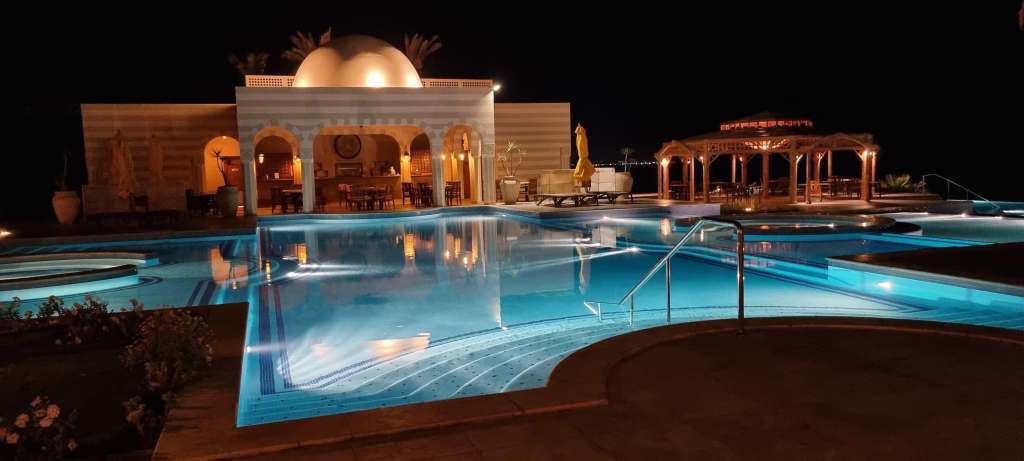
Lily Beach operates under an all-inclusive plan, which made our stay hassle-free and seamless. This wasn’t just about meals; it included meet-and-greet services at the airport, access to the seaplane lounge, fine dining experiences at all four of their restaurants, dreamy excursions, various sports and activities, and a selection of premium wine and spirits. The resort had truly thought of everything, elevating our vacation to one of effortless luxury.

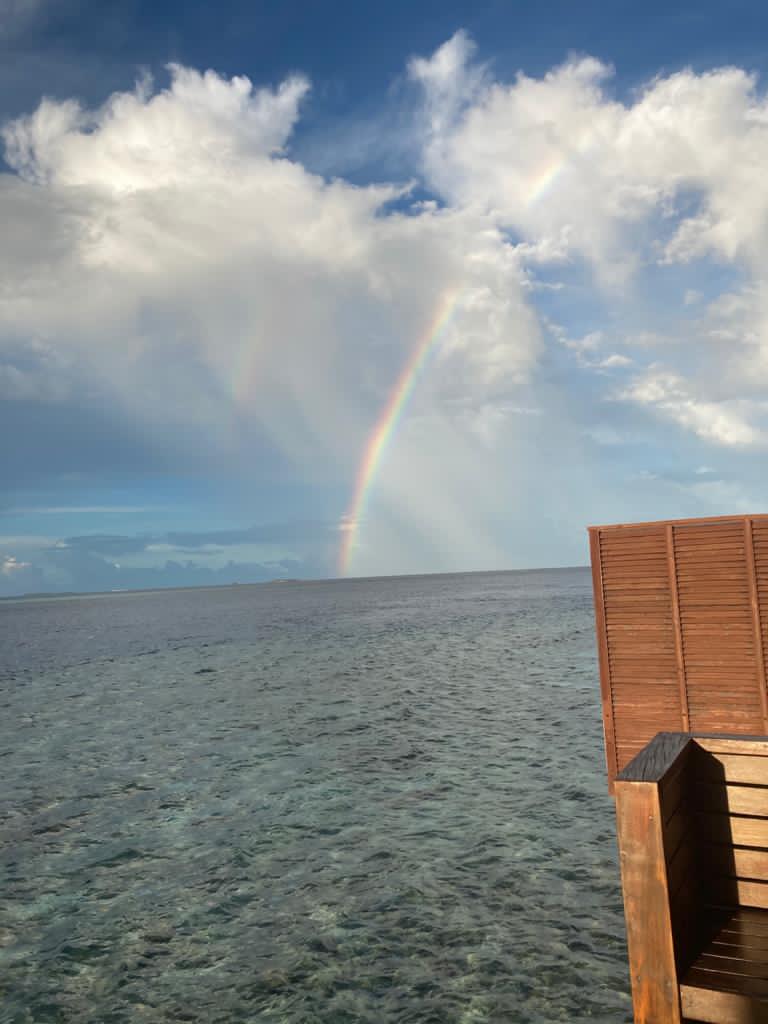
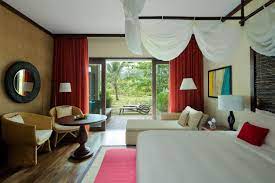
Our villa was an overwater bungalow, complete with a private pool and deck leading straight to the beach. The glass-bottom feature gave us the unique privilege of watching the stunning colors of the Maldivian waters from the comfort of our room. It was compact yet elegantly designed—a peaceful retreat from the world where every detail had been considered for maximum comfort.

When it came to dining, we were spoiled for choice. With four restaurants and four bars, every meal felt like a new adventure. One of my favorite spots was Lily Maa, the buffet restaurant. Each evening had a different theme, with a selection so vast and irresistible that I found myself trying everything. Breakfast was no less impressive—expansive, satisfying, and full of fresh options. Aqva, the poolside restaurant, was perfect for casual meals after a swim. Their pizza, salads, and burgers hit the spot every time. Then there was Tamarind, the Indian-Thai-Asian restaurant that provided an exciting change of pace. The samosas and specially-prepared curries were highlights, offering a taste of home but with an elevated twist. One morning, we tried the much-raved-about floating breakfast, and while the view was unbeatable, the reality didn’t quite live up to the hype—soggy food and no option for seconds. Still, it was a fun, one-time experience that I don’t regret.

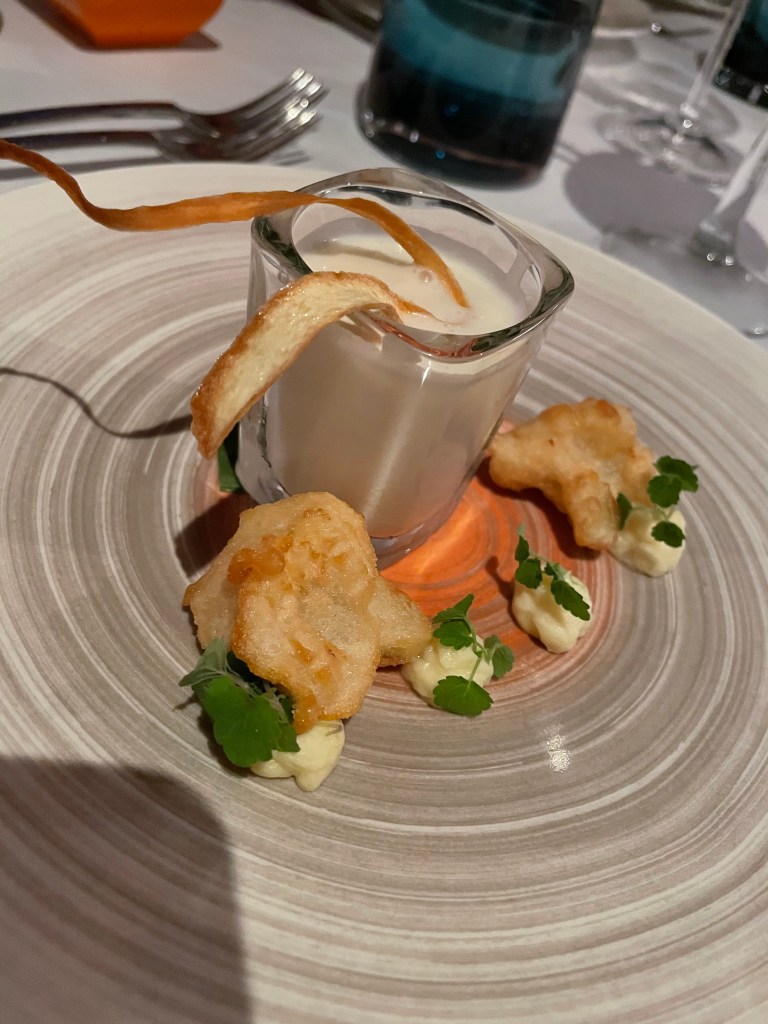
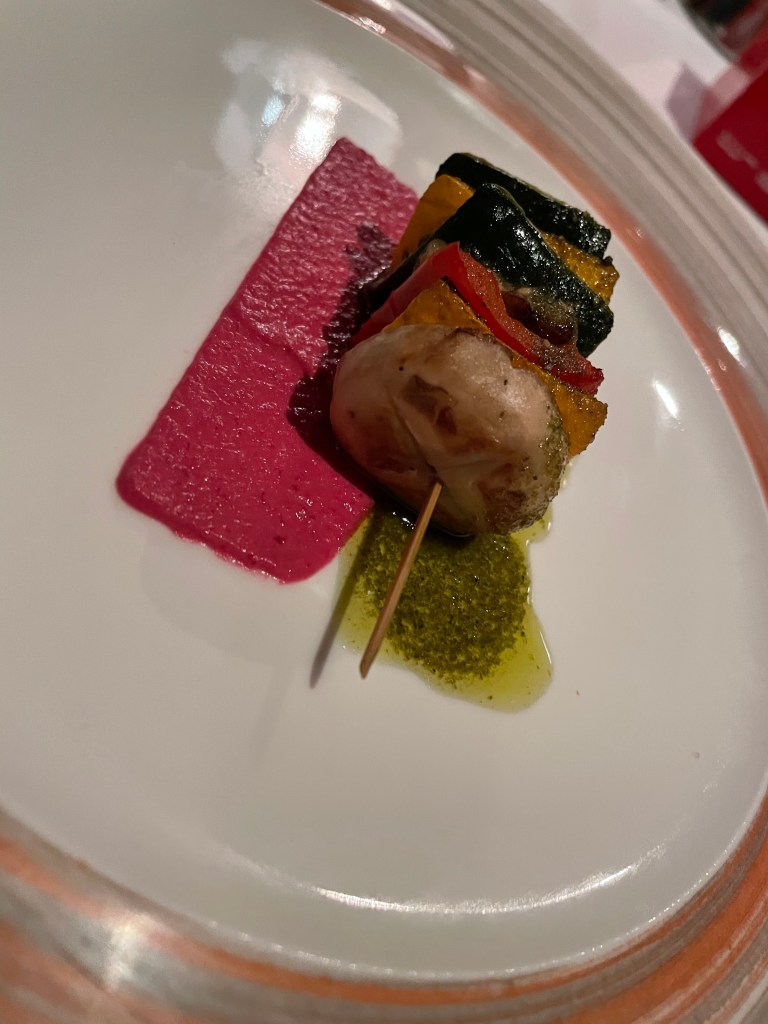
One night, we decided to splurge on a private fine dining experience, which was worth every penny of the $100 per person. Set in a secluded location with only the sound of the waves as our backdrop, we enjoyed a four-course meal that was nothing short of divine. Sharing it with good company made the evening even more memorable.

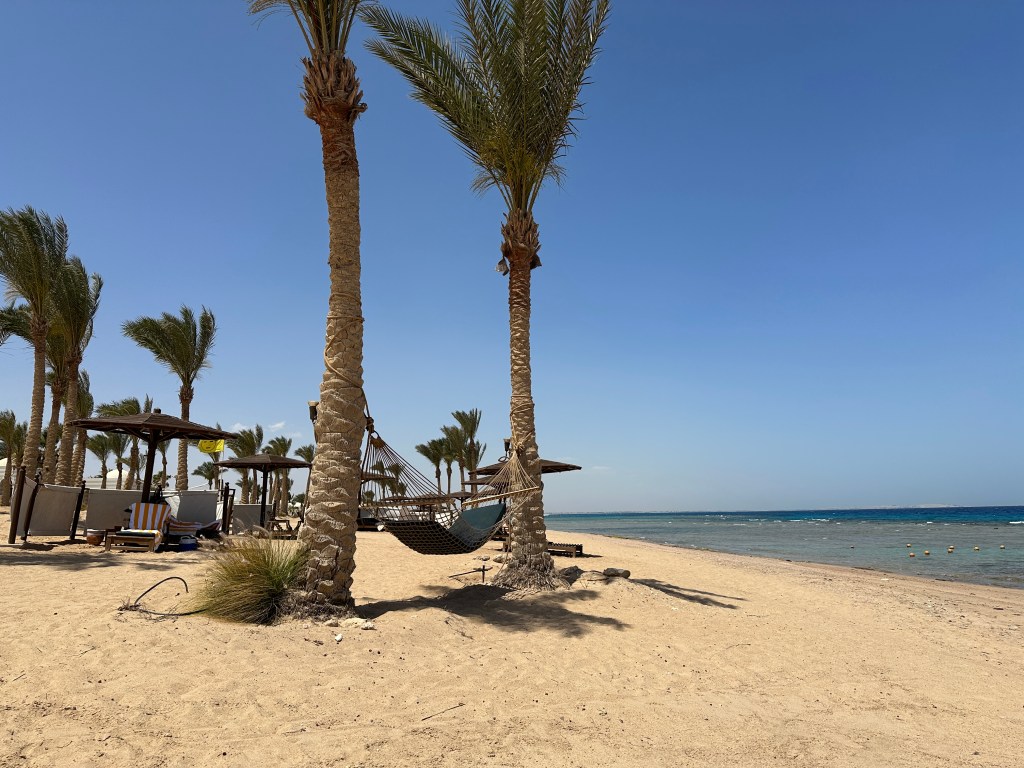
Lily Beach’s main beach, located near the water sports area, was absolutely stunning. The soft white sand and clear, shallow waters made for the perfect spot to relax for hours. Whether we were sipping coconut water from the beach bar or watching the sunset over the horizon, it was impossible not to feel at peace. We spent most days lounging by the beach, but the activities offered by the resort were equally tempting. Stand-up paddleboarding and glass-bottom canoeing were complimentary, and though I attempted to flyboard, my lack of skill made for more of an entertaining spectacle than an accomplishment.

The evenings at Lily Beach were no less magical. We enjoyed sipping drinks on our deck, gazing out at the endless sea under a star-filled sky. The resort also hosted performances from time to time, adding an element of fun and excitement to our stay. The moments of sheer relaxation and quiet joy felt like they would never end.

One standout aspect of our trip was the hospitality. I’ve traveled extensively and stayed at many world-class resorts, but the level of care and attention we received at Lily Beach was extraordinary. The staff went above and beyond to make sure our experience was nothing short of exceptional.

Our time at Lily Beach was one of pure bliss, filled with luxurious comforts, exciting activities, and endless indulgence. It was a trip that left us with memories to treasure and stories to tell for years to come. Without hesitation, I would recommend this little slice of paradise to anyone looking for the perfect Maldivian escape.

Waldorf Astoria Ithaafushi

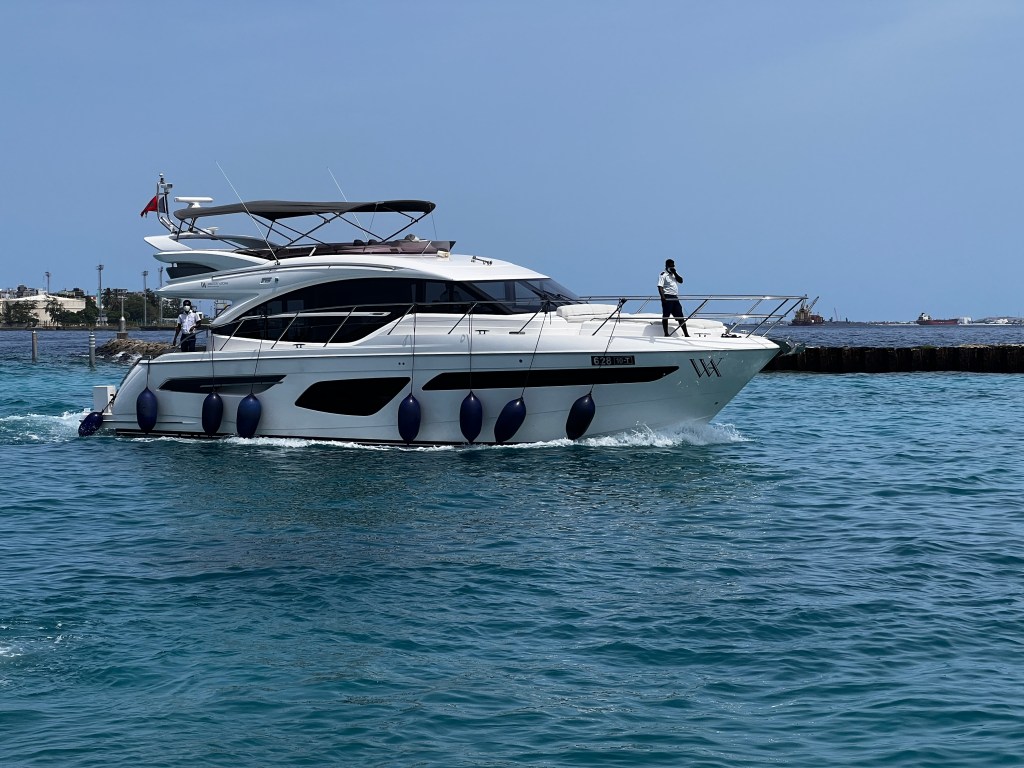
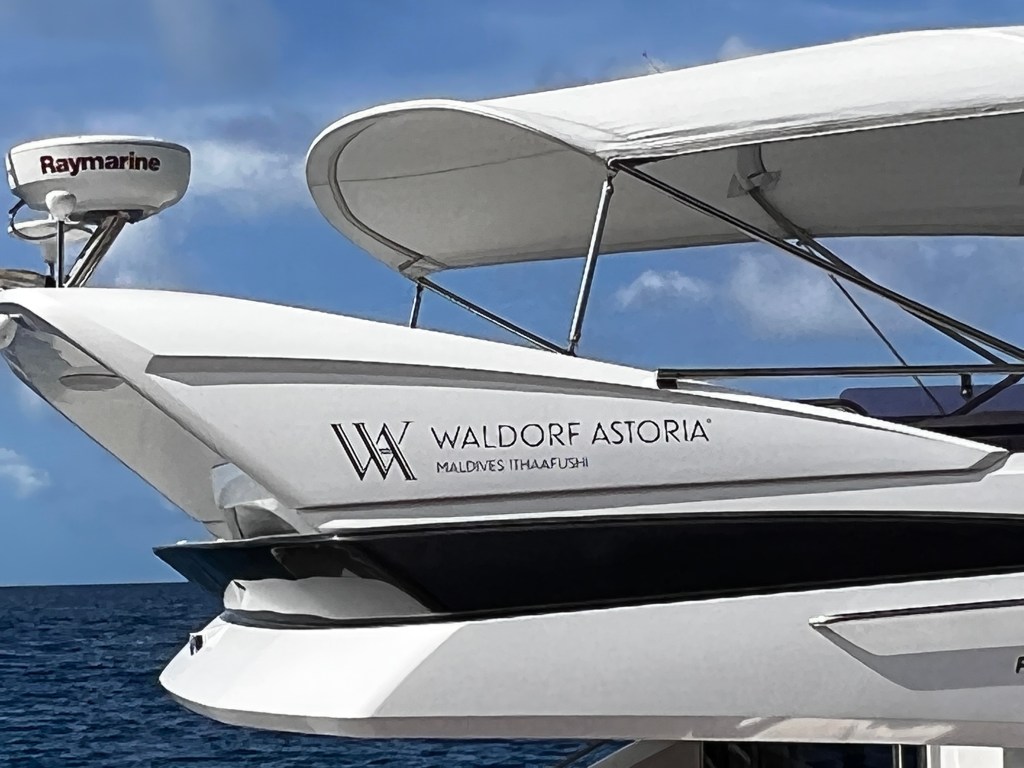
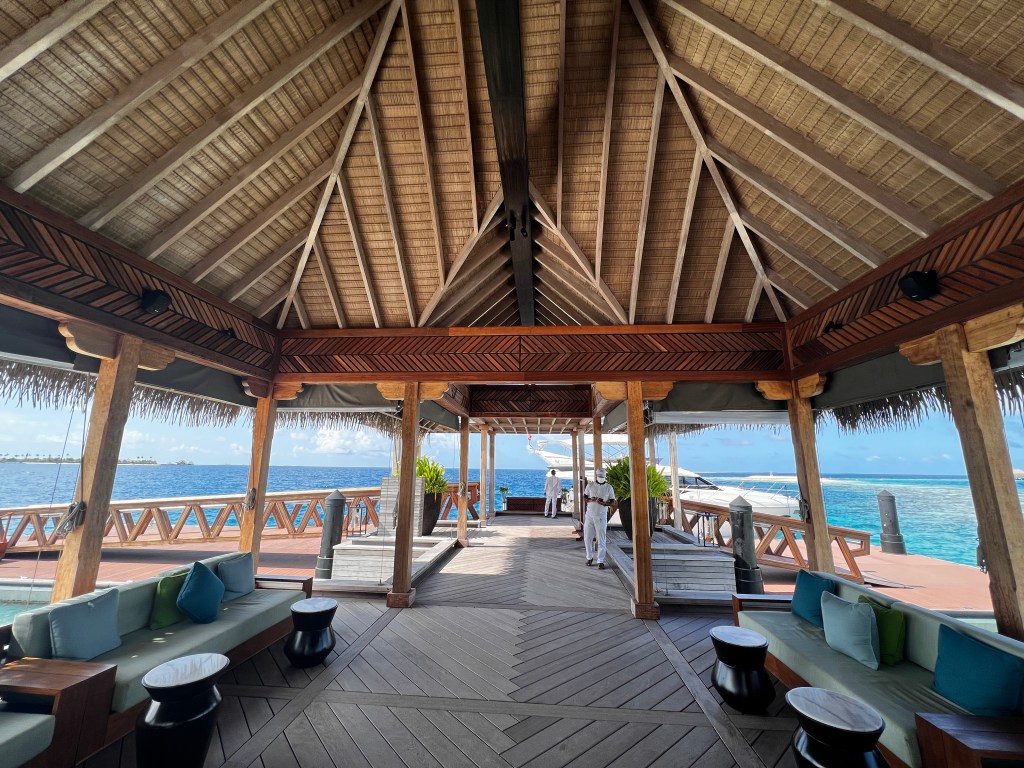
Our journey to the Waldorf Astoria Ithaafushi began with the smoothest of transitions, quite literally. After landing, we were escorted a mere two-minute walk to the sea where a luxury yacht awaited us. Unlike most Maldivian resorts that require a seaplane transfer, the Waldorf Astoria is close enough to the airport that a yacht makes the journey—a 40-minute ride across the turquoise waters. As first impressions go, this one set the bar incredibly high. The yacht itself was a masterpiece: immaculate interiors, plush seating, and the sort of luxurious detailing that you expect from a resort of this caliber. Add in the free-flowing champagne and gourmet snacks, and it felt like the vacation had already started.

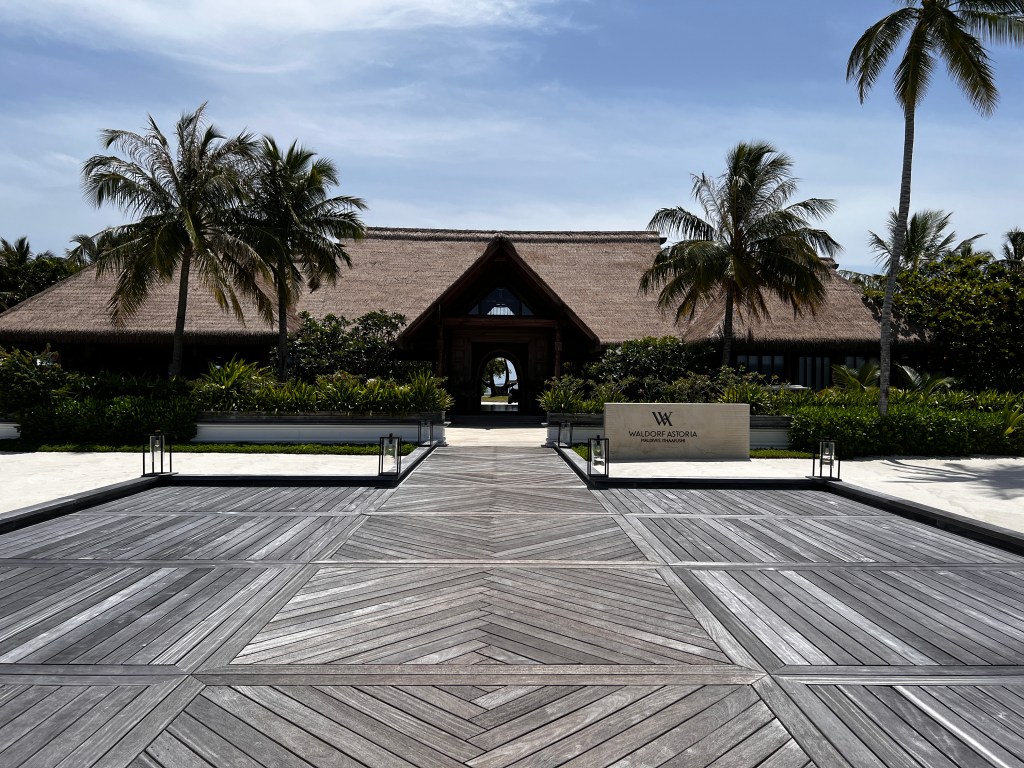
Arriving at the resort, we were greeted by a smiling team of staff, including our island host. Walking into the main reception area was like stepping into a world designed for the elite. The ceilings soared above us, and the polished wooden floors gleamed. It was a subtle, yet immediate reminder that this was no ordinary resort. This was something more. Much more.

Our villa was located on the south side of the island—an Ocean Villa, which, even by Maldivian standards, was astounding. Illuminated cathedral ceilings, oversized chandeliers, and attention to every detail made this place feel more like a palace than a tropical retreat. The space was immense, both inside and out. The villa even had a glass-bottomed viewing section so we could enjoy the underwater world without leaving our room. I particularly appreciated how, three weeks before our arrival, the hotel reached out with an extensive questionnaire about our preferences. From whether we preferred still or sparkling water to an incredibly detailed pillow menu, the Waldorf’s commitment to personalizing every aspect of our stay was clear from the start.

One of the standout features of the villa was the bathroom. It was almost as large as the bedroom itself, with a deep soaking tub that overlooked the pristine waters of the Indian Ocean. The outdoor space was just as jaw-dropping as the interior—there were 18 seats arranged across the deck, none of which felt cramped. The sheer space and layout made it hard to believe this was the “standard” villa. I’ve seen presidential suites in other hotels that didn’t come close to what the Waldorf Astoria offers as their baseline.

For our 4-night stay, we paid 7,20,000 INR, which included the yacht transfer and a $100 USD credit per person for four days, usable at all the restaurants (except Terra and private dining experiences). Given the luxury of the resort, we found this a fair price for what was delivered. At the end of our stay, our final bill came to around $800 USD, covering additional food and activities.

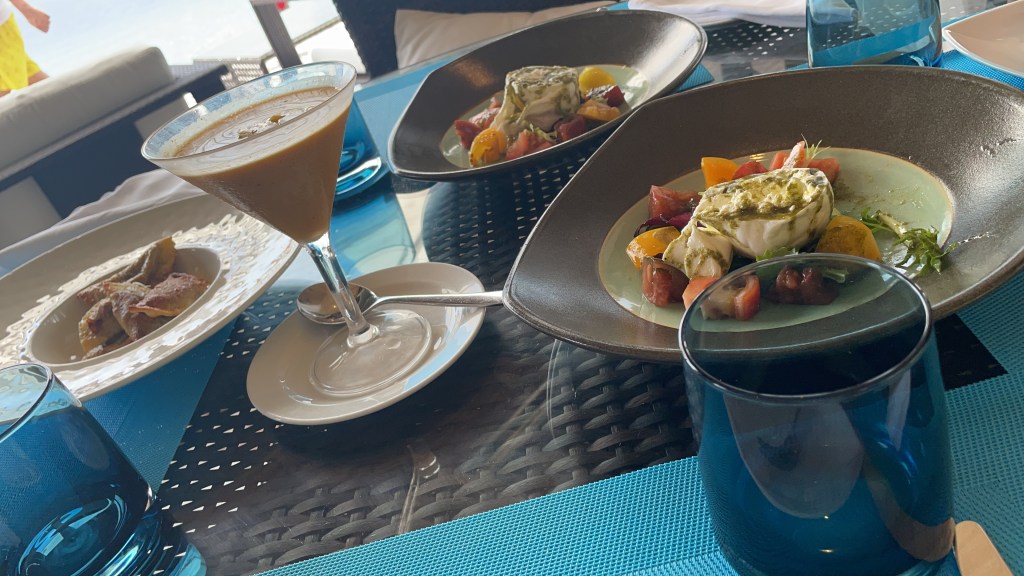
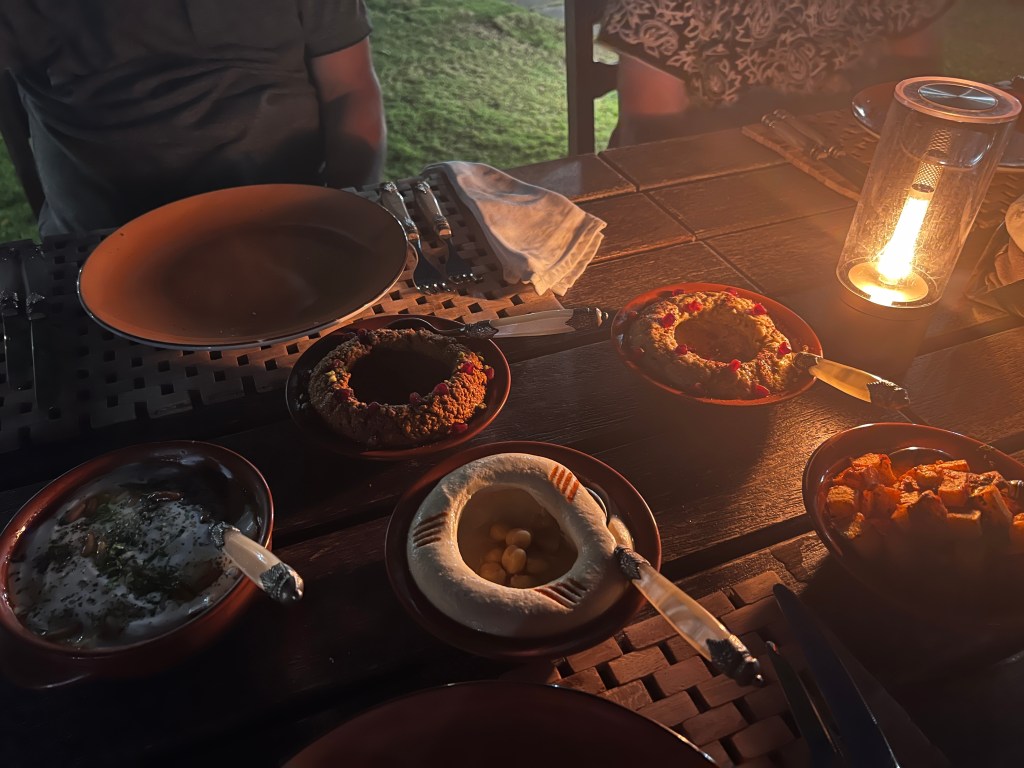
When it came to dining, the Waldorf Astoria did not disappoint. Our first dinner was at Yasmeen, a restaurant designed to resemble a traditional Arabic village. I could almost believe I had been transported somewhere deep into the Levant as we devoured freshly baked breads and exquisite dips. Another memorable dinner was at Li Long, their Chinese restaurant. Known for its Peking duck, the authenticity of the dishes took me by surprise. It was a taste of China, but with the stunning backdrop of the Maldives.

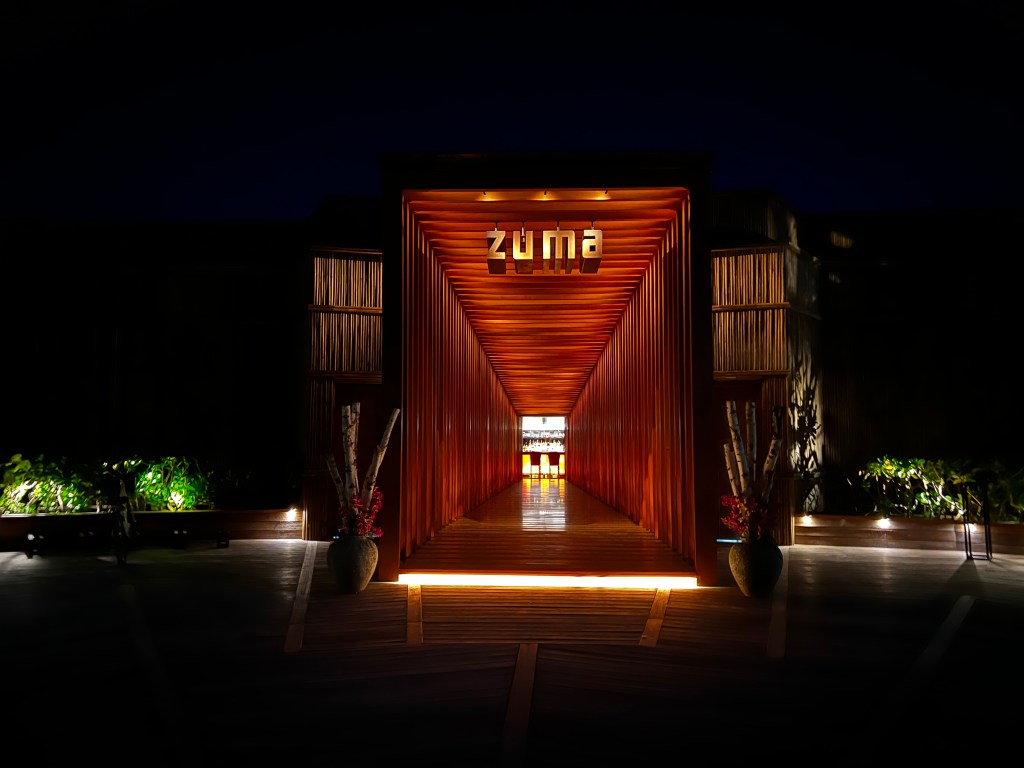
Perhaps the most unexpected culinary highlight came from Zuma, a restaurant that needs no introduction. We were fortunate to dine here just after it had opened, enjoying dishes like yakitori and robata grill while surrounded by one of the most picturesque landscapes I’ve ever seen. Floating above the lagoon, Zuma offered not just a meal, but an experience.

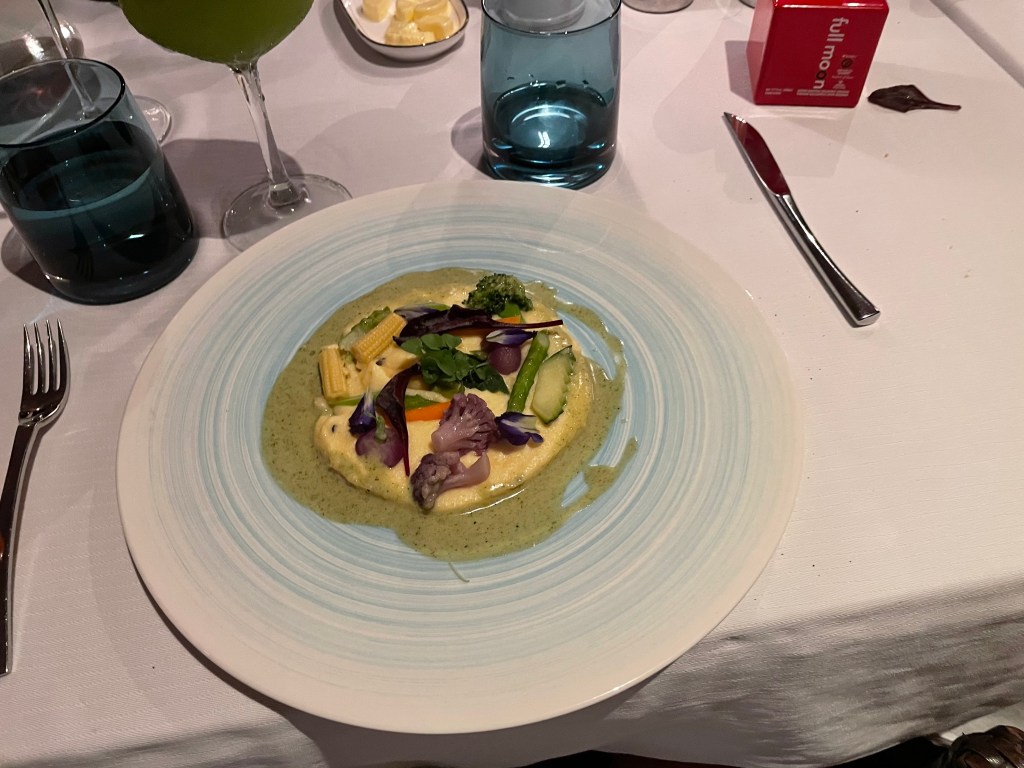
The Ledge by Dave Pynt, another Michelin-starred venture, was another gem. Having waited two months for a reservation at the Singapore branch, it was incredible to experience the same level of quality here, without any of the hassle. Even as a vegetarian, I found the grilled items and desserts divine. Glow, their farm-to-table concept, was a lovely surprise, offering hearty vegan burgers and comforting soups. Amber, a sunset lounge, gave us one of the most breathtaking views of our trip. I can’t put into words how mesmerizing the sky was, shifting through countless shades as we sipped our drinks.

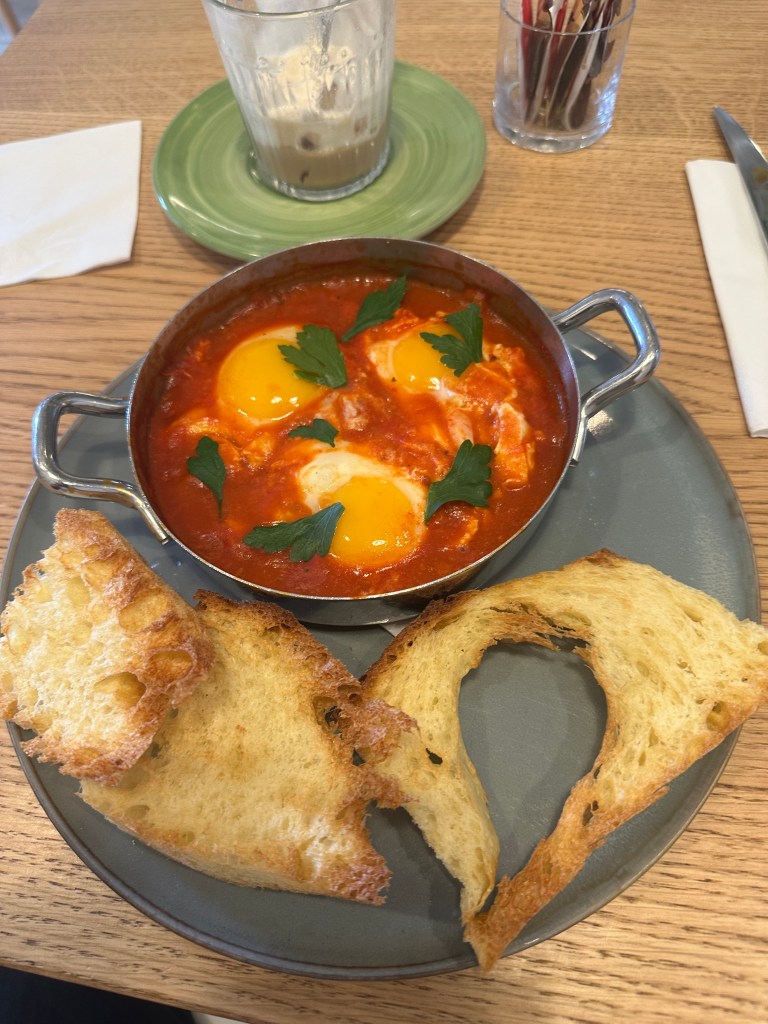
For something more casual, Nava became our go-to spot. With stunning lagoon views, live DJs, and pizzas that hit the spot, it was perfect for a laid-back afternoon. Tasting Table, the main restaurant, was where we enjoyed breakfast most days. Each morning was a feast of creativity and indulgence, with unique dishes like truffle eggs benedict and Maldivian-inspired shakshuka. The service was impeccable—our glasses never stayed empty, and the staff were always eager to assist.

In terms of wellness, the Waldorf has a 24/7 gym outfitted with state-of-the-art equipment and a spa that goes above and beyond. The wellness pool was a revelation, divided into zones that targeted different parts of the body, using jets, air pressure, and varying water temperatures to offer a complete sensory experience. For those looking to stay active, there are tennis and padel courts, and for water enthusiasts, the dive center and water sports center offer plenty of options. I opted for seabobbing—a thrilling way to explore the waters around the island.

What truly sets the Waldorf apart, though, is the service. Every staff member seemed to know our names and preferences, making us feel like the most important guests on the island. Whether we were dining, relaxing by the pool, or exploring the resort’s many activities, we were constantly met with warmth, attentiveness, and a genuine desire to ensure our stay was nothing short of extraordinary.

Reflecting on our time at the Waldorf Astoria Ithaafushi, it’s clear that this resort has mastered the art of luxury. Every detail, from the moment we stepped on that yacht to our final breakfast, was curated to perfection. This isn’t just a resort—it’s a destination in itself, where indulgence and comfort reach new heights. The Maldives may be known for its luxury, but the Waldorf Astoria has redefined what it means to truly escape to paradise.

Conclusion 

If you’re considering alternatives to the Waldorf Astoria Ithaafushi, here are some excellent options:

  • Soneva Jani / Fushi: The retractable roof villas with huge pools are something out of a dream, perfect for stargazing while lying in bed. Soneva Fushi offers a lush island vibe, while both resorts champion eco-luxury. The price tag is steep however..
  • Taj Exotica: Conveniently close to Malé, it’s a quick boat ride to this slice of Indian-influenced luxury. The service is warm and attentive, though you might occasionally hear seaplanes overhead due to its proximity to the airport.
  • Ritz-Carlton: A striking newcomer with modern, sleek villas and a unique circular design. The service is impeccable, and the villas are spacious, though some might find privacy a bit compromised in certain spots of the villa due to the layout. Yet, an incredible modern new property.
  • St. Regis: Known for its outstanding butler service, this resort is all about tailored luxury. The whale shark-shaped bar and serene setting are unforgettable. It’s a little more secluded, which is either a dream or a bit too quiet, depending on your preference.
  • Four Seasons (Landaa Giraavaru / Kuda Huraa): With two stunning properties, Four Seasons offers a mix of adventure and luxury. Both have exceptional marine programs, and the high price reflects the brand’s consistent top-tier service.
  • Angsana Velavaru: The villas here are literally on the ocean, and you’ll need a boat to shuttle between the main island and your villa. It’s a unique experience, and the wellness focus is fantastic, though it’s not as over-the-top luxurious as some of the other options.
  • InterContinental: Nestled in Raa Atoll, this is a quieter, more understated luxury option with great wellness programs. It screams extravagance, and the tranquillity and service make it a solid pick.
  • Gili Lankanfushi: The Crusoe Residences are incredibly private, accessible only by boat, which gives a sense of serene isolation. The food, villas and views are unparalleled.
  • Conrad Maldives Rangali Island: Famous for Ithaa, its underwater restaurant, this resort offers a mix of family-friendly fun and luxe experiences. Some areas of the resort can feel a little busier though.

The Maldives is a haven of turquoise waters, tranquil beaches, and ultimate relaxation. From the luxurious pampering at the Waldorf Astoria Ithaafushi to the peaceful serenity of your private villa, every moment is crafted for indulgence. Whether you’re floating in crystal-clear lagoons, dining under the stars, or simply unwinding in the quiet of nature, the Maldives offers a perfect escape from the world. It’s a destination where time slows down, and relaxation takes over, leaving you rejuvenated and refreshed. A stay here isn’t just a vacation—it’s a truly unforgettable experience of tranquility and luxury.

Oman

I wanted to share my experience of visiting Oman, a country I first explored in 2016. I made another visit later in 2019 as well. Both trips were brief, so while my personal memories have faded somewhat, I owe massive credit to my uncle’s blog (https://raghavbihani.wordpress.com/) for providing much of the information and details. I’ve added some personal anecdotes, as I always do in my blogs. If you’re looking for a detailed itinerary and process, I highly recommend checking out his blog post, as it is both vivid and thorough. I must apologize for the lack of restaurant names and specific food details in my account—unfortunately, those memories didn’t stick with me. I have, however, included my first trip in grave detail and some basic details about my second visit as well, which, as you’ll read below, didn’t go quite as planned. Enjoy!

Oman, often overshadowed by its flashy neighbors, is a land of contrasts and hidden wonders. Picture towering dunes, rugged mountains, and crystal-clear wadis all within reach of serene, unspoiled beaches. This is a country where ancient traditions thrive alongside modern comforts, offering travelers a taste of authentic Arabia. With its growing accessibility thanks to Oman Air and a strategic location just a short flight from major Middle Eastern hubs, Oman is the perfect destination for those seeking adventure, relaxation, and a deeper connection to the rich culture of the Arabian Peninsula.

A tentative short Oman itinerary

Day 1: Day in the Mountains : Jebel Akhtar or Jebel Sham mountains.
Day 2: Day trip to Nizwa Souk and Fort and forts in Bahla/Jibreen before proceeding to Wahiba Sands for an Arabian Night
Day 3: Ras al Jinz in the night via Wadi Bani Khalid for viewing of the turtle nesting
Day 4-5: Back to Muscat for a relaxing 2 days at the beach. 

This could be streched out for 7 days also for a more relaxing option with 2 days in the Mountains and 3 days in Muscat.

The mountains of Jabal Akhdhar 

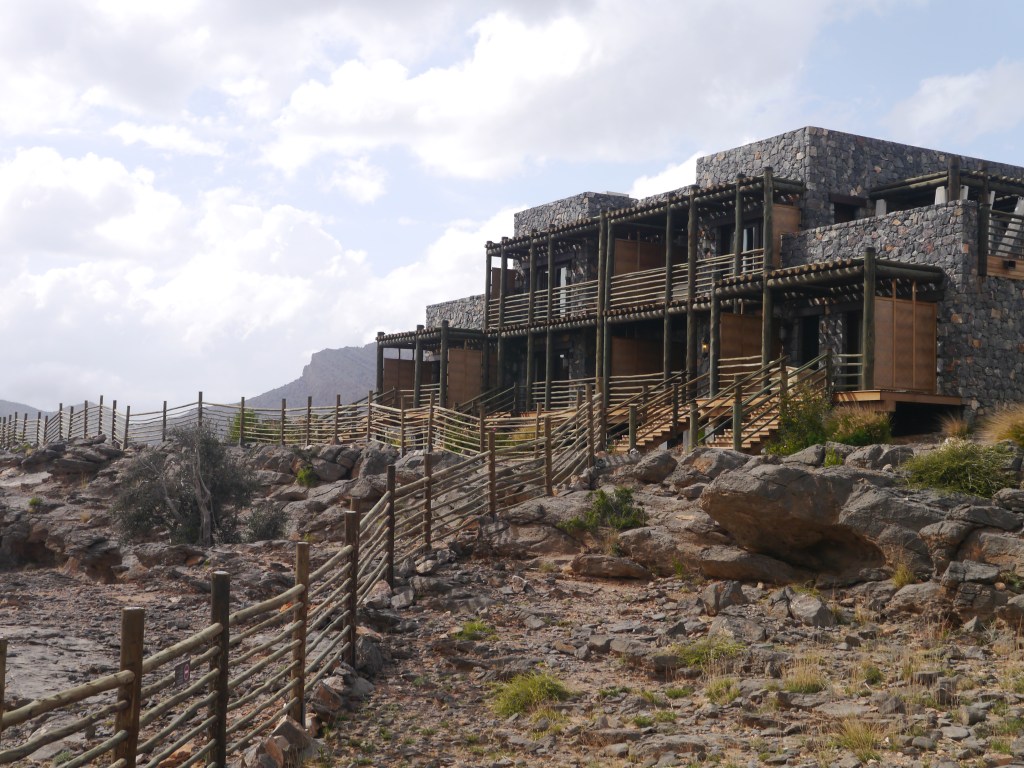
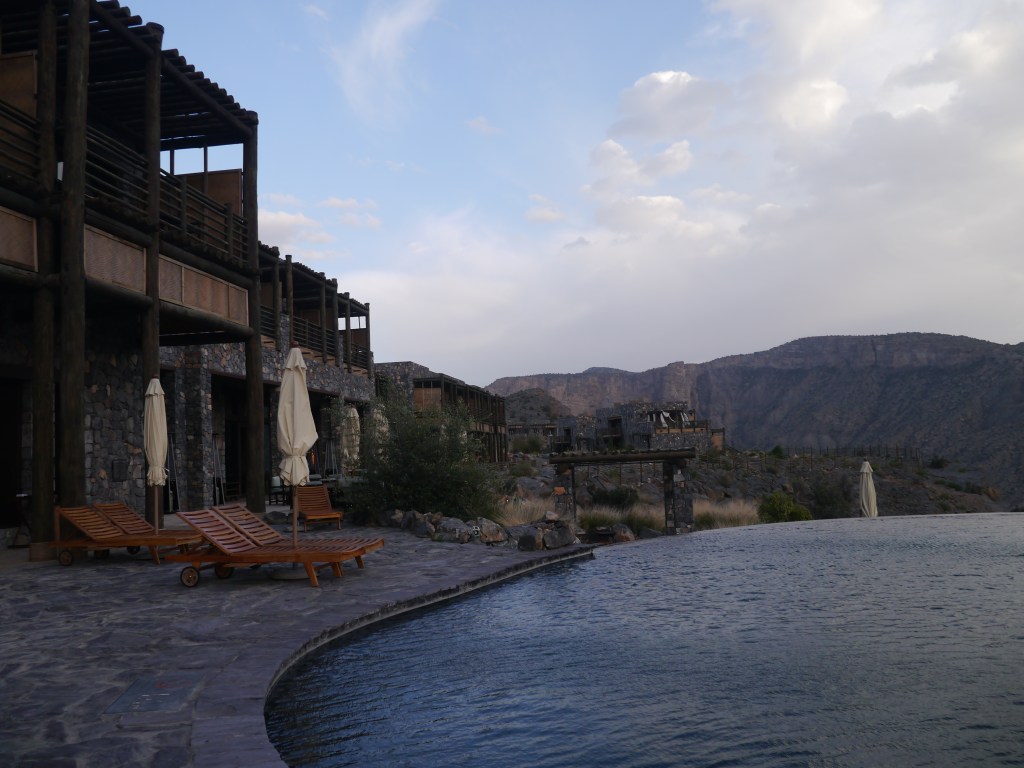
When in Oman, experiencing the mountains is an absolute must, and your choice of mountain depends largely on the hotel you decide to stay in. We chose the Alila Jabal Akhdar, and it was nothing short of spectacular. The panoramic views were breathtaking, the infinity pool was a dream, the villas were pure luxury, and the service was impeccable. If you’re looking for other options, The View Oman or Anantara are also excellent choices, with Sahab Hotel and Jebel Shams Resort offering slightly more budget-friendly accommodations.

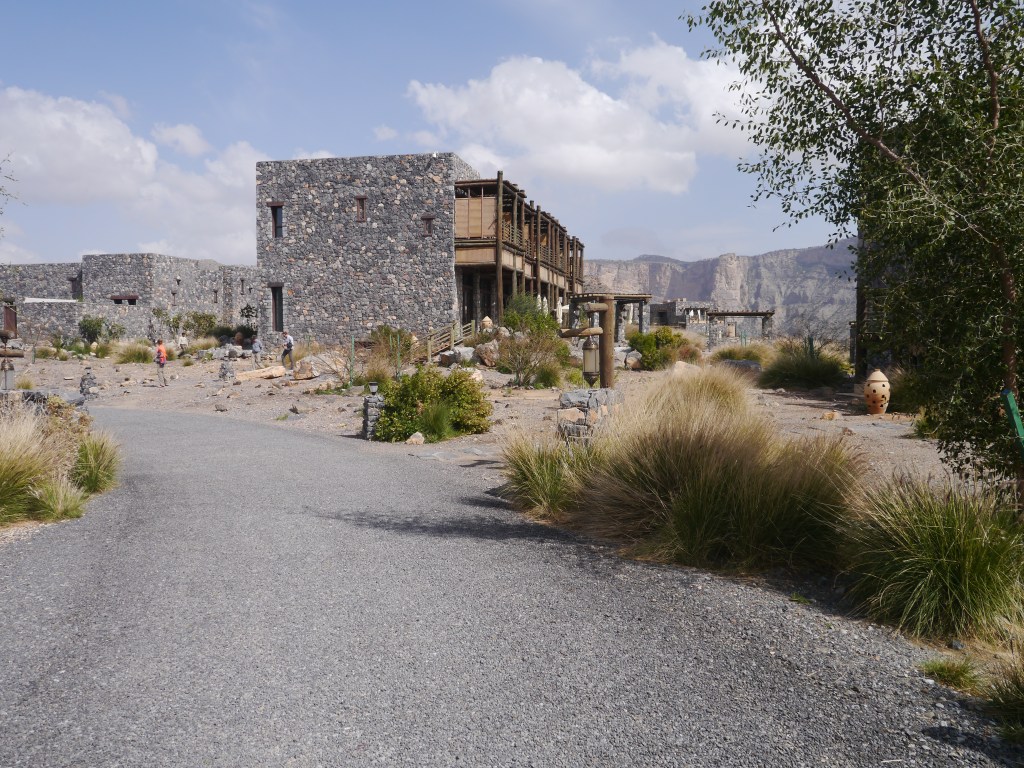
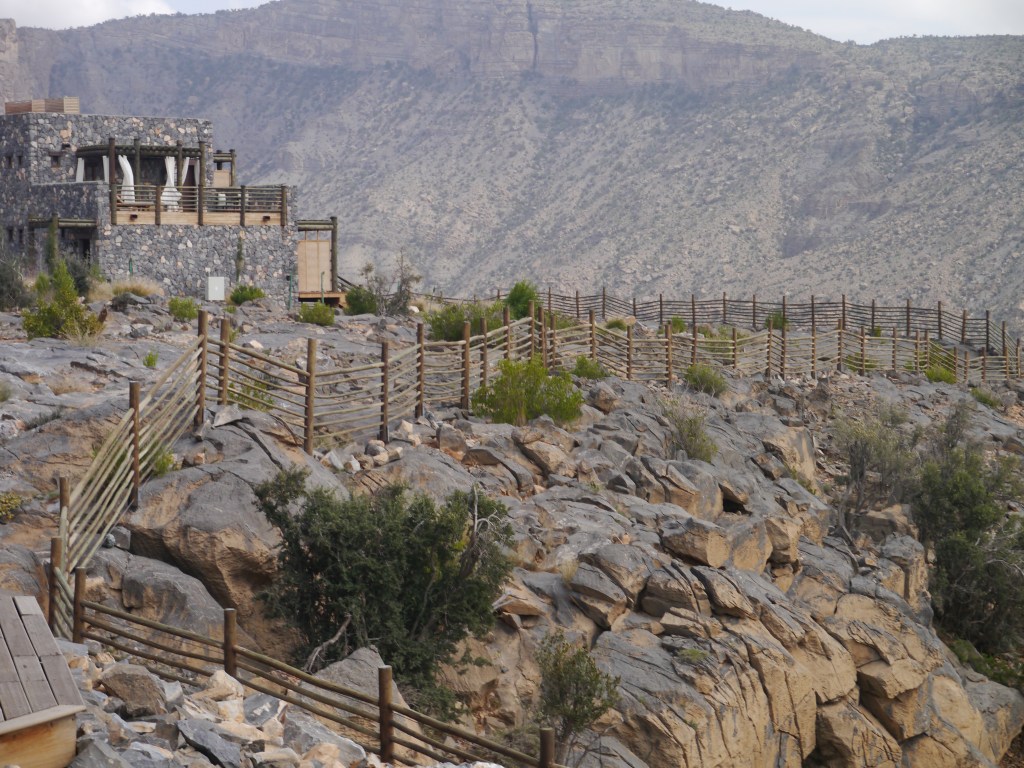
The Alila Jabal Akhdar’s property is beautifully integrated into the landscape, with the main hotel and villas perched right at the mountain’s edge. The infinity pool is to marvel at as the views are unparalleled. Constructed from local materials, it blends seamlessly with its surroundings. You can walk along the property’s mountain edge, soaking in the views, or embark on hikes of varying difficulty. For those seeking a thrill, cycling through the rugged terrain is an option, but if relaxation is your goal, the infinity pool and spa won’t disappoint. The rooms themselves are spacious, with a distinct local vibe that set this place apart from the other hotels I’ve stayed in.

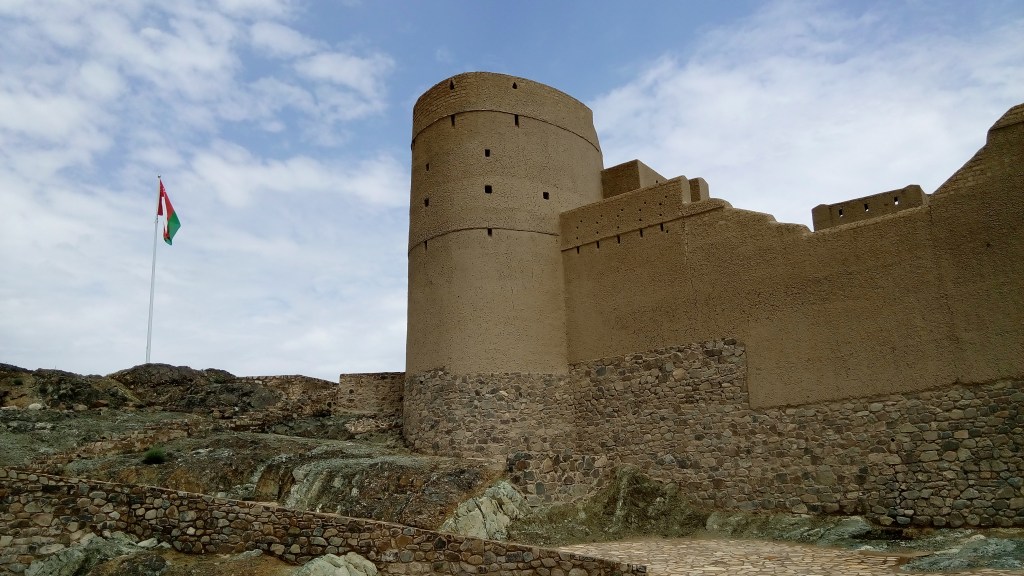
Nizwa, an ancient city in the Ad Dakhiliyah region of northern Oman, is a charming town that once served as Oman’s capital. It’s home to a quaint souk and the historic Nizwa Fort, perfect for a bit of souvenir shopping.  The surrounding area is dotted with other fascinating forts like Jibreen Castle and Bahla Fort. Bahla Fort, a UNESCO World Heritage site since 1987, is particularly impressive and definitely worth a visit only if you’re passing through Nizwa on your way to the mountains.

Our journey took us up to Jabal Akhdar. The mountains, though barren, were stunning with their deep canyons and expansive views, reminiscent of the Atlas Mountains in Morocco. As we reached the summit, the air turned refreshingly cool—a welcome change from the heat of Nizwa.

I have to admit, my first night was marred by a mild fever, but that didn’t dampen my spirits. We enjoyed a light dinner in the main dining area and continued to soak in the experience. The food in Oman, by the way, is generally excellent, with plenty of vegetarian options available.

Wahiba sands 

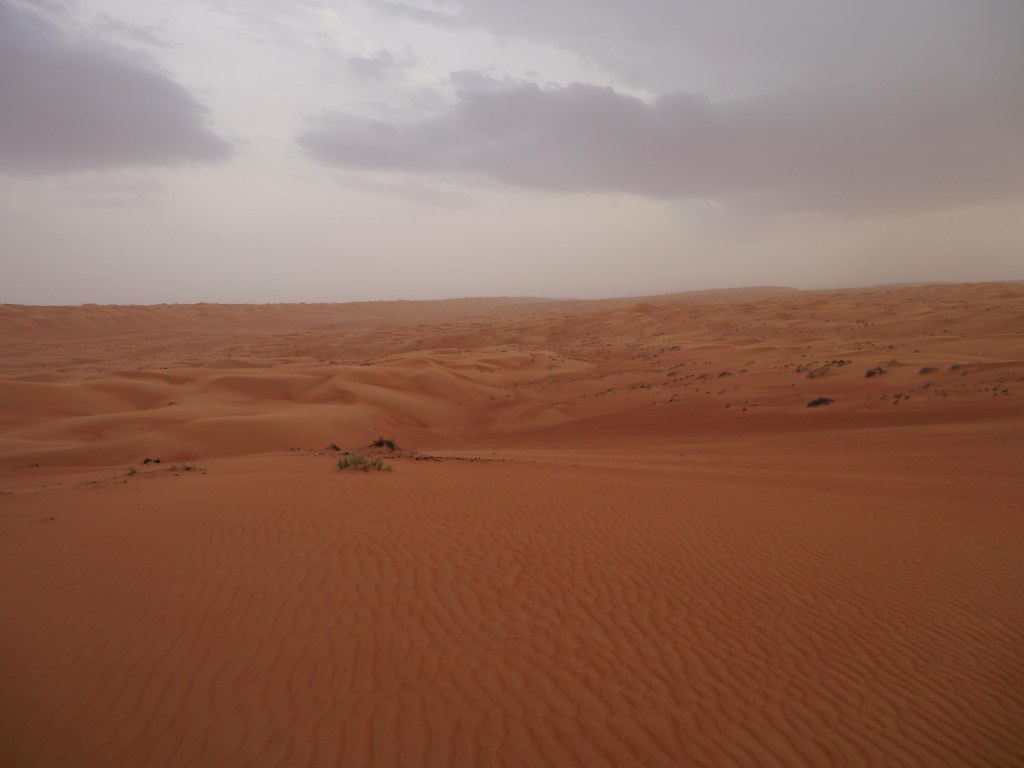
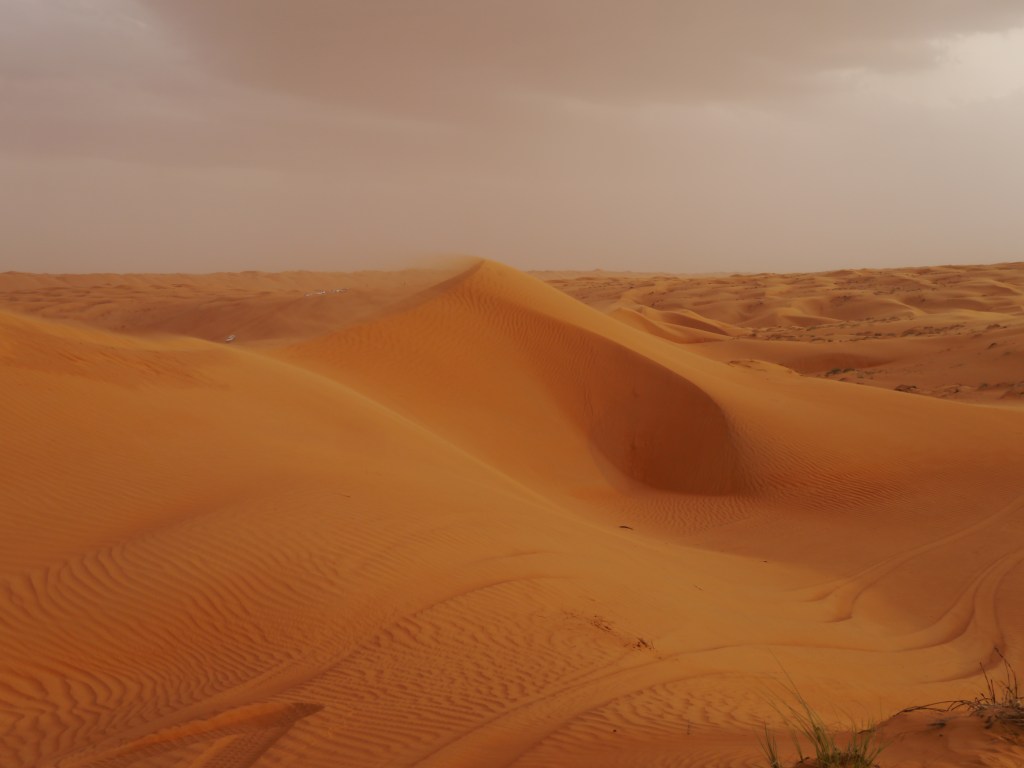
Oman is home to a portion of the Rub’ al Khali, or the Empty Quarter, the world’s largest continuous sand desert. Though the Empty Quarter itself is remote, with no hotels and only camping options, and quite far from the usual tourist routes, you can still get a taste of its vastness by visiting Wahiba Sands. The area is defined by a boundary of 180 kilometers north to south and 80 kilometers east to west, with an area of 12,500 square kilometers.

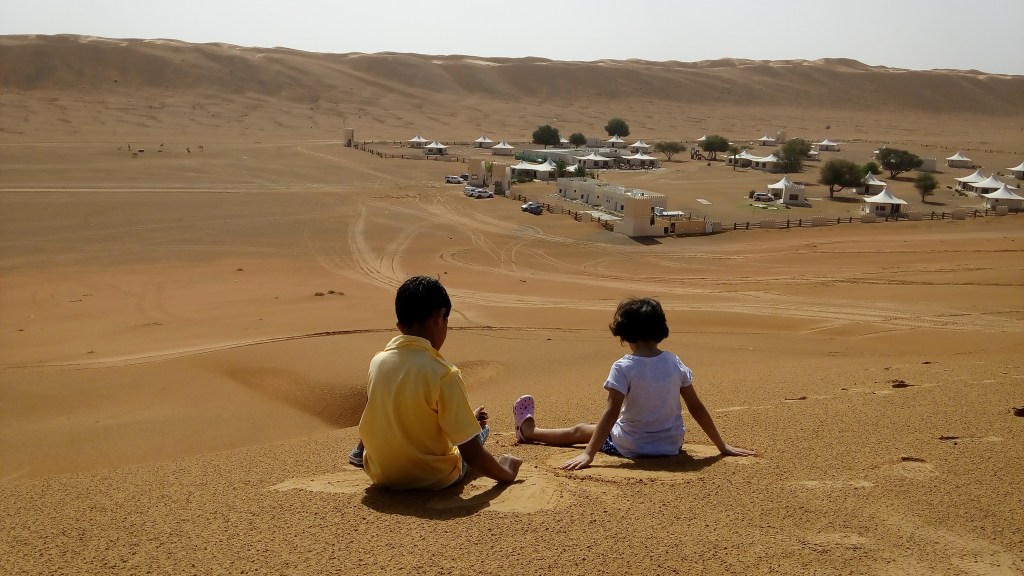
Wahiba Sands offers a more accessible desert experience, with several camps to choose from, and picking the right one can make a big difference. We opted for Desert Nights Camp, the top luxury choice in the area, but if you’re looking for something more budget-friendly, the Arabian Oryx Camp next door is a great alternative. Another interesting option is the 1000 Nights Camp, which even boasts a swimming pool, though it’s a bit further into the desert, about 35 kilometers in.

These camps are nestled amidst vast, towering sand dunes, far removed from the hustle and bustle of civilization, with only the expansive, star-lit sky above. While the activities at these camps are fairly consistent, one experience you absolutely can’t miss is Dune Bashing. It’s a thrilling adventure, as you race through the dunes in a SUV, navigating steep climbs and heart-pounding descents, sometimes even in reverse! The excitement level really depends on the expertise of your driver. If you’re up for a challenge, quad biking offers a more hands-on way to conquer the dunes, though it demands a bit of caution.

For those who prefer a more laid-back experience, the camps also organize sunset drives into the desert. There’s something magical about sitting atop a dune, as the sun sinks below the horizon, painting the sands in rich hues of brown, beige, and orange. It’s a serene moment, perfect for reflection or capturing beautiful photos. And of course, for younger guests, a camel ride is always a delightful option.

As night falls, the desert truly comes alive. Under a blanket of stars, you can enjoy traditional Arabic dance performances or indulge in a lavish Omani feast, seated on carpets spread over the sand. It’s like stepping into the pages of a storybook, experiencing an Arabian Night in all its glory.

 Swimming in Wadi Shab / Wadi Tiwi / Bani Khalid

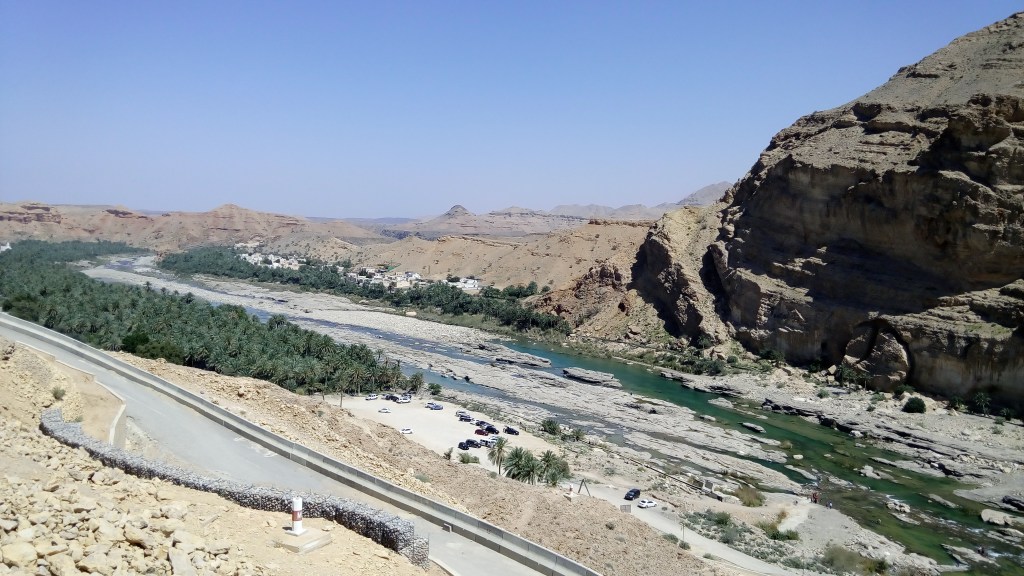
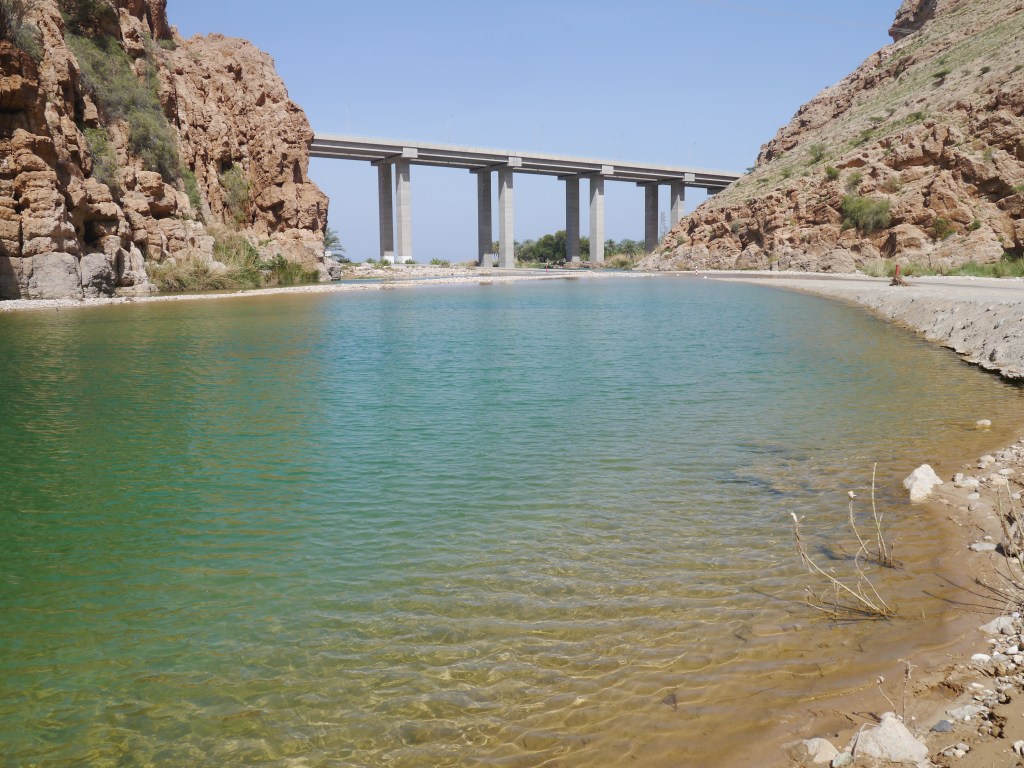
In Oman, wadis are valleys or dry riverbeds between mountains, often filled with water during rains or from intermittent streams. Some wadis, like Wadi Tiwi, Wadi Bani Khalid, and Wadi Shab, have permanent water sources and are must-visit spots. Swimming and picnicking at these scenic locations are highlights of any trip to Oman.

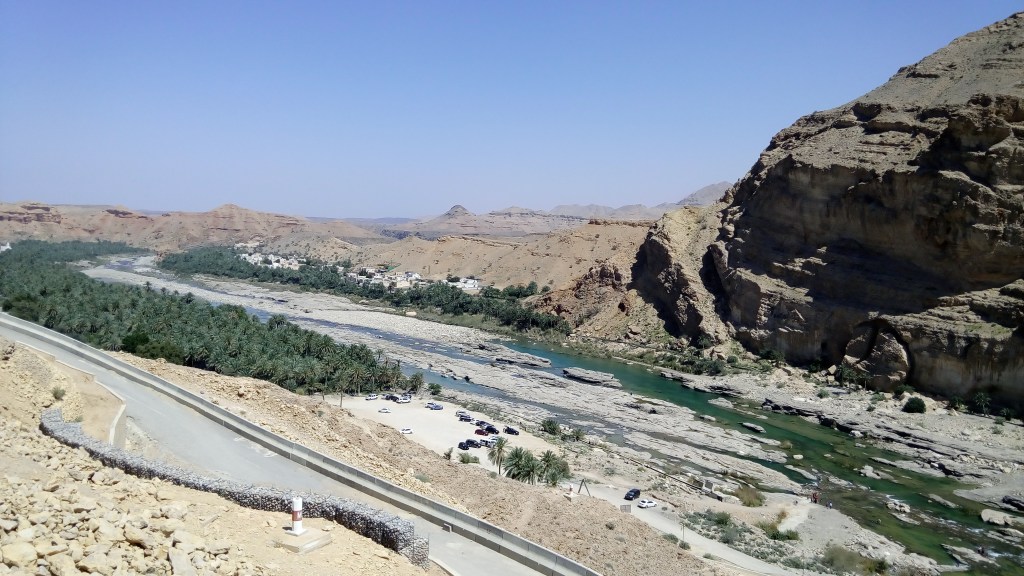
The crystal-clear waters are perfect for a refreshing dip, with swimming spots nestled between mountains, inside caves, or under small waterfalls. Visiting on a quiet day is ideal to enjoy the tranquility. We had a blast swimming, though it’s important to be cautious of rocks and stick to deeper areas. The areas are very picturesque and photo worthy, to say the least. Wadi Shab requires a bit of hiking to reach, adding a touch of adventure, while Wadi Tiwi and Wadi Bani Khalid are accessible by car.

Ras al Jinz

Ras Al Jinz is a small fishing village situated in Ras Al Hadd, along the eastern coast of the Arabian Peninsula. This village is renowned as a crucial nesting site for the endangered green turtles, with over 20,000 turtles coming to its shores annually to lay their eggs. The area is carefully monitored by the government for conservation purposes, and access is only permitted through guided tours. Each tour is limited to 20-25 people, with around eight tours scheduled each night around 9 pm, and another four in the early morning hours.

Witnessing the turtles emerge at twilight to lay their eggs is a truly magical experience. The government takes significant measures to ensure that this natural event remains undisturbed, and as visitors, it’s our responsibility to respect this delicate process. The beach is a short walk from the visitor center, and groups are required to take turns viewing the turtles from a safe, non-intrusive distance. Unfortunately, there are always a few tourists who don’t follow these guidelines, which can detract from the experience and stress the turtles. While you wait for your turn, the guides provide in-depth explanations about the turtle nesting process and are always ready to answer any questions. 

Muscat

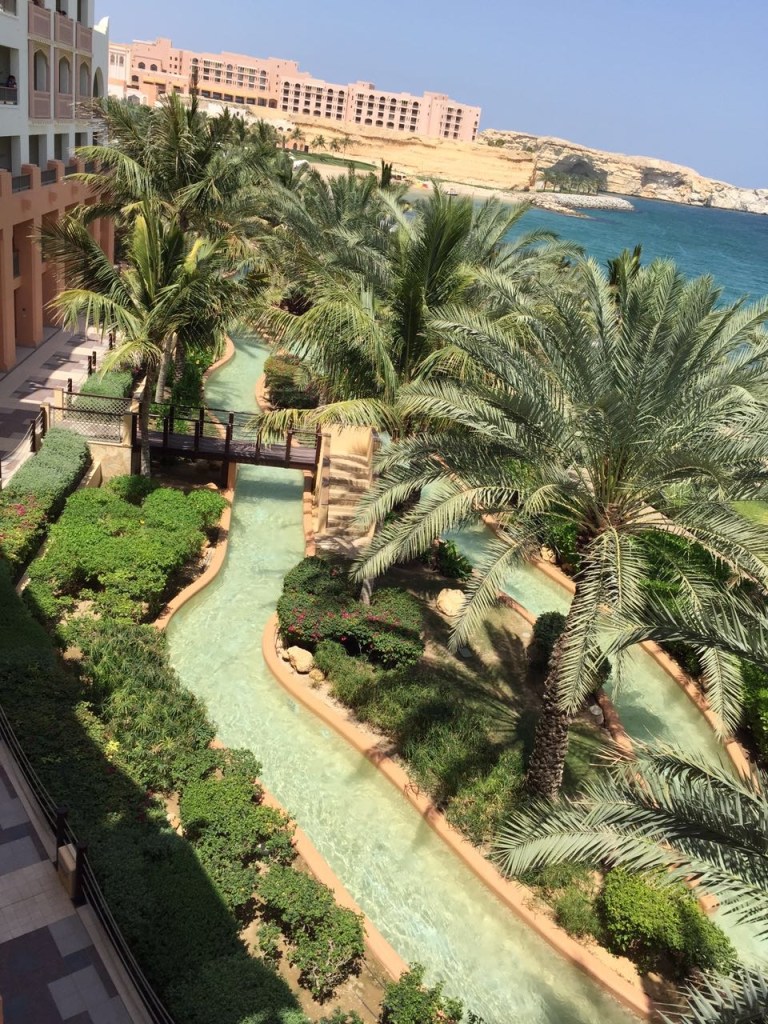
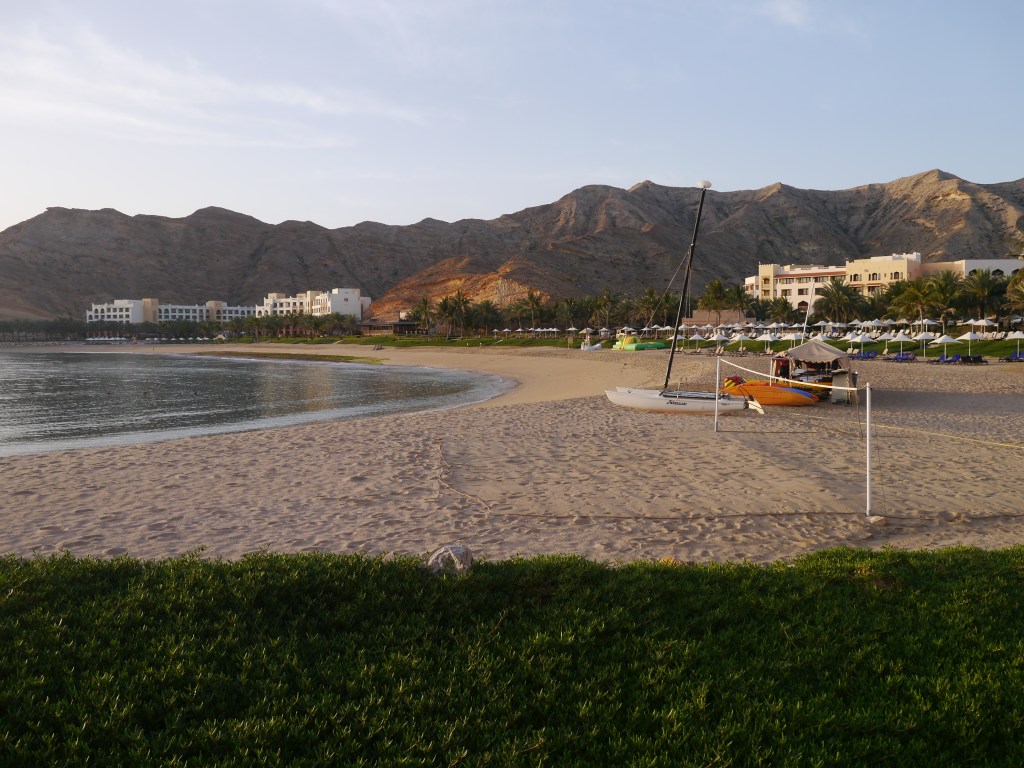
Muscat, cradled between the rugged Al Hajar mountains and the turquoise waters of the Arabian Sea. This enchanting capital seamlessly blends Oman’s rich maritime heritage with its vibrant, evolving culture, making it a true jewel of the Arabian Peninsula. No visit to Muscat is complete without staying at a beach resort. For families seeking a blend of location and activities, Shangri-La Barr Al Jissah stands out. This resort complex is nestled on a secluded bay and consists of three distinct properties, two of which are connected by a delightful 500-meter lazy river. With a soft sandy beach, multiple swimming pools, and a variety of dining options, it’s an ideal spot for a family getaway.

Children will love the play zone, adventure zone, and aqua park, while adults can enjoy a range of water sports or a relaxing dolphin-watching trip right from the resort. The private beach is a standout, perfect for swimming, sunbathing, or simply enjoying water sports. The breakfast spread is lavish and delicious, setting the tone for a perfect day. The resort also features a nearby mall, giant board games, and plenty of entertainment to keep everyone occupied. For those seeking a quieter escape, there’s also an adults-only property within the complex.

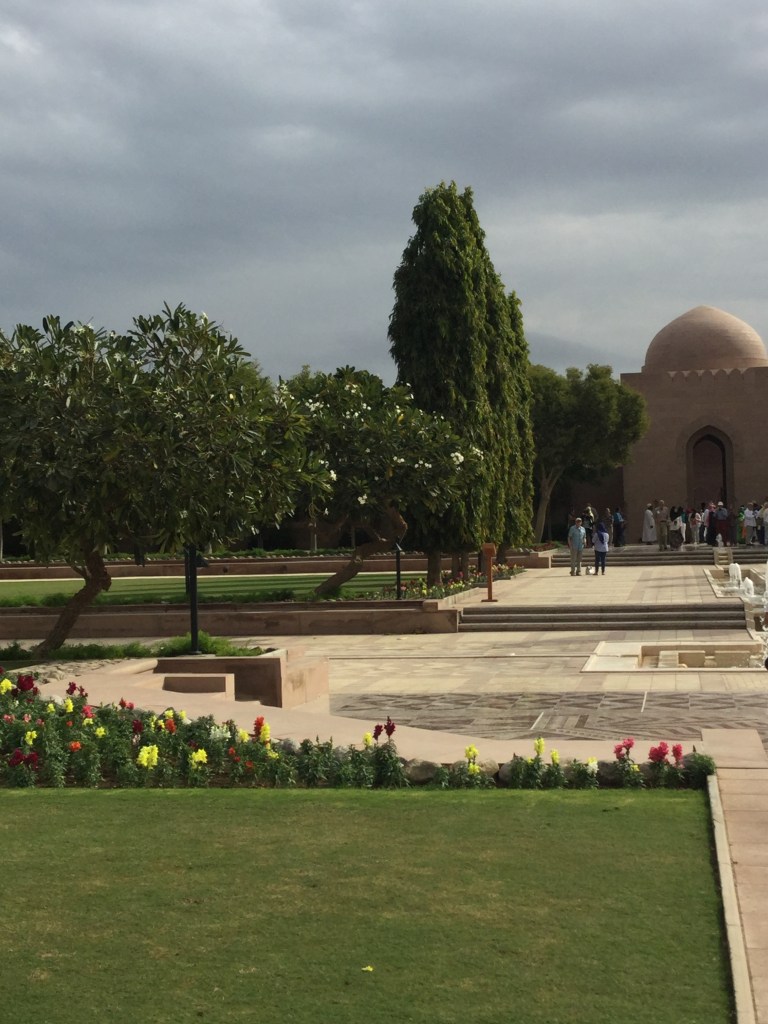
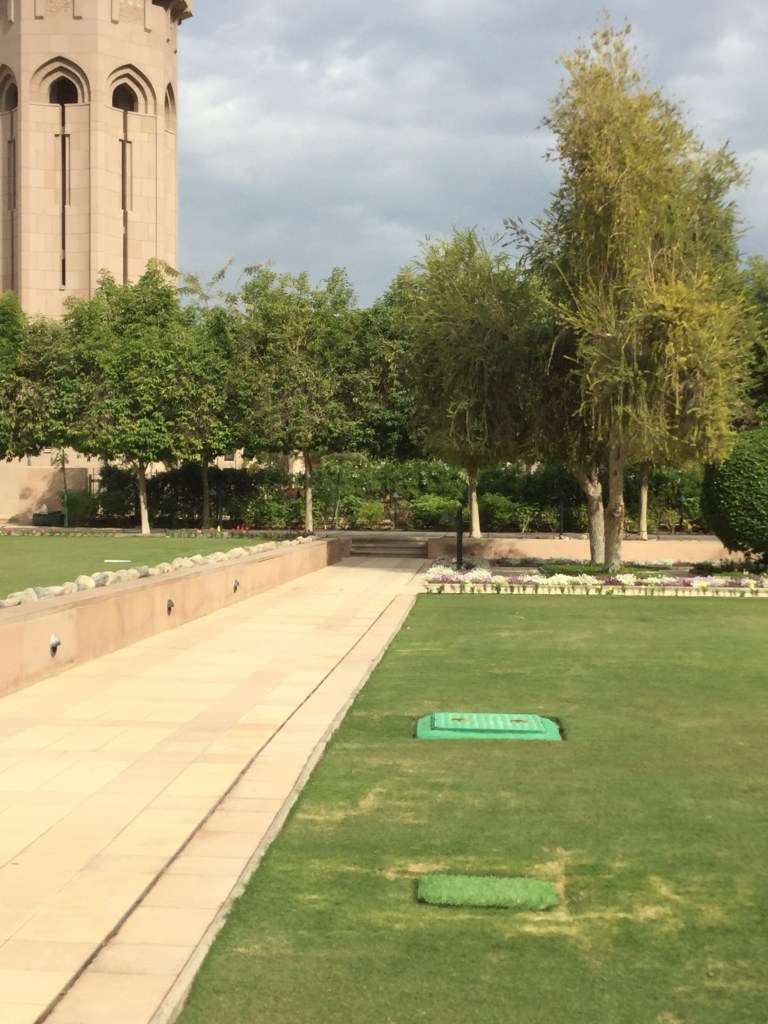
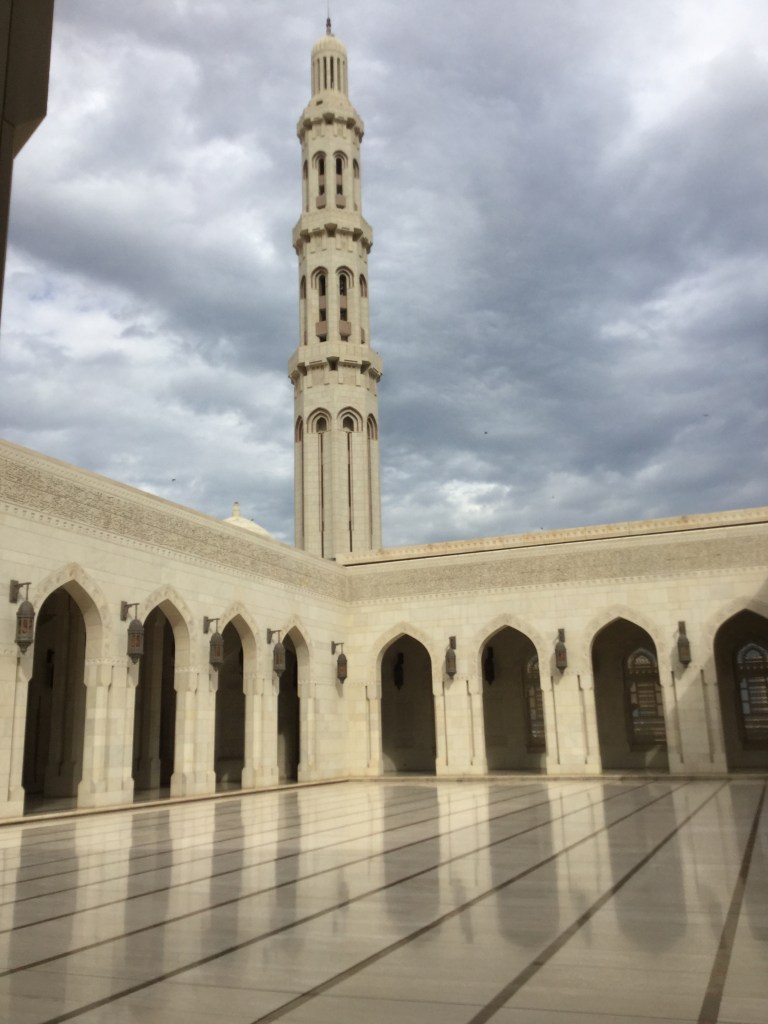
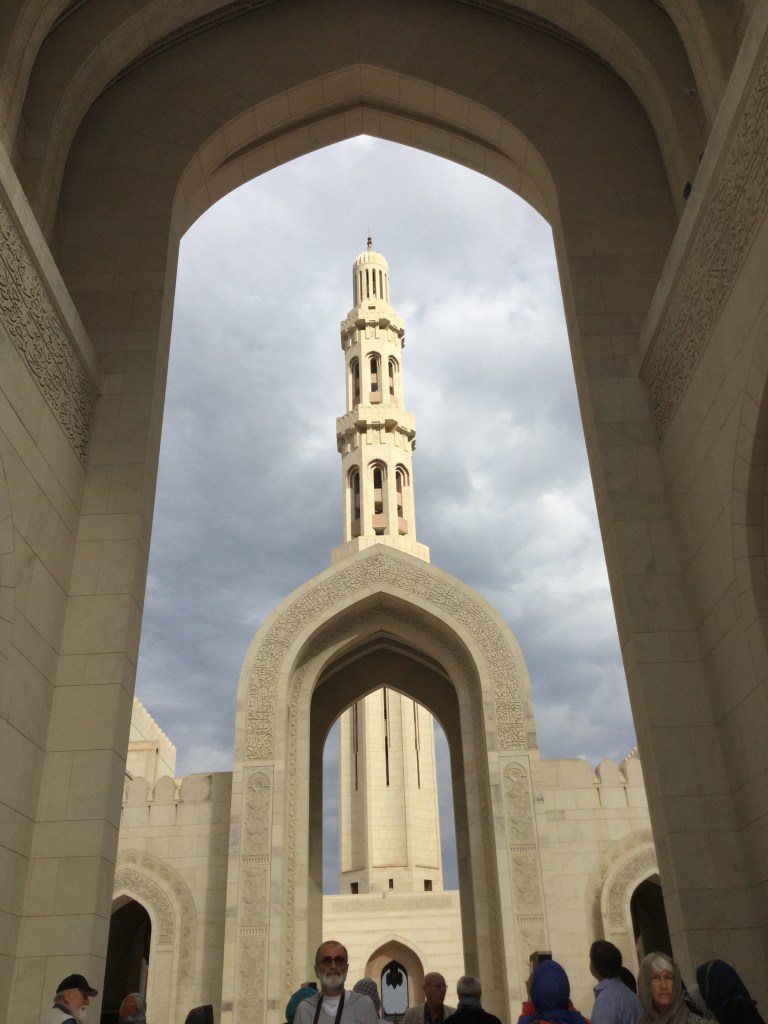
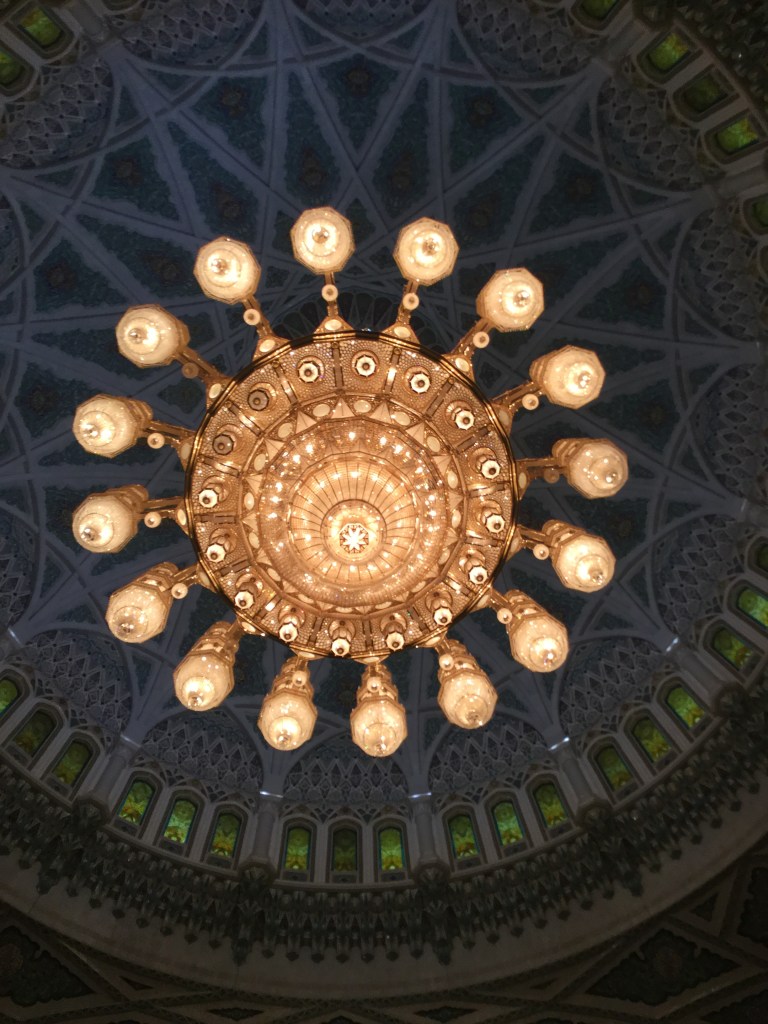
When in Muscat, a visit to the Grand Mosque is a must, which was completed in 2001. This stunning modern mosque is home to the world’s second-largest carpet and features breathtaking interiors, including massive 14 meter tall chandeliers and intricate wood and ceramic work. The serene courtyard, with its manicured gardens and reflective pools, offers a tranquil space for contemplation. The mosque is meticulously maintained, and visits are allowed only in the mornings, outside of prayer times only. A certain dress code is also required so please obey the cultural norms.

Other points of interest include the Mutrah Souk and its promenade, ideal for souvenir shopping. Additionally, consider visiting the Royal Opera House, a symbol of Omani culture and heritage. The Al Alam Palace, with its unique architecture and stunning gardens, is another iconic site. 

The Second Trip

The second trip was a shorter stay, just four days in Muscat, with planned day trips to the wadi and the desert. However, as soon as we arrived, I was struck with a 103-degree fever and ended up bedridden for nearly three days. Thanks to the swift care from the hotel’s doctor, I recovered quickly—a big shout out to the Shangri-La for their excellent service. Despite the rocky start, we still managed to explore the major sites, and while nothing particularly new happened, the trip was another peaceful and serene experience, reaffirming Muscat’s unique charm.

From the rugged mountains and serene wadis to the vast deserts and vibrant capital of Muscat, each experience left a lasting impression. Even with the unexpected challenges of my second trip, the warmth of Omani hospitality and the stunning landscapes made every moment worthwhile. Oman is more than just a destination; it’s a place that invites you to explore, unwind, and connect with its deep-rooted traditions and breathtaking scenery.

Kenya 2.0

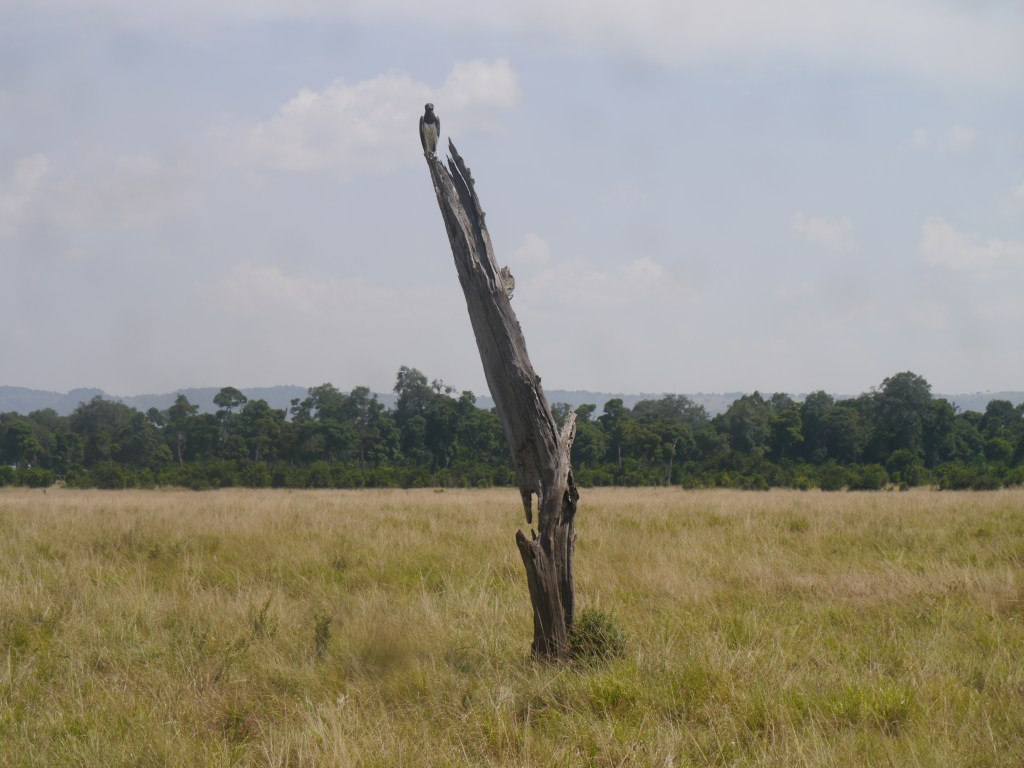
Nestled in the heart of Kenya, the Maasai Mara is a wildlife haven renowned for its breathtaking landscapes and extraordinary wildlife. This iconic safari destination offers a unique blend of vibrant Maasai culture and unparalleled game viewing, making it a must-visit for any nature enthusiast. From witnessing the Great Migration to enjoying close encounters with the Big Five, our journey to the Maasai Mara was a captivating adventure that left us in awe of nature’s wonders. 

Tips for Visiting Maasai Mara

Weather

The Maasai Mara experiences warm days and cool nights, with early mornings and late evenings being particularly chilly. The best time to visit is during the dry seasons from July to October for the Great Migration, and December to February for excellent game viewing. Be prepared for rain and potentially muddy conditions if you visit during the rainy seasons (April-May and November).

Clothing

Pack layered clothing for temperature variations, with lightweight shirts and pants for the day, and warmer jackets and sweaters for cooler times. Neutral-colored clothing like khaki, beige, and olive is best to blend in and avoid attracting insects. Sturdy, comfortable shoes are essential for walking safaris and exploring around the camp, and don’t forget sun protection such as a wide-brimmed hat, sunglasses, and sunscreen.

Safari

Bring good-quality binoculars and a camera with a zoom lens for wildlife viewing. Avoid making loud noises or sudden movements, and carry essentials like water, snacks, and a light jacket. A small first aid kit can also be handy.

General

Ensure you have necessary vaccinations and consider anti-malaria medication as recommended by your doctor. The local currency is the Kenyan Shilling (KES), and while credit cards are widely accepted, having some cash for tips and small purchases is useful. Stay within designated areas of the camp, especially at night, and use a flashlight to be aware of your surroundings. Respect the Maasai culture and traditions; ask for permission before taking photographs and be mindful of local customs.

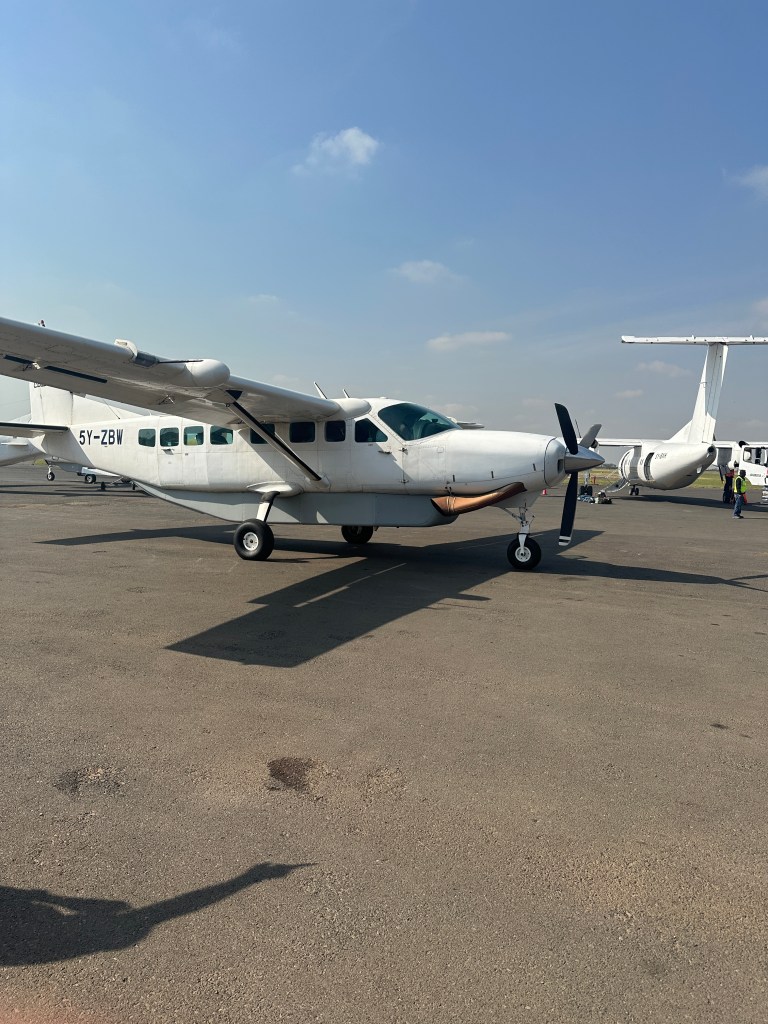
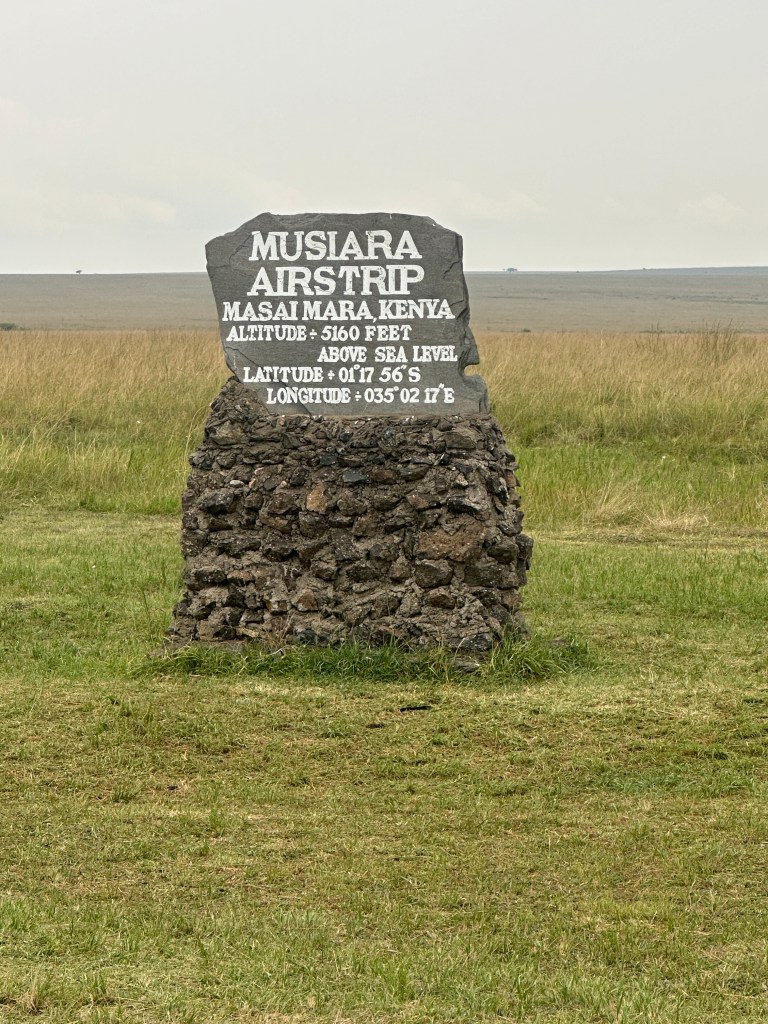
Our trip began with a flight from Mumbai to Nairobi via Kenya Airways. Upon landing in Nairobi at 6:15 am, the weather was pleasantly cool with a refreshing breeze that required us to wear light jackets. From there, we headed to Wilson Airport for our Safarilink flight to Musiara Airstrip in the Maasai Mara. Note that the regulations are strict: you’re allowed 15kg combined for hand and check-in luggage, and hard-top bags are not permitted.

We enjoyed some local coffee at Spring Valley Coffee in the airport, which was incredible, so much so that I bought some beans to brew at home. We also had avocado toast and some pastries.

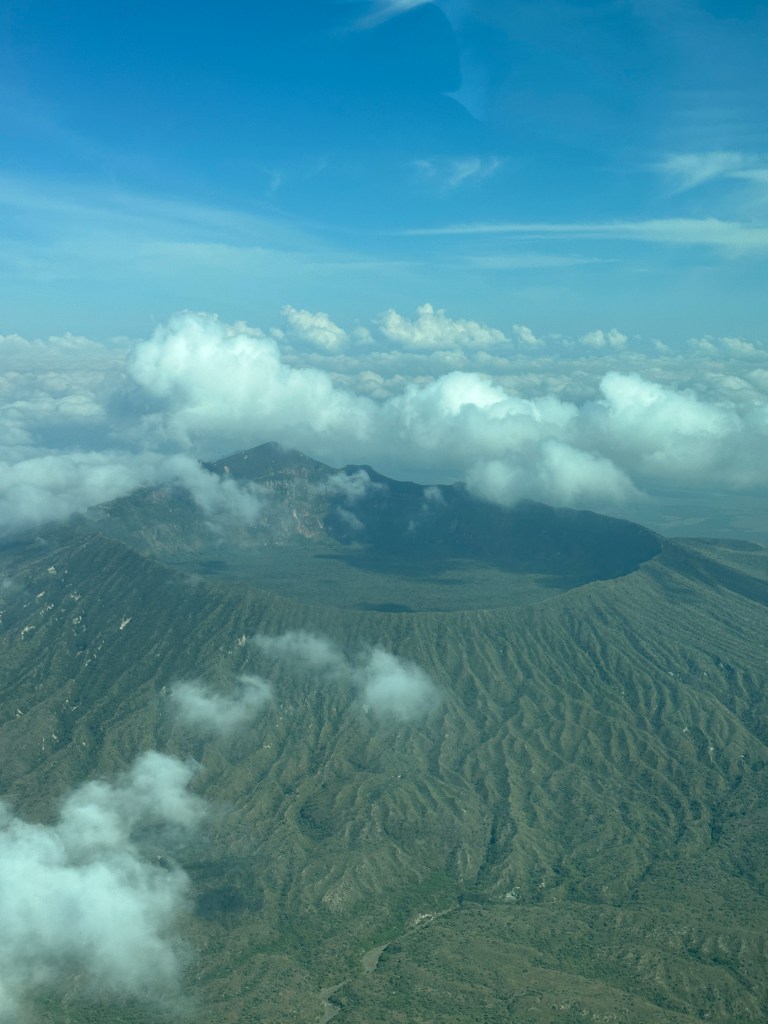
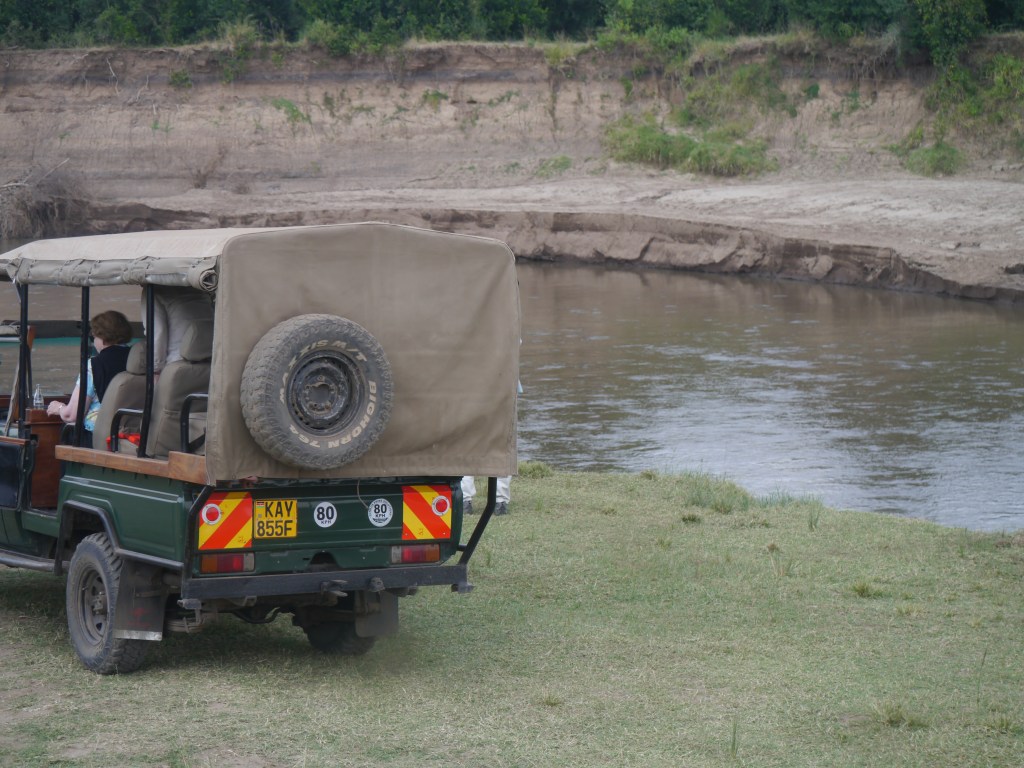
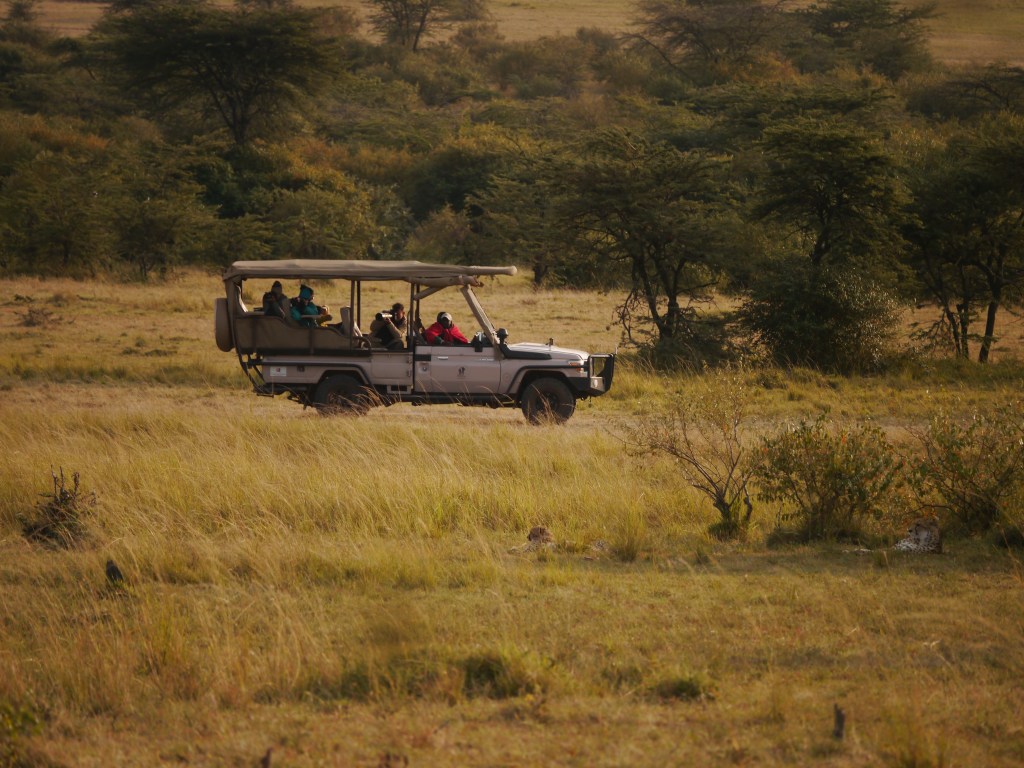
The flight took a scenic route with three stops, each providing glimpses of the diverse Kenyan landscape, from rolling savannahs to patchwork fields, before finally reaching our destination. As we landed at Musiara Airstrip, the excitement was palpable. Our jeep was ready and waiting, and we immediately set off on our first game drive.

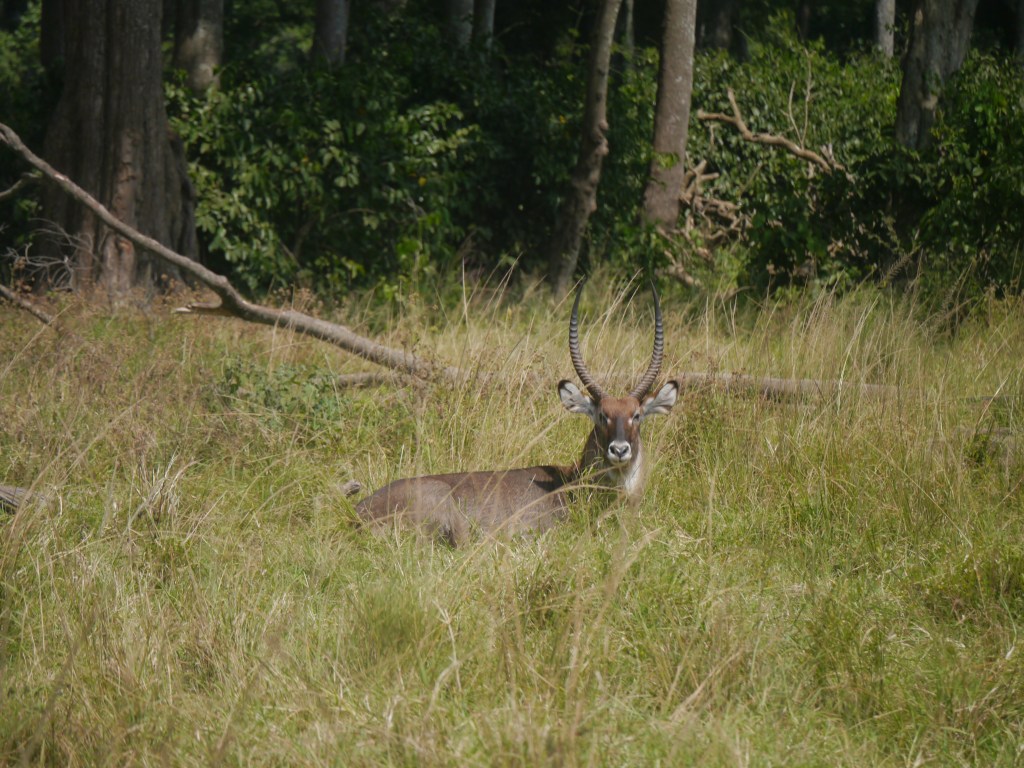
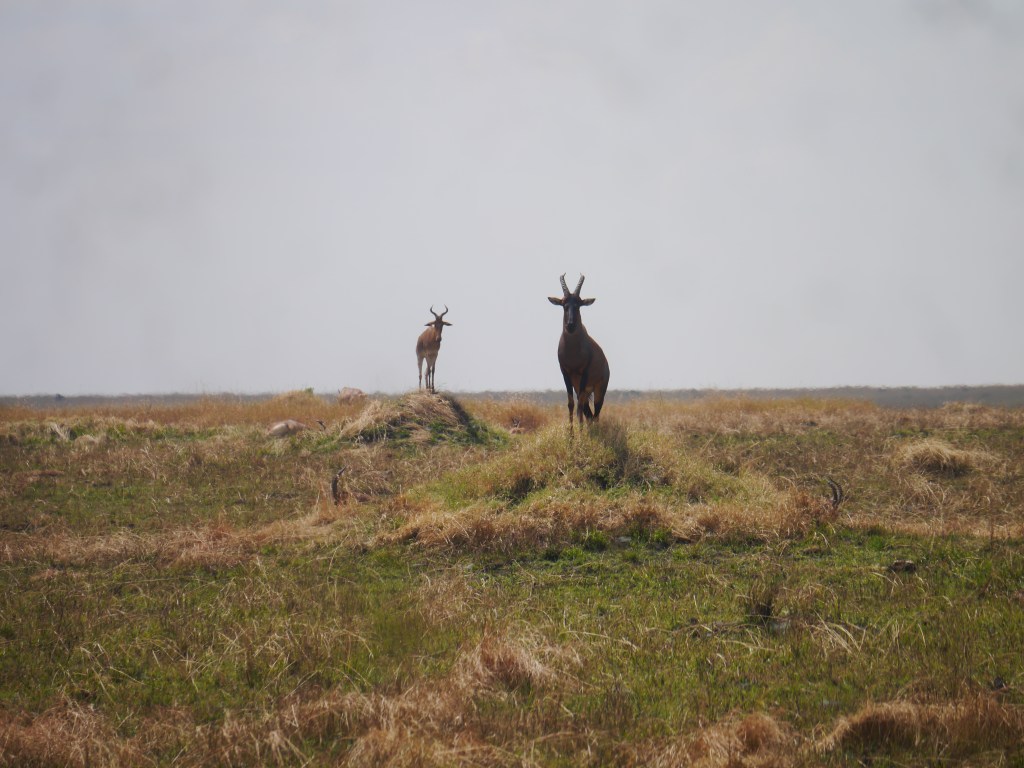
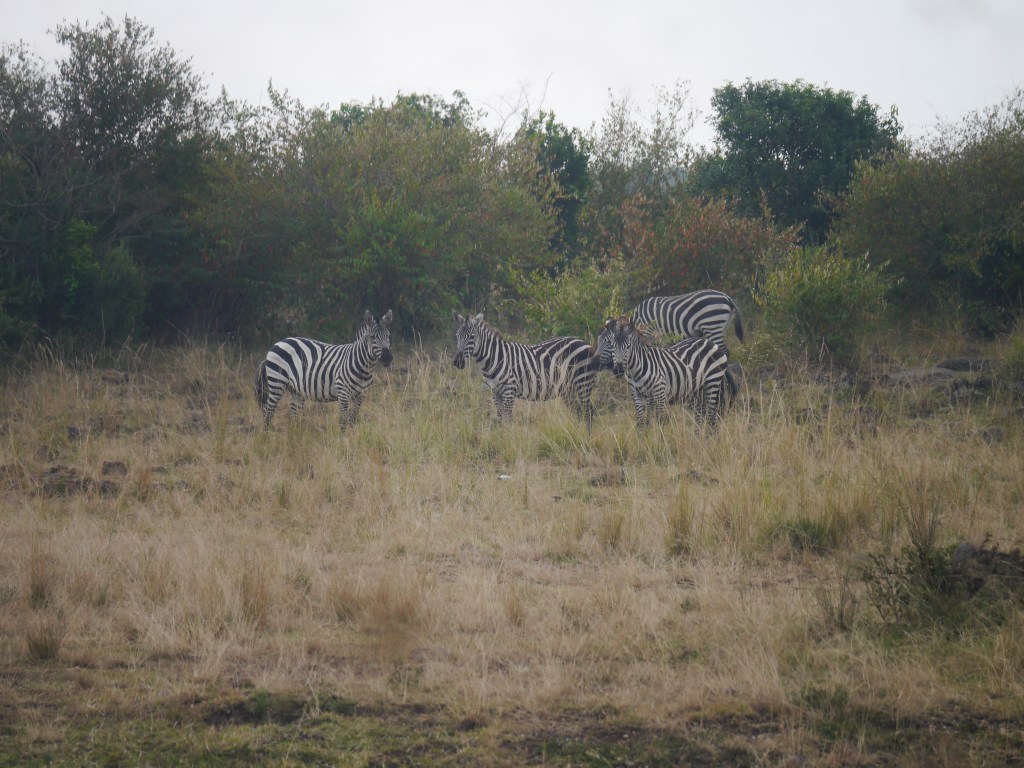
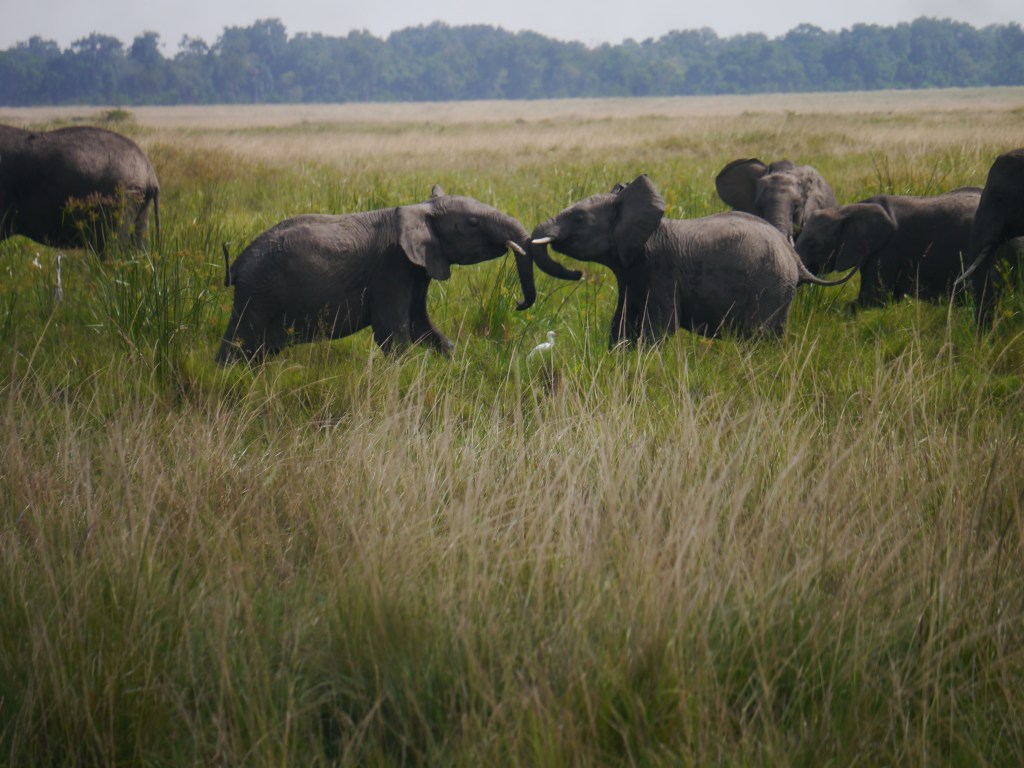
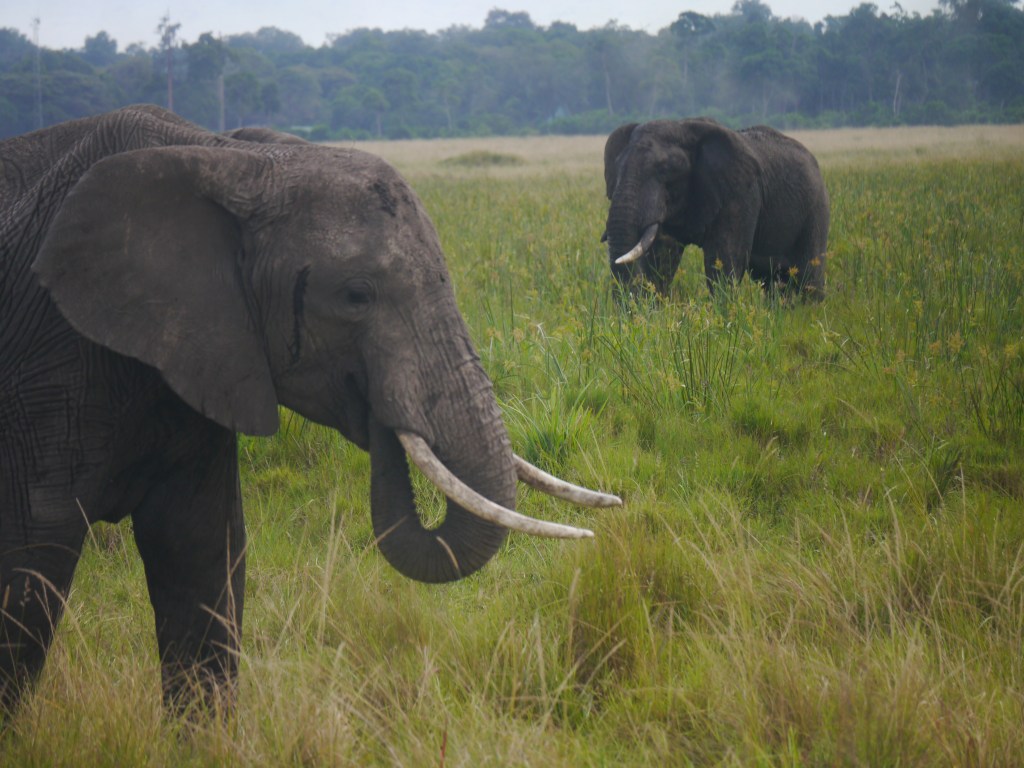
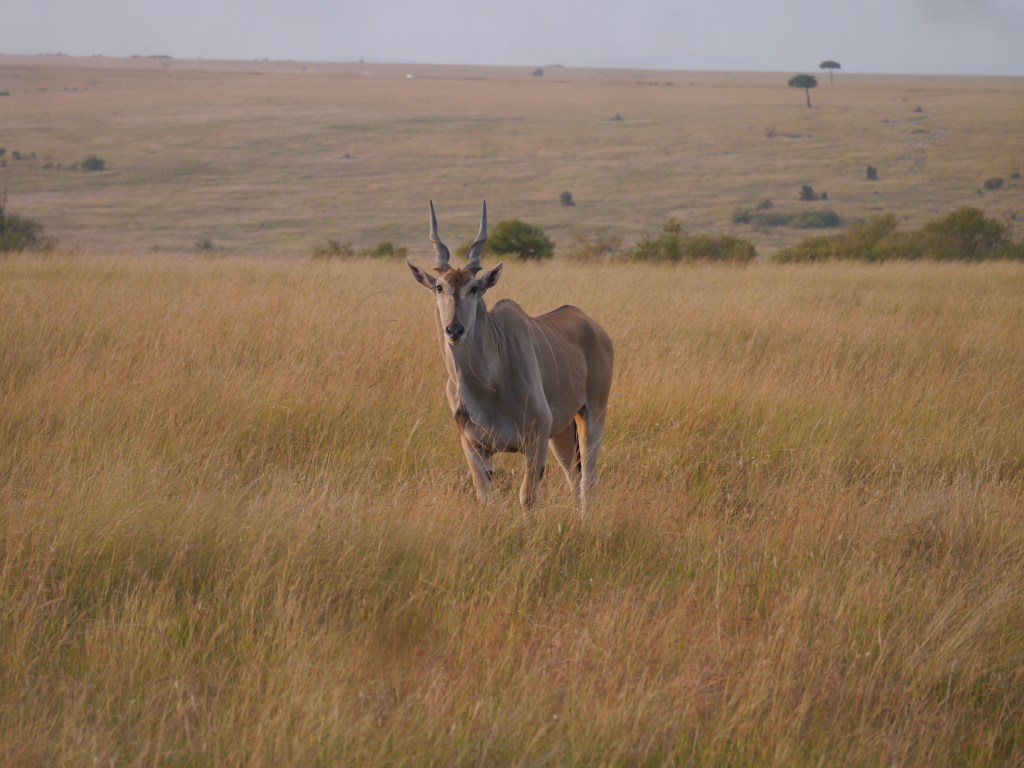
As we ventured into the heart of the Maasai Mara, the landscape came alive with wildlife. Brilliantly striped zebras grazed on the lush grasses, their black and white stripes standing out vividly against the green backdrop. A short drive further and we encountered a majestic herd of over 25 elephants. It was a spectacle of nature—some elephants were busy playing, their trunks entwined in a tussle, while others were peacefully grazing. A few younger ones were energetically running around, adding a lively atmosphere to the scene. Giraffes ambled in the distance, their long necks reaching for the highest leaves on the acacia trees. Hippos lounged in the water, their large bodies partially submerged, occasionally surfacing to take a breath as well. 

We paused for lunch in the jeep, enjoying fresh salads and refreshing drinks. The simplicity of the meal was perfect, allowing us to focus on the breathtaking surroundings. The game drive continued, and we were constantly amazed by the variety and abundance of wildlife.

After an exhilarating and tiring 4-hour game drive, we made our way to our camp. Our camp, Speke’s Camp, is a small and intimate camp located in the Musiara region of the Mara. The camp has 10 tents, each with security, a jeep, driver, spotter, and an assistant. While the jeeps were a bit run-down compared to others we saw on the road, the tents were spacious and luxurious. The service was amazing, and the food was decent, but the main issue was the bathroom. There was no running water for the sink, shower, or toilet; we had to request water to be brought, which was a bit annoying. At night, venturing out alone is not advised, which is normal in the Mara.

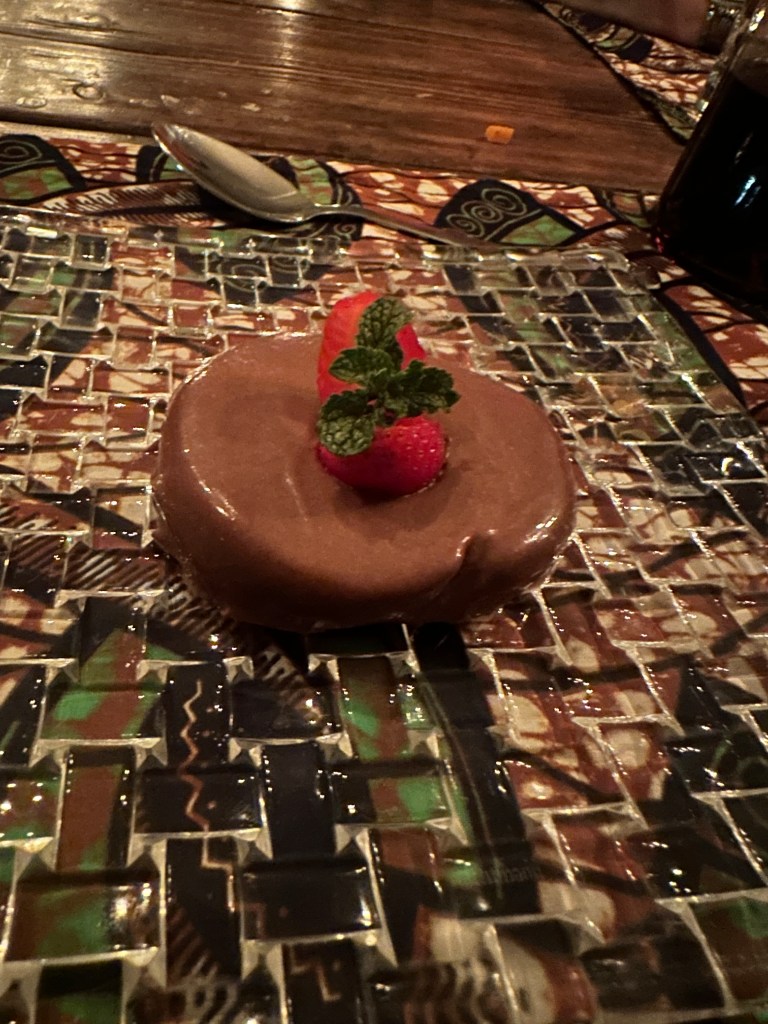
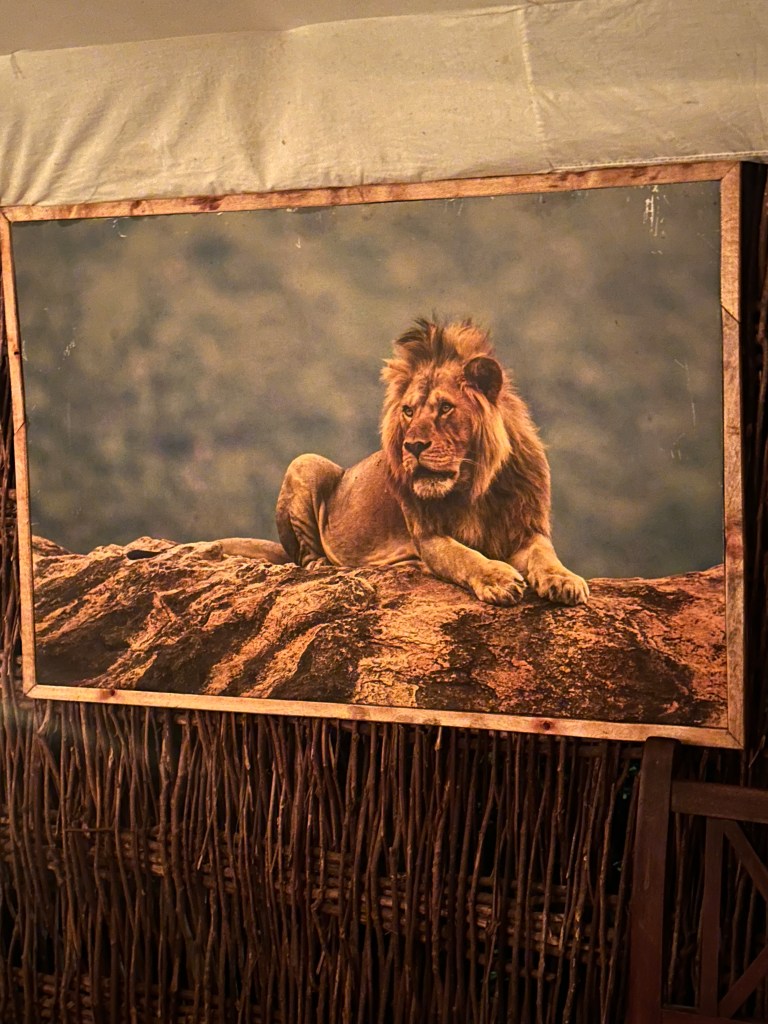
For dinner, we headed to the mess, beautifully decorated with antiques and local pieces. I loved the decor. The food was a three-course meal consisting of onion soup, curry with homemade bread, and a delicious chocolate mousse that was vegan and incredibly tasty.

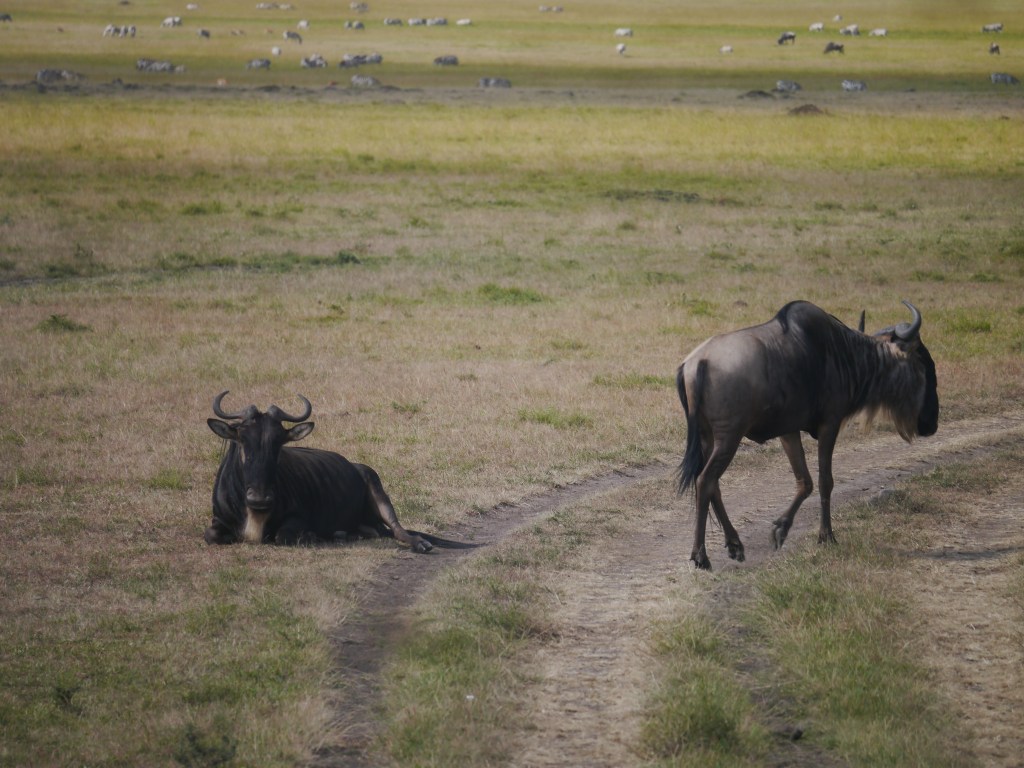
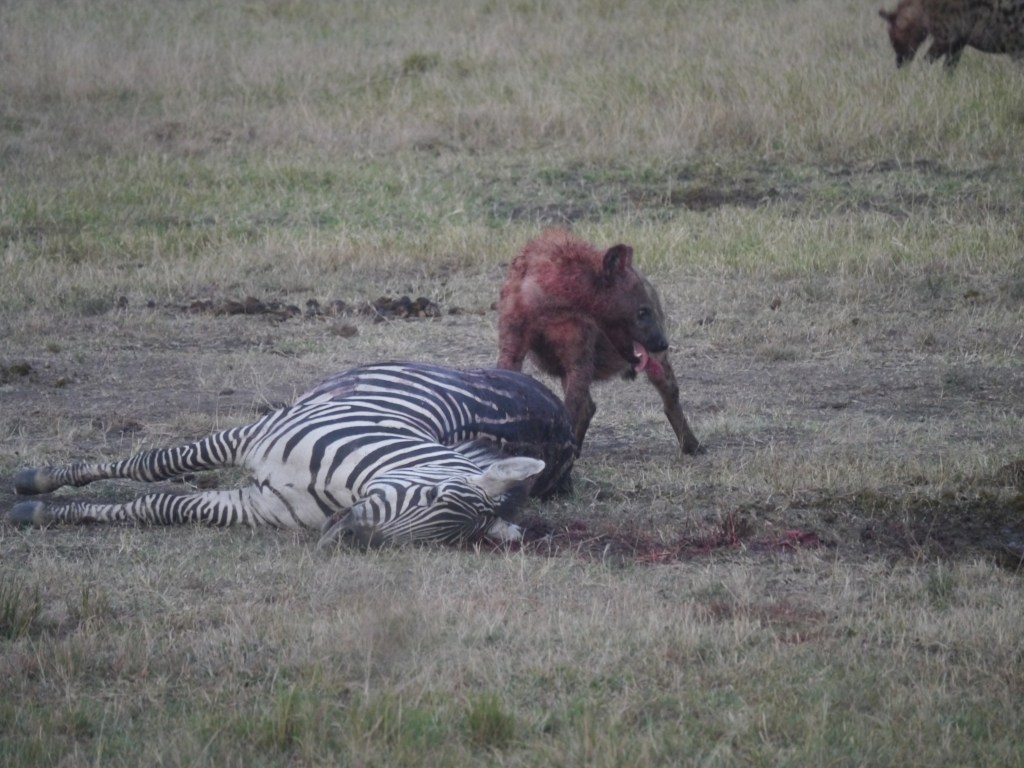
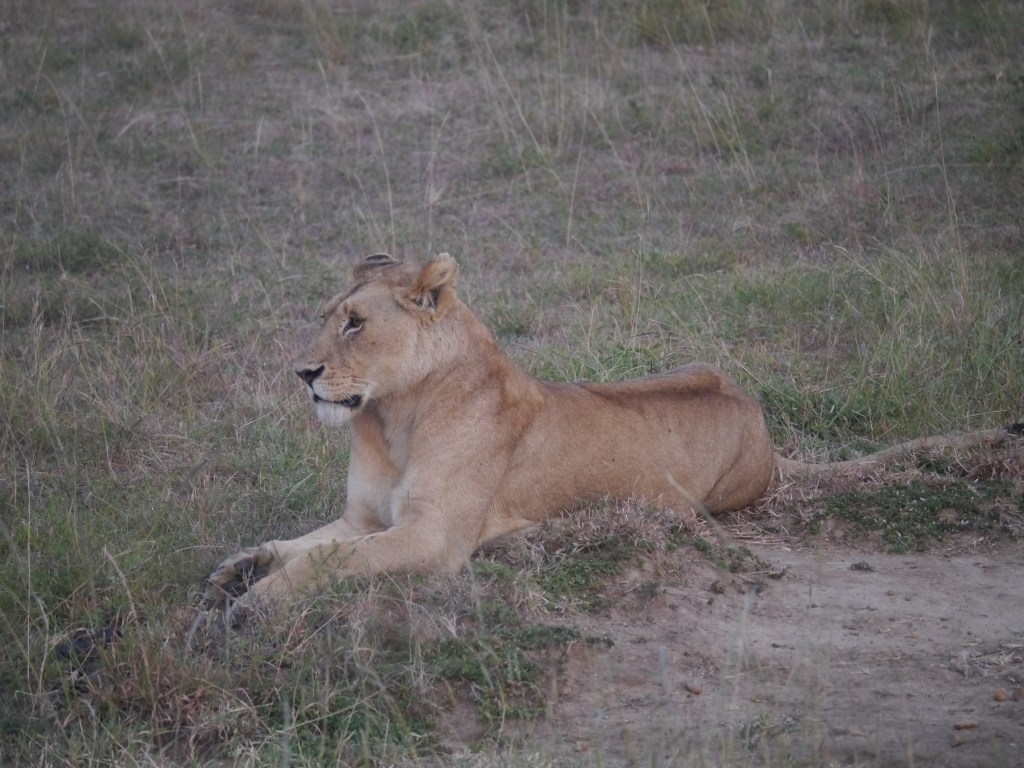
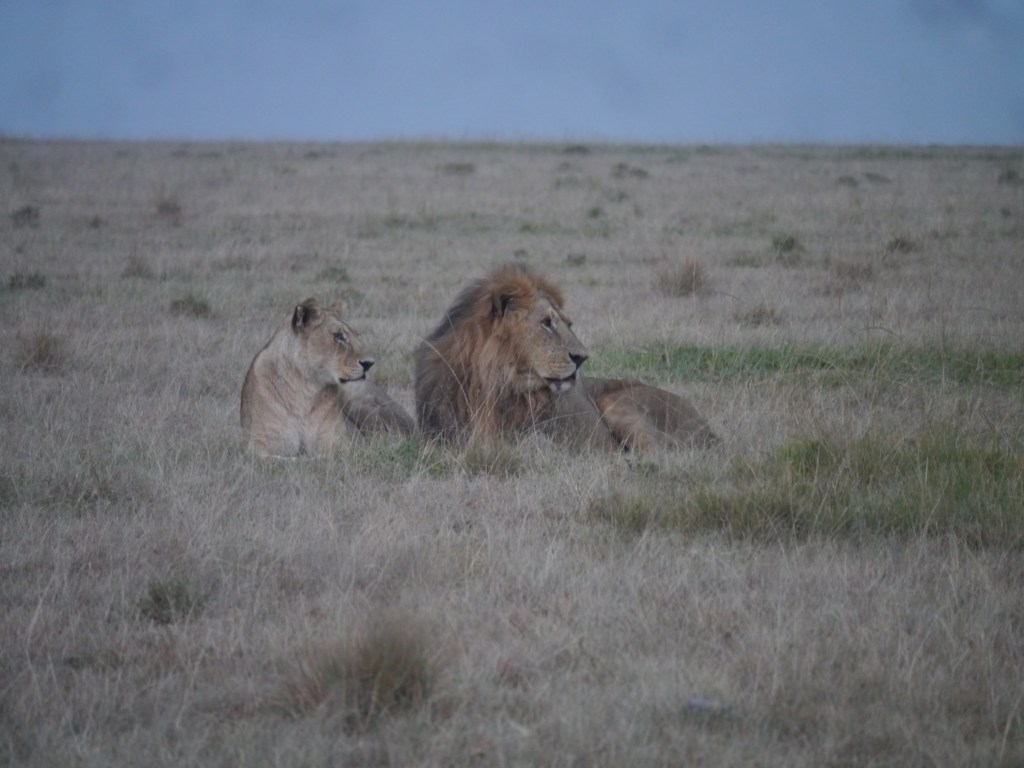
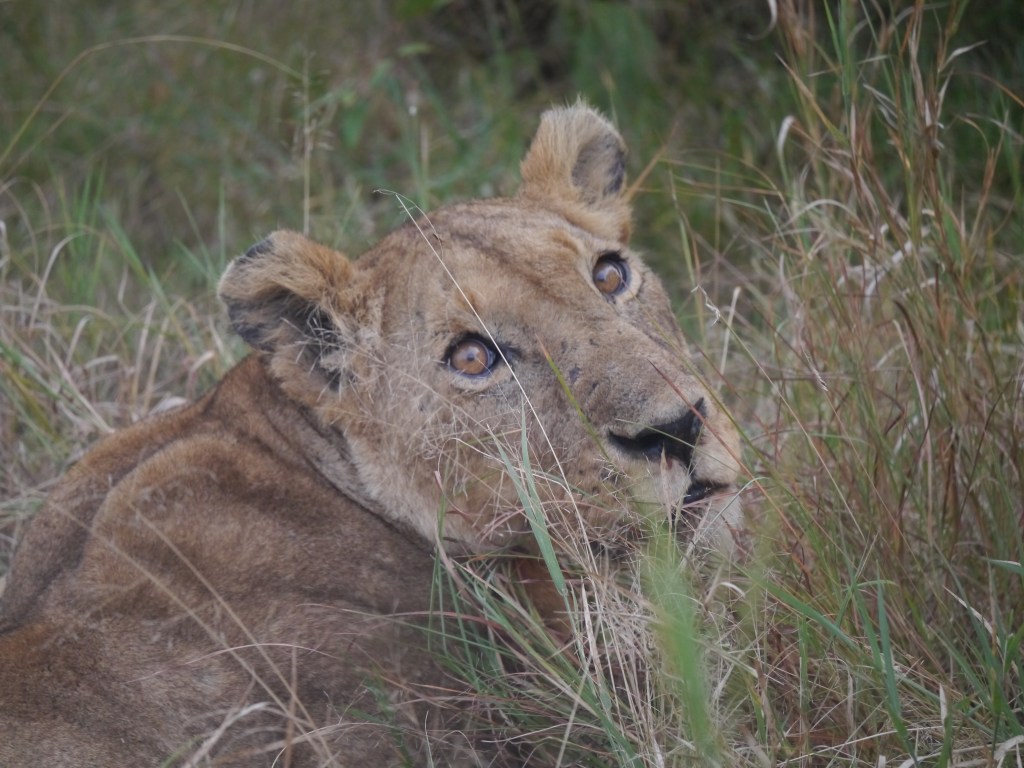
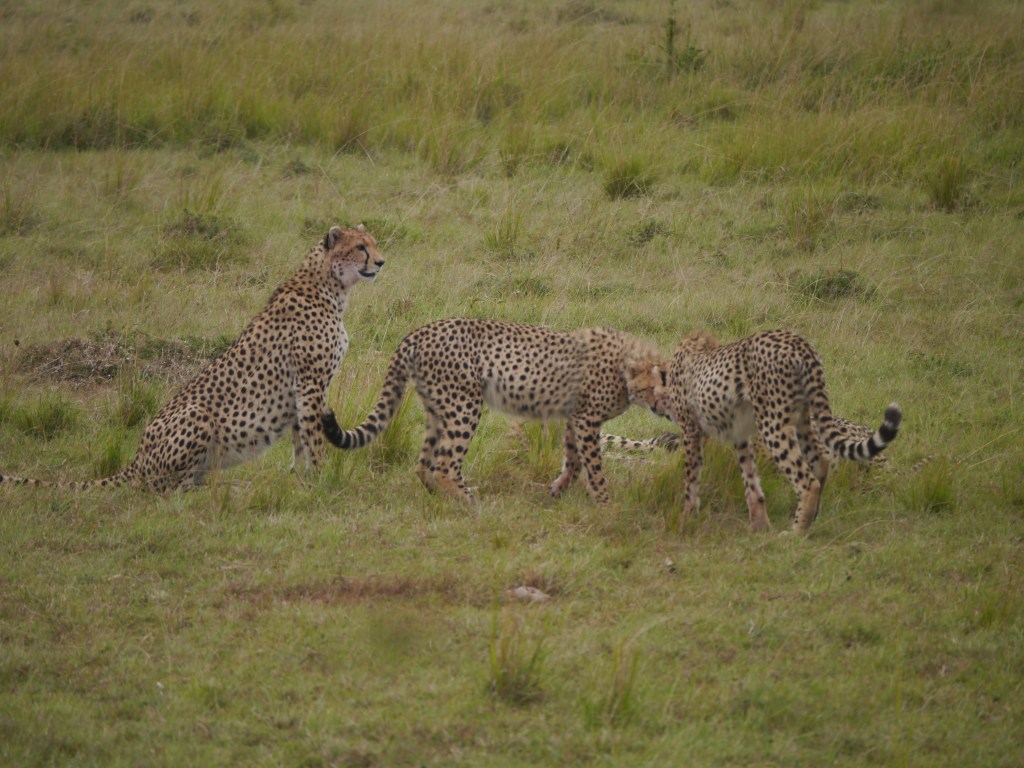
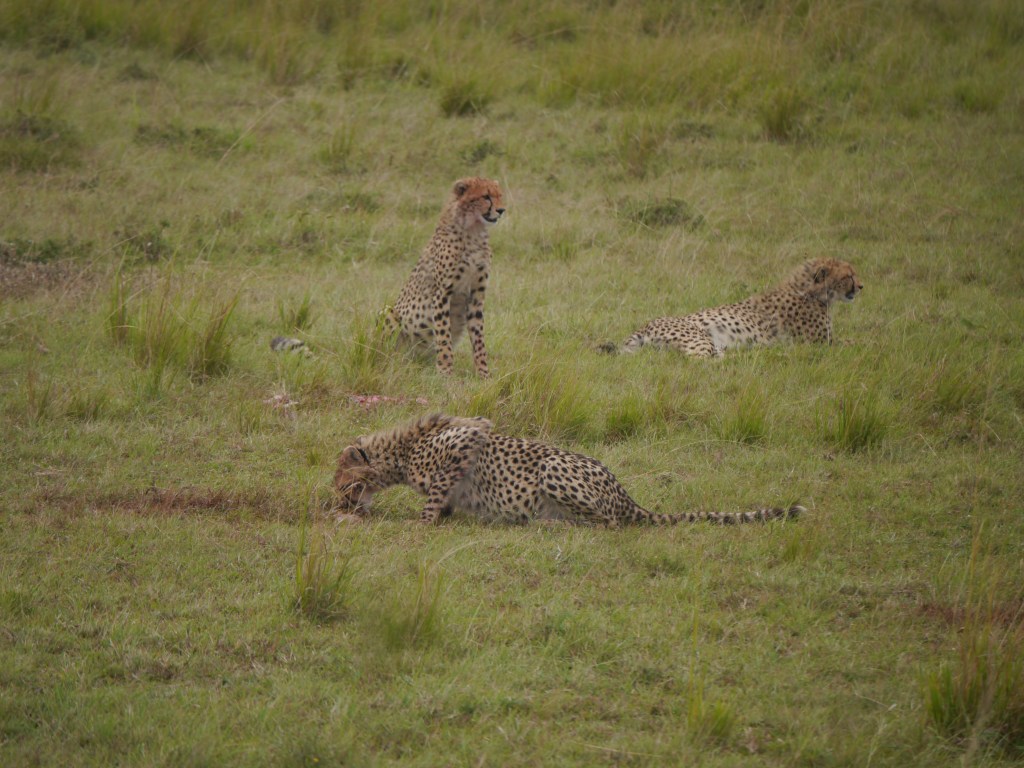
The second day began early with a 6 am game drive. The early start was rewarded with an incredible array of wildlife. We spotted hyenas feasting on a zebra, a sight both brutal and fascinating. Not far from there, a small pride of lions lounged lazily on dry grass. Further along, we encountered a family of cheetahs with their playful cubs, as the cubs tumbled and chased each other. We also saw herds of wildebeest grazing peacefully. The numbers were not much as the migration had not yet began. 

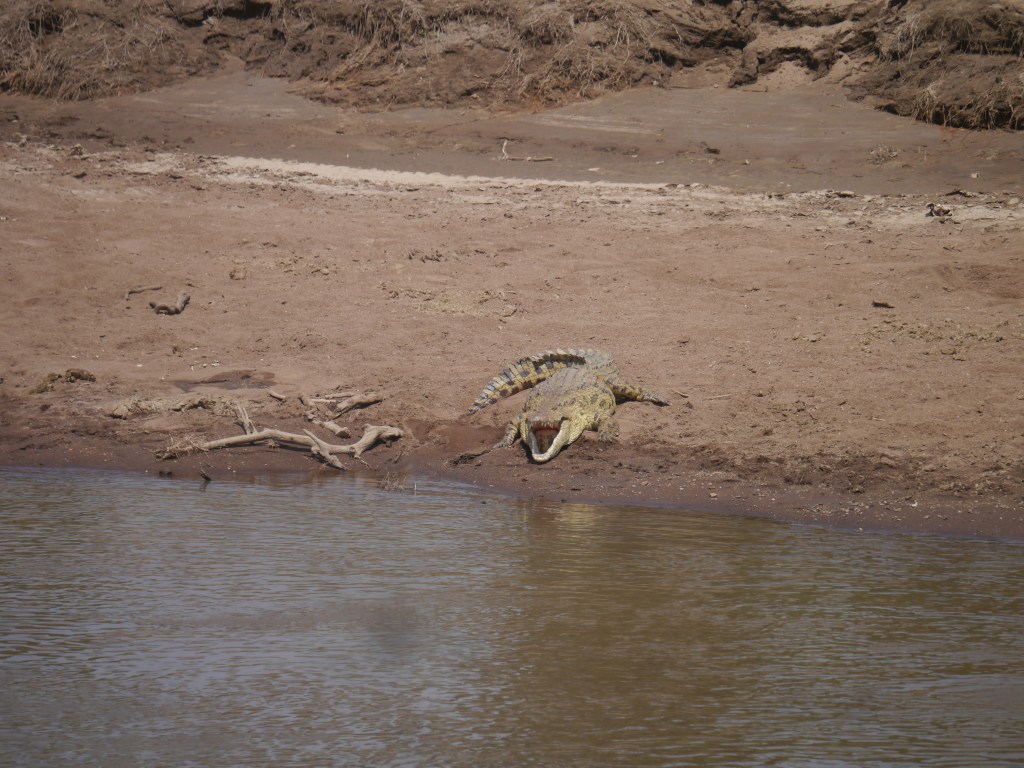
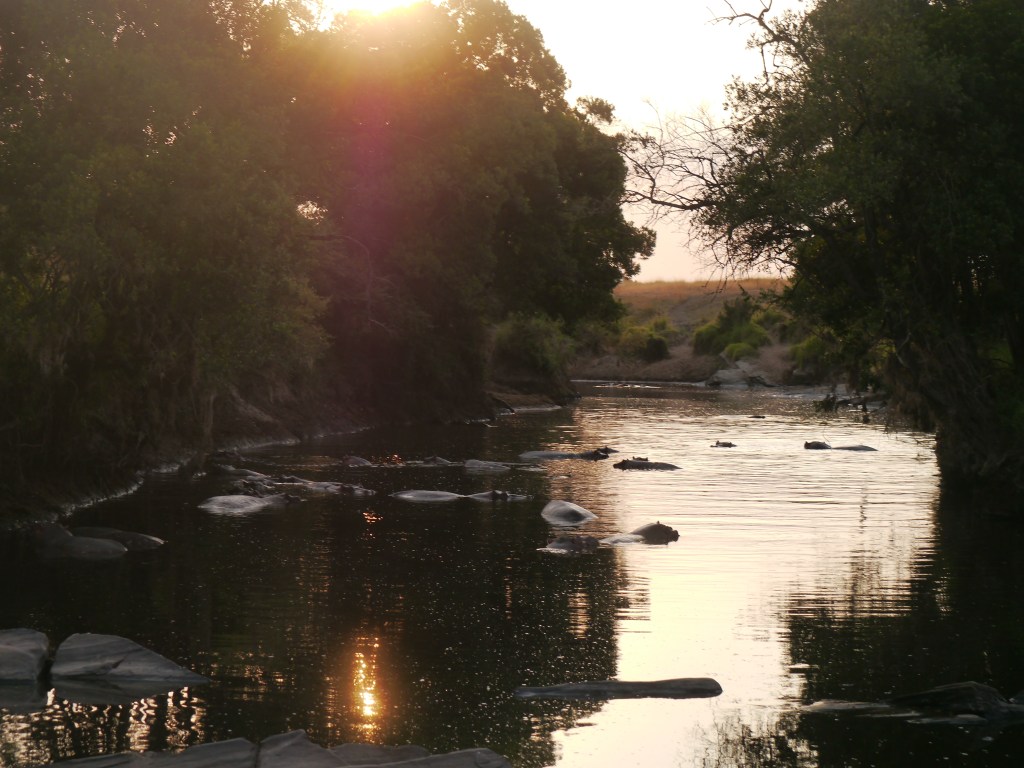
Breakfast was a mid-drive treat by the Mara River, where we watched crocodiles sunning themselves on the banks, alligators lurking just beneath the surface, and hippos wallowing in the water, occasionally surfacing with a snort or a yawn.

We returned to camp for lunch, which was a delightful “make your own taco” setup. After a heavy meal, a siesta was in order before we ventured out for the afternoon safari. This time, we encountered more lions, this time observing a pair of them mating, a rare and fascinating sight.It was a sight that underscored the primal and natural cycles of life in the Mara.Buffaloes roamed the plains, their massive horns and sturdy bodies making them one of the Mara’s most formidable creatures.

For dinner, we shared a meal and some fun conversations with a lovely Pakistani couple we met at the camp. The shared stories added a personal touch to our safari experience.

The next day followed a similar routine, which felt like living in sync with the rhythms of the wild. We left at 6 am and were once again greeted by the majestic lions. We also saw cheetahs enjoying their fresh kill, with vultures circling overhead, waiting for their turn to feast. The sight of vultures tearing apart a zebra was surreal, highlighting the harsh realities of the food chain.

Lunch brought us back to camp for another hearty meal, followed by an afternoon game drive where we saw similar wildlife but were no less amazed. The consistency and abundance of wildlife sightings were truly impressive.

In the evening, I spent a few hours in the WiFi tent, catching up on messages and sharing some of our incredible experiences with friends and family. This was a relaxing way to end our last full day in the Mara.

Other Properties in Maasai Mara

• Mara Explorer Camp

• Mara Intrepid

• Serena Safari Lodge

• Governors’ Camp

• Sand River Camp Elewana

• Mara Enkewa Camp

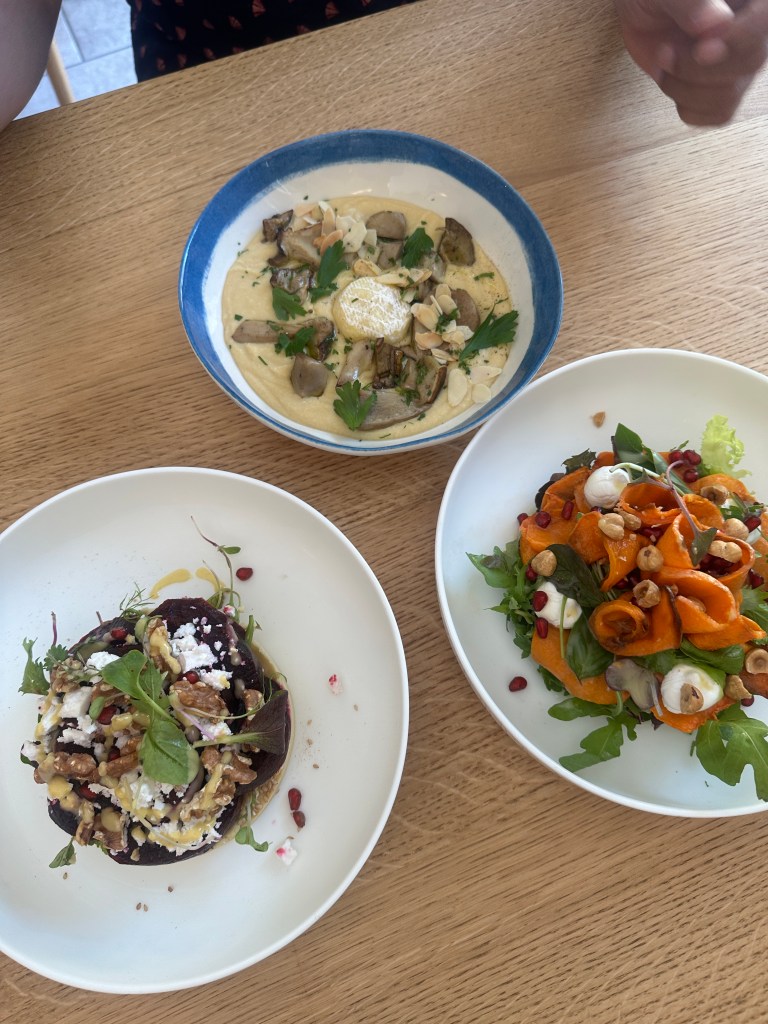
The next day, we left the Maasai Mara on an 11 am flight to Nairobi. After landing at Wilson Airport, we headed to Cultiva for lunch. Cultiva was amazing, using local ingredients in an incredible atmosphere. We enjoyed carrots made in three sauces, beetroot and blue cheese salad, corn on the cob, burrata, and delicious drinks.

Following lunch, we visited Utamaduni Craft Centre, where we bought local items like coffee and handicrafts. Although we skipped it, you could also visit the Giraffe Center and the Karen Blixen Museum. We saw local buildings and parliament along the way before arriving at our hotel, JW Marriott. Other hotels to consider are Kempinski, Four Points by Sheraton, Serena, Fairmont, and Sankara.

The JW Marriott, a new property opened two months ago, is expansive and brilliant, though the service needs improvement. The facilities are top-notch, and the rooms are very nice. For dinner, we went to Mughal, the Indian restaurant in the hotel. The food was excellent, but the service was terrible and slow. Other restaurant recommendations include Jiko and Thai Chi by Sarova.

This ended our time in Nairobi as we flew out the next morning.

Kenya offers a wealth of attractions beyond the Maasai Mara. Lake Nakuru, renowned for its stunning pink flamingos, rhinos and diverse birdlife, provides a picturesque setting for bird watchers and nature lovers. Mombasa, with its pristine beaches and rich Swahili culture, offers a vibrant coastal experience, complete with historic sites like Fort Jesus and bustling markets. For more wildlife adventures, consider visiting other game reserves such as Amboseli National Park, where you can see large herds of elephants against the backdrop of Mount Kilimanjaro, or Samburu National Reserve, known for its unique wildlife species like the Grevy’s zebra and reticulated giraffe. The lush landscapes of Aberdare National Park and the scenic beauty of Mount Kenya, Africa’s second-highest peak, also provide excellent opportunities for hiking and exploring Kenya’s diverse ecosystems.

Seychelles

Seychelles is a breathtaking African archipelago in the Indian Ocean, known for its stunning beaches, coral reefs, nature reserves, and rare wildlife. The main island, Mahé, boasts lush tropical forests, beautiful landscapes, and an inviting, laid-back atmosphere.

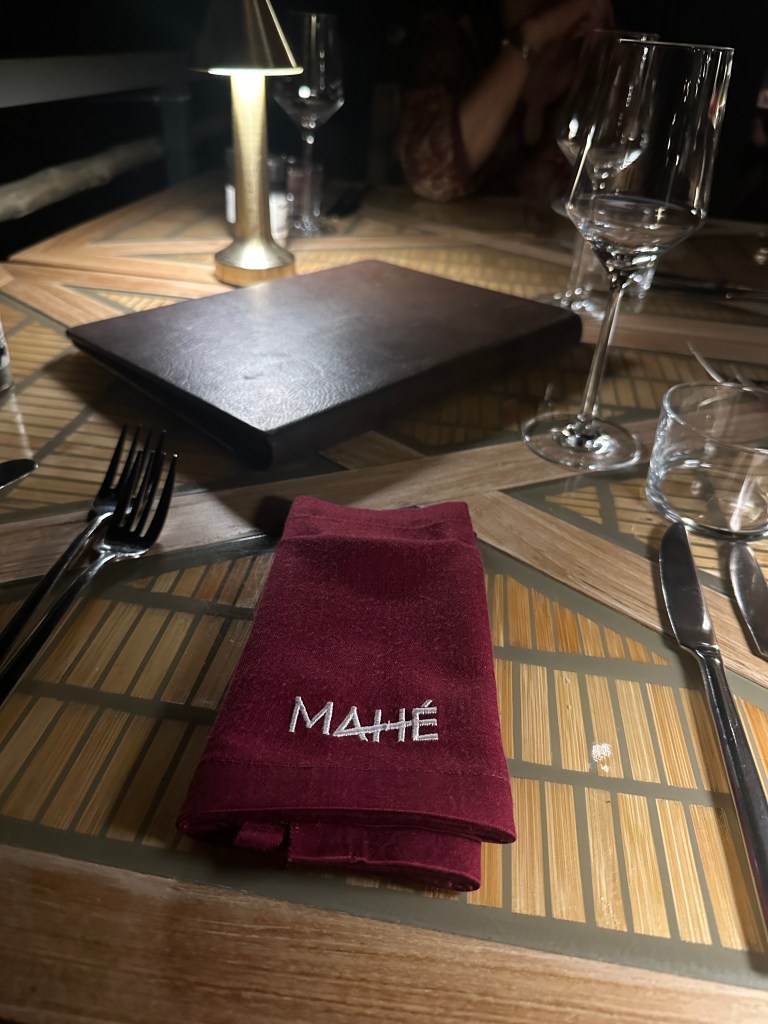
Our journey to Seychelles began with a flight from Nairobi to Mahé. The local airport welcomed us with its charm, setting the tone for our stay. Mahé island itself felt like stepping into a postcard. Just 30 minutes from the airport, we arrived at our hotel, STORY, a luxurious yet intimate retreat.

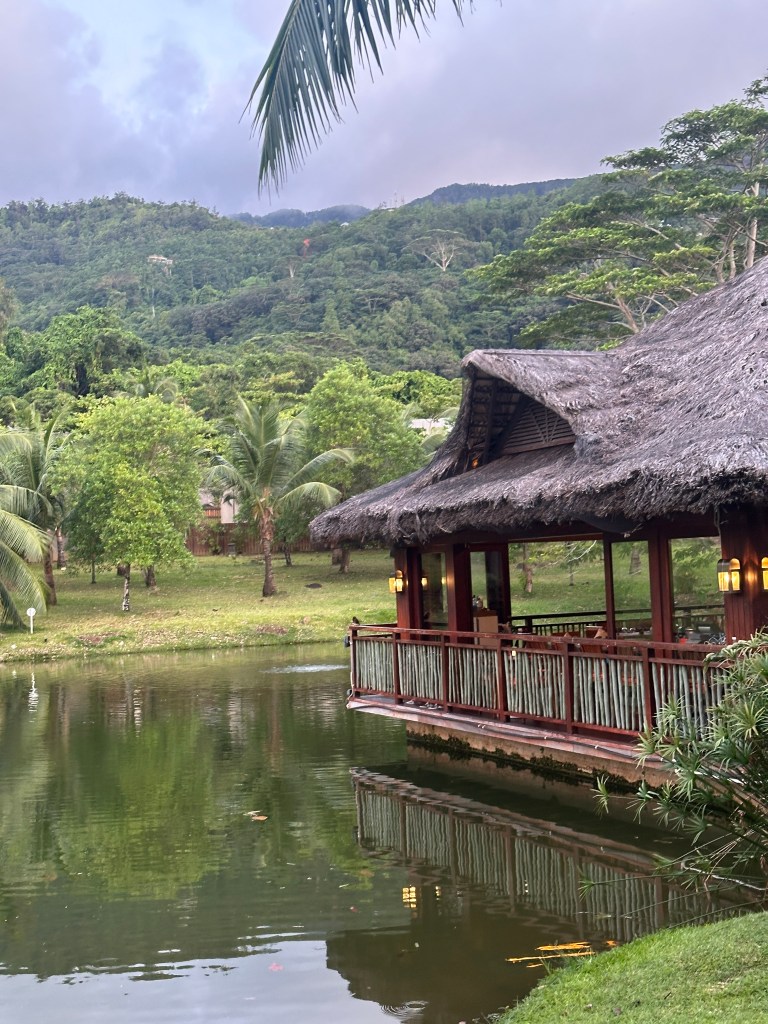
STORY Seychelles is home to six restaurants, a pristine beach, an inviting pool, and a serene lake with fountains, adding to its allure. For dinner, we visited Eden, where we enjoyed a creative spin on a Caesar salad, a grilled wrap, and a flavorful curry with rice. However, dining in Seychelles can be quite expensive, reflecting the country’s intention to maintain exclusivity by limiting tourist numbers.

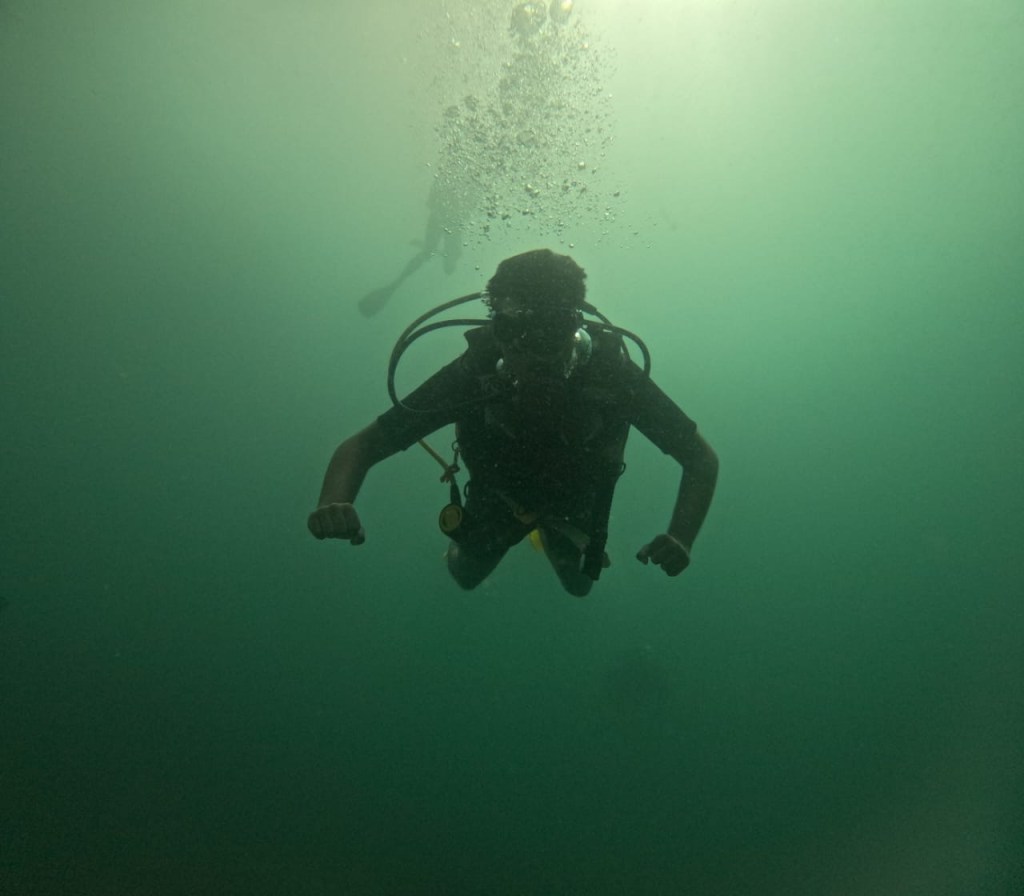
The next day was dedicated to my primary reason for visiting: completing a PADI Open Water Scuba Diving course. The PADI Open Water course is the world’s most popular scuba certification, recognized globally. It includes a combination of knowledge development, confined water dives, and open water dives. This course teaches essential diving skills, safety procedures, and underwater communication techniques. Completing it opens up a world of underwater exploration, allowing you to dive up to 18 meters (60 feet) independently all across the globe.

I registered at a nearby dive center and paid a fee of 515 euros. The first practical session was a confined water dive in the ocean, where I learned essential skills such as hand gestures, underwater communication, and breathing techniques.

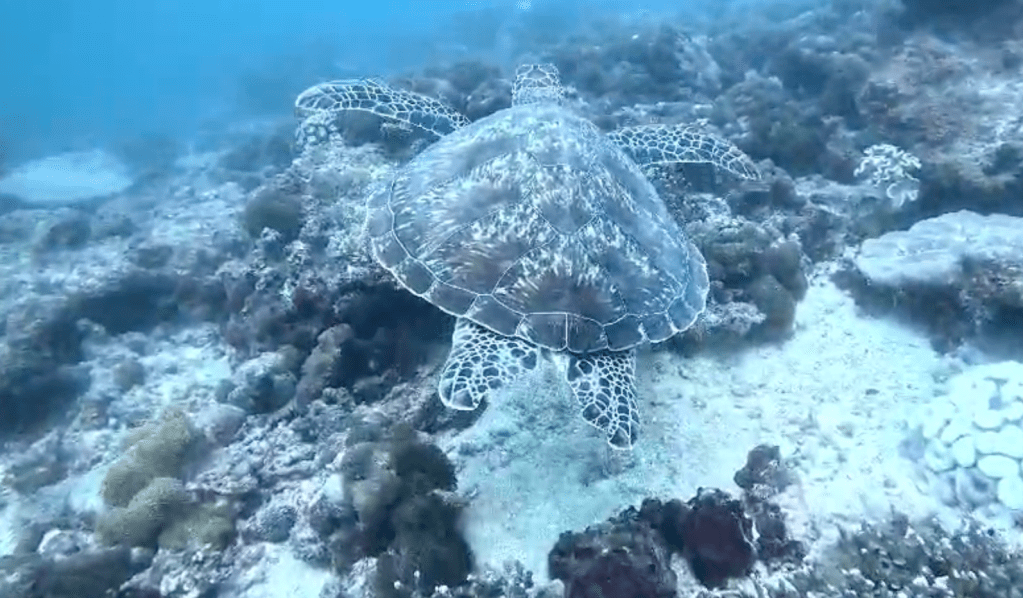
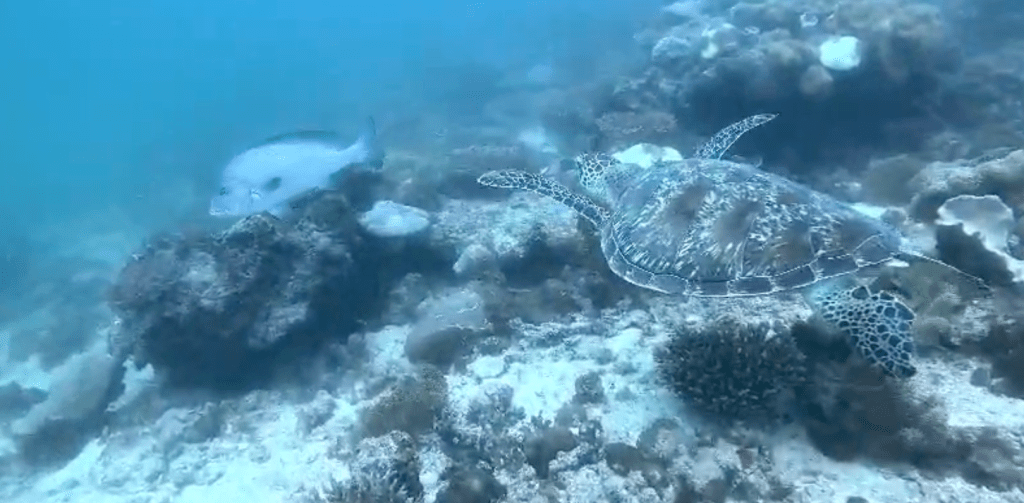
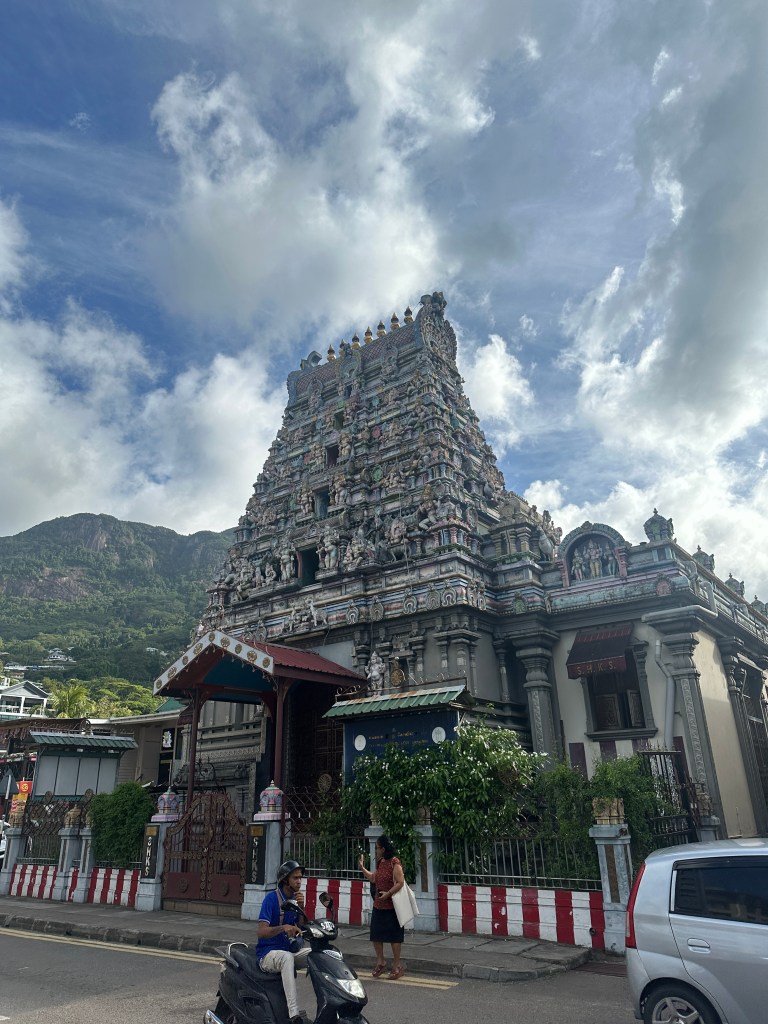
After a brief return to the hotel, I headed to Bel Ombre jetty for my first open water dive. We explored a shipwreck at 18 meters, encountering turtles, jellyfish, reef sharks, eels, stunning corals, and trumpet fish. After two thrilling sessions, we wrapped up the day and spent the evening exploring Victoria Island. Highlights included the famous clock tower, a charming replica of London’s Big Ben, Arul Mihu Navasakthi Vinayagar Temple, and shopping for local coco de mer perfumes, vanilla, and souvenirs at the bustling Sir Selwyn Selwyn-Clarke Market.

Dinner that evening was at STORY’s Japanese restaurant, where we enjoyed delicious hibachi vegetables, salads, sushi, and edamame. The intimate 35-seater restaurant, set on the lake, provided a unique dining experience, albeit at a cost of 50 euros per person.

Our third day started early with breakfast, followed by two dives. The first was a skills training dive focused on emergency procedures and useful techniques. The second dive was purely for fun, exploring a reef with sightings of octopus, starfish, sea urchins, and lionfish.

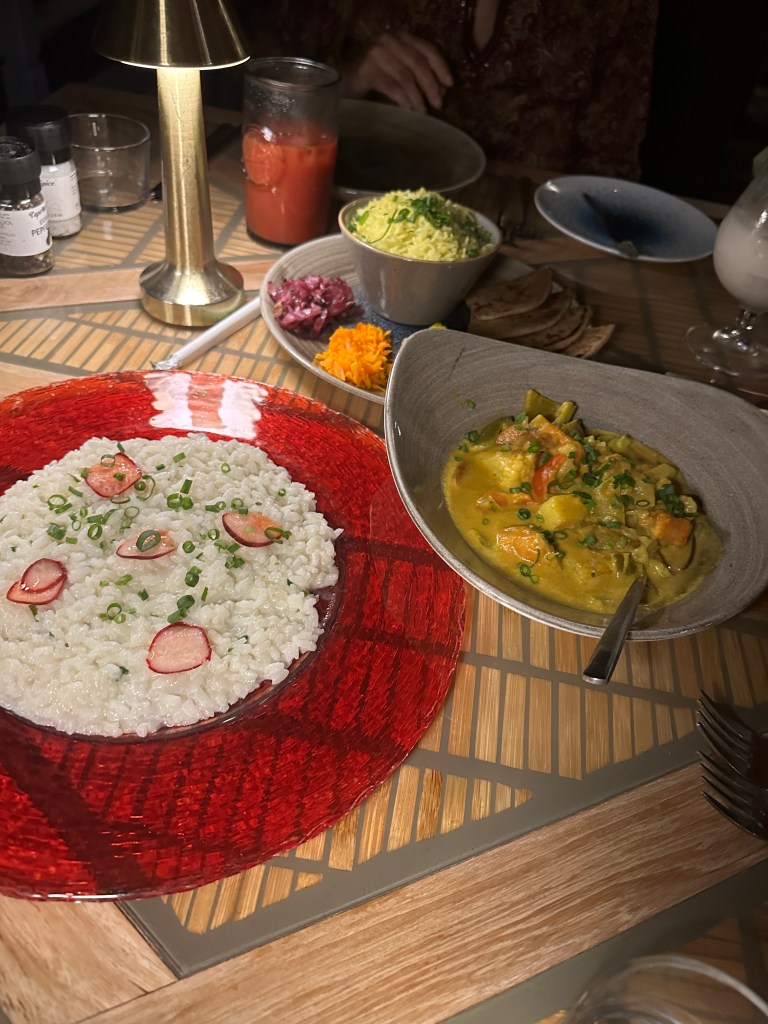
We spent the evening relaxing and later dined at Hilton Northolme’s Mahé restaurant, savoring local Creole cuisine. The standout dish was local creole curry made with local spices and bread made with coconut and breadfruit, paired with a tropical salsa and passion fruit butter.

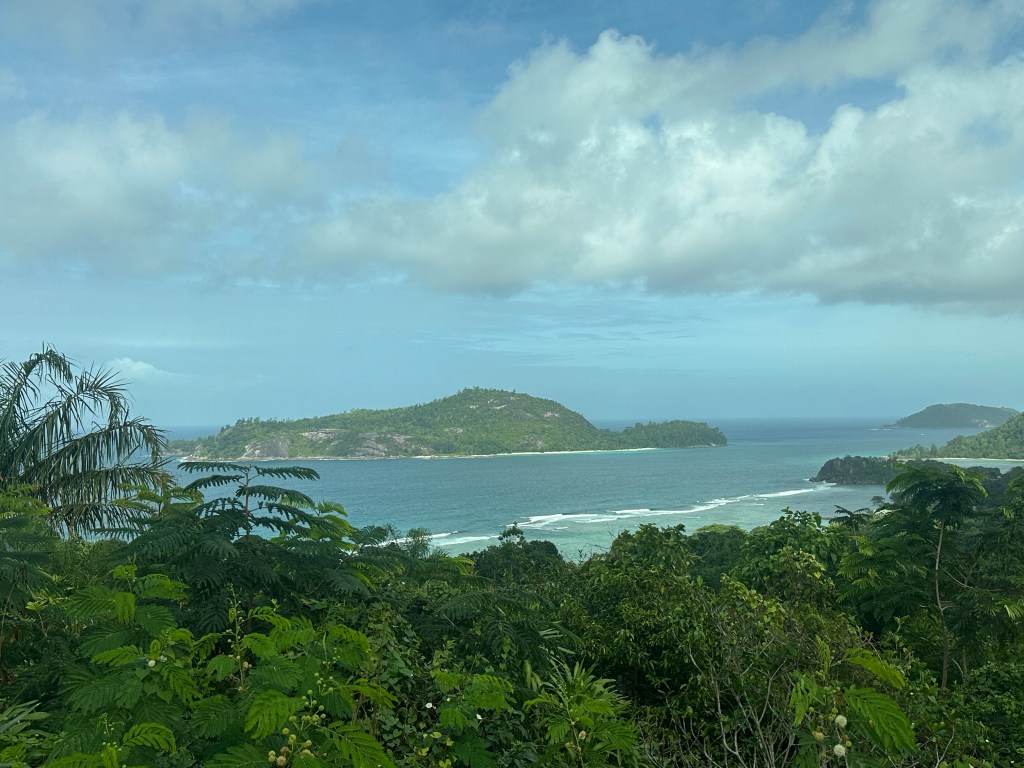
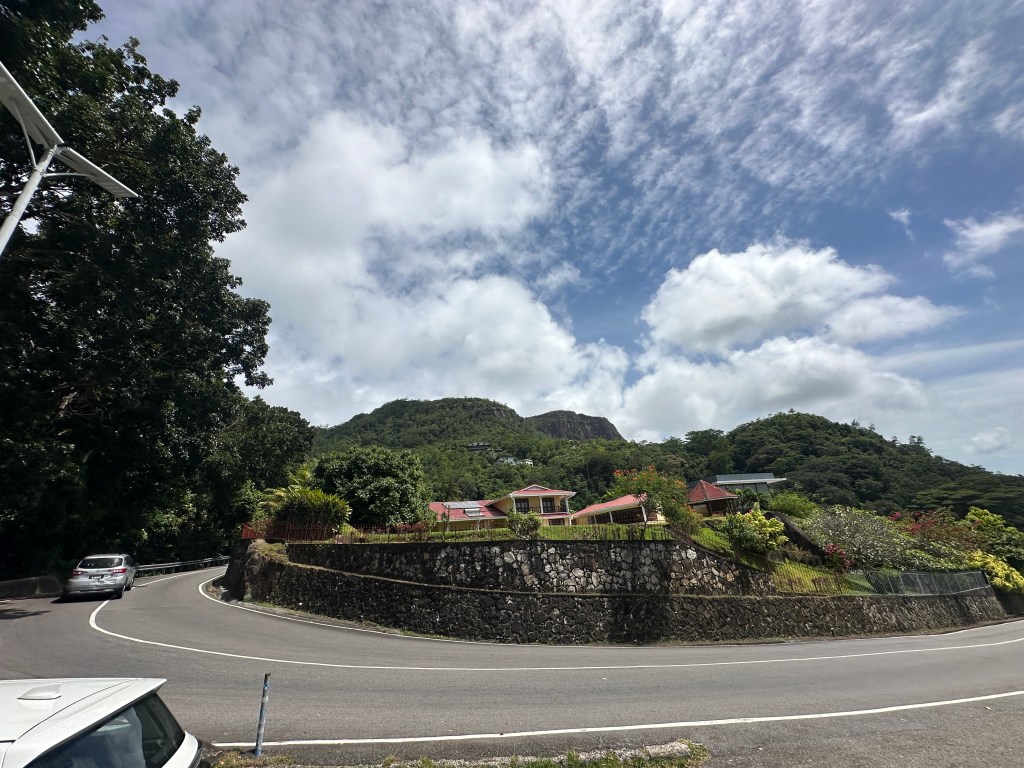
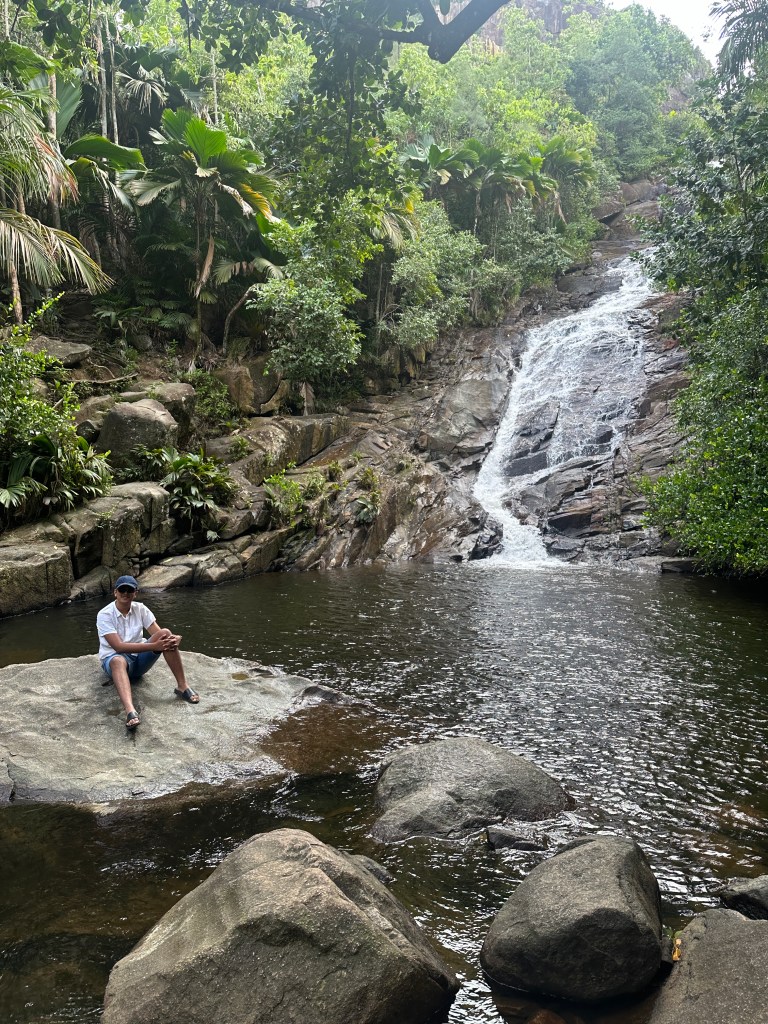
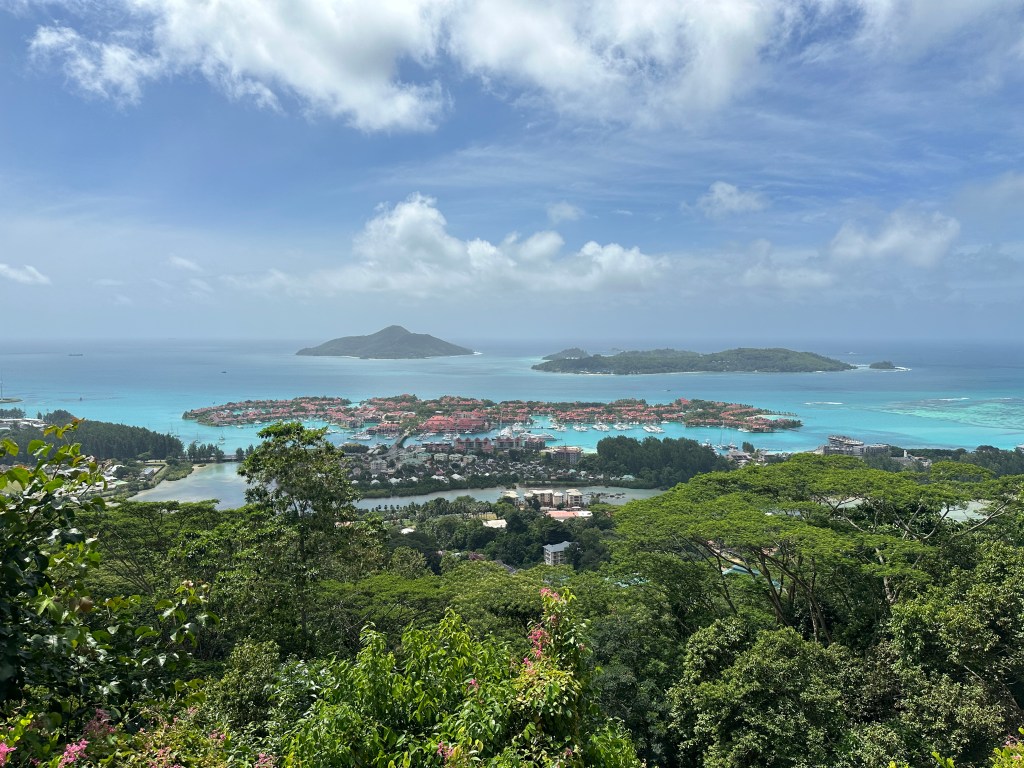
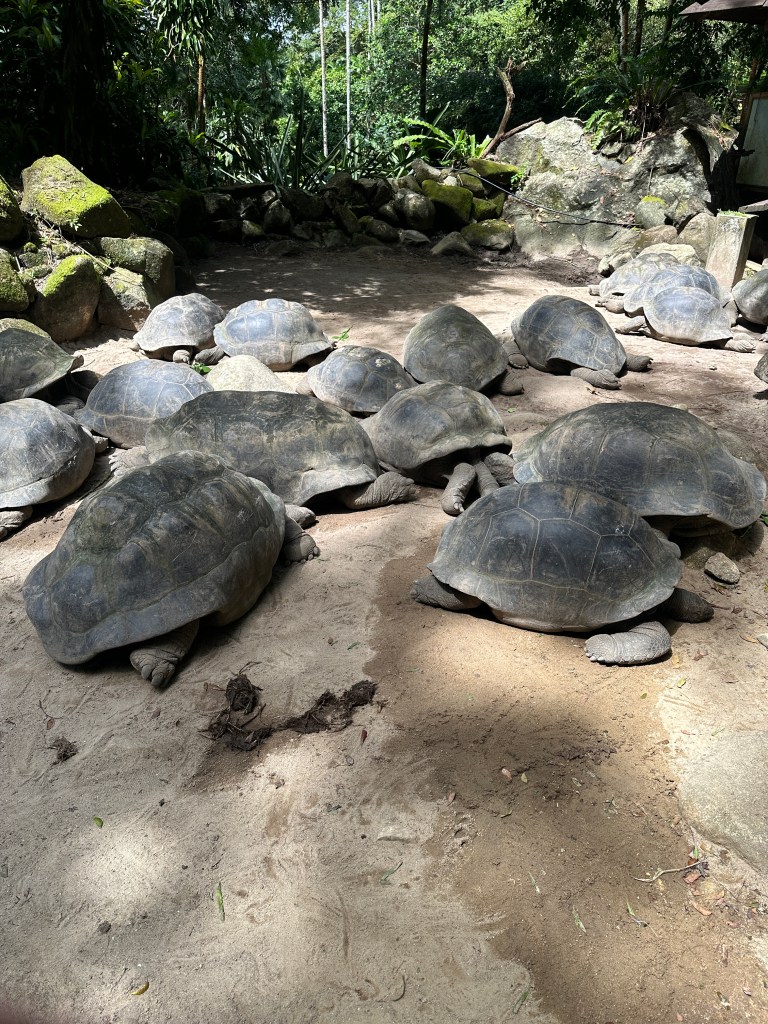
On our final full day, we toured Mahé island. Despite the tea factory being closed, we enjoyed visiting a picturesque waterfall, a stunning viewpoint overlooking Mahé, and a relaxing beach. The tour ended at the Botanical Gardens, where we saw coco de mer and fed giant tortoises. A quick snack of French fries at the cafe was followed by some sunbathing and a 20-minute jet ski ride at the hotel. Dinner at Mahek restaurant in Coral Strand was a comforting reminder of home. That evening, I also completed the theory part of my scuba diving course, successfully finishing five modules and passing the final exam online which requires a percentage of 75%.

The last day included an early morning dive, after which we soaked up all that Seychelles had to offer before departing in the evening.

Recommendations I have which I could not do : 

Praslin Island: Known for the stunning Anse Lazio beach and the Vallée de Mai Nature Reserve, home to the famous coco de mer palm.

La Digue: A tranquil island famous for its beautiful beaches, like Anse Source d’Argent, and its relaxed, bicycle-friendly atmosphere.

St. Anne Marine Park: A group of six islands offering excellent snorkeling, diving, and opportunities to see marine life up close.

Morne Seychellois National Park: Offers fantastic hiking trails with panoramic views, lush forests, and diverse wildlife.

Other Recommended Properties in Seychelles

Mahé:

  • Hilton Northolme
  • STORY
  • Fishermans Cove
  • Constance Ephelia
  • Hilton Labriz
  • Anantara Maia
  • Savoy

Silhouette Island (Great for Diving):

  • Hilton Silhouette Island

Other Islands:

  • Waldorf Astoria
  • Four Seasons

Seychelles offers an unparalleled experience with its natural beauty and luxurious accommodations. Whether you’re diving into the deep blue or exploring the islands, there’s always something new to discover.

Egypt

Route : Cairo → Alexandria ( day trip via road ) → Cairo → Abu Simbel ( Day trip via Aswan where we reached via airplane ) → Aswan → Luxor ( via cruise visiting temples of Kom ombo and Edfu ) → Hurghada ( via road ) → Cairo

Our EgyptAir flight touched down at the crack of dawn at Cairo International Airport and  the adventure in the land of pharaohs and pyramids began. Though greeted by the less-than-impressive maintenance of the airport’s international arrival area and an unexpected mix of tour guides mingling with immigration officials (a sight so unusual it bordered on comical), our spirits remained undamped.

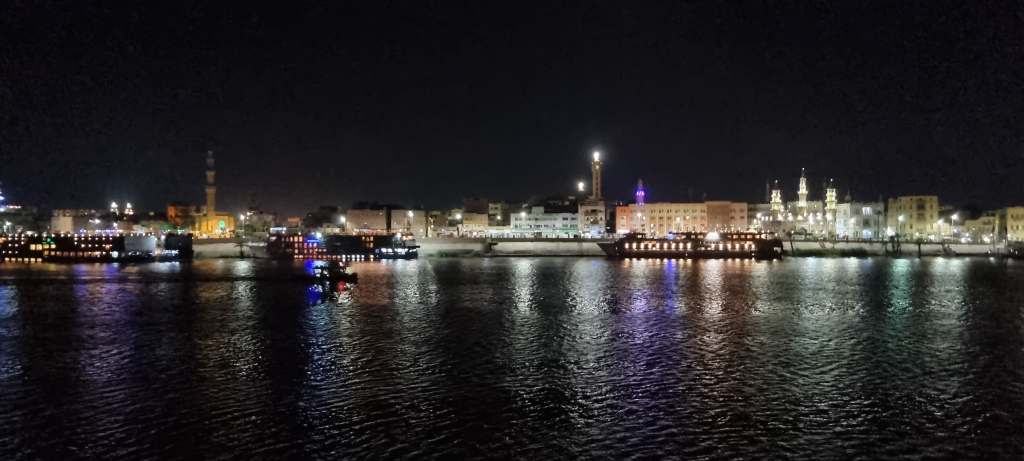
In Egypt, it seems, the van (Tempo travellers) reigns supreme as the vehicle of choice for tourists. The journey from the airport to our hotel was an eye-opener. Cairo’s sheer density is overwhelming, with every nook and cranny filled to the brim with people, contributing to the chaos that is its traffic and urban sprawl. Yet, amidst this cacophony of sounds and sights, our hotel awaited us at the banks of the mighty Nile—our home for the duration, the opulent Nile Ritz Carlton. Offering spacious rooms with breathtaking views of the world’s longest river, the hotel promised (and delivered) a luxurious respite from the outside world.

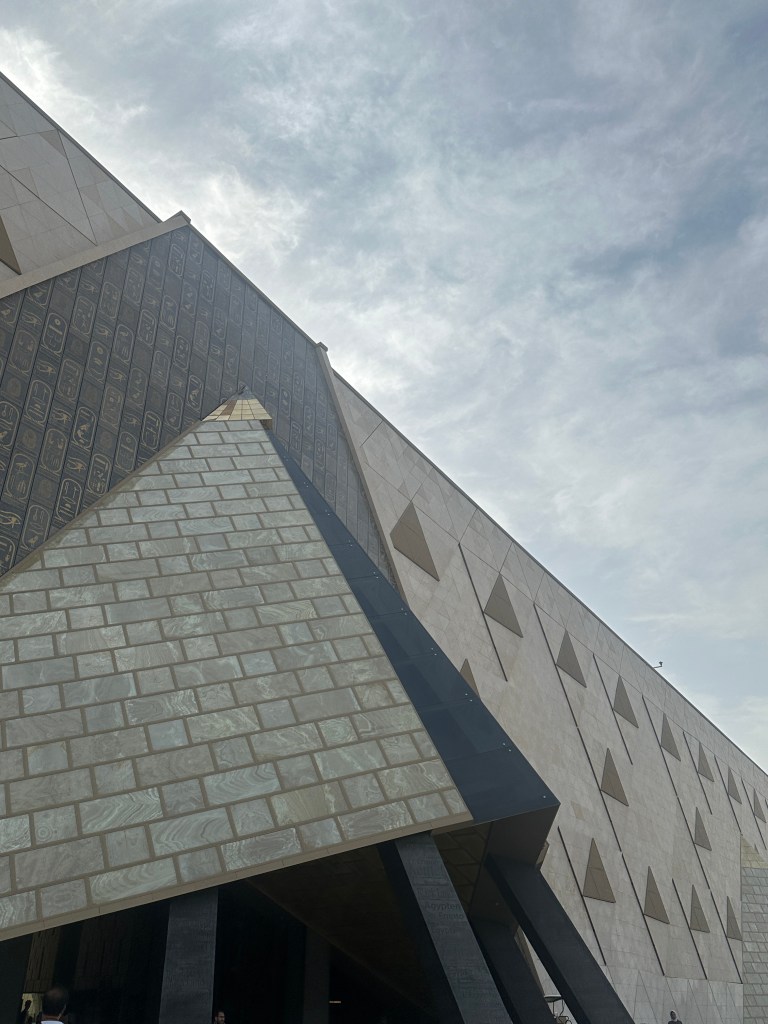
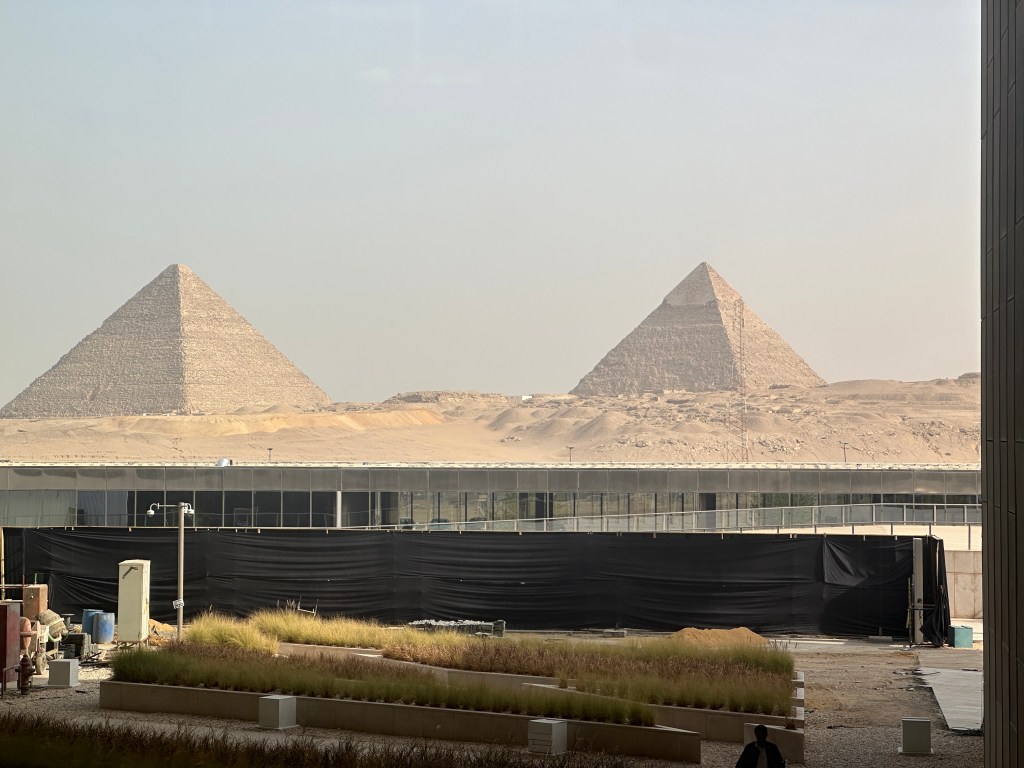
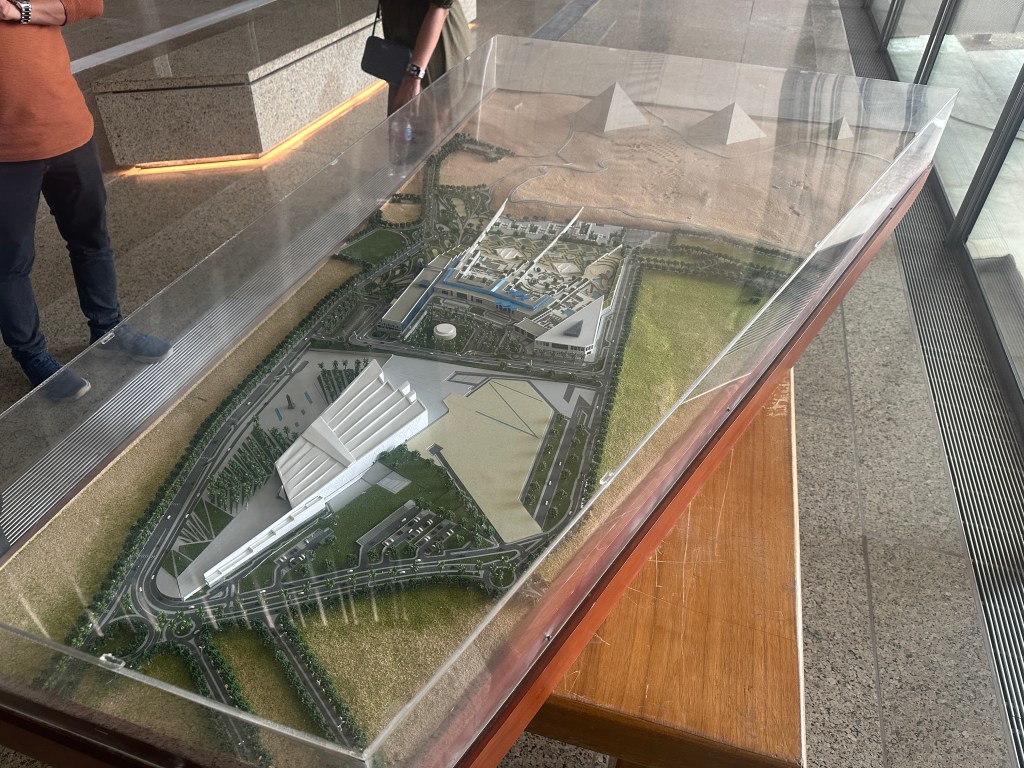
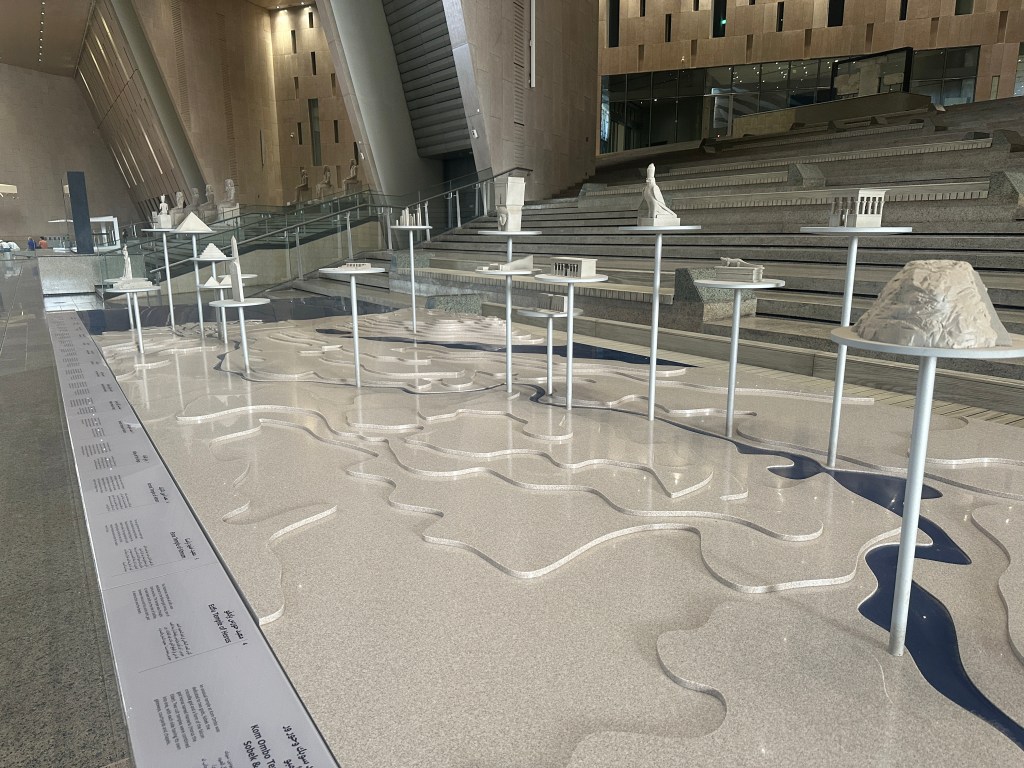
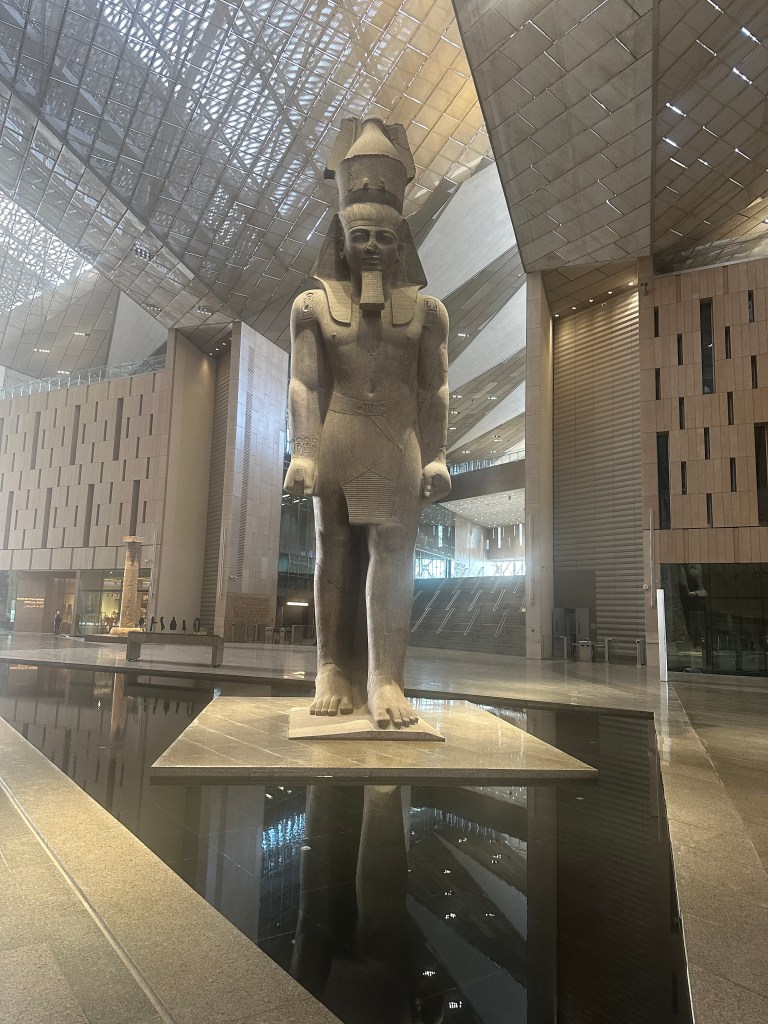
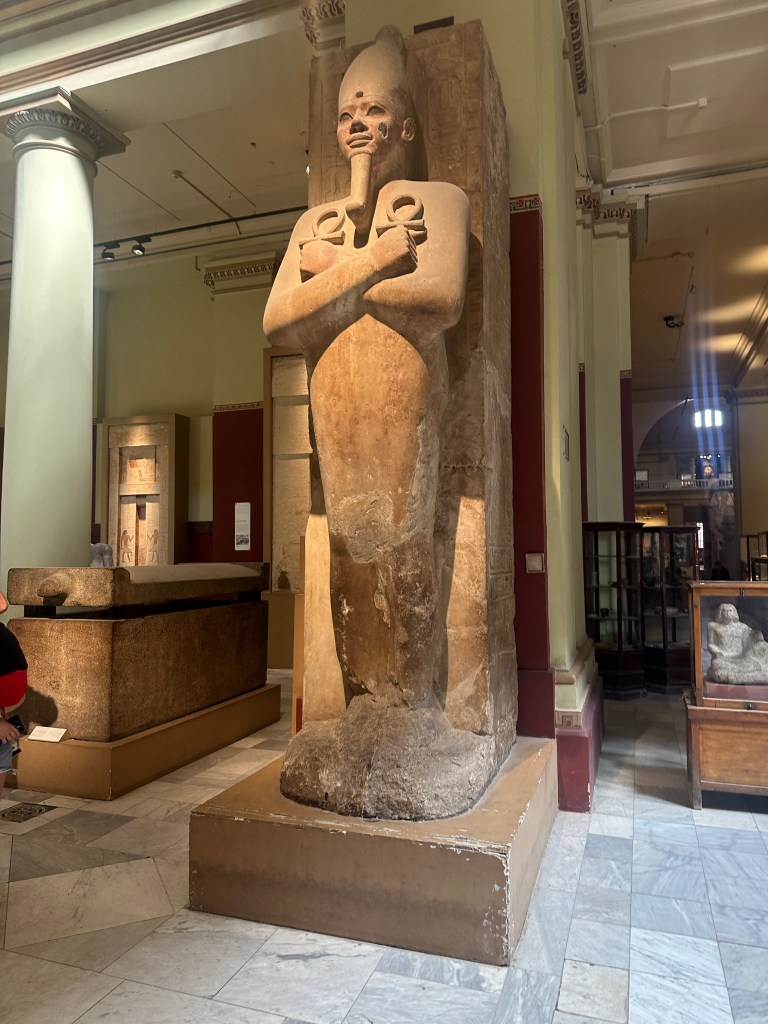
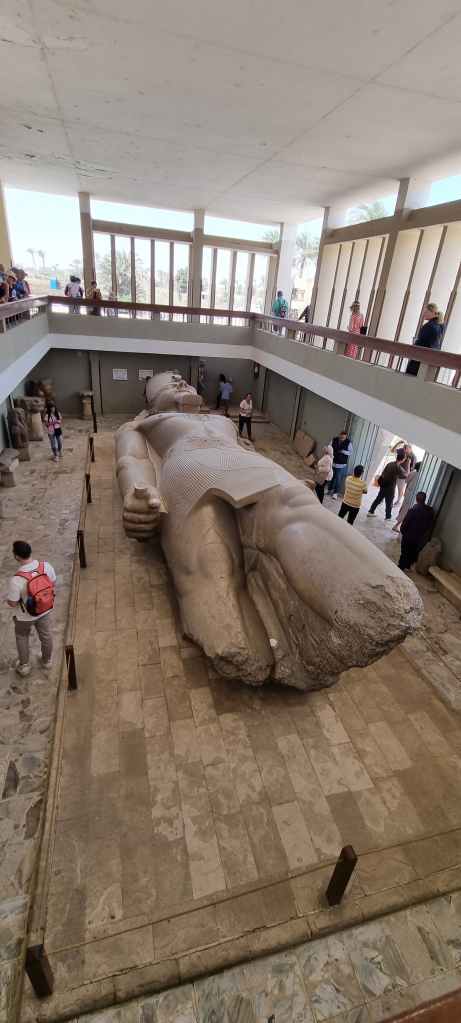
Our excitement led us to the Great Egyptian Museum (GEM) slated for completion in 2030. The parts of the museum that completely showcased modern Egyptian architecture, A towering 20-metre statue of Ramses II welcomed us, setting the stage for an exploration of strategically placed artefacts and statues that brought ancient Egypt back to life. Despite Ramadan’s early closing hours, our visit was nothing short of magical, complete with food from the museum’s food street.

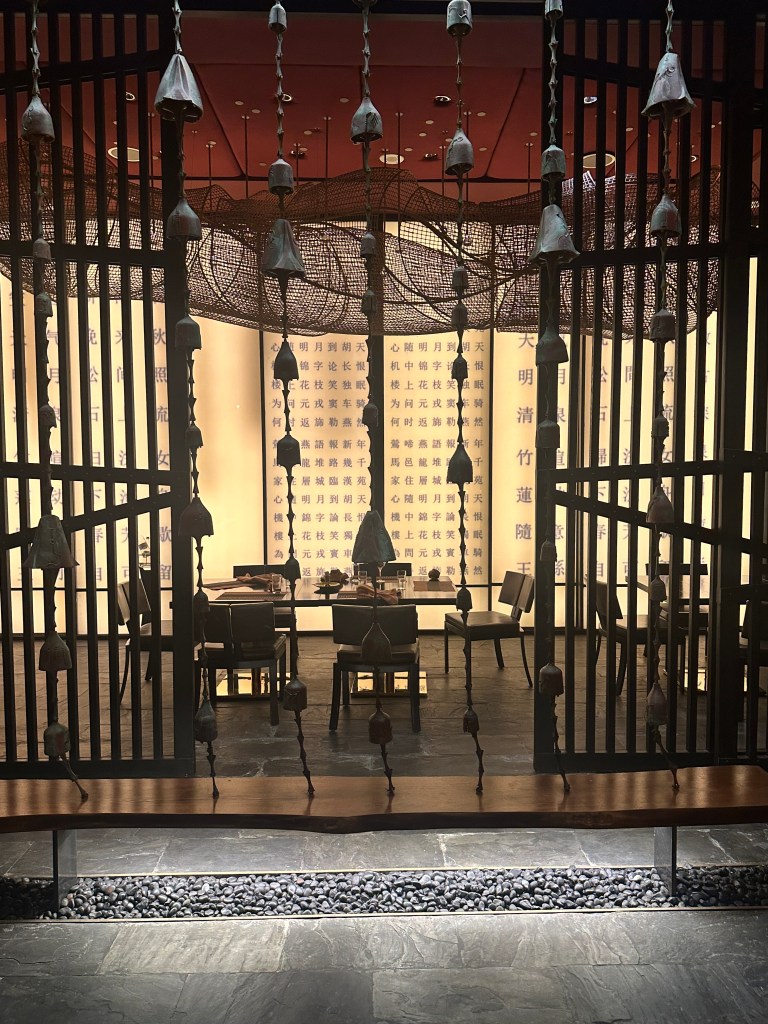
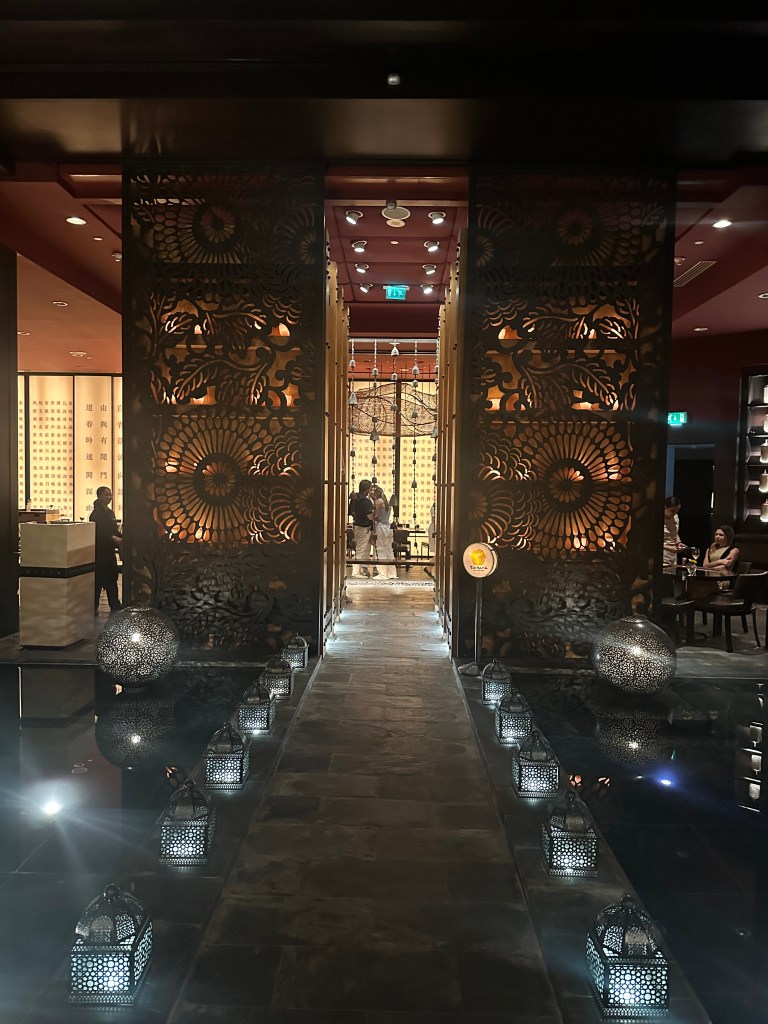
Our exhausting tour led us to St. Regis Hotel’s Iridium Spa, acclaimed for its impeccable service and facilities. A 30-minute scrub followed by an hour-long massage was our chosen elixir, costing us 5000 Egyptian pounds. Before you pull out your calculator, that’s about $60 USD or 5000 INR, given the current exchange rates. Who said luxury can’t be quantified? Relaxed, we dined at Tianma, a Chinese restaurant. The papaya salad, dim sums, and baos set the stage, but the main course truly stole the show with its flavorful concoctions. while the ambiance, adorned with live piano and violin, enveloped us in an atmosphere of luxury. 

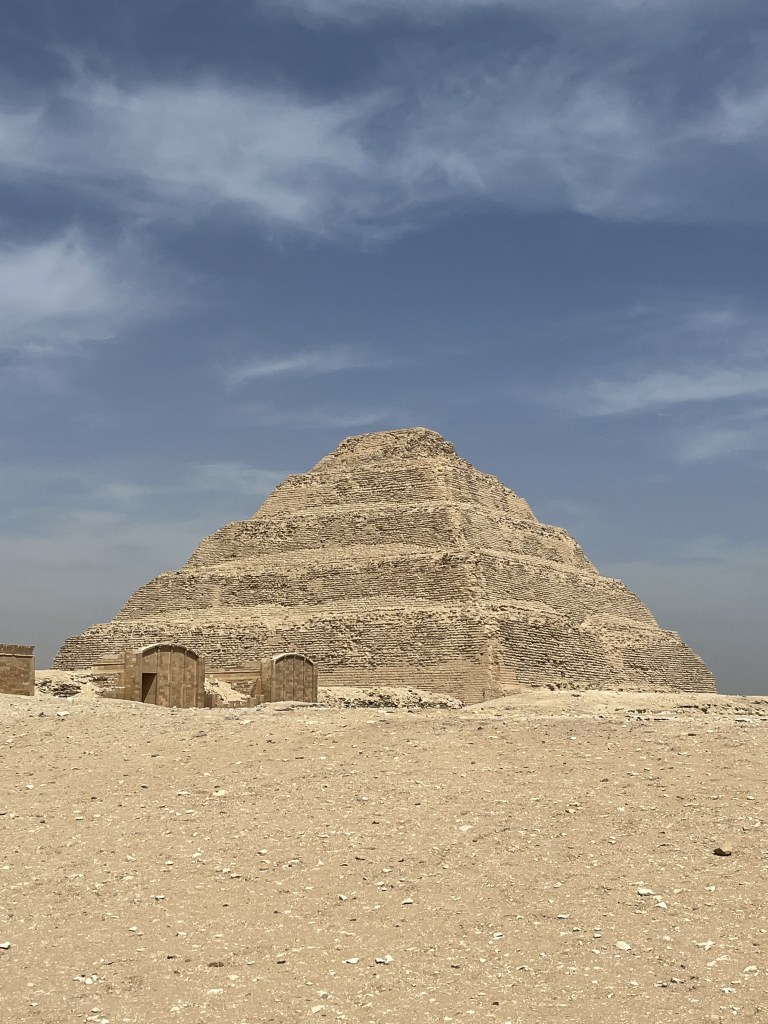
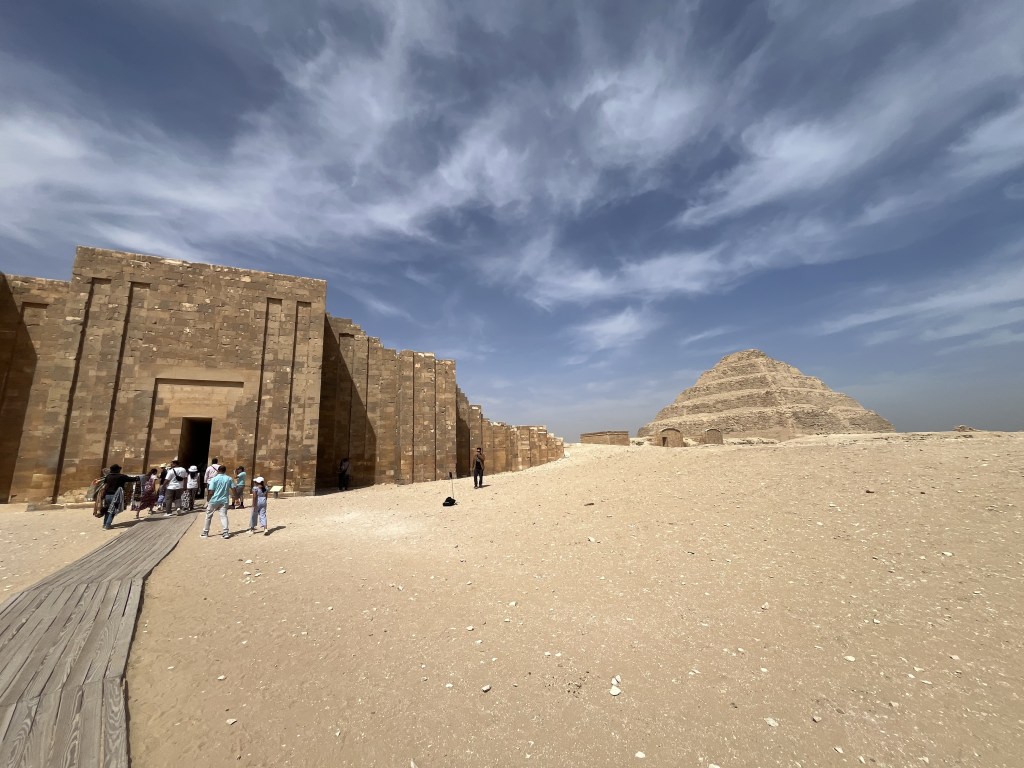
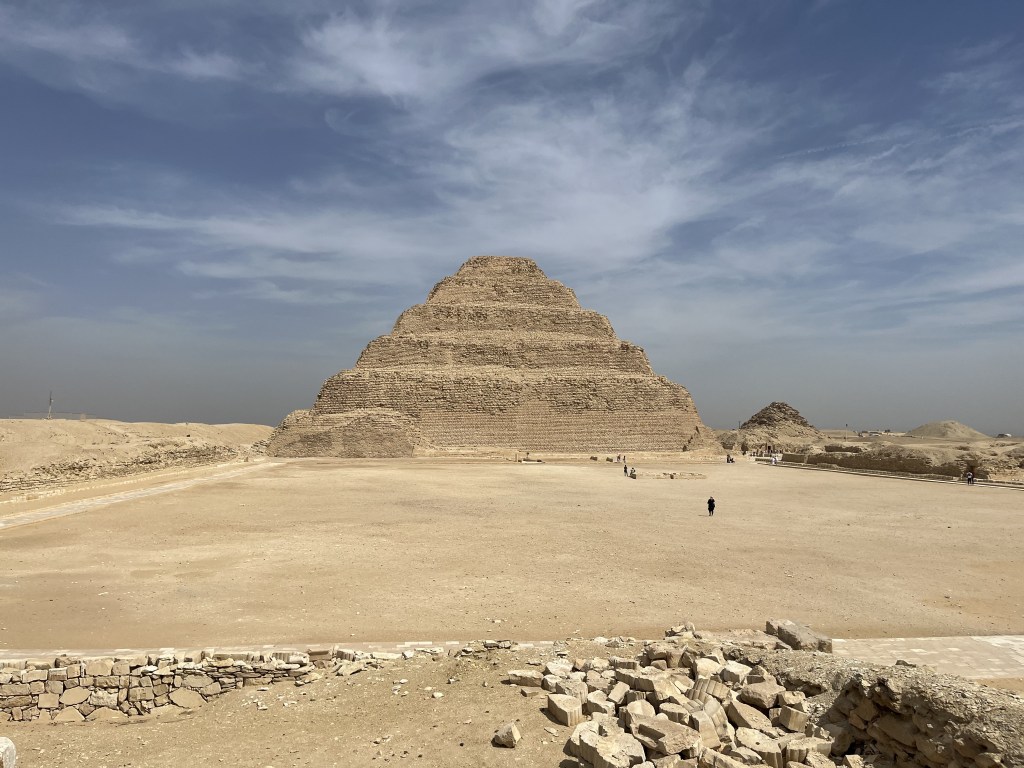
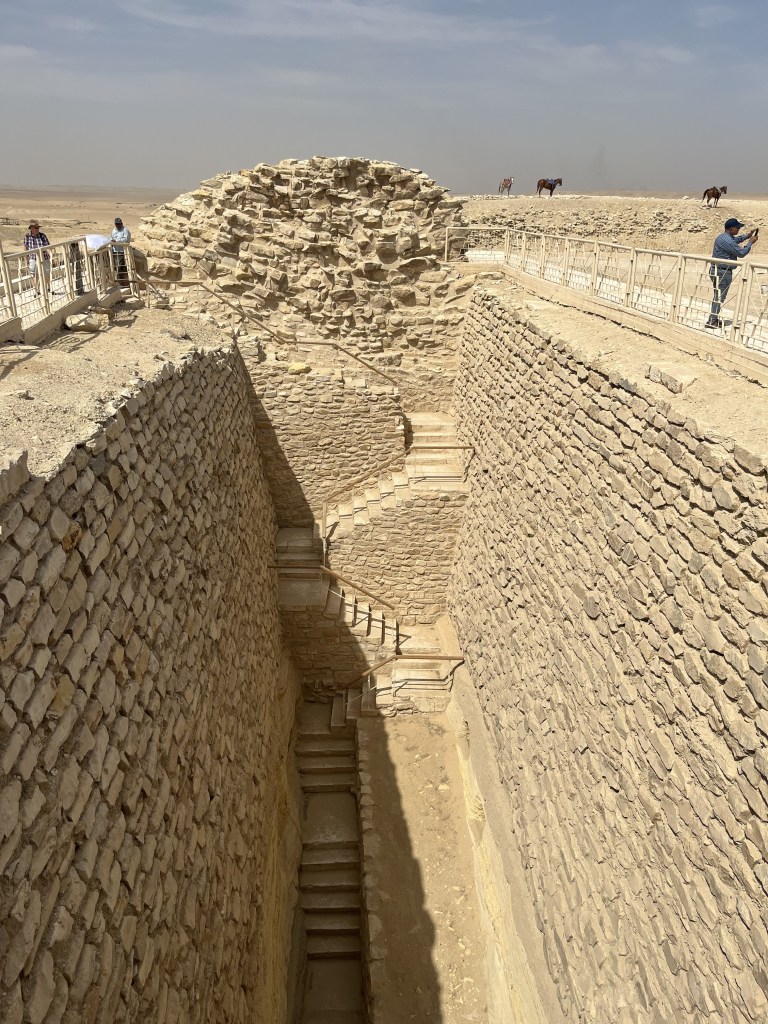
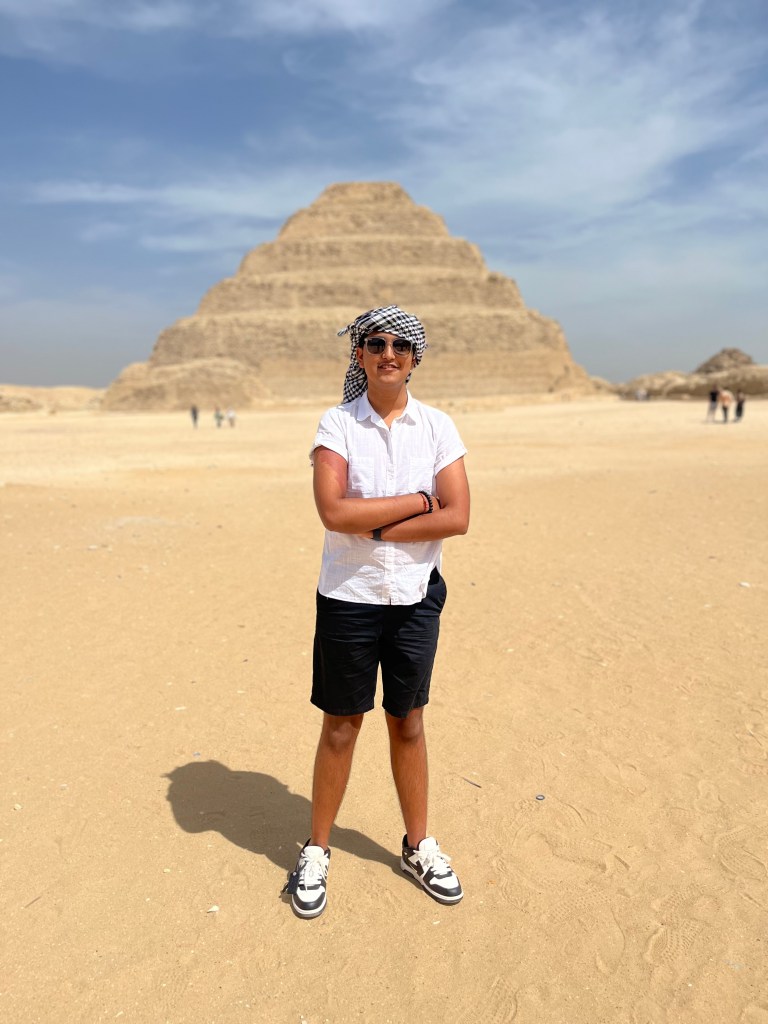
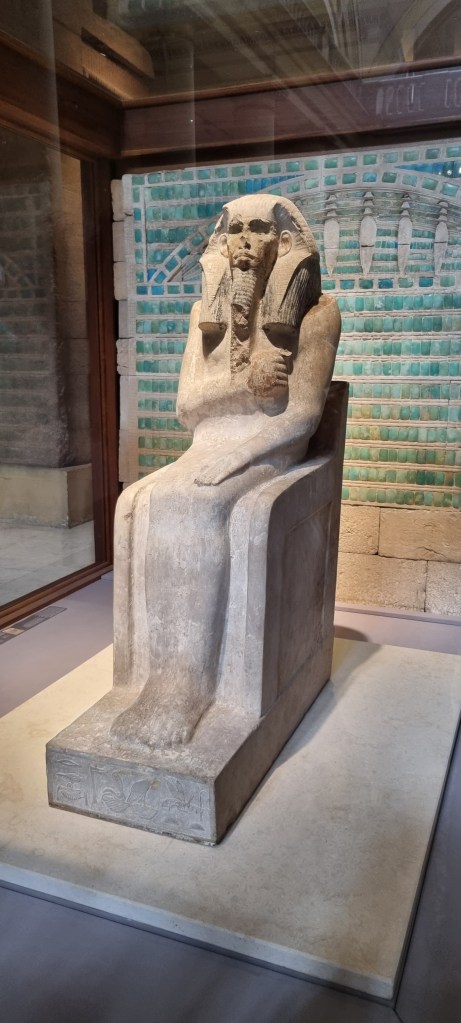
The Egyptian sun greeted us as we set out at 9 AM, destined for the ancient steppe of Saqqara. The Djoser’s Step Pyramid, our first encounter, stood as a testament to architectural innovation, being one of the earliest colossal stone buildings in Egypt—a pacesetter for the pyramids that followed. With its unique tiered design, Saqqara is a delight, boasting a rich necropolis full of tombs.

Our adventure took a daring turn as we ventured into the Pyramid of Nefertiti in the Saqqara complex. The journey was a test of flexibility and endurance, bending and crawling to under three feet in near darkness until reaching the central chamber that houses only a stark sarcophagus. The void of treasures inside did nothing to diminish the exhilaration of stepping into ancient history itself.

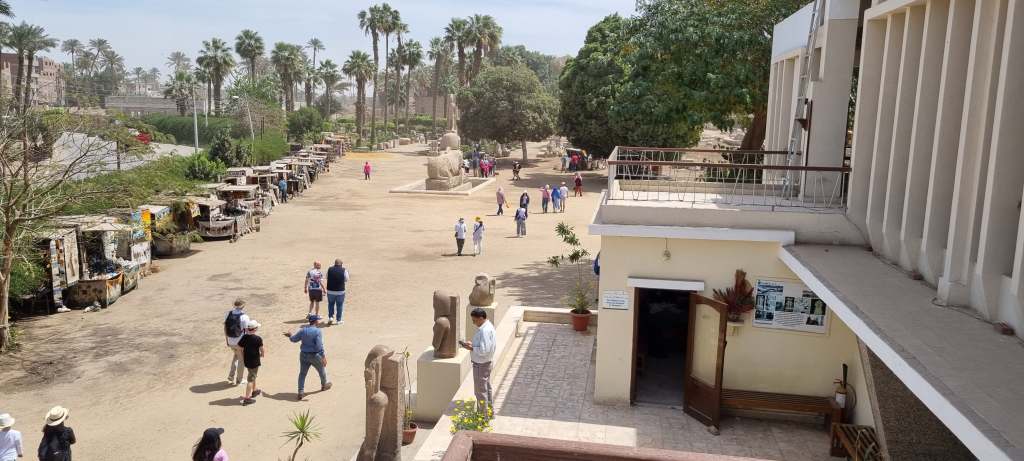
Our next port of call was Memphis. The statue of Ramesses II we admired here was the same as the statue displayed in the Great Egyptian Museum. There were 2 and one is here and one is in GEM. Memphis, the capital of ancient Egypt, echoed the grandeur of bygone days.

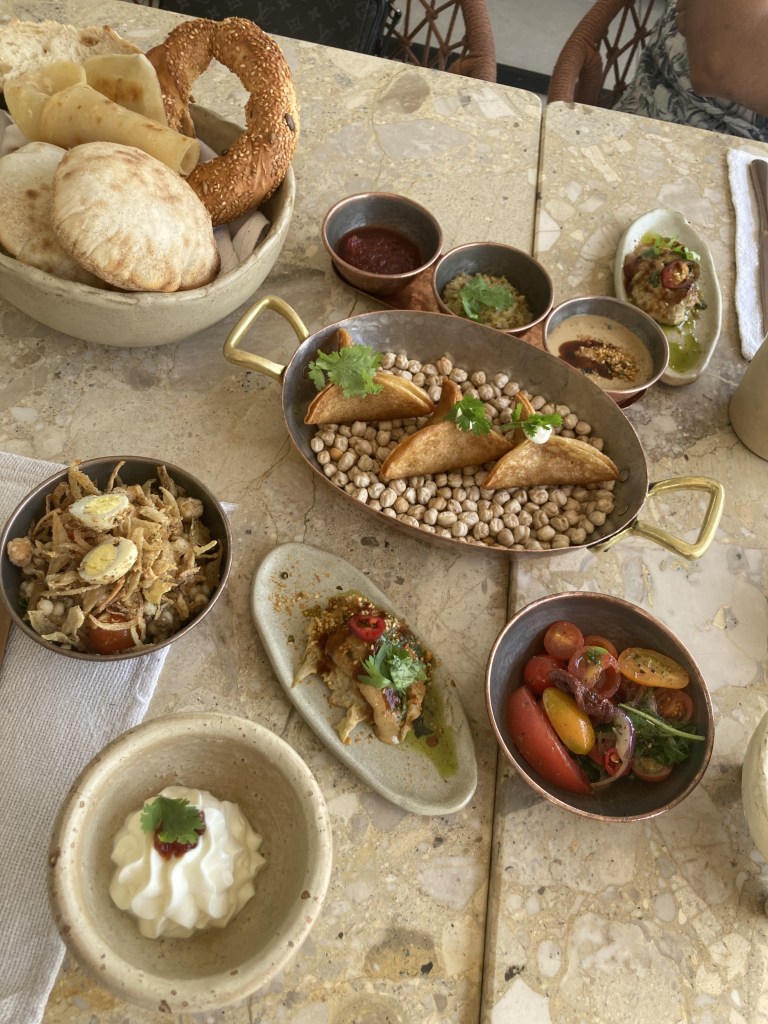
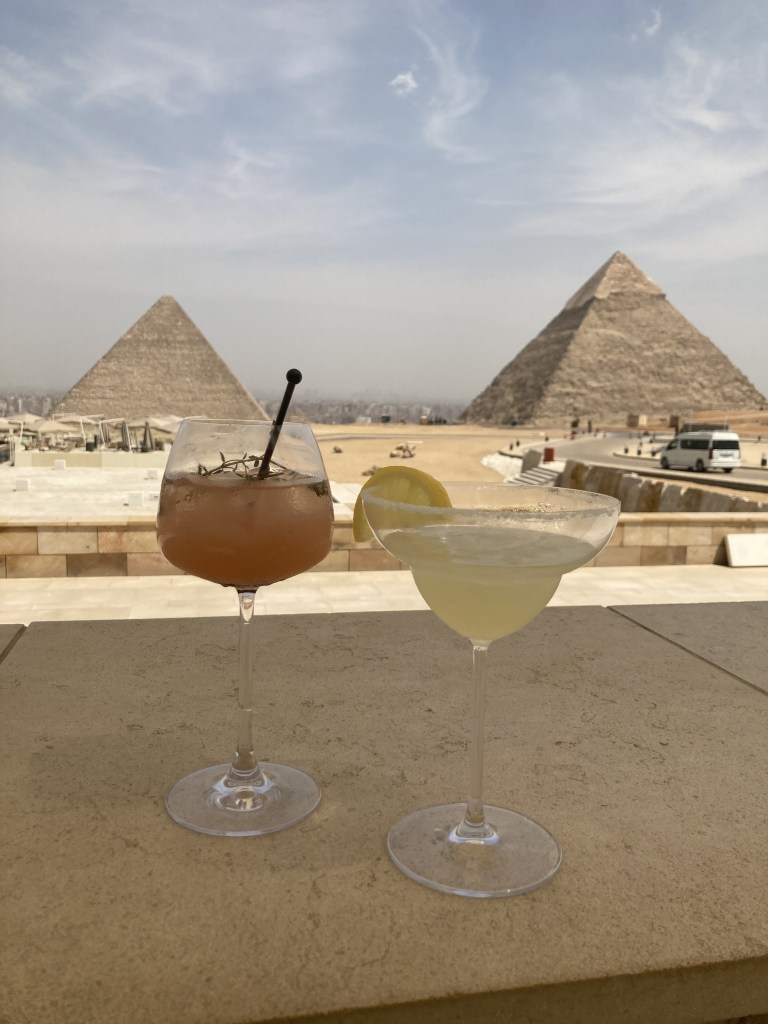
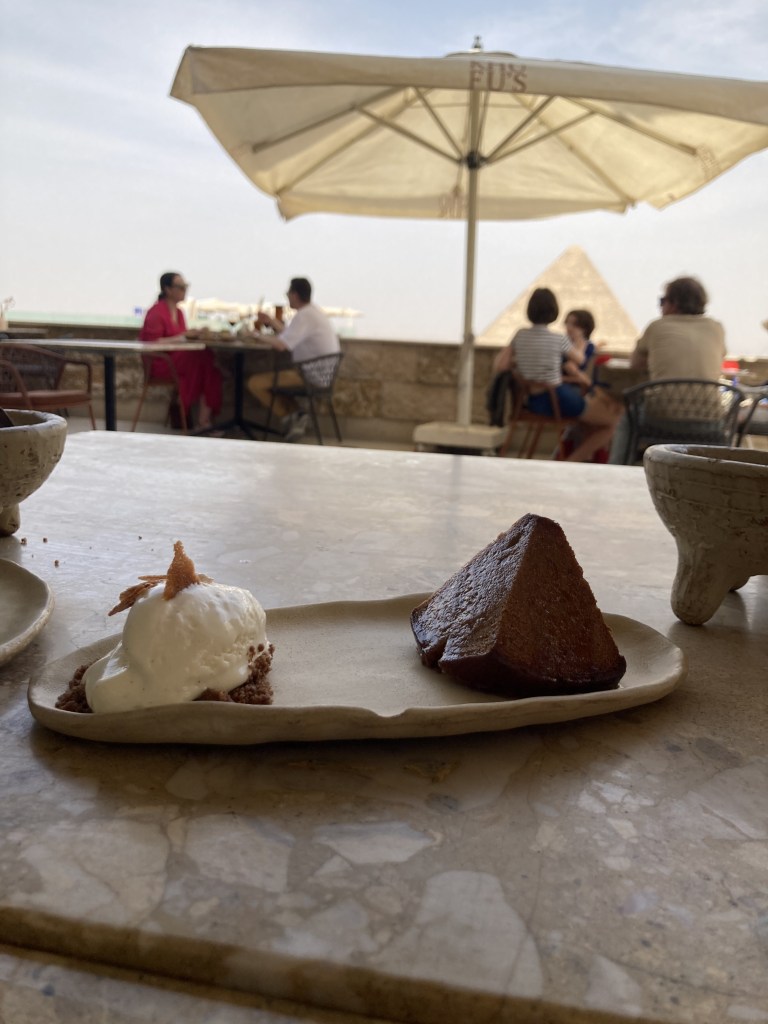
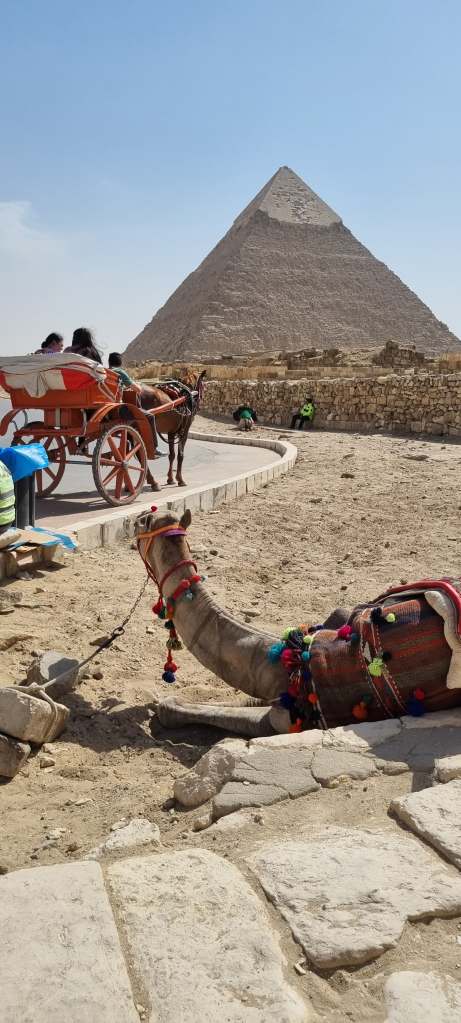
Lunch at Khufu’s transformed into a sumptuous narrative as plate after plate arrived, weaving a story of flavour and heritage of Egypt. The Koshari Salad, Baba Ganoush, and Wara’ Enab were joined by the smoky tomato salad, the rich cottage cheese with chilli jam, the delightful Qatayef, and the crisp fried street style potatoes. Each dish was a vignette, capturing the essence of Egypt’s culinary spirit, enhanced by the vista of the great pyramids in the Giza complex.

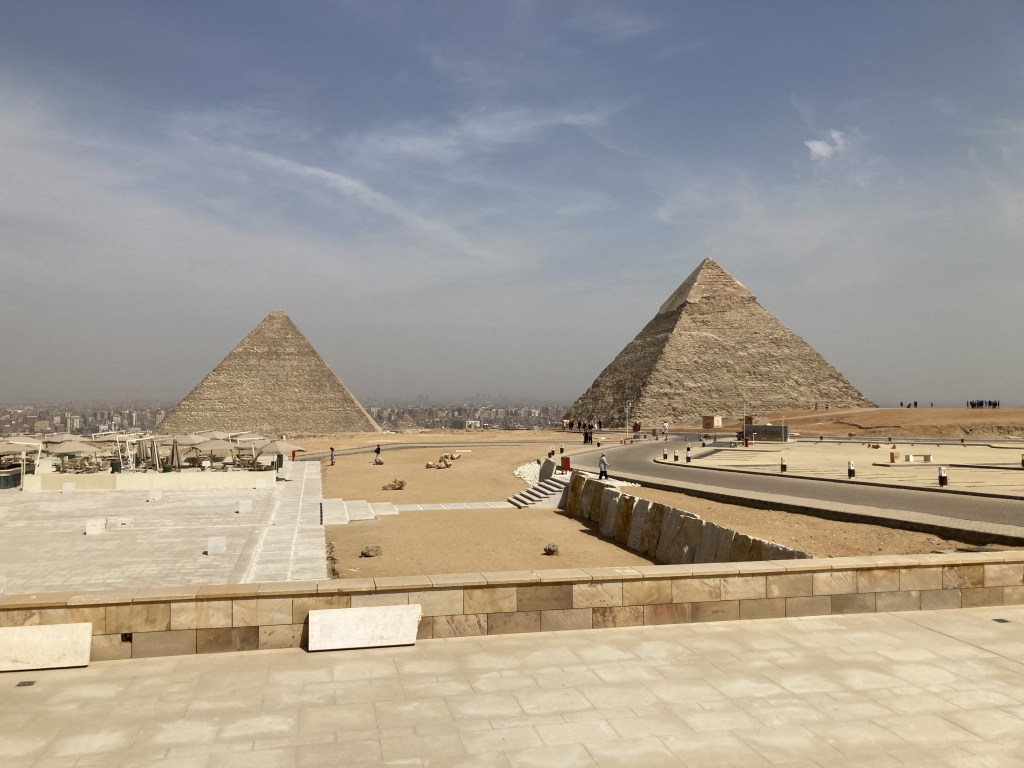
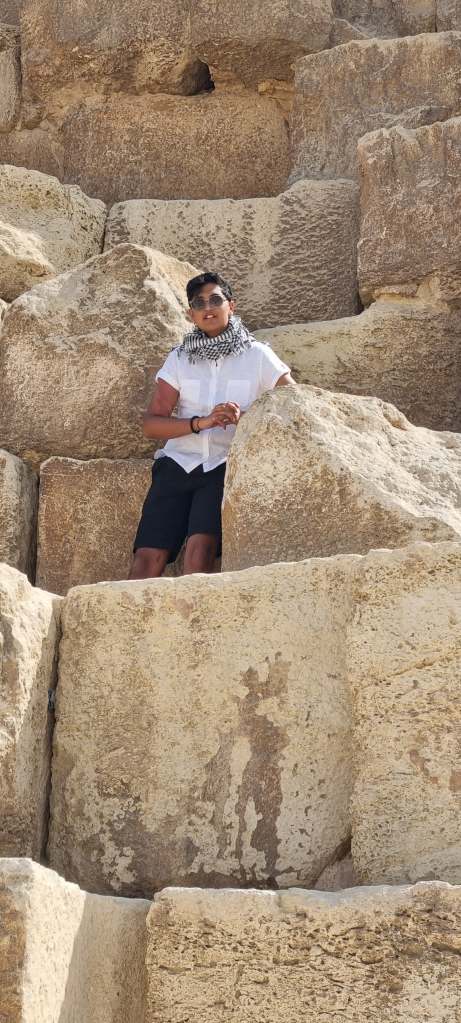
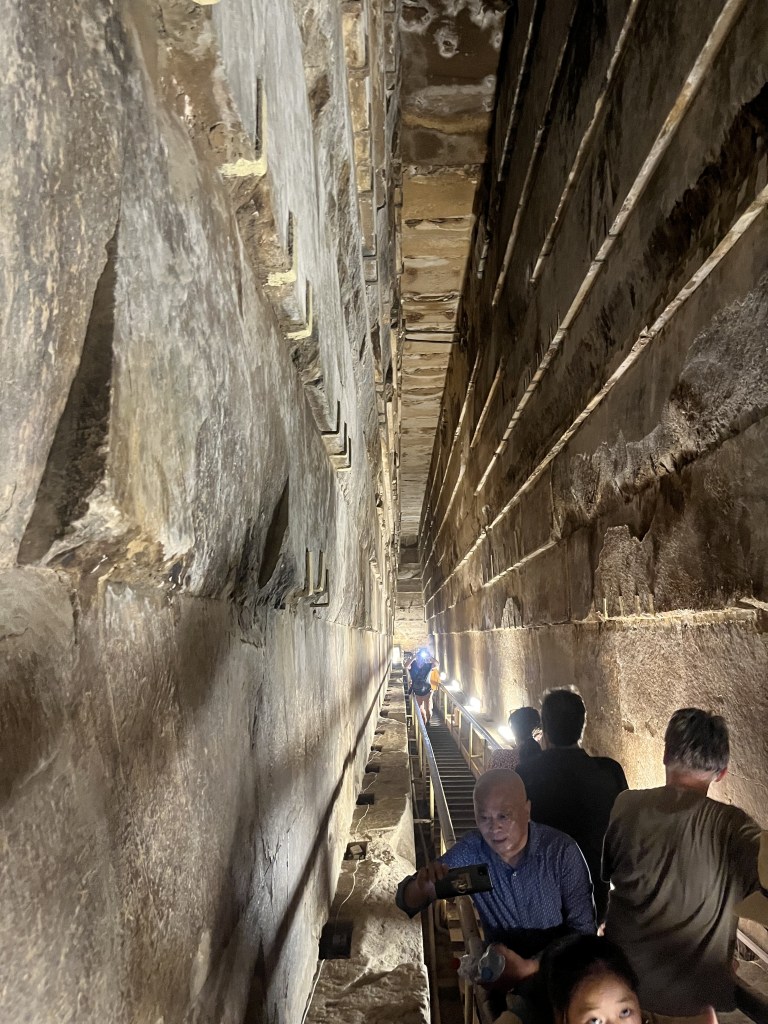
Speaking of the Pyramids of Giza, stepping into the necropolis was like entering a time in BC. Towering above us at a staggering 146 metres, the Pyramid of Khufu was a testament to ancient prowess and sheer will. Ascending within its confines was a more formidable task than at Nefertiti’s—stifling heat and overwhelming humidity made it a herculean effort. The panoramic viewpoint later offered us a canvas to capture memories, with the pyramids posing in their grandeur.

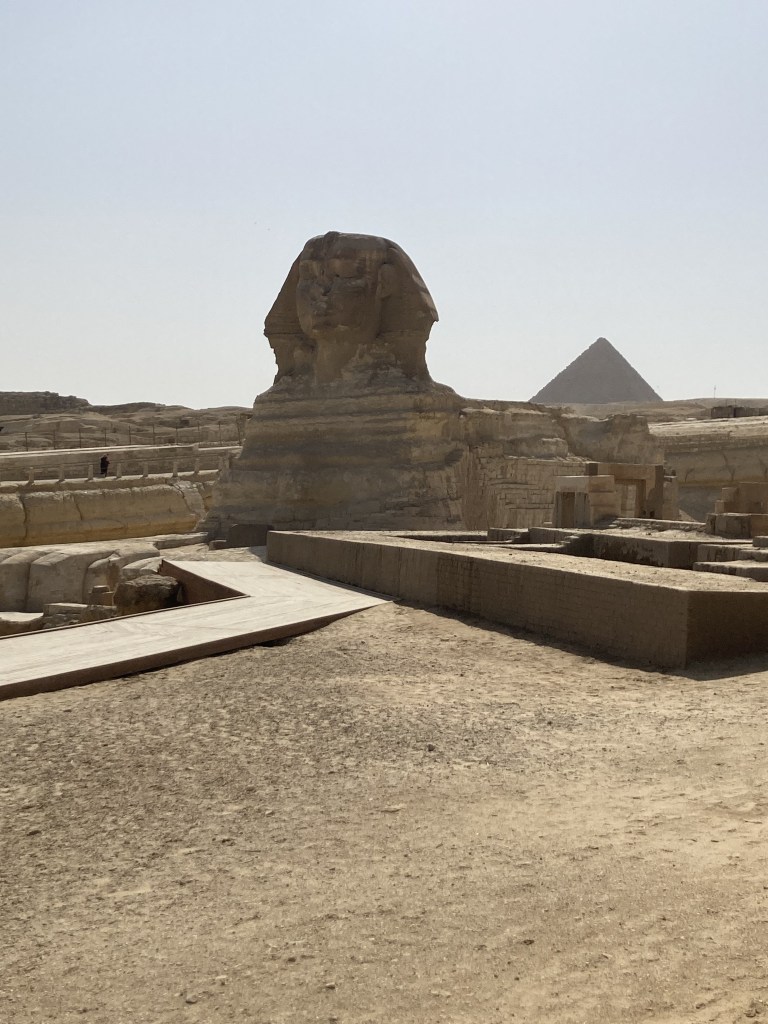
The Sphinx – a lion body and a human head –  which was our next and last stop in Giza endured a millenia, with its enigmatic gaze, was the change in scenery I didn’t know I needed. After a day surrounded by the solemnity of tombs and temples, the Sphinx’s mythical allure provided a refreshing narrative shift.

From the Necropolis, we diverted our attention to the papyrus and perfume stores, where we learnt a bit more about the production of these products, but when we came to buy these products the prices were exorbitant. The same quality can be found in cheaper roadside stalls with less than 5% of the price these shops quote.

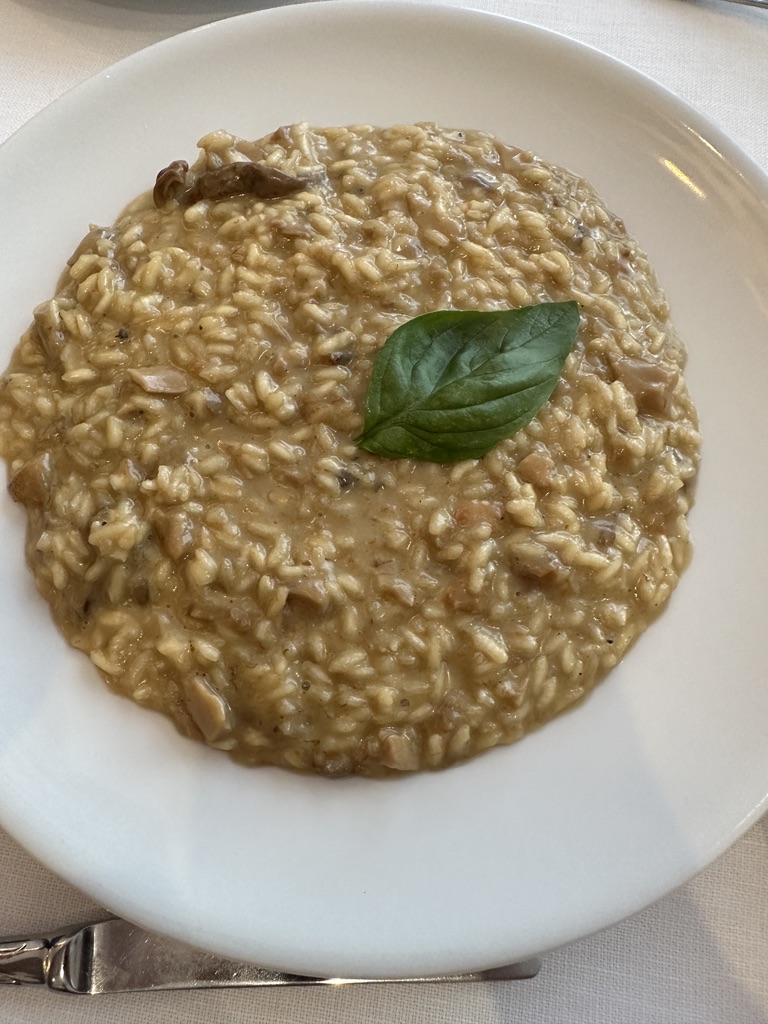
A brief foray into the bustling shopping scene followed, a single line of shops where I snagged treasures to take home, the high street offerings turning into souvenirs. As evening fell, we retreated to the comfort of Vivo at the Nile Ritz Carlton. The restaurant, a cosy corner within the hotel. Here, the simplicity of aglio e olio and the earthy goodness of a mushroom risotto were the perfect culinary bookends to a day steeped in history. 

Day 3 began with a three-and-a-half-hour journey to Alexandria, the city of Alexander the Great that turned out to be just great! By 11 AM, we were treading the depths of the catacombs, a fascinating underground maze. The catacombs of Kom El Shoqafa is considered as one of the Seven Wonders of the Middle Ages. Just imagine, ancient Egyptians and Romans, side by side in the afterlife, probably bickering over who had the better architecture!

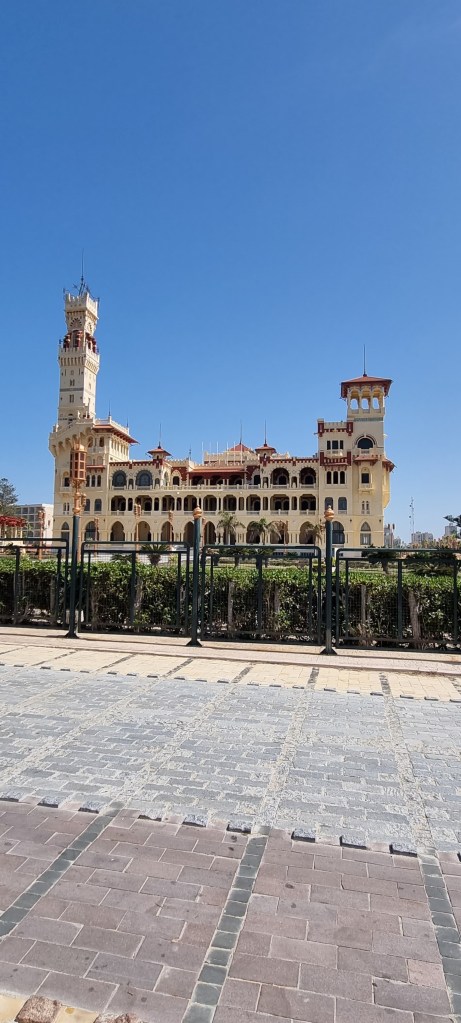
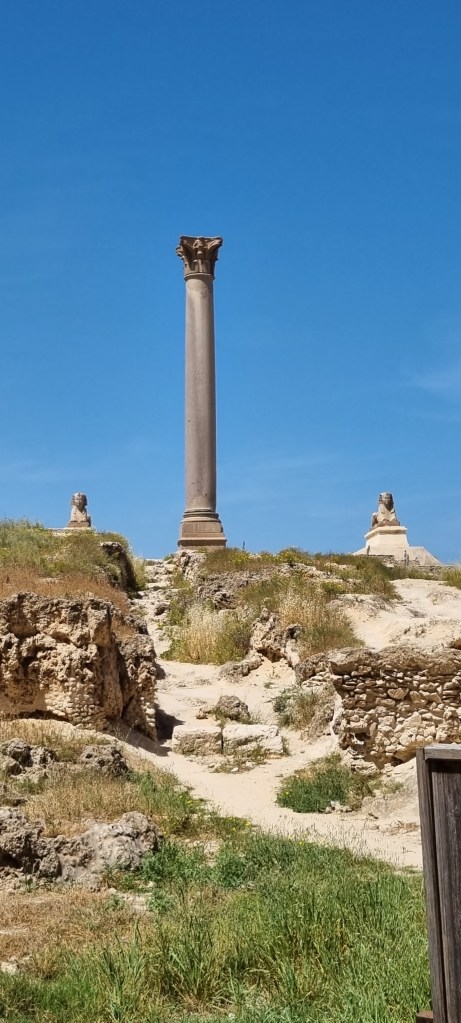
Next up was the famed Pillar of Alexandria. It’s… well, it’s a pillar, but with some history running through it. Then, off we rushed to Montazah Palace. The exterior is beautiful and polished unlike the rest of egypt with sprawling vistas and manicured gardens along the mediterranean coast but going inside is not permitted. 

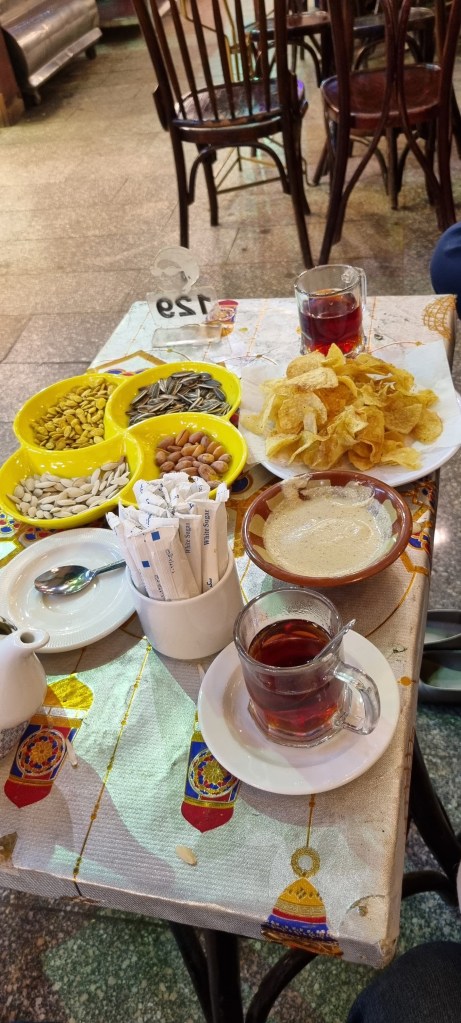
Lunch led us to Jeeda’s, where we savoured Patatas Bravas, nachos with zesty salsa, and a Valencian paella which was nothing short of delicious. Each bite was a fiesta in the mouth. 

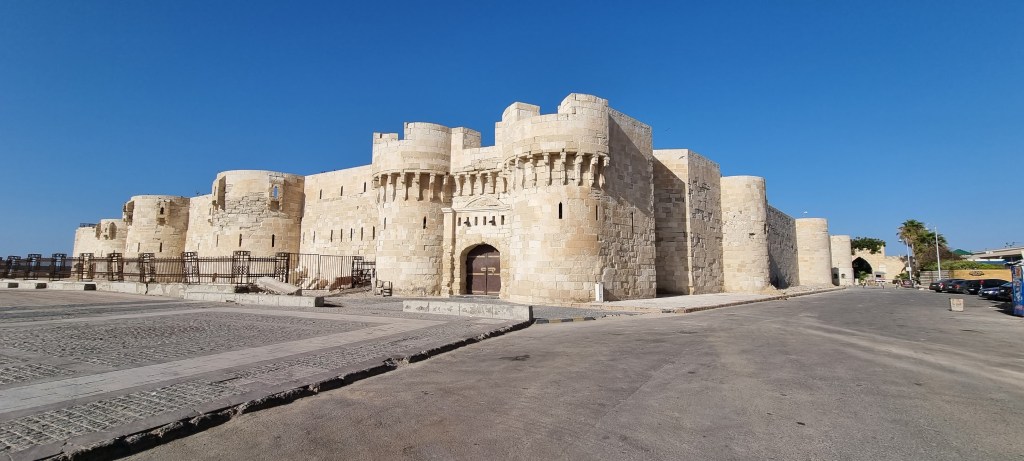
Our final stop was the Citadel, standing guard by the Mediterranean. It’s also where the ancient Alexandria Lighthouse was once housed. Just a stone’s throw away, the new seven-story (four underground and three above) Alexandria Library caught our eyes, its modern facade gave us a feel of what it might have looked like before it was reconstructed/destroyed. 

As night fell, we ventured back to Cairo, where Khan El Khalili which is a bustling, historic bazaar, famous for its vibrant shops, traditional crafts, and rich Egyptian culture. The market’s vibrant aura enveloped us. Khan el  Amidst the brightness of lamps and lights and the melody of live Arabic music, we dined on local delights, capping off our day.

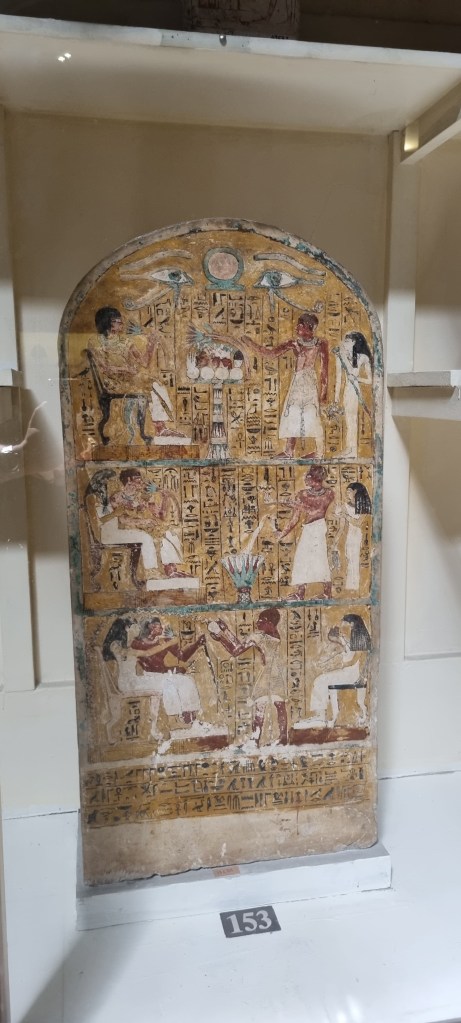
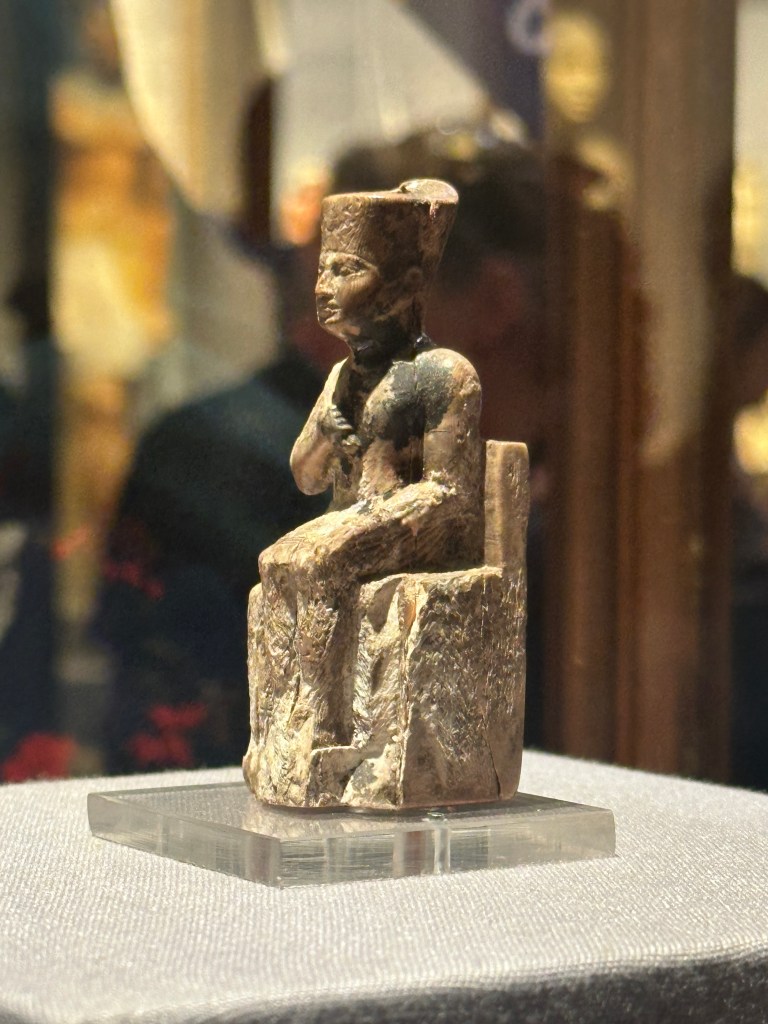
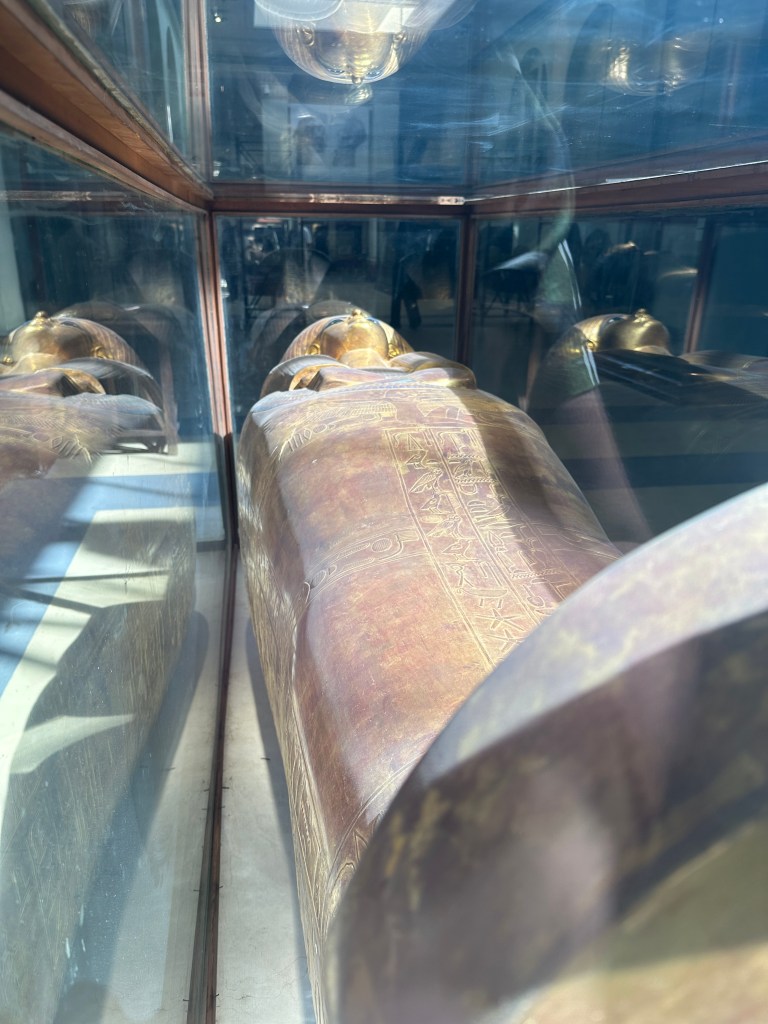
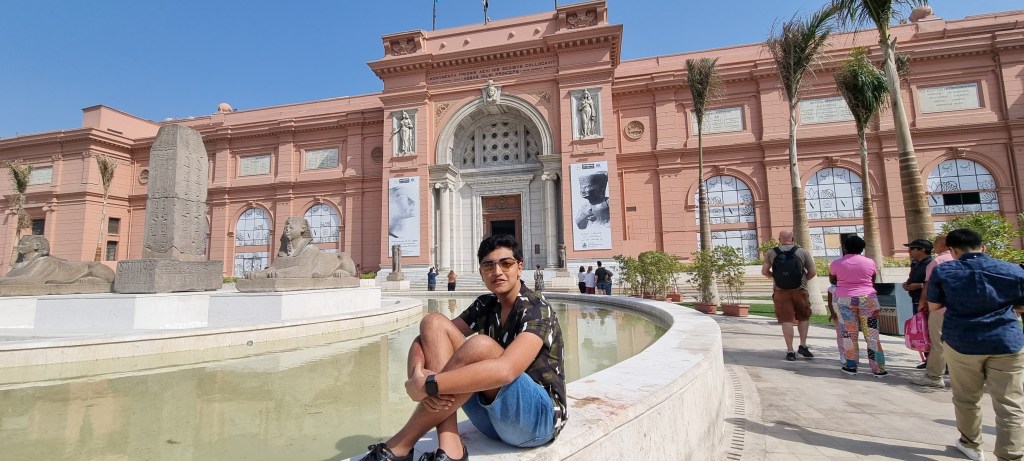
Our Cairo Sightseeing began as we made our way to the Egyptian Museum at 9 AM sharp. Picture this: over 200,000 artefacts showcasing the grandeur of Egypt’s past, neatly tucked into the Old, Middle, and New Kingdom divisions. We marvelled at Tutankhamun’s mask and got up close with two ancient mummies. Although we tried to soak it all in within an hour, history aficionados could easily wander for a good 2-3 hours amidst these treasures. Post-museum, we snagged a quick specialty coffee at CAF. 

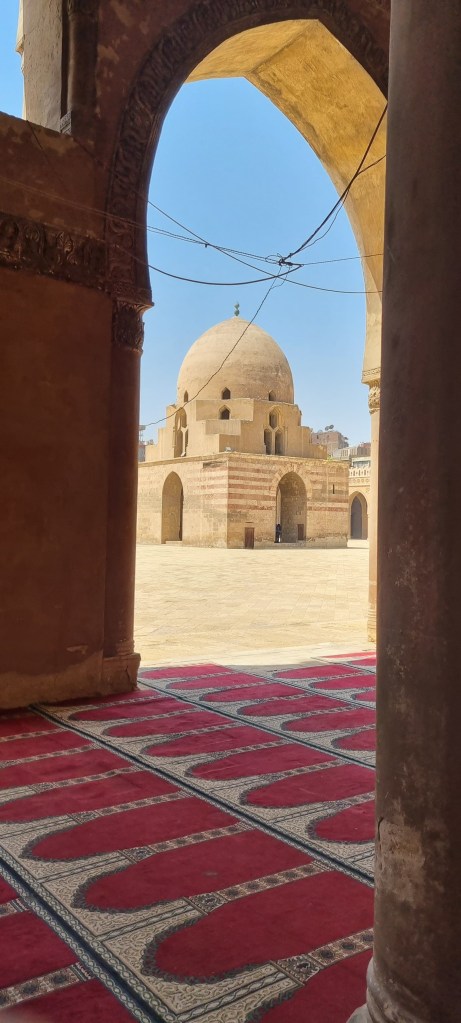
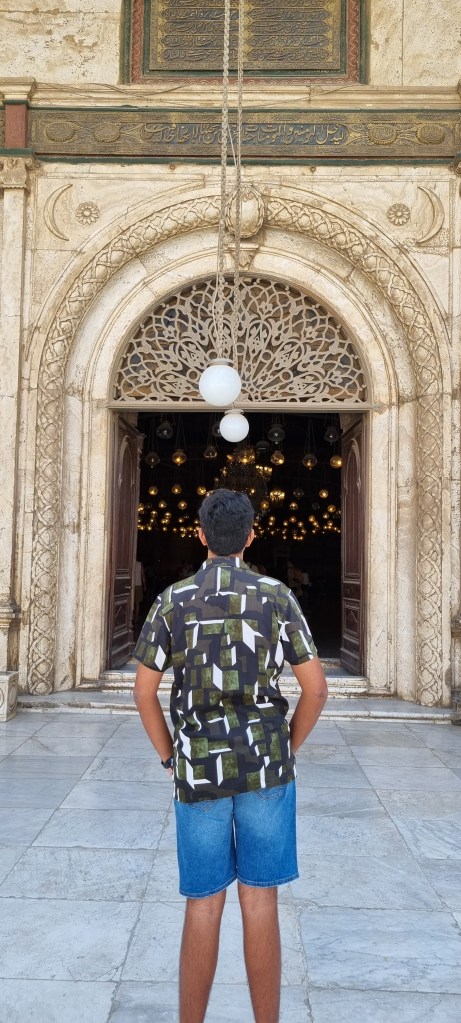
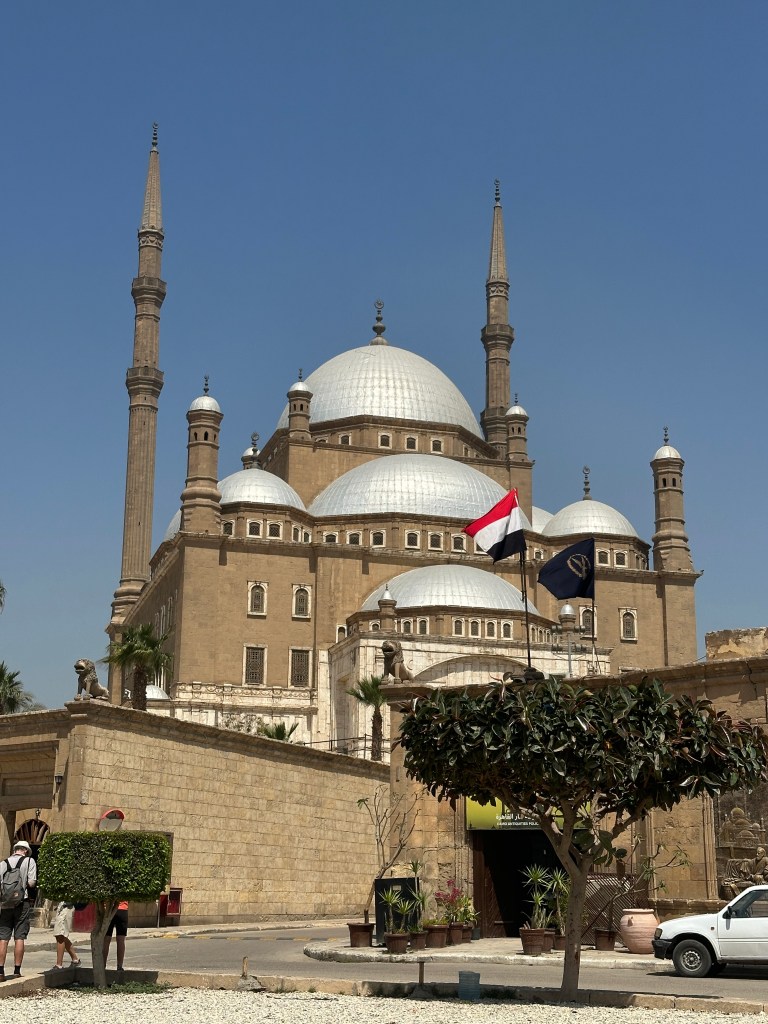
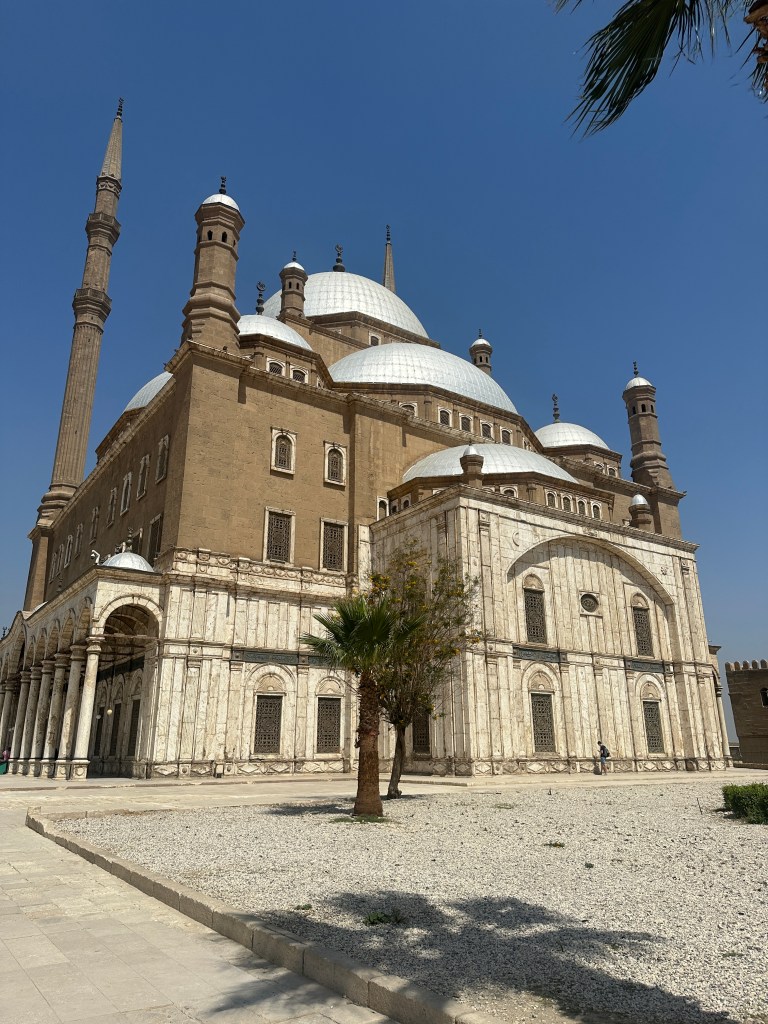
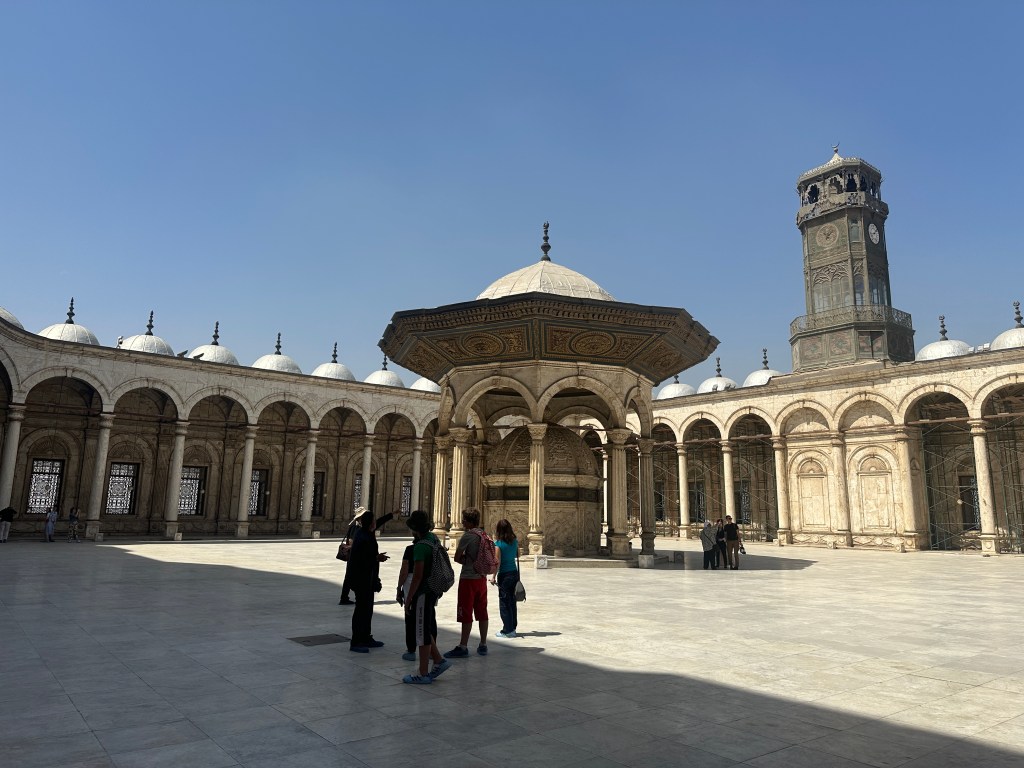
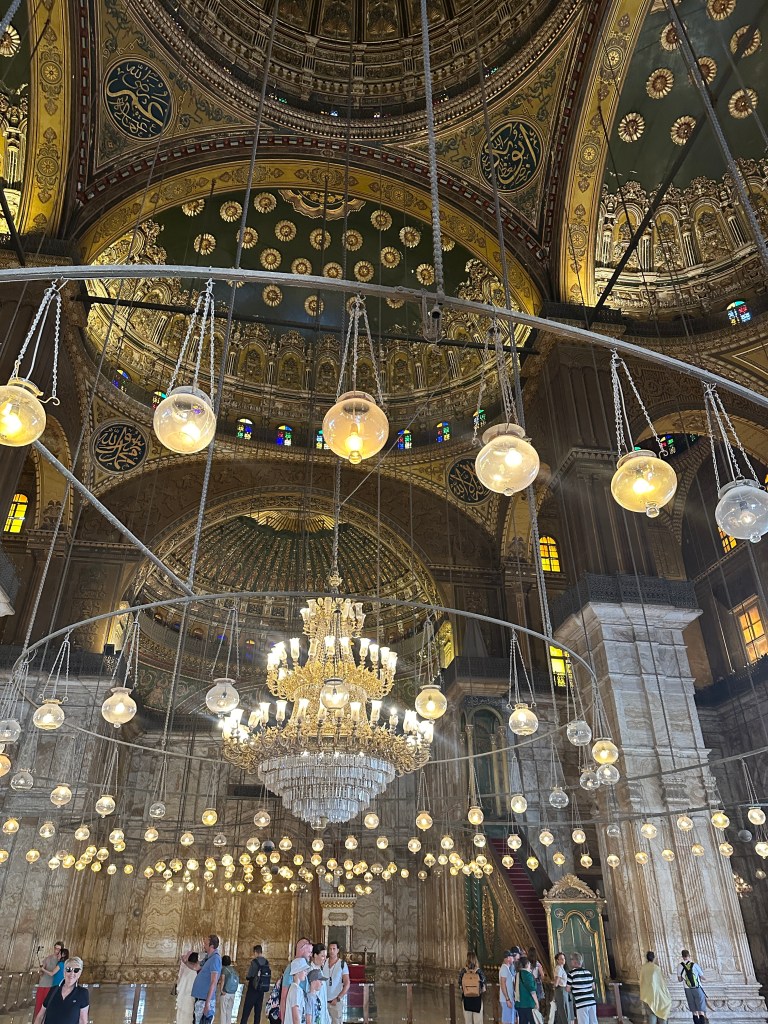
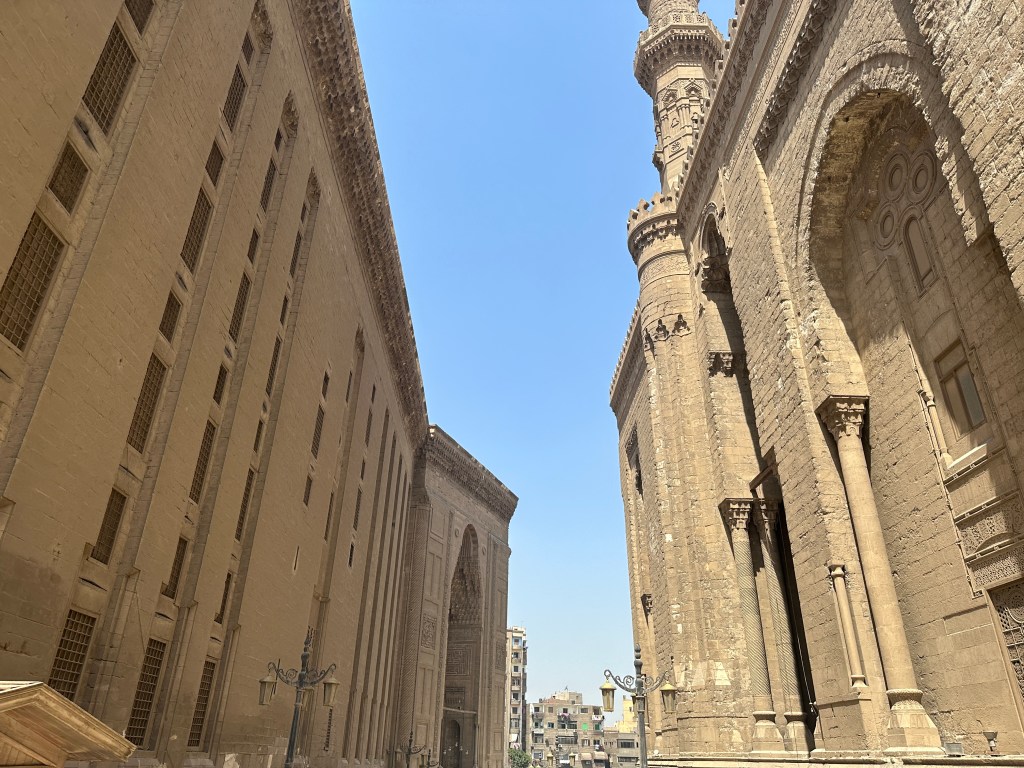
Next on our list were Cairo’s iconic mosques, each with its own tale. The Mosque of Muhammad Ali in Cairo Citadel served us sprawling views of Cairo and some Ottoman grandeur both in the exterior and interior. Ibn Tulun Mosque was impressive but a bit run down, while the Sultan Hassan Mosque was grand from the outside but bleak from the inside. We also saw Al-Azhar mosque from the outside of khan el khalili, so we crossed it off our list. 

By afternoon, we ventured to Festival City Mall in New Cairo for a shopping spree amidst famous brands. The mall’s vastness was a refreshing change, mirroring the modern face of Egypt.

Winding down at 6 PM, we hit Zamalek which is an upscale cairo island for dinner at Luuma. Here, we ordered salads and pizza but it was the local Feteer that we absolutely loved. They also provide an extensive shisha menu, with many unique flavours.

Day 5 of our Egypt trip started with a flight. At the crack of dawn (5 am to be exact), we left our hotel. By 7 am, we were airborne, heading towards Aswan, with the sun barely keeping up. An hour later, we landed, not to waste a moment. Aswan is a historic and cultural nexus on the Nile’s edge in the Southern part of Egypt. 

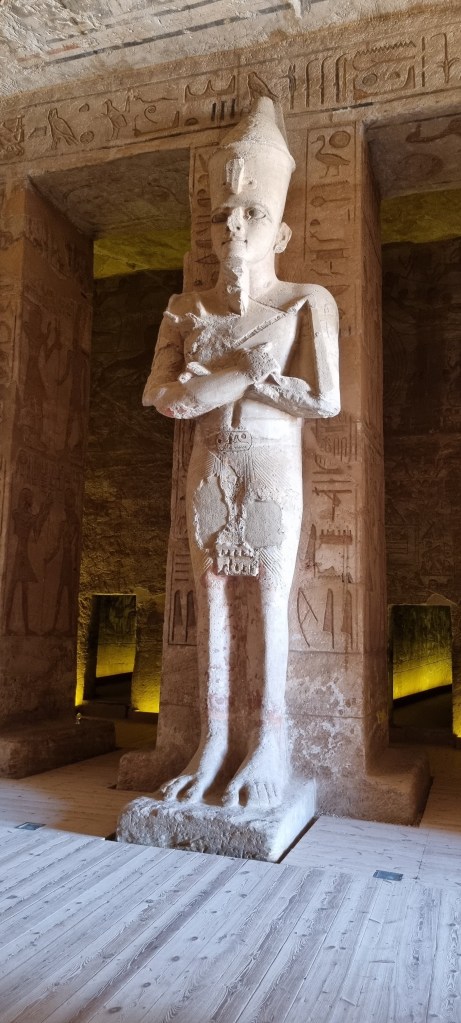
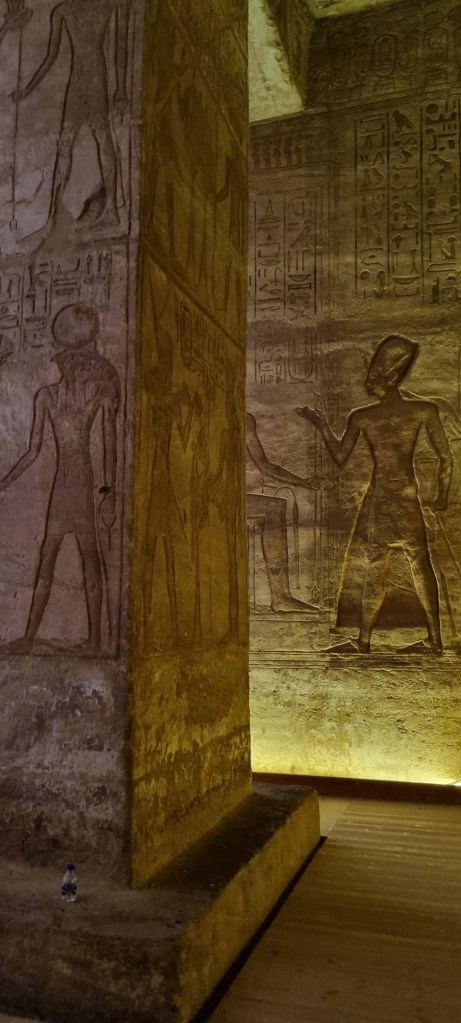
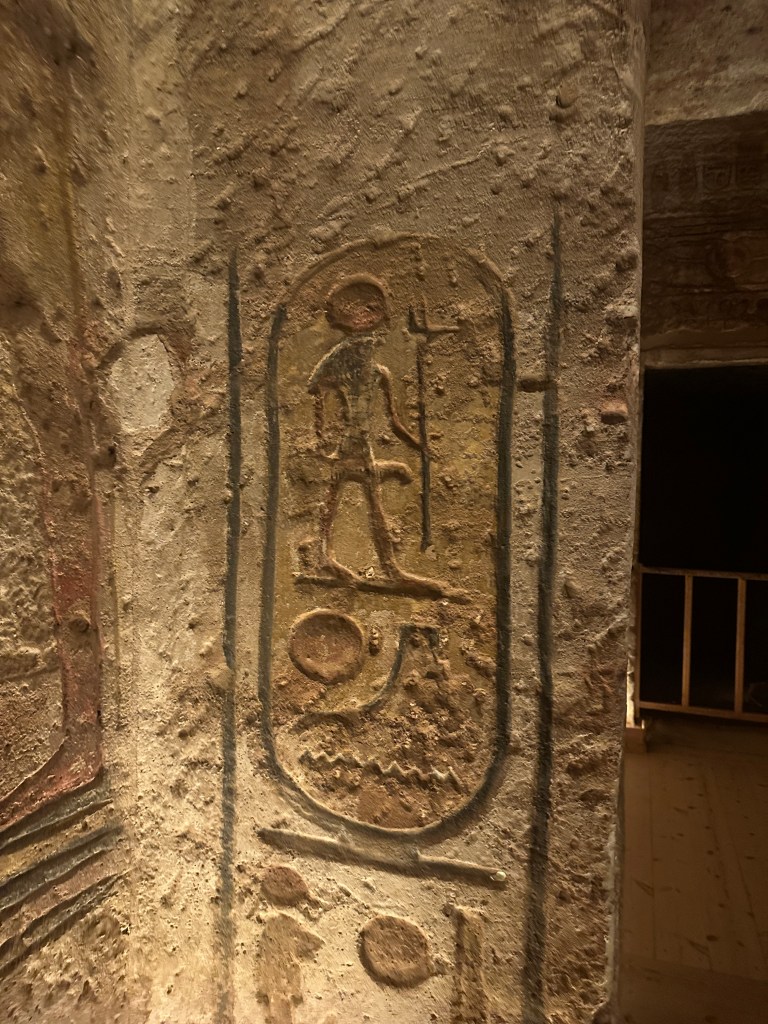
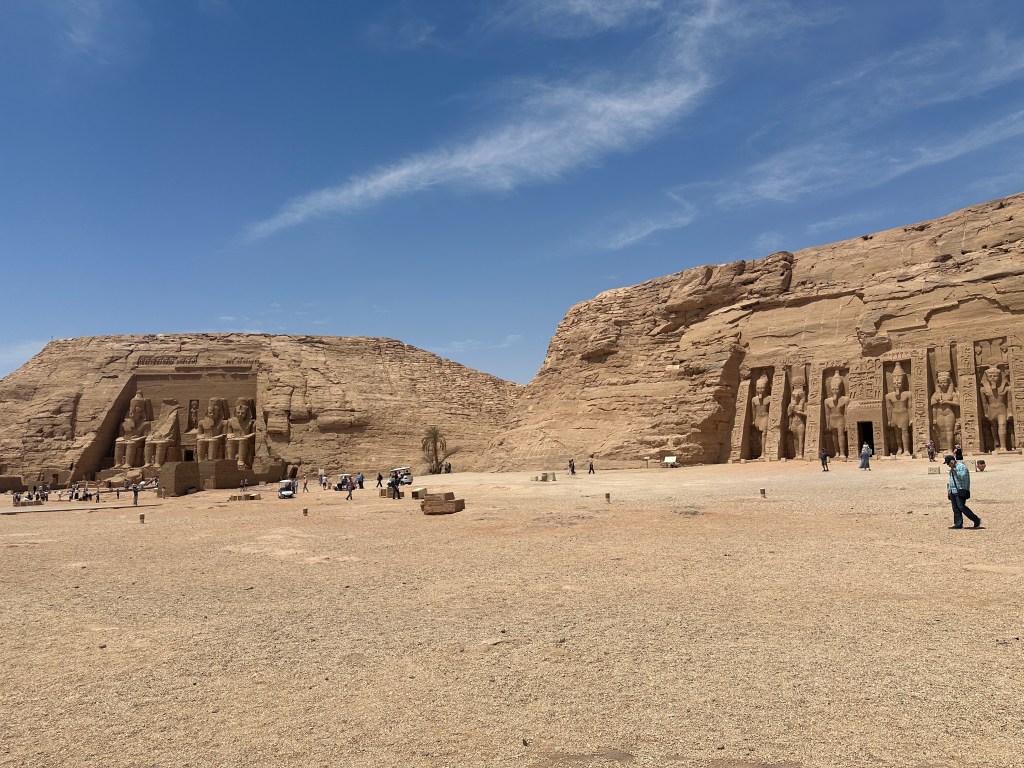
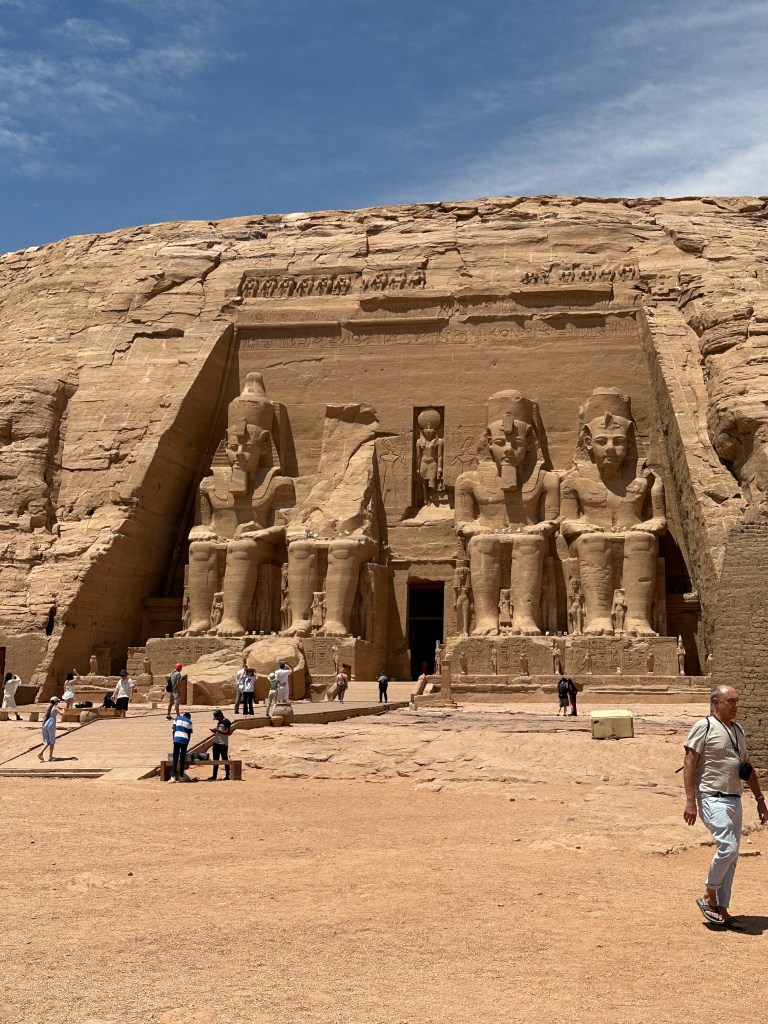
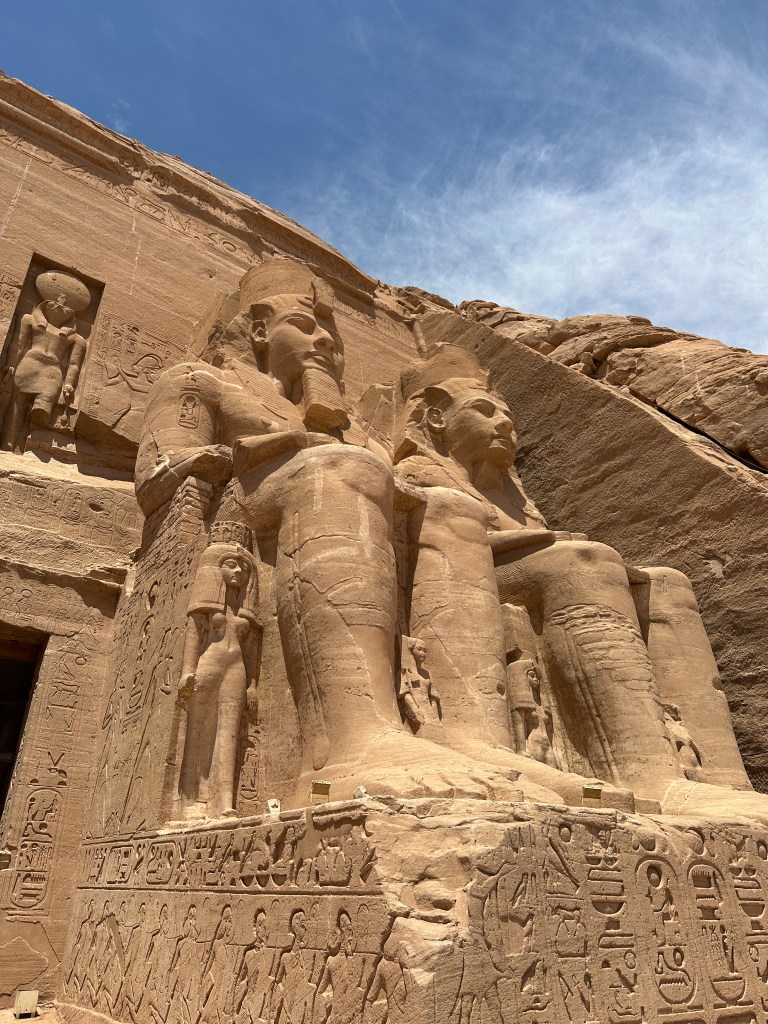
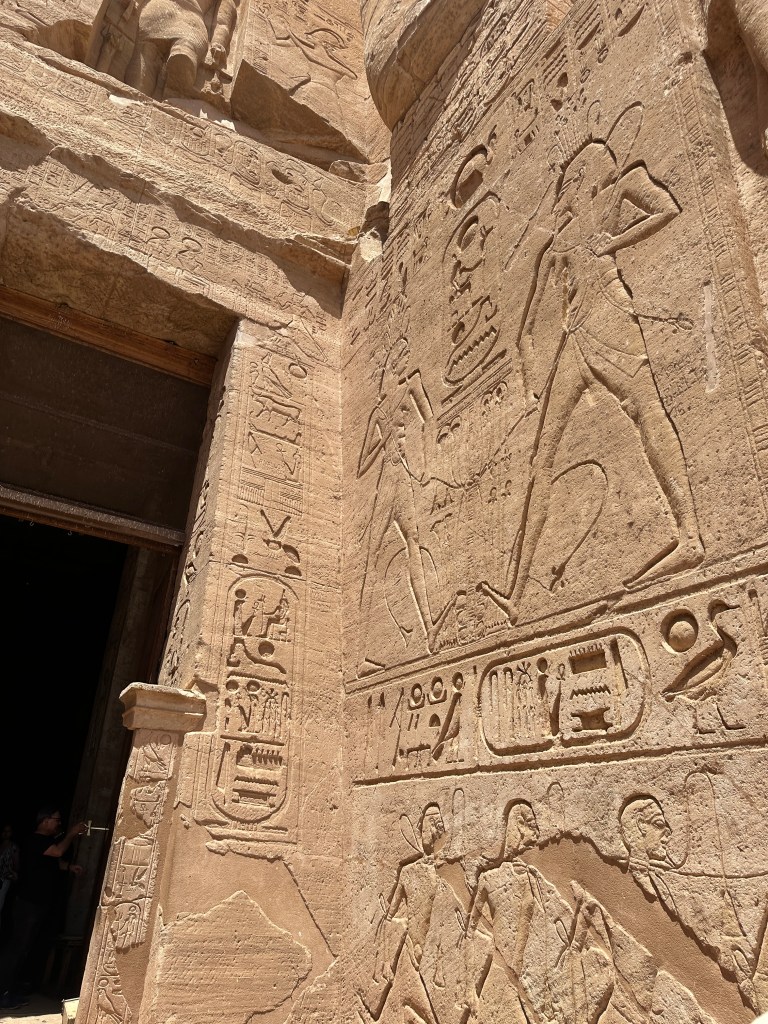
Straight off the plane, we journeyed to Abu Simbel, reaching around 11:30 am. Picture this: two monumental temples, carved out of rock during King Ramses II’s reign around 1200 B.C. One is a tribute to the king himself, and the other, a romantic gesture to his queen, Nefertari. The exteriors of these temples are nothing short of majestic, with colossal statues guarding the entrance. Inside, a hieroglyphic heaven awaits, with walls adorned with intricate carvings depicting tales of gods, battles, and the daily life of one of history’s most fascinating civilizations. For temple newbies like us, it was the perfect introduction. If photos were a currency, we’d be millionaires!

However, every adventure has its bumps. Back in Aswan, we checked into the Pyramisa Hotel on Isis Island. Potential? Yes. But the reality was a mix of poor service and questionable design choices with poor furnishing and lack of thought in charging points, desks and placements. Movenpick or Sofitel might save your day.

Speaking of Sofitel, dinner at their 1902 restaurant was a journey back to the European fine dining era. Mandatory coats and an ambience fit for royalty set the stage. French cuisine was curated and the creme brulee and eggplant dishes were the highlights. The live pianist was the cherry on top playing songs which hit memory lane. We ended the night with a boat ride back to Pyramisa. 

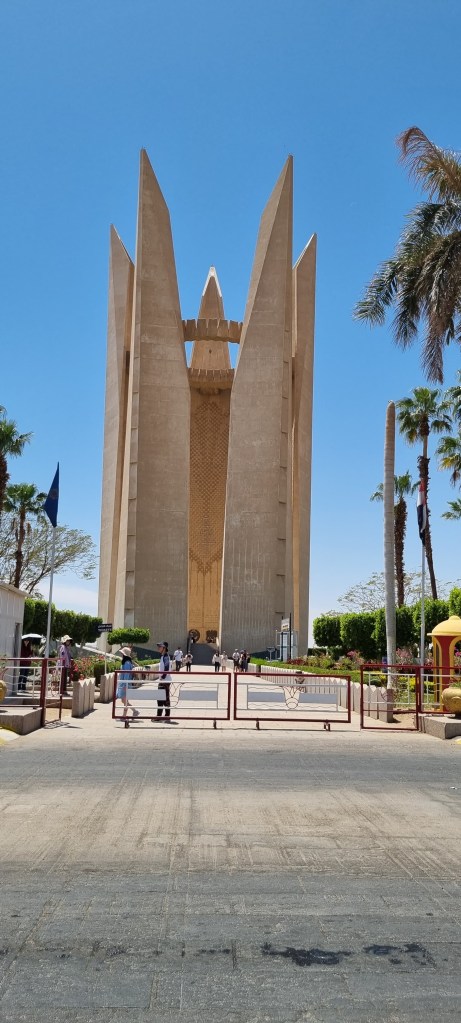
Diving into Aswan’s heart, our adventure began at the High Dam, an engineering marvel that reshaped the Nile’s course and Egypt’s future. Built in the 1960s, this colossal structure was a monumental effort in controlling flooding, providing hydroelectric power, and securing water for agriculture. 

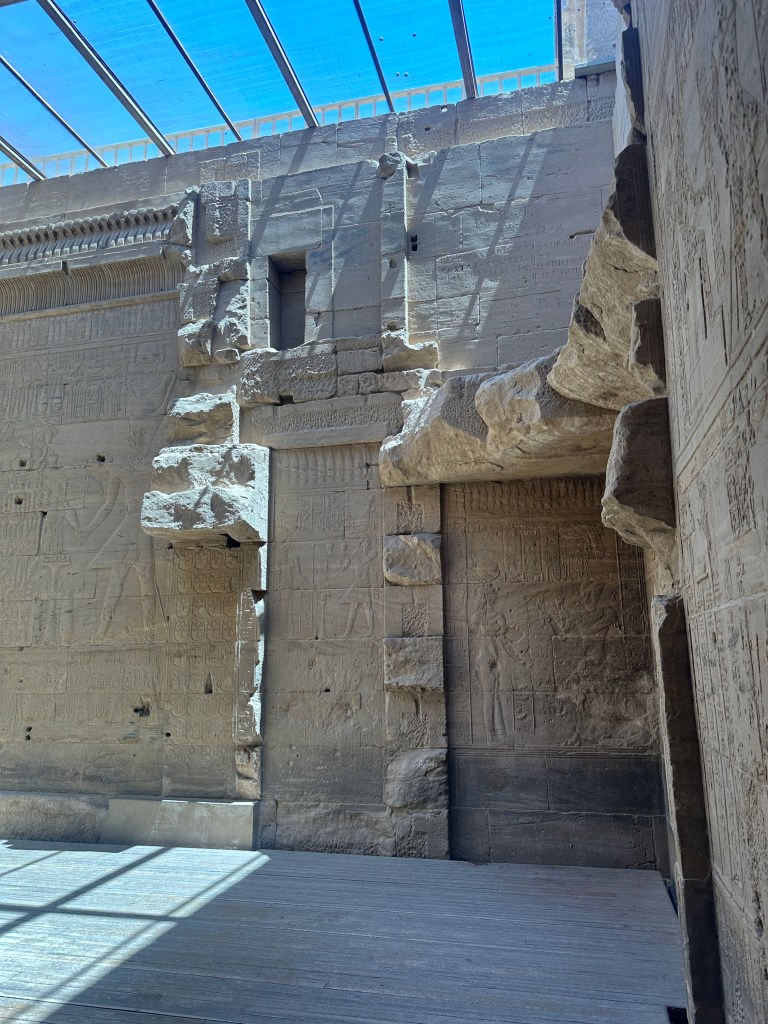
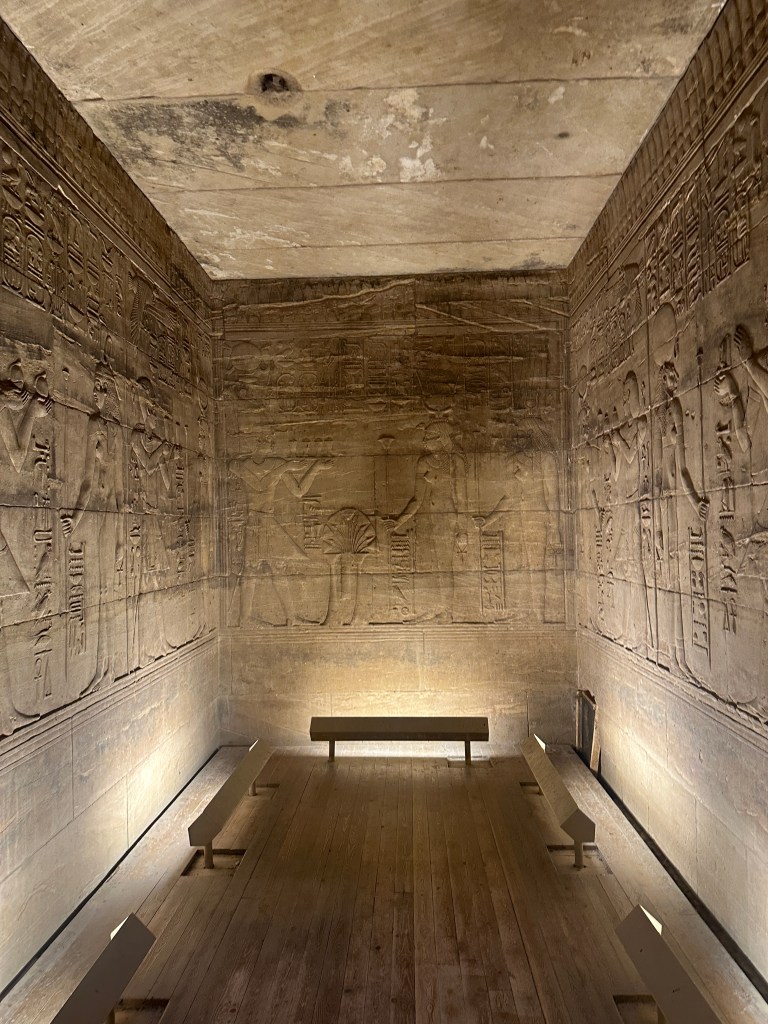
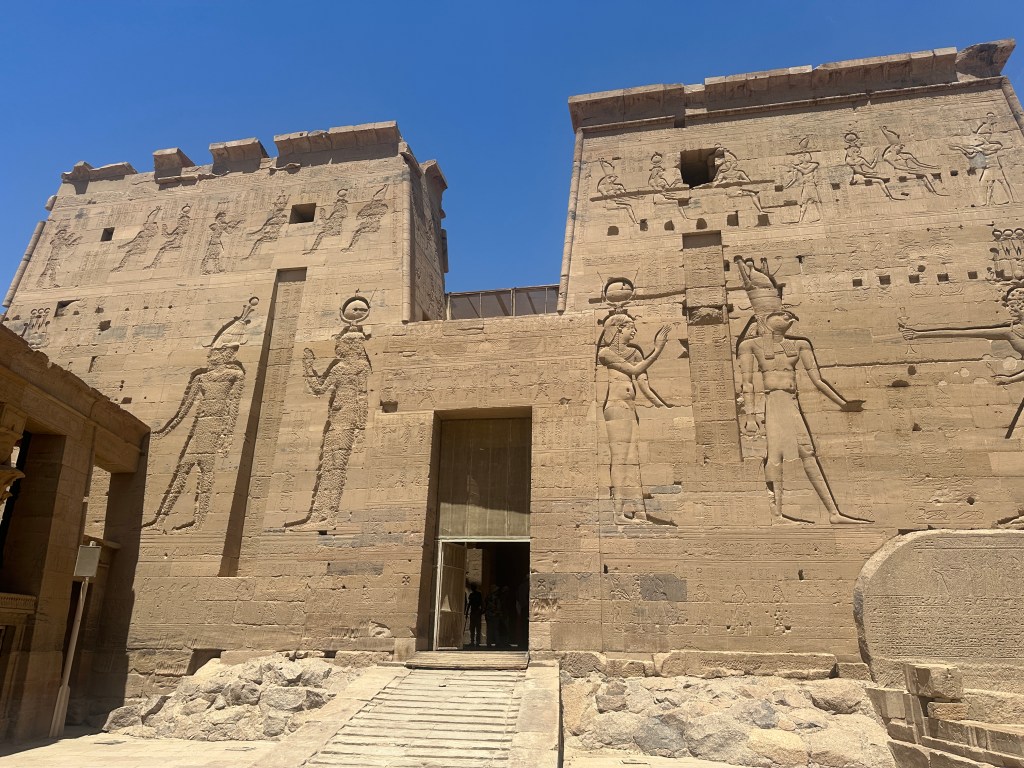
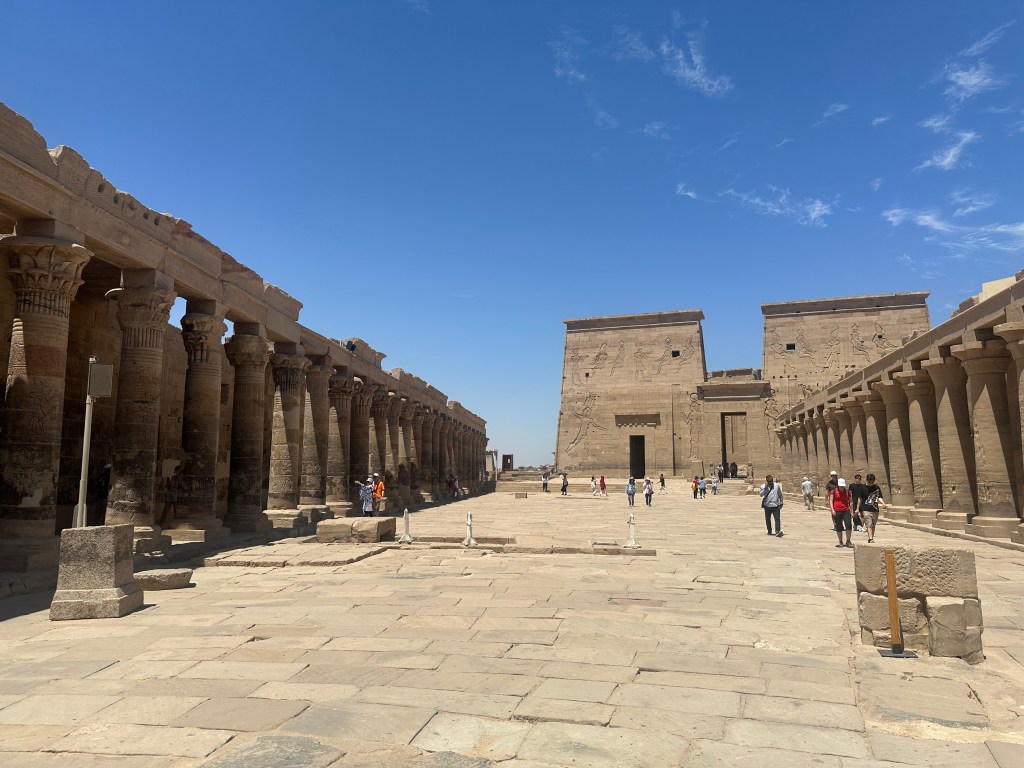
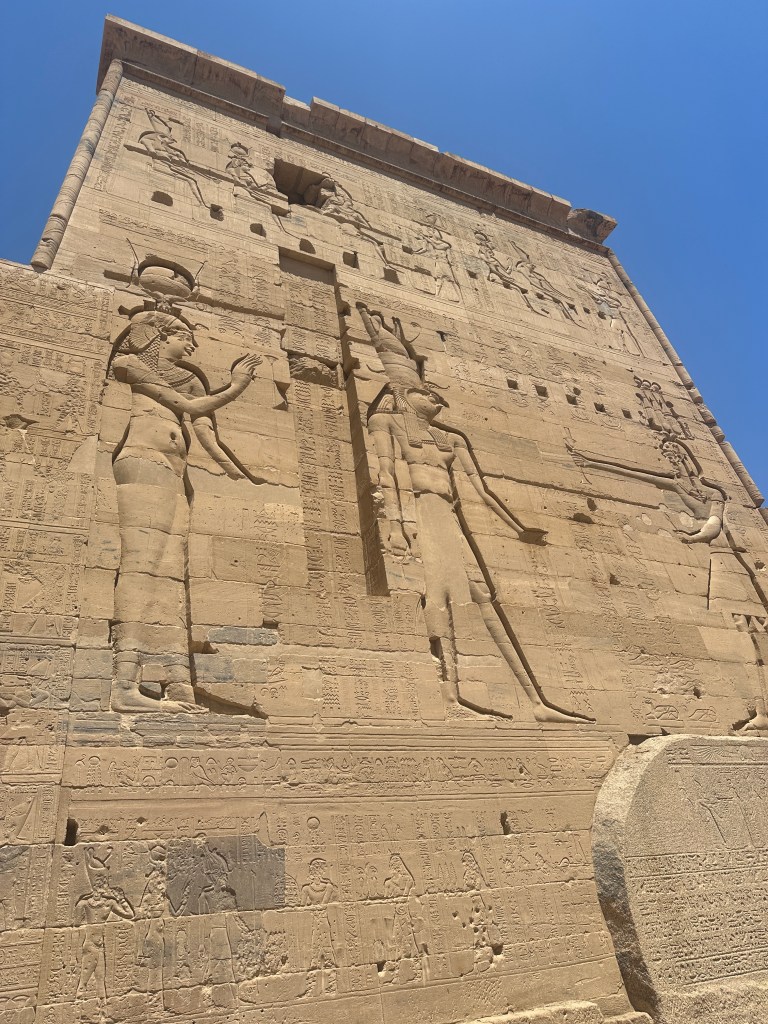
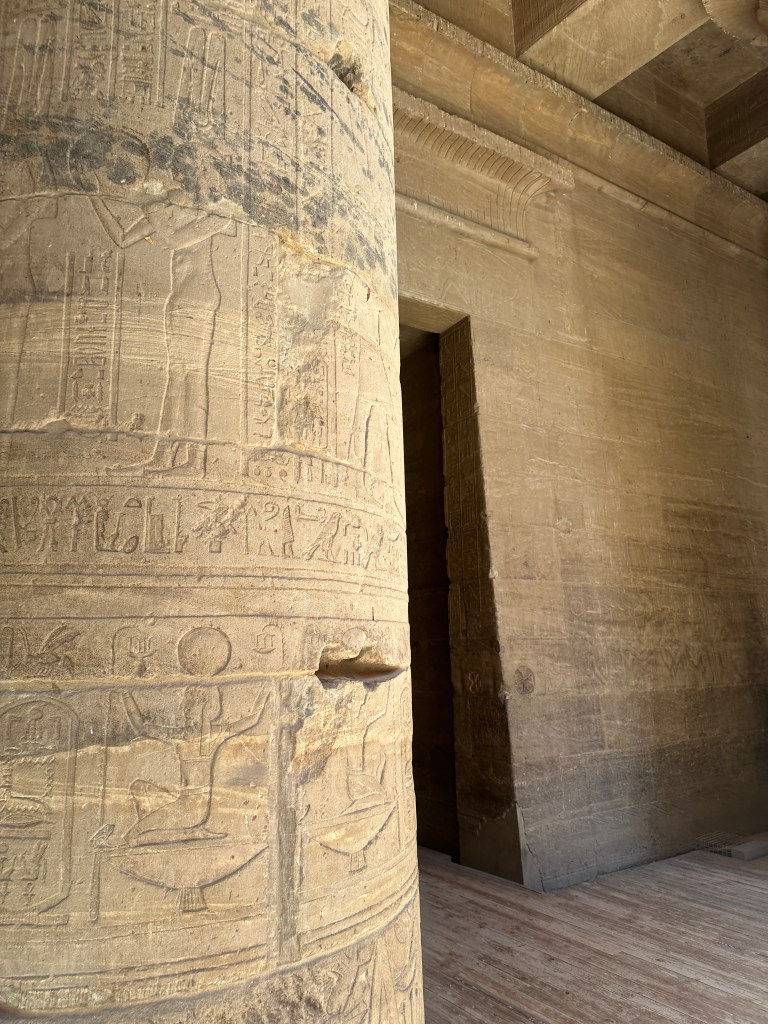
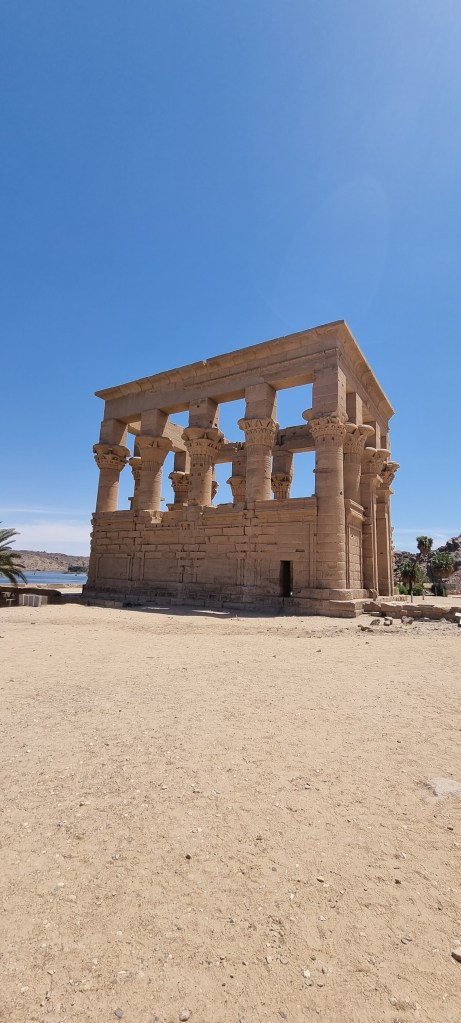
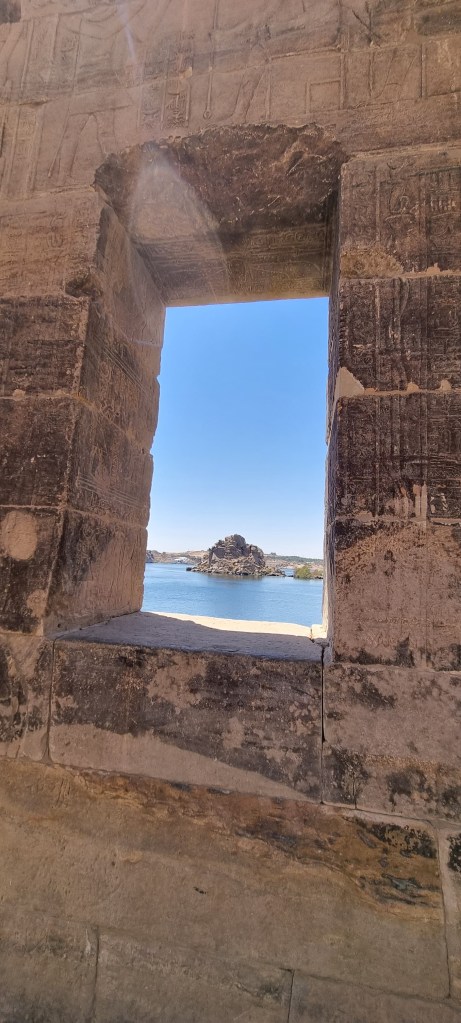
Next up, the Philae Temple built during the Greco roman period, accessible only by a quaint boat ride, felt like drifting into a dream. This jewel of ancient architecture, dedicated to the goddess Isis, sits elegantly on an island, its pillars and carvings narrating tales of gods mingling with mortals. Walking through its halls, the delicate hieroglyphs and majestic columns felt very magical but the weather of the scorching sun was not a great accompaniment.

The voyage continued aboard the Sonesta Sun Goddess, our floating palace. With suites boasting balconies that offered front-row seats to the Nile, spacious interiors, and staff that tried their best to take us, we were living the egyptian dream. 

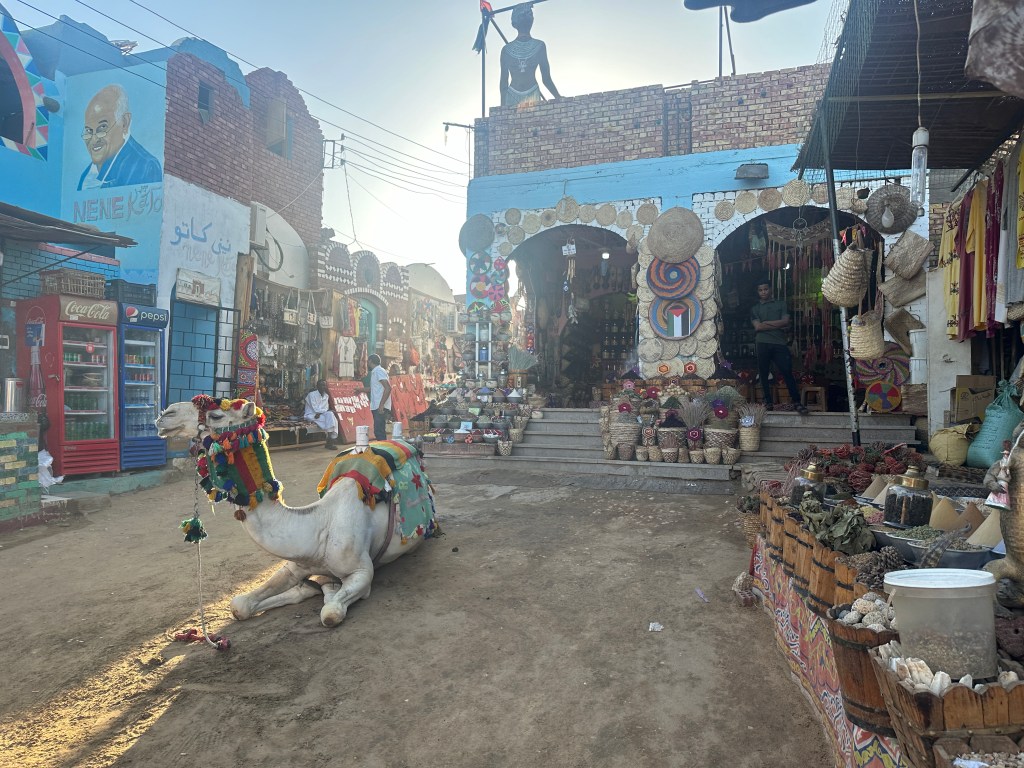
A pit stop at a Nubian village introduced us to a culture as vibrant as its homes. Nubians, with their rich heritage and artistic flair, paint their world in blues and whites, offering a stark contrast to the desert’s golden hues. Sipping on Kahawa Turki, we soaked in the atmosphere. The day wrapped up with a cultural showcase back on the cruiser, proving that Nubian rhythms could make even the stiffest traveller like me, unfortunately, sway. 

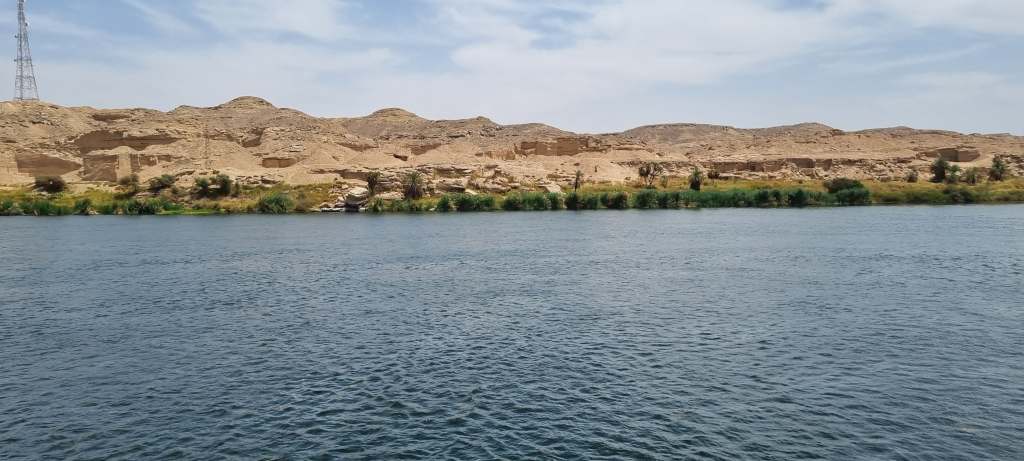
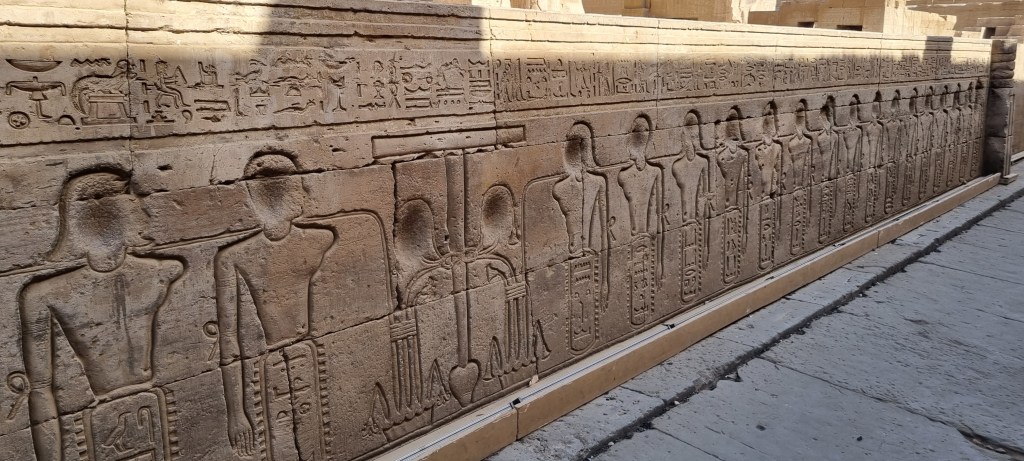
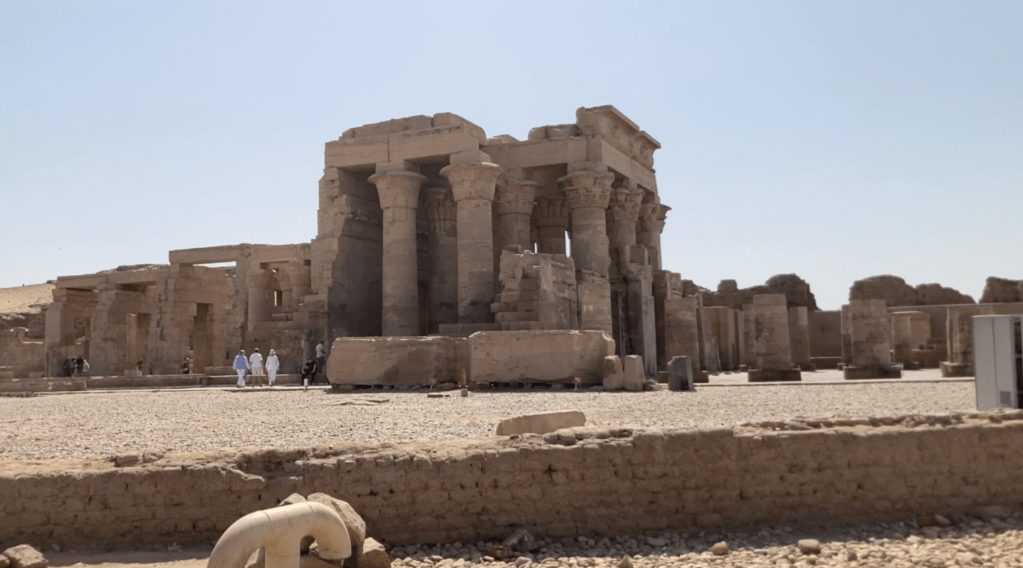
Sailing, our day began with the Nile guiding us to Kom Ombo. Dedicated to both Horus, the falcon god, and Sobek, the crocodile god. This wasn’t just a temple; it was a divine duplex with courtyards and sanctuaries aplenty, showcasing scenes of battles and divine offerings. Inside, we encountered mummified crocodiles and a nilometer, but the real jaw-dropper? Hieroglyphs detailing ancient medical practices, from C-sections to surgical tools, which is incredible to think that these tools were invented like 3000 years ago. 

Next up, the Crocodile Museum, where we met Sobek’s mummified minions. Kinda cool, kinda creepy. Lunch was a culinary voyage back in time with koshari and okra served family-style on the cruise. Best. Egyptian. Meal. Ever. Simply, it was divine. 

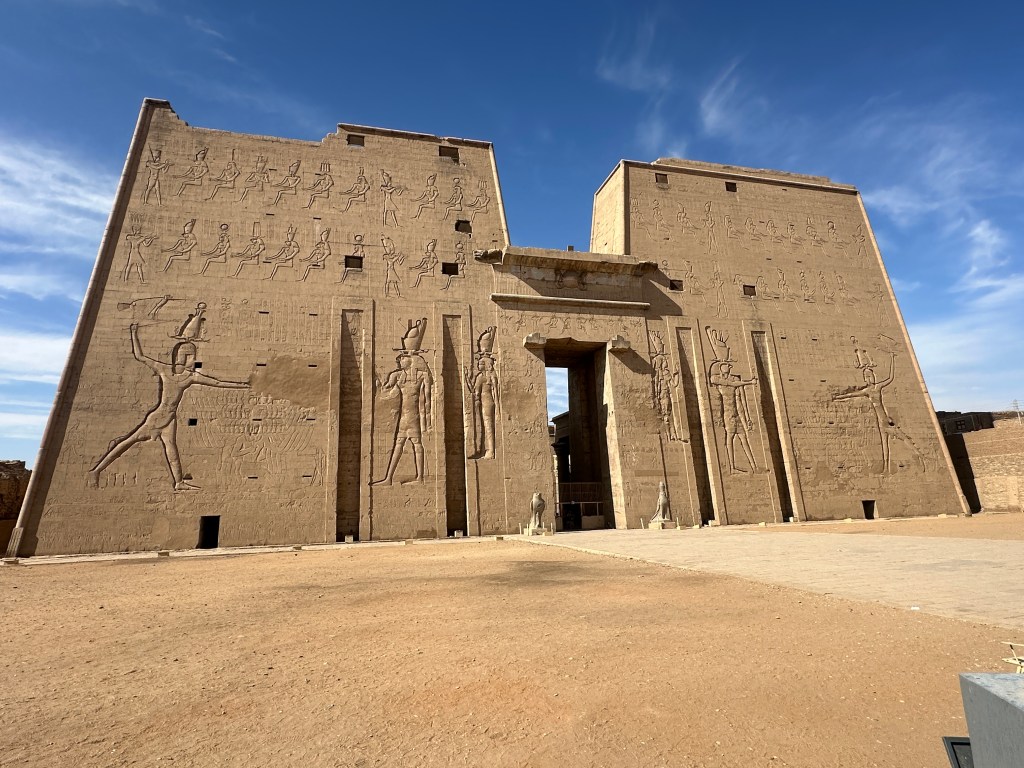
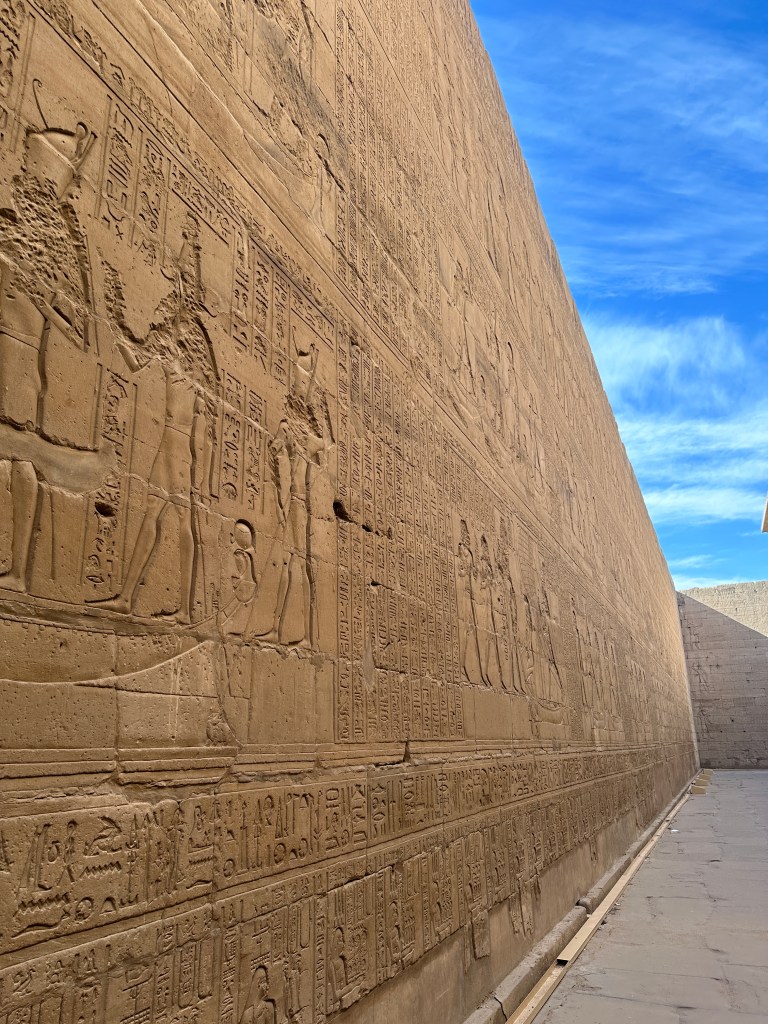
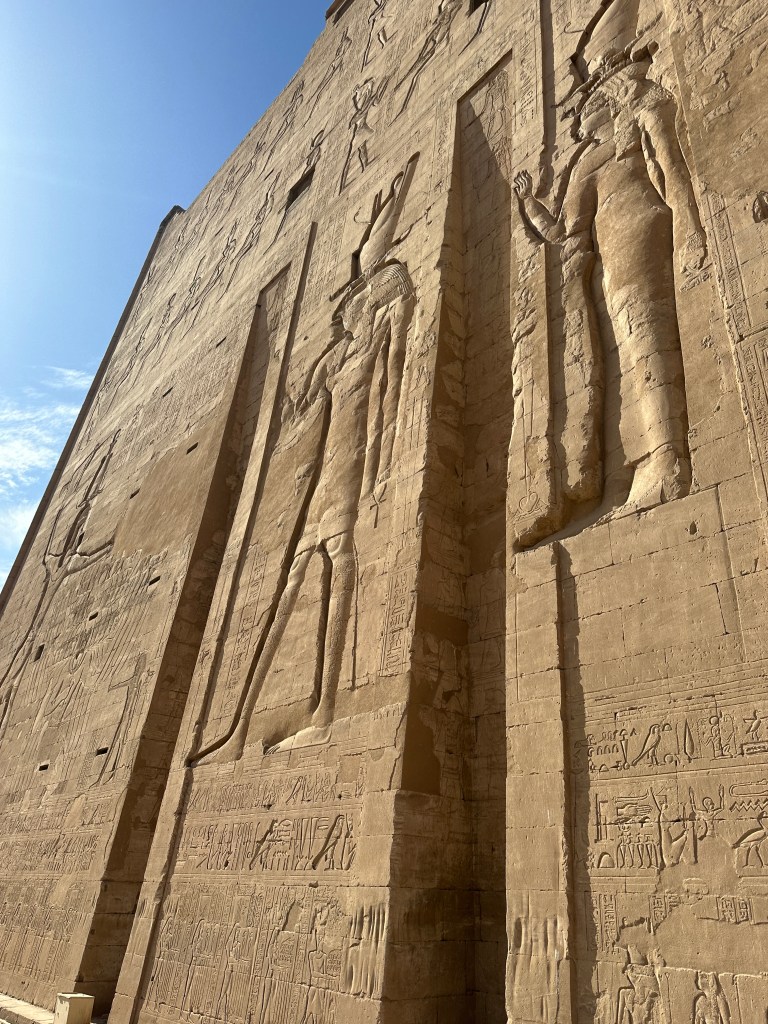
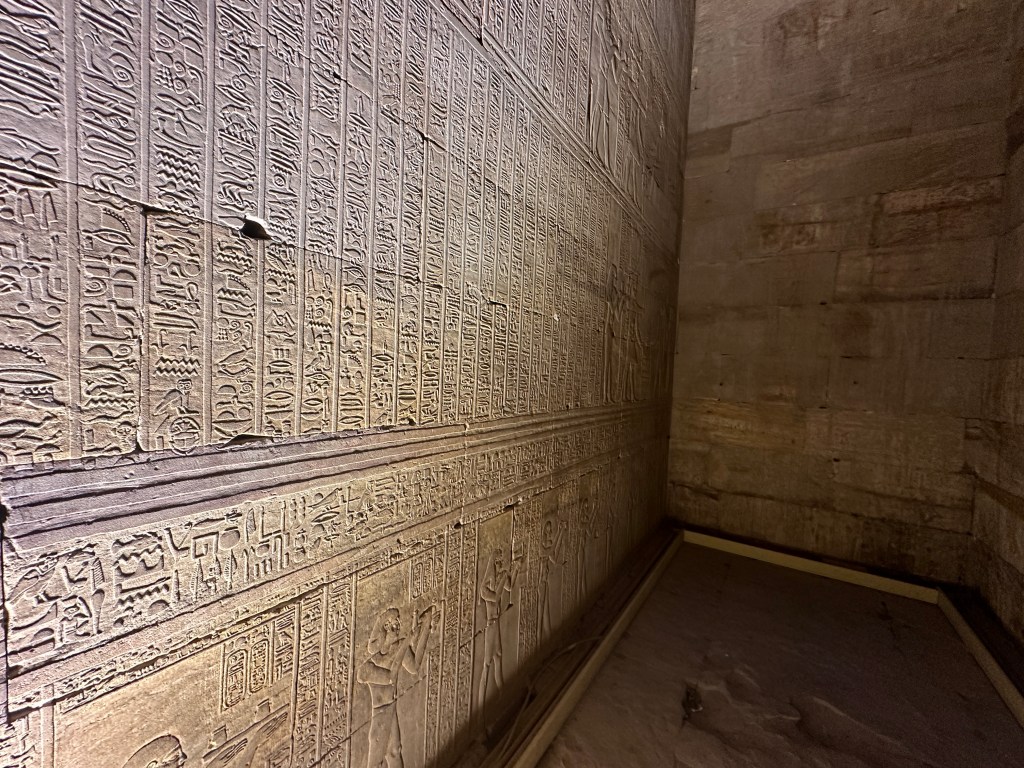
Our sails then took us to Edfu Temple, which is said to be the only temple in Egypt which is in pristine condition. Reaching through a horse carriage to the main temple complex we were stunned at its grandeur. Walking through its courtyards and chambers felt like flipping through the pages of a comic book, with Horus and Set battling it out in stone. The engravings were not just decor; they were the ancient Egyptians’ binge-worthy TV-series, complete with drama, conflict, and the triumph of good over evil.

The day wrapped up with a barbeque on the terrace while the Ship was docked in Esna. Ohh, and let’s not forget the massage we took before dinner because even the most rugged adventurers need a little pampering.

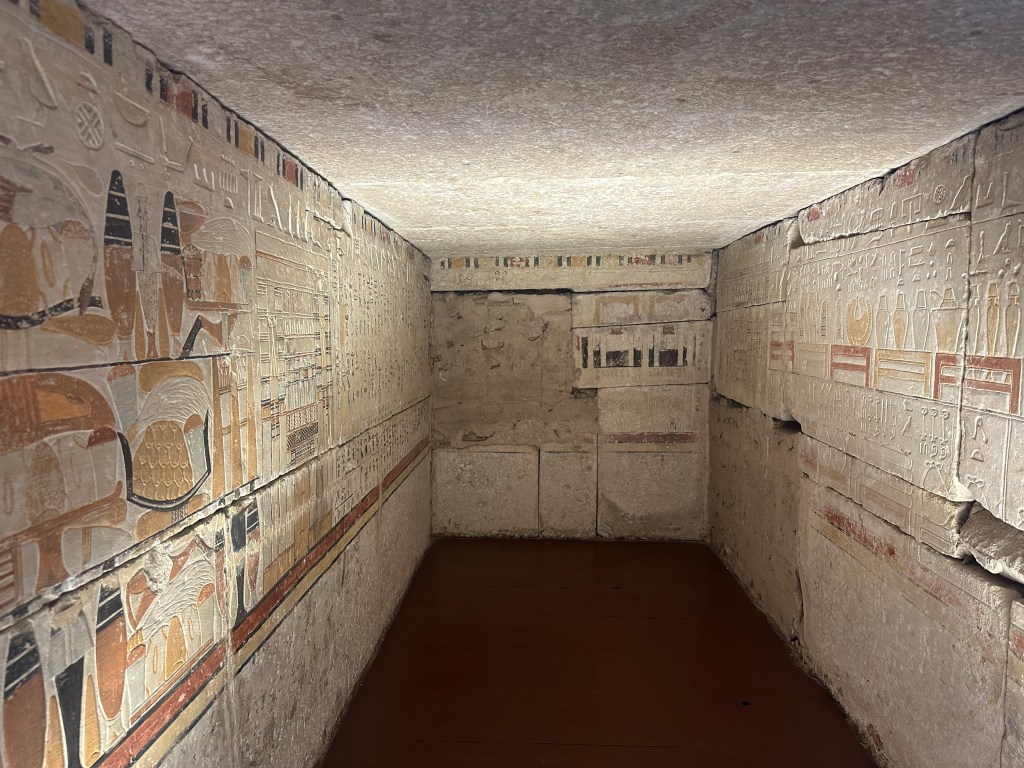
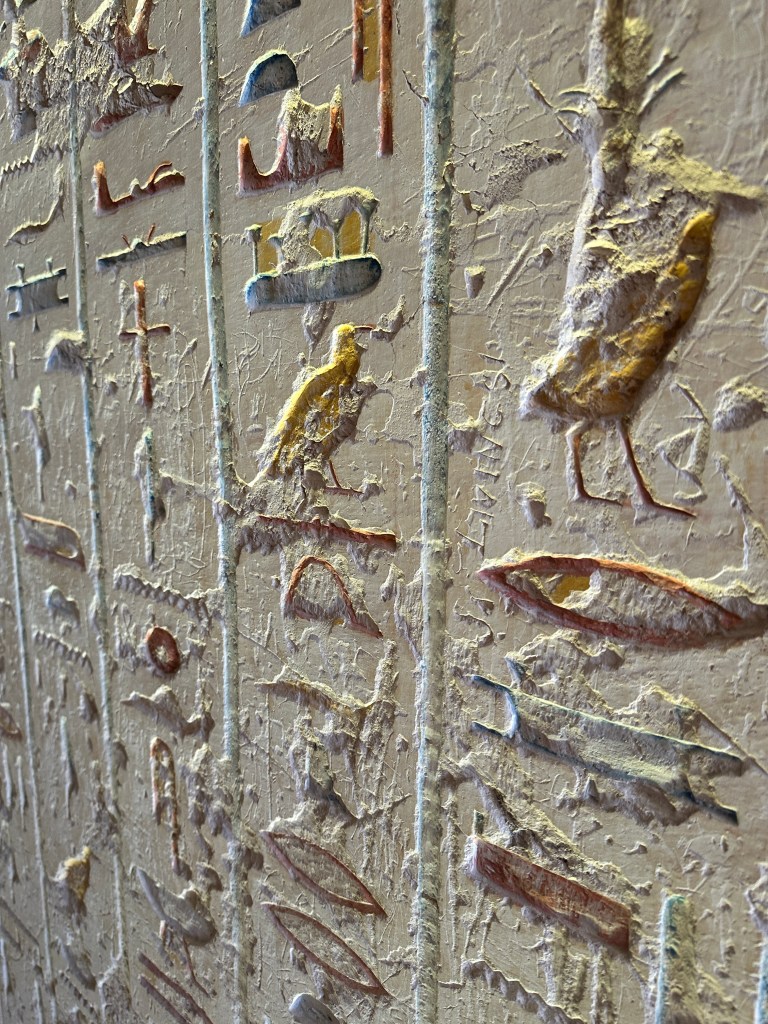
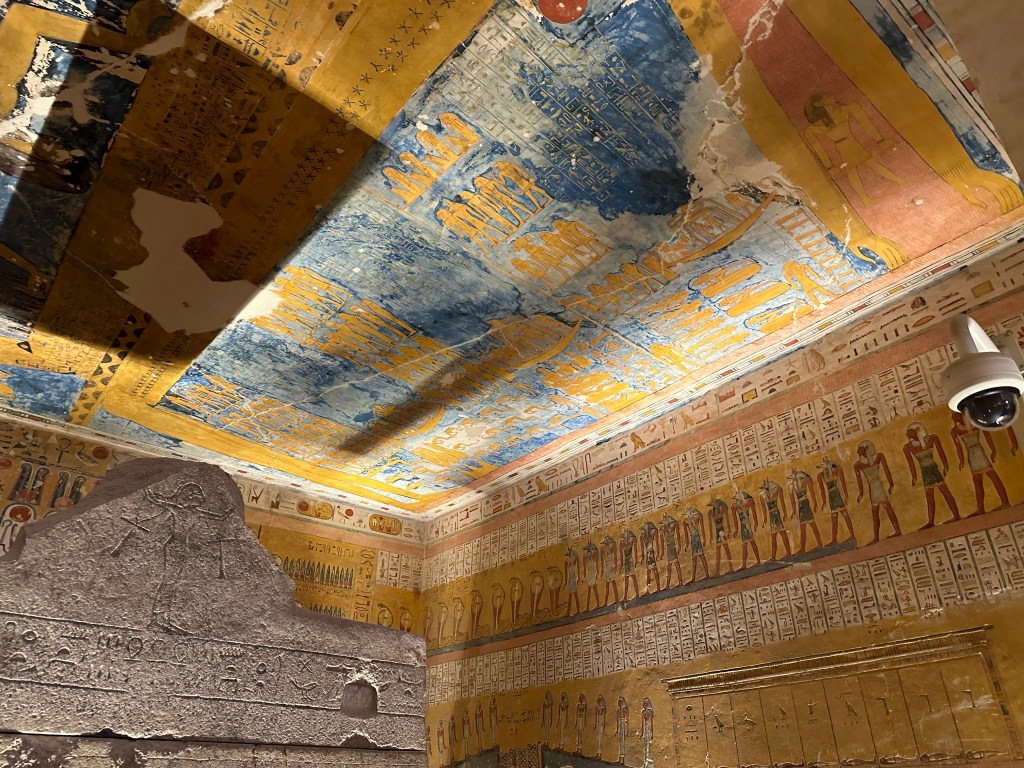
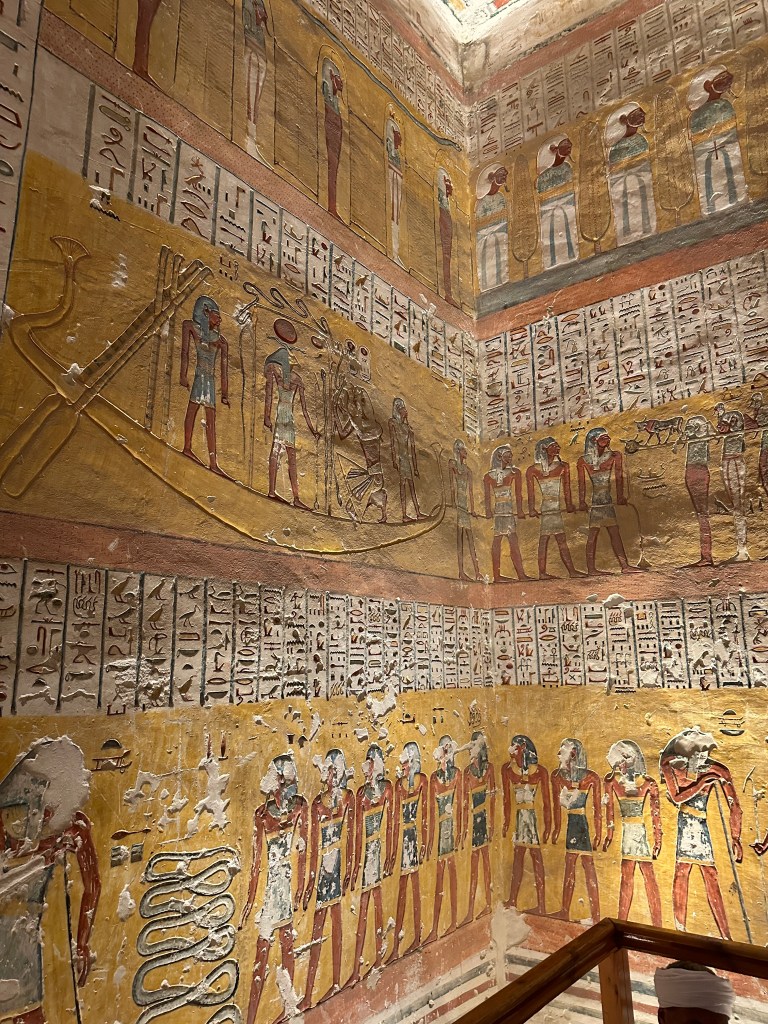
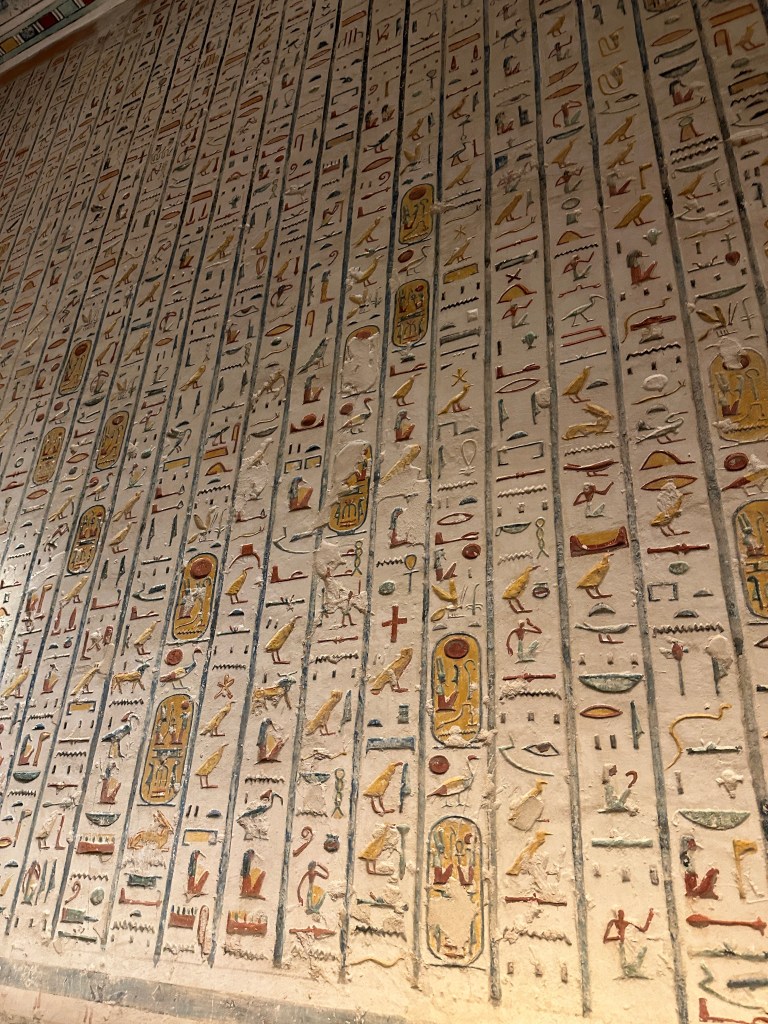
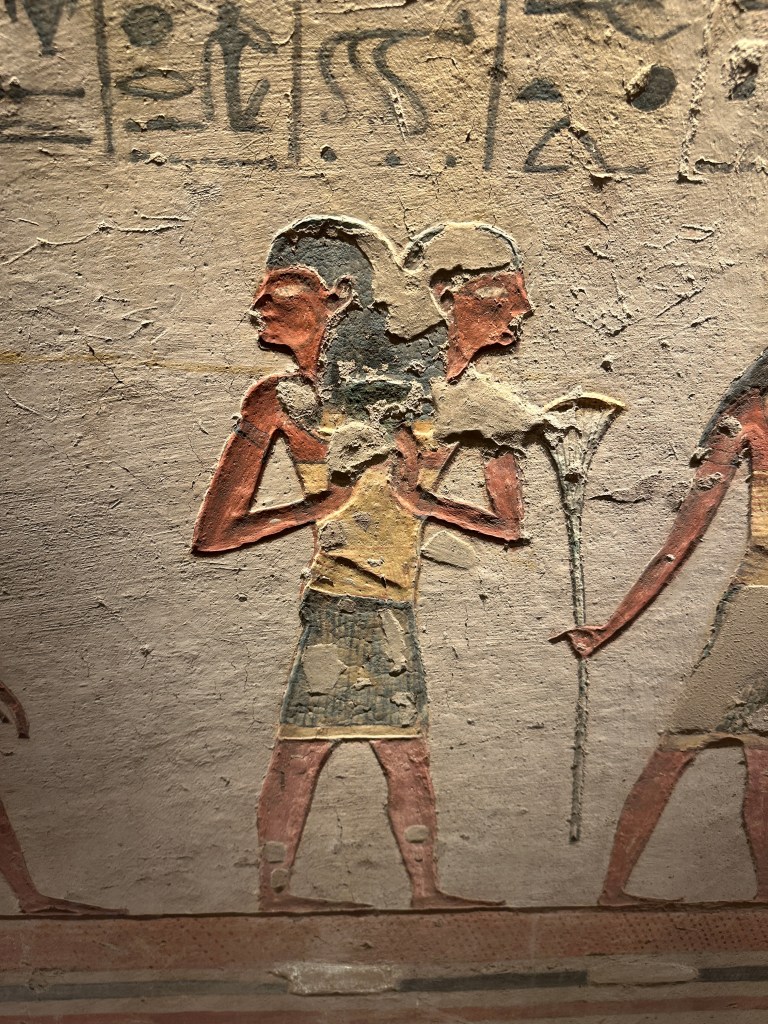
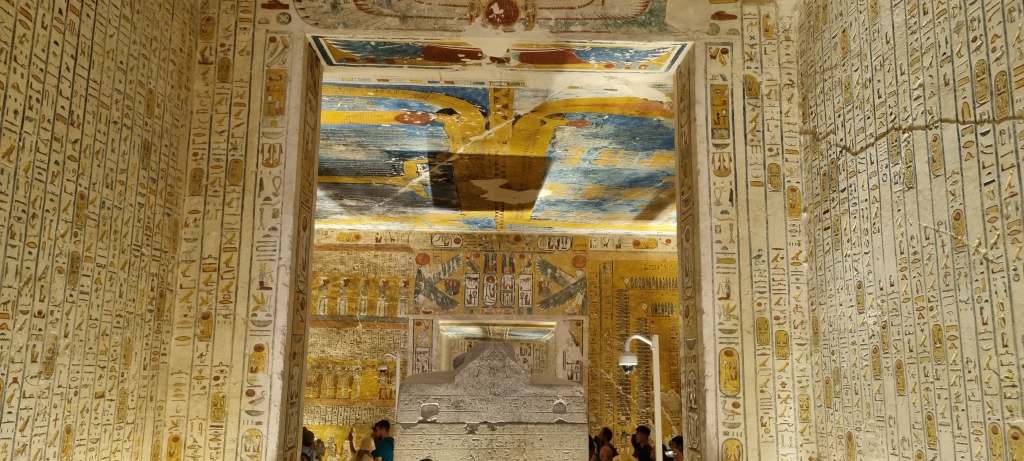
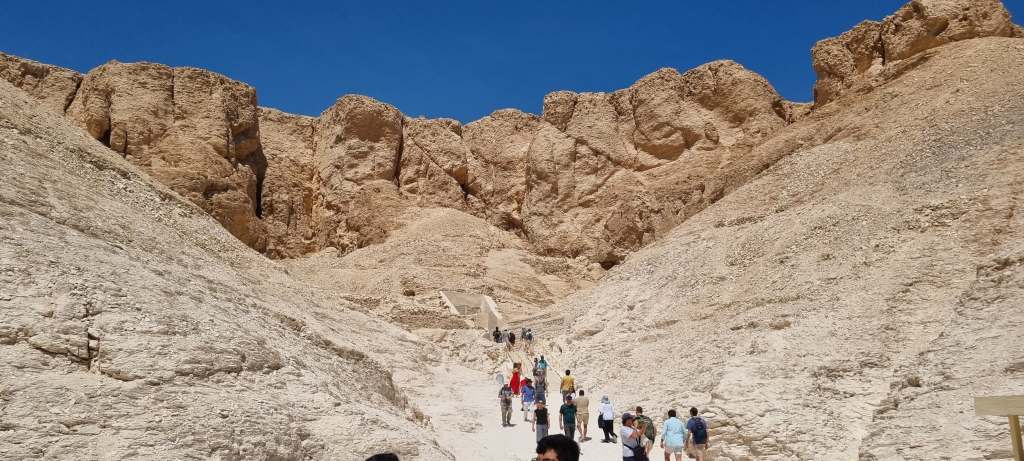
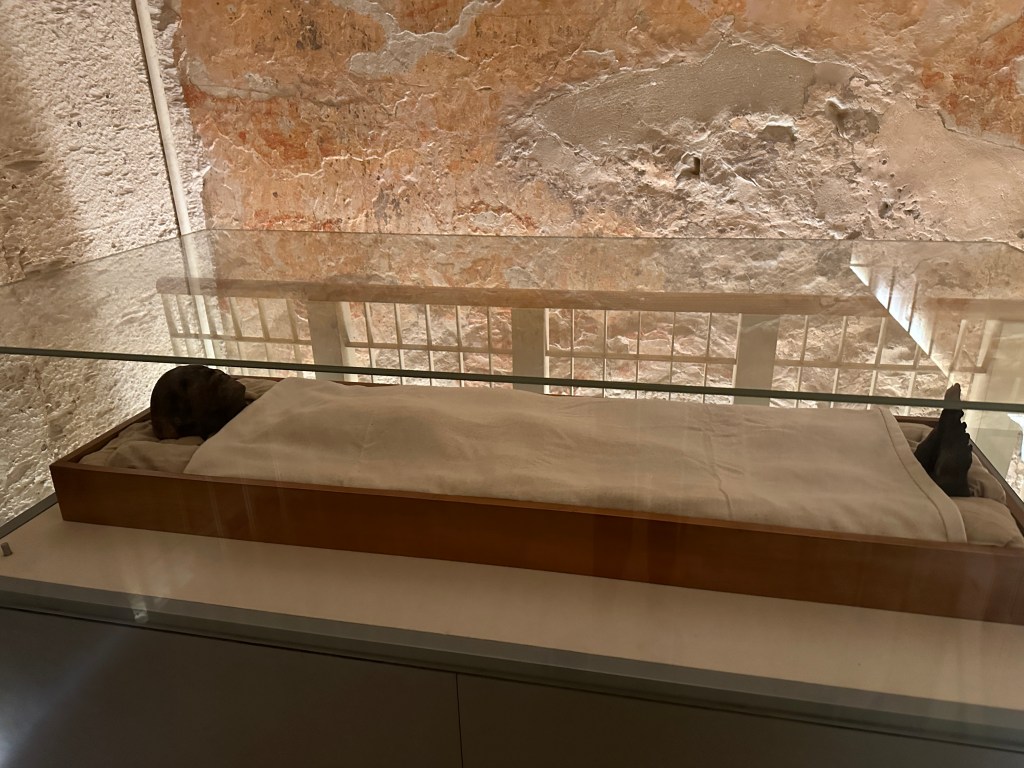
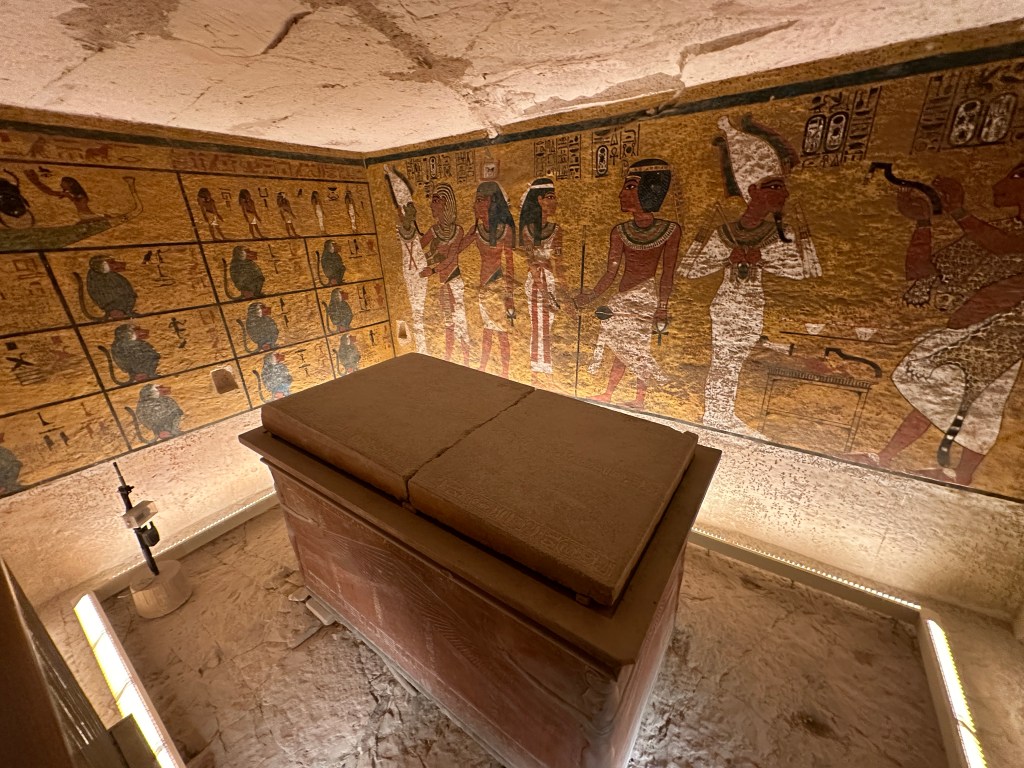
Luxor, the city where ancient royalty favoured hidden tombs over towering pyramids, unfurls its history alongside the Nile’s gentle flows. Our exploration commenced at the dawn of civilization in the Valley of the Kings. This necropolis, set against the backdrop of rugged cliffs, served as the final resting place for Egypt’s greatest rulers. Unlike their predecessors who opted for pyramids, these pharaohs chose the valley’s secrecy to guard against grave robbers. With tombs adorned in vibrant hieroglyphics, the site offers a colourful passage into the afterlife, narrating tales of divine journeys and earthly triumphs. Here, we stood where Tutankhamun was buried and also along the tombs of Seti I and Ramses II. 

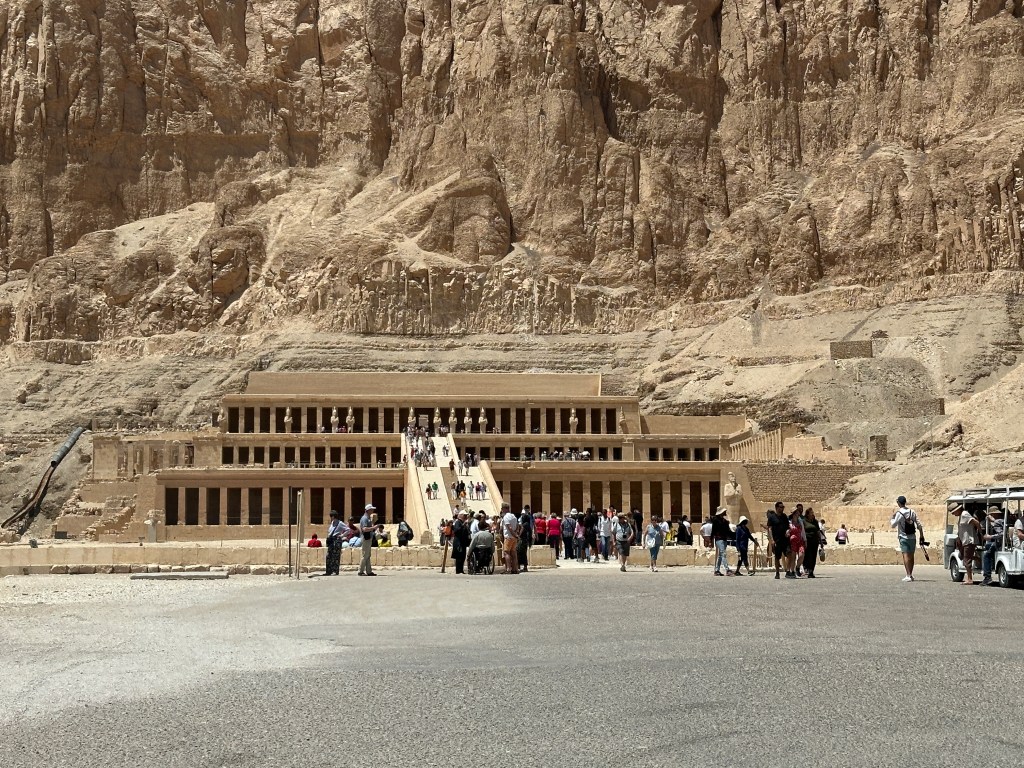
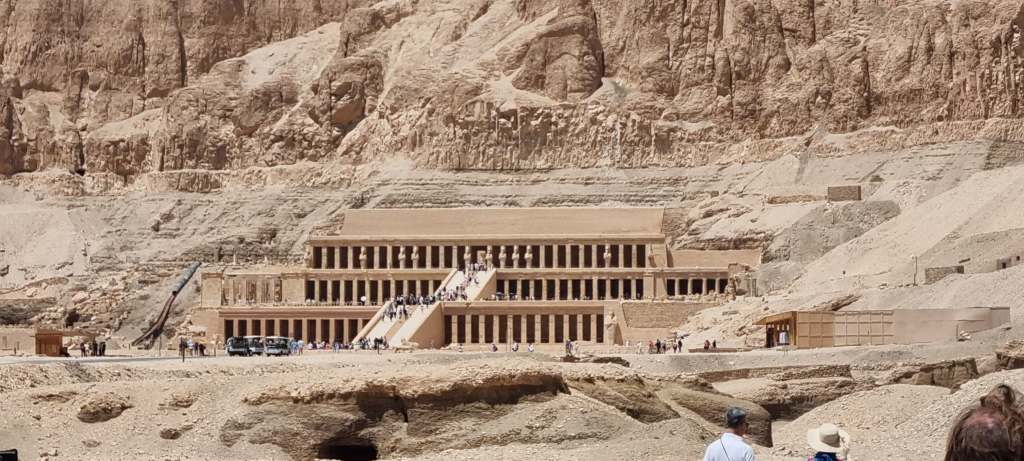
Next, we scaled the heights to the Temple of Hatshepsut, a monument that’s as much a tribute to the queen’s reign as it is to those with the stamina to reach it. The midday sun turned our visit into an impromptu sauna session. Its terraced structure and different architecture was interesting and fascinating as a tourist. However, at this time the heat was getting to us. 

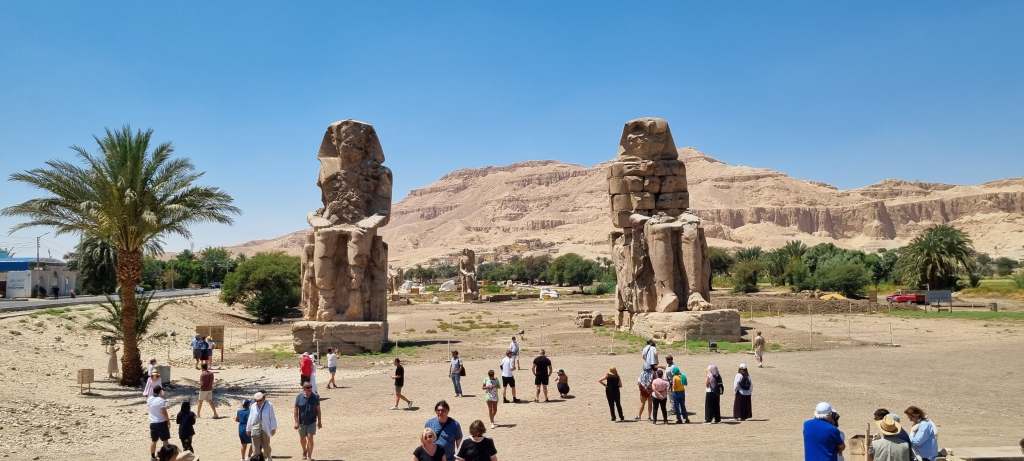
A brief pause at the Colossi of Memnon offered a moment of awe which were towering statues standing guard all for the grand prize of zero pounds.

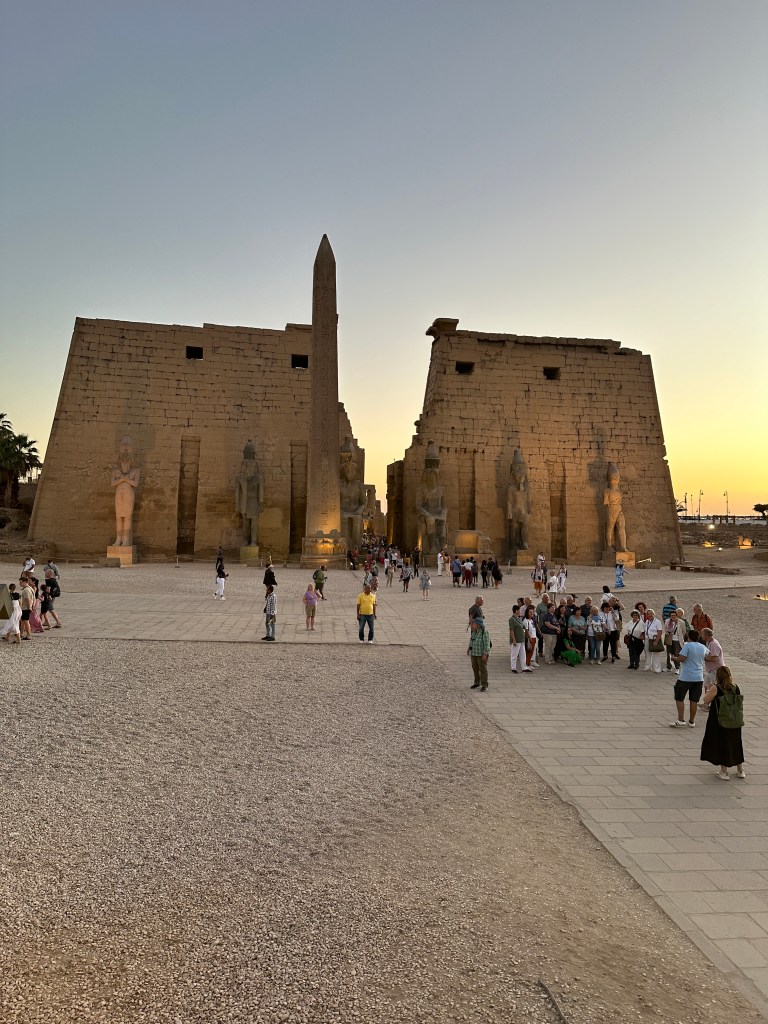
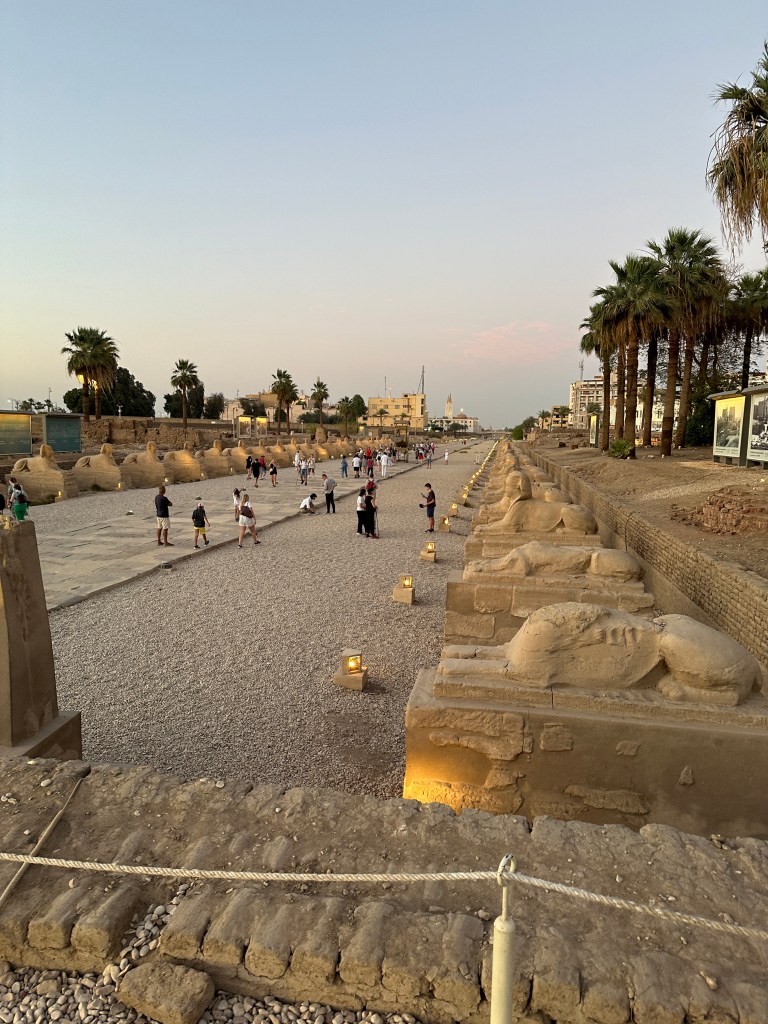
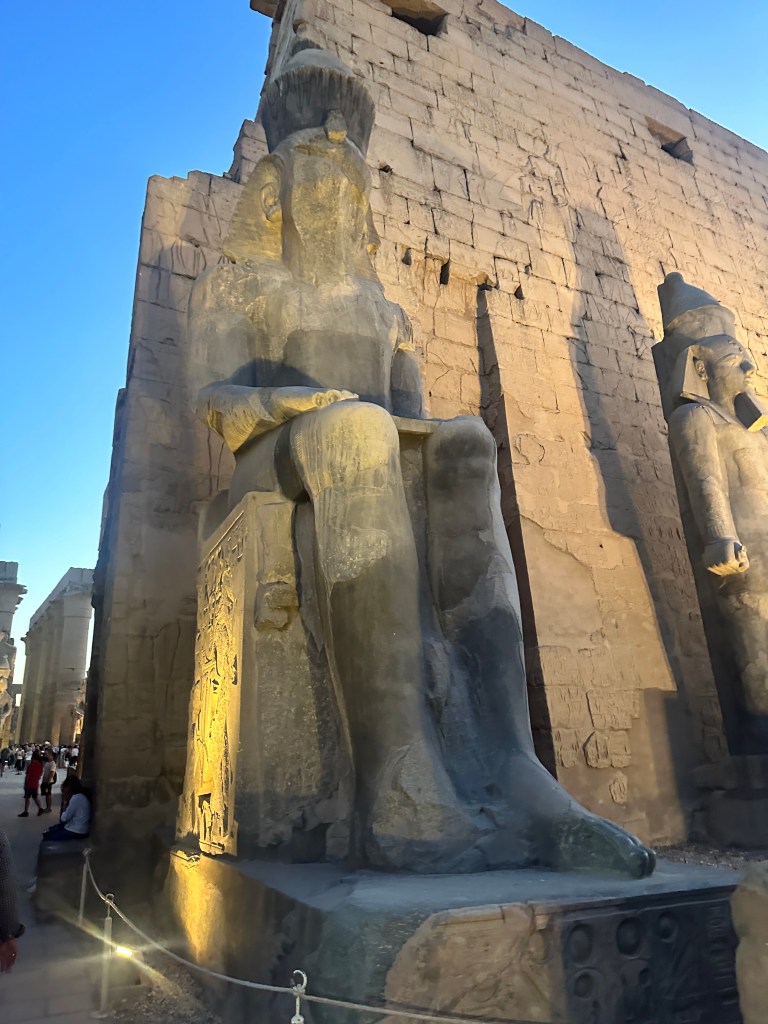
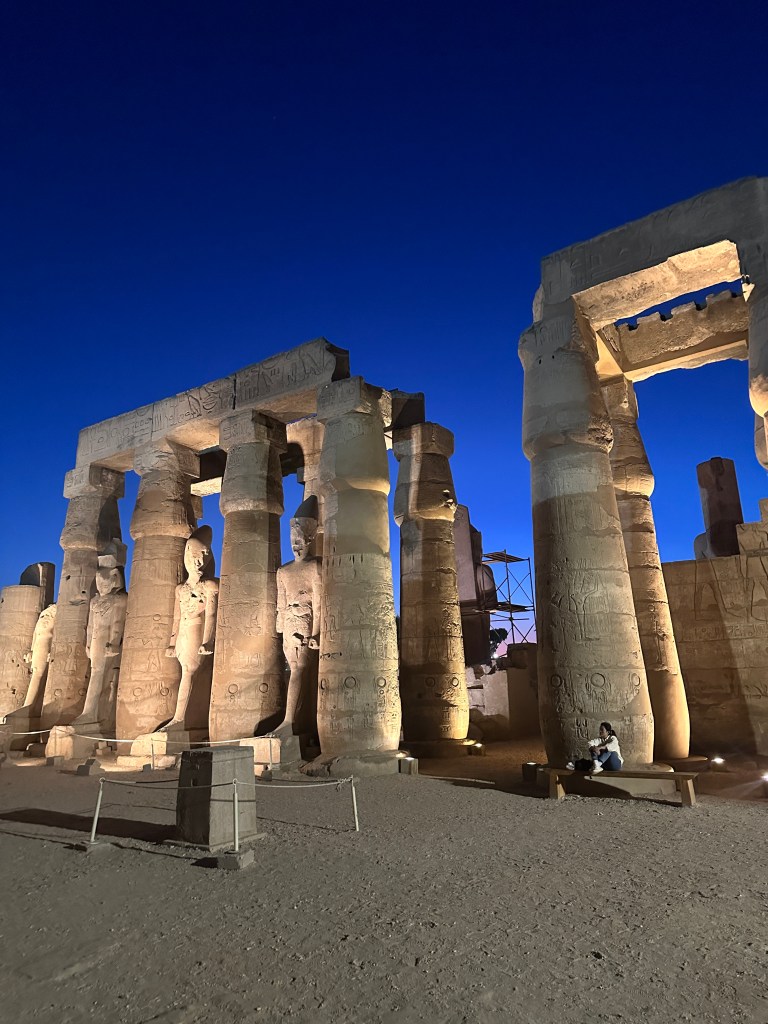
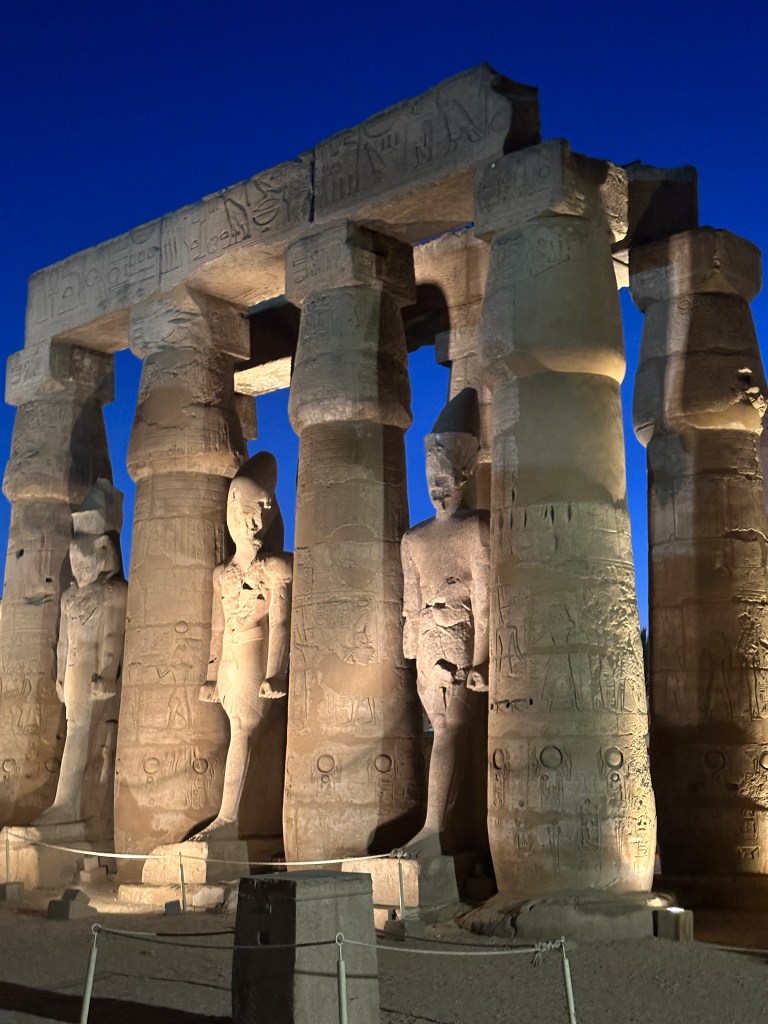
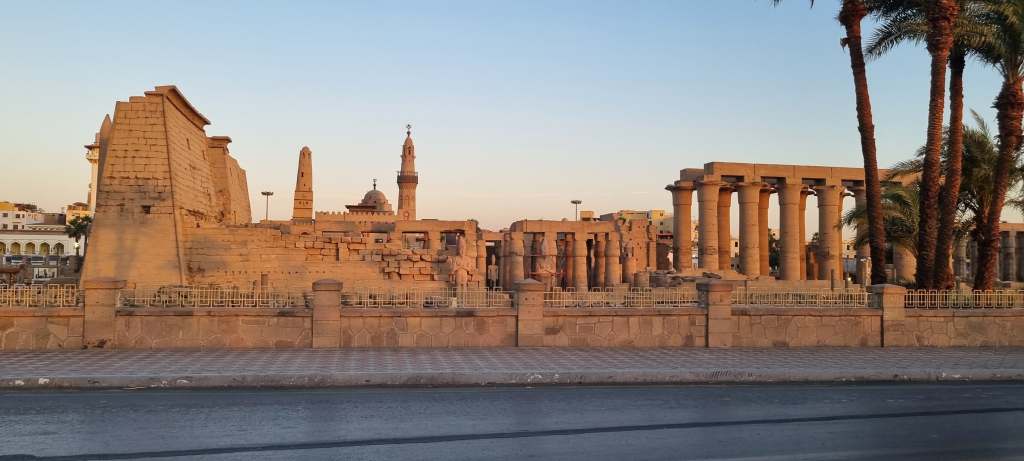
Escaping the heat, we retreated to our cruise, relaxing in the comfort of air conditioning and anticipation for Luxor Temple’s twilight glow. Returning at sunset, we were greeted by the temple in its dual attire of daylight grace and nocturnal majesty. The Avenue of Sphinxes stretched before us for 3 kilometres to Karnak temple, a path once trodden by pharaohs. Known for its spectacular processions and as a site of coronation, Luxor Temple captivates not just with its historical significance but as a photographer’s dream, where every angle and hour offers a new perspective on its timeless beauty.

Our day concluded with an exploration of Luxor’s culinary landscape, where  we enjoyed falafel, ful, and sugarcane juice for a mere 35 pounds, proving that the Egyptian treasures aren’t just buried underground. The night was capped off with a belly dancing and galabeya show on the cruise. 

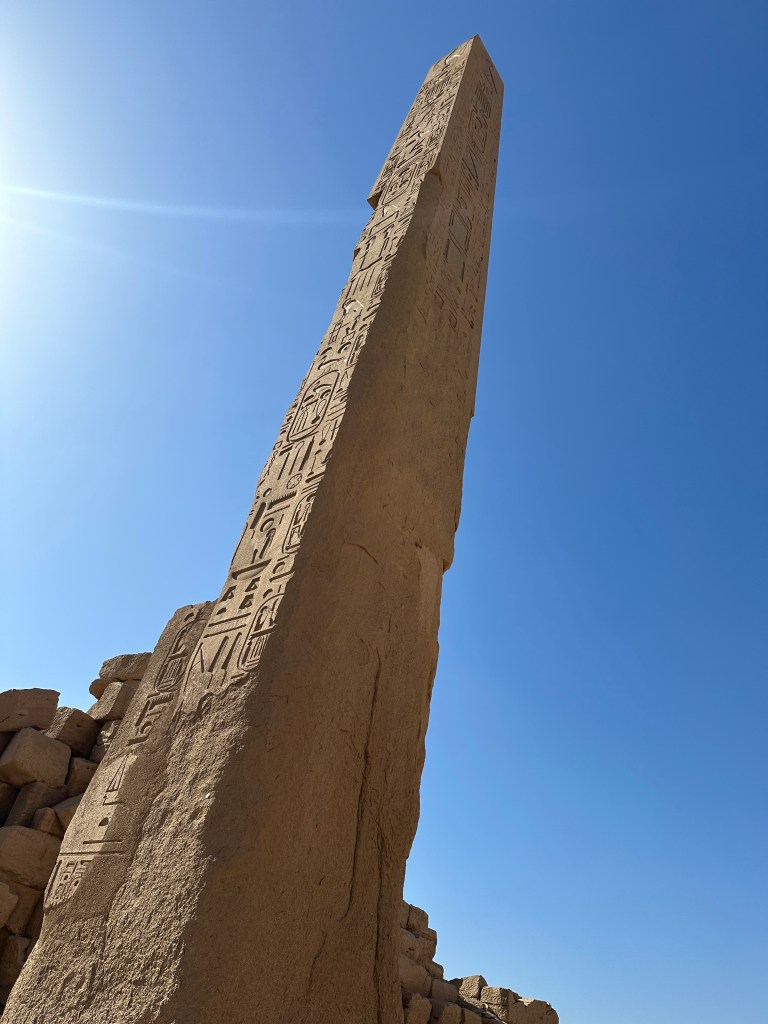
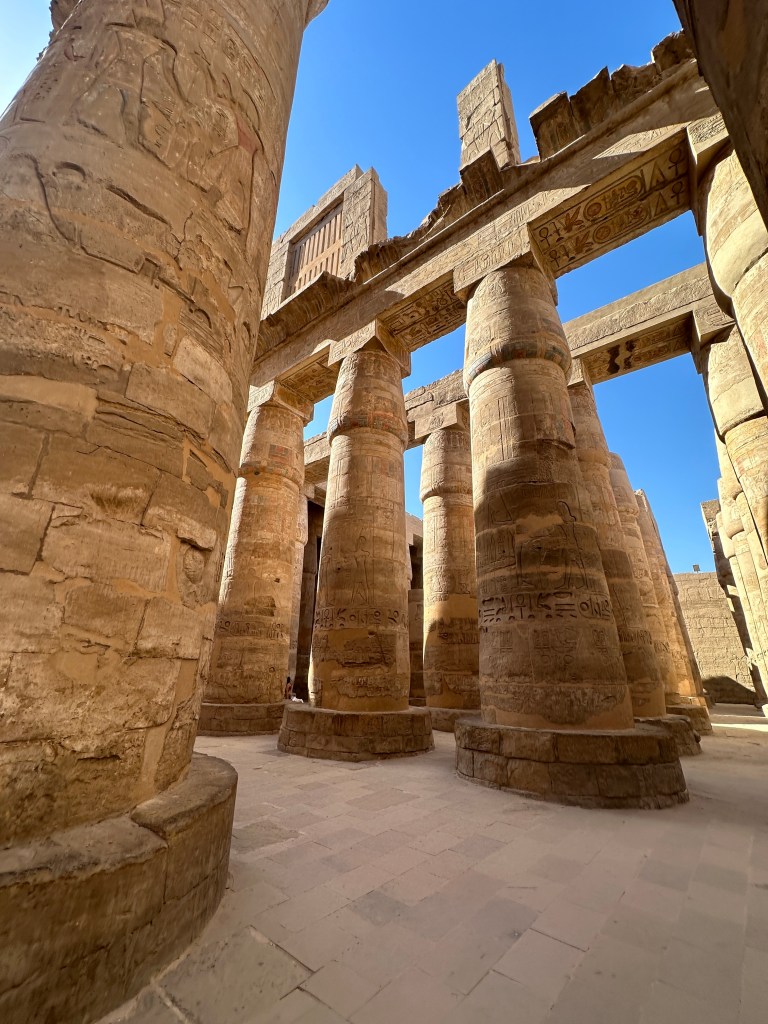
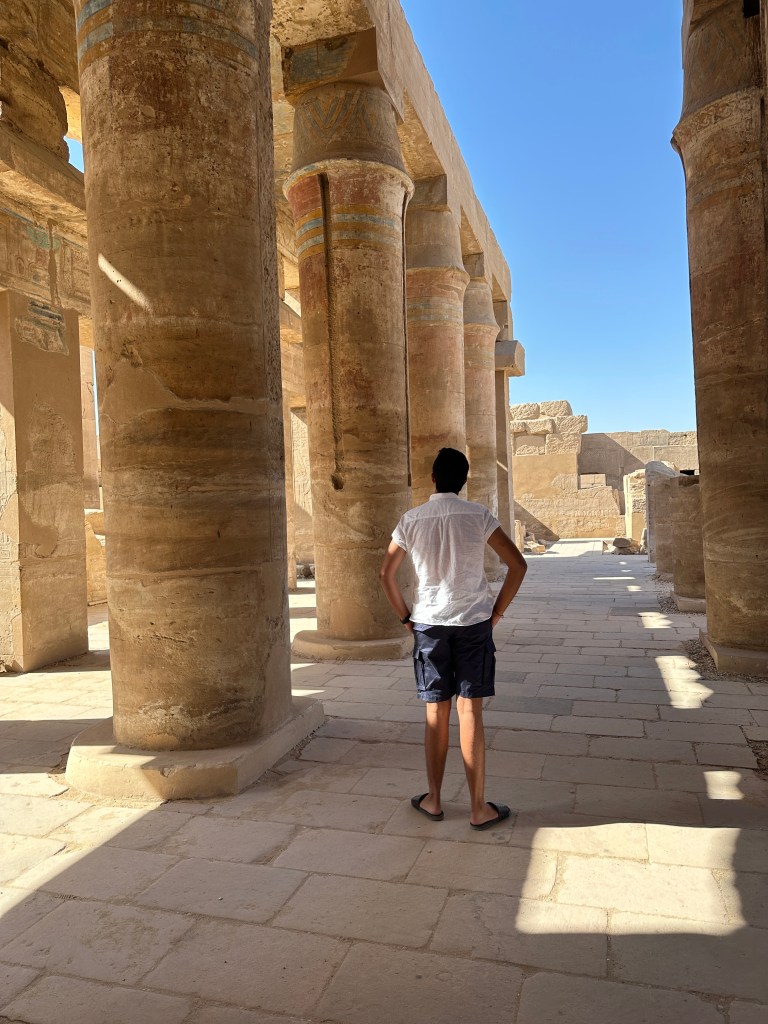
Our Egyptian saga continued with a morning pilgrimage to the monumental Karnak Temple, a place where the past towers over you, quite literally. It is one of Egypt’s top billing attractions and a UNESCO World Heritage site. Imagine a temple so grand, it took 2,000 years to complete. Dedicated to the trio of Amun rah, Mut, and Khonsu, this sprawling complex is a testament to ancient devotion and ambition.

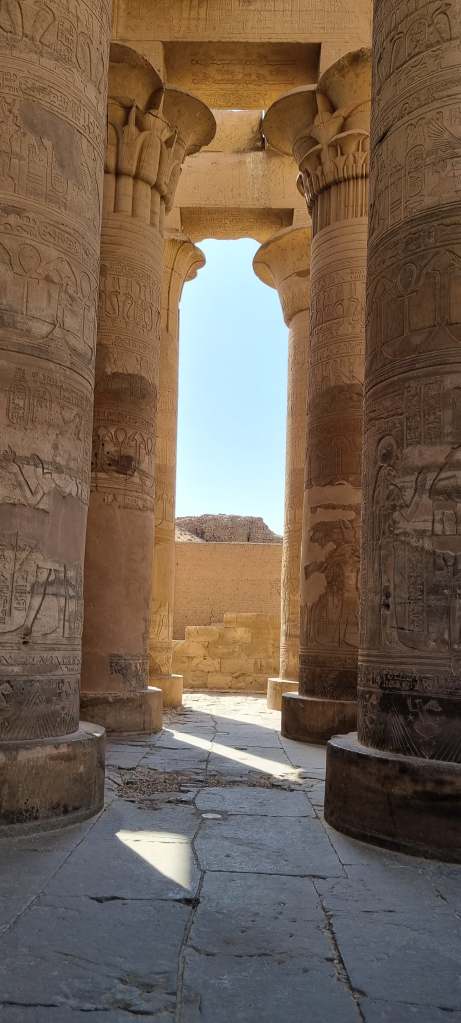
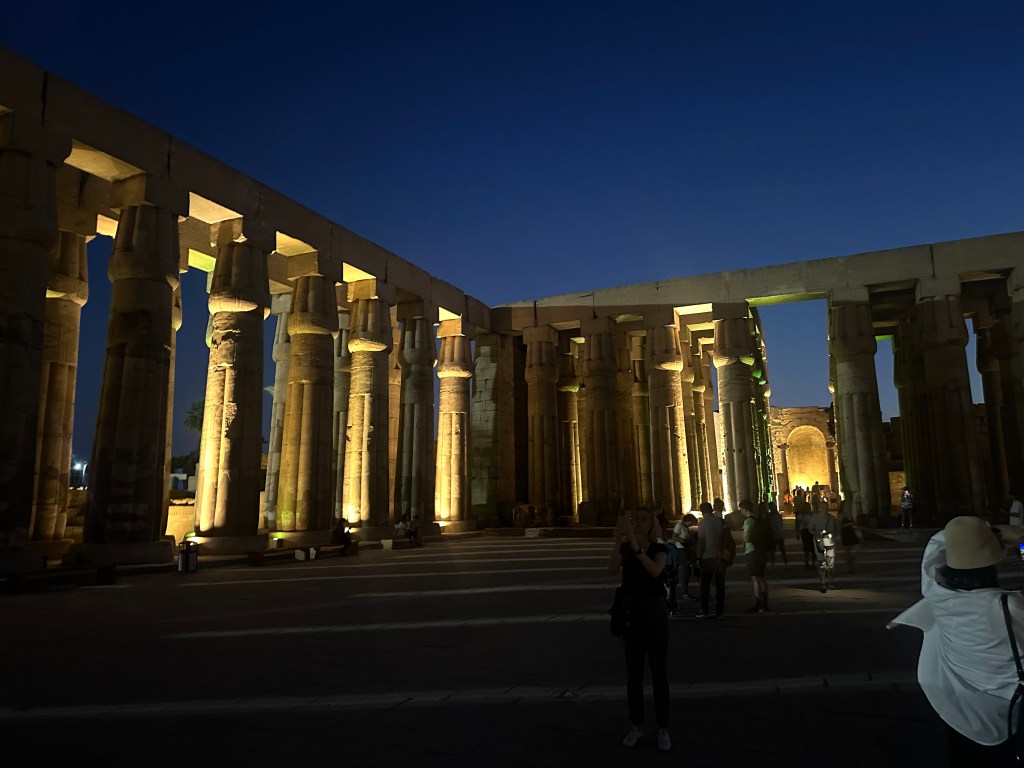
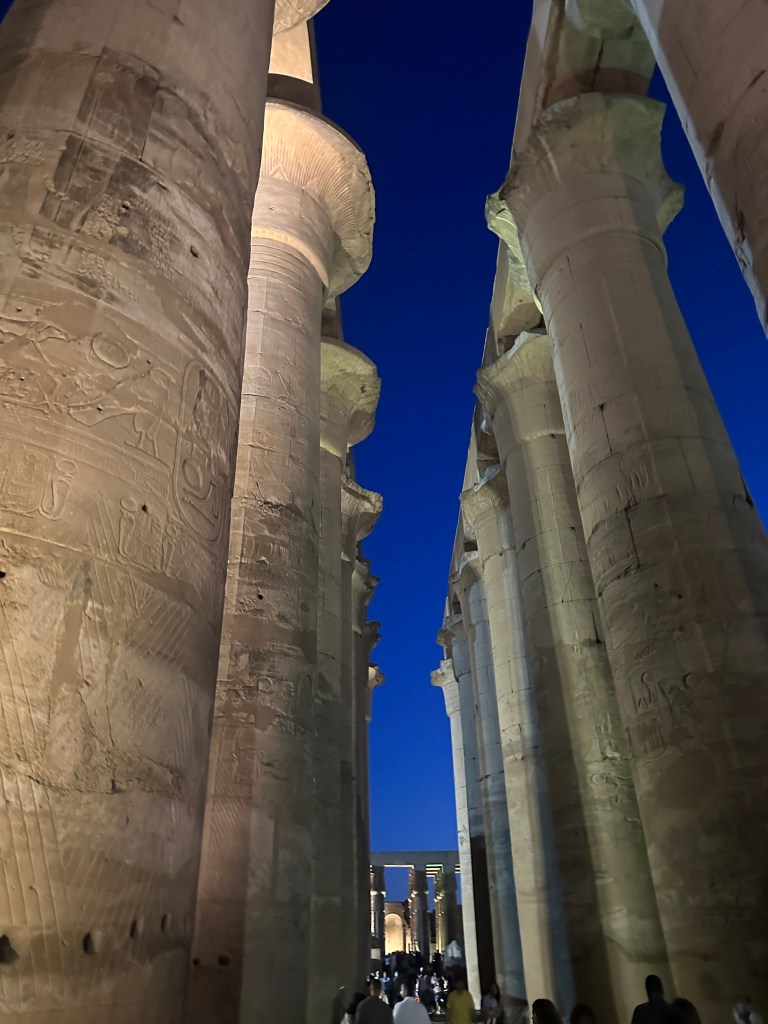
Arriving at the crack of dawn, we beat the crowds and were greeted by the Hypostyle Hall in all its columned glory, bathed in the soft, golden light of morning—perfect for those pictures. Despite some scaffolding here and there, the hieroglyphs and reliefs narrated epic tales of gods, battles, and ceremonies. 

Diving back into our day, after visiting at Karnak temple, we found modern luxury awaiting at the Oberoi Sahl Hasheesh in Hurghada. Nestled on the Red Sea’s shores, this retreat offered us not just a taste of opulence but tranquillity, starting with a refreshing poolside lunch. Amidst the expansive, sun-drenched property, we indulged in a light yet satisfying meal of pastas and gazpacho, the perfect fuel for our next adventure—a session at the hotel’s gym.

The day’s culinary journey reached its zenith in the hotel’s open courtyard, under a blanket of stars, serenaded by live music. The ambiance was set, and then came a spread that transported us straight back to the streets of our home city, thanks to the magic of the Oberoi’s kitchen. The surprise encounter with a chef from our hometown Oberoi added a delightful twist to our evening, serving up not just dishes but memories. Masala papad, papad ka saag, alongside dal makhani, paneer butter masala, and lasooni palak, crafted a meal that was more than just food; it was a feast for the soul.

Our adventure in Egypt reached its grand finale with a day that started not with the sun, but with a leisurely late wakeup—because sometimes, the best way to celebrate the end is to begin… slowly. Breakfast was a global affair on a plate: shakshuka, Parsi akuri, avocado toast, mushroom toast, and omelettes. 

Then, it was off to the beach, where the weather decided to show off, serving us a day so perfect. The sea was painted in infinite shades of blue and the winds blew off the enduring heat of the sun. The Red Sea revealed its treasures beneath the waves; corals that painted the underwater landscape in hues of life and mystery, with waters so blue and so many varieties of fish. Lunch was enjoyed with salads and chole bhature overlooking the beach. 

Recharged from a quick nap, we took a leisurely stroll around the Oberoi’s expansive grounds, soaking in every detail, every view, before dinner called. We ordered biryani which was delicious with paneer again as it stole the show yesterday and we wanted to savour it again. 

The next morning, we bid adieu to Egypt, taking a flight to Cairo post breakfast and then onwards to Mumbai. From the grandeur of ancient monuments to the tranquil Red Sea shores, our journey through Egypt was an unforgettable tapestry of history and modern luxury. 

Estonia

Estonia, a gem in Northern Europe, is a land of contrasts, where medieval charm meets digital innovation. With its rich history, diverse geography, and vibrant culture, Estonia offers a unique blend of tradition and modernity. From over 1,500 islands to dense forests and beautiful lakes, the country’s landscape is as varied as its cultural heritage. Known for its strong tradition of folk music, art, and digital advancements.

Our Estonian adventure began in Pärnu, a resort city known for its beautiful beaches, spas, and historical architecture. Pärnu’s charm lies in its blend of modernity and tradition, with lively festivals and serene coastal landscapes. After a long journey, we were starving and headed to Steffani Suve Pizzarestoran. The pizzas, including some deep-pan options, were to die for, though the 1.5-hour wait was a bit irritating. The ice cream dessert, enough for 10 people, was a delightful treat. We then strolled around the beach and enjoyed bolt scooting along the shore for 45 minutes, soaking in the coastal vibes.

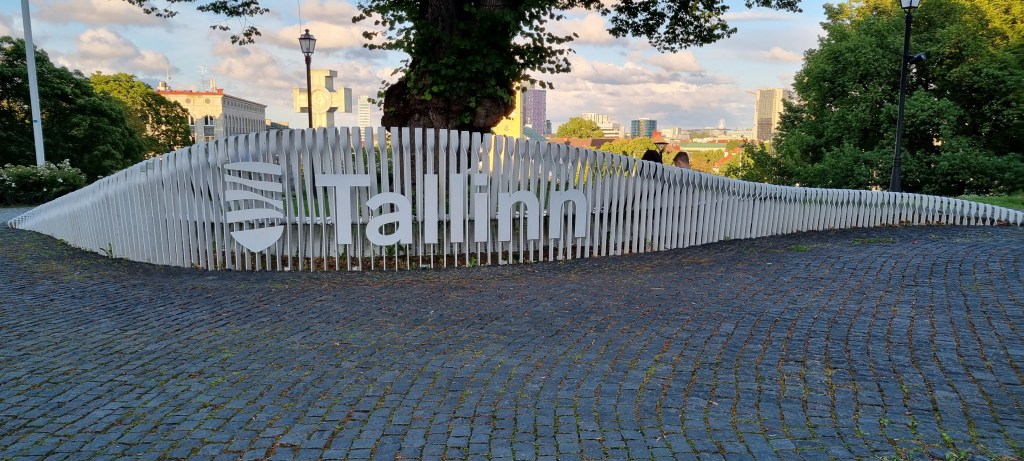
Next, we headed to Tallinn, Estonia’s capital, with a drive time of around two hours. Tallinn is a city that beautifully marries history with modernity. Its medieval Old Town, cutting-edge technology scene, and lively cultural festivals make it a must-visit destination. The city’s architecture is a blend of medieval, Gothic, and modern styles, reflecting its rich history and vibrant present.

We checked into the Nordic Forum, a hotel that impressed us with its spacious rooms, great pool, and fantastic location. The rooms were well-furnished, with comfortable beds and modern amenities. The pool area with a sauna was a relaxing haven, perfect for unwinding after a day of exploration. The hotel’s location, facing a park and close to major attractions, added to its appeal. The welcoming staff ensured a pleasant stay, making the Nordic Forum a highly recommended choice.

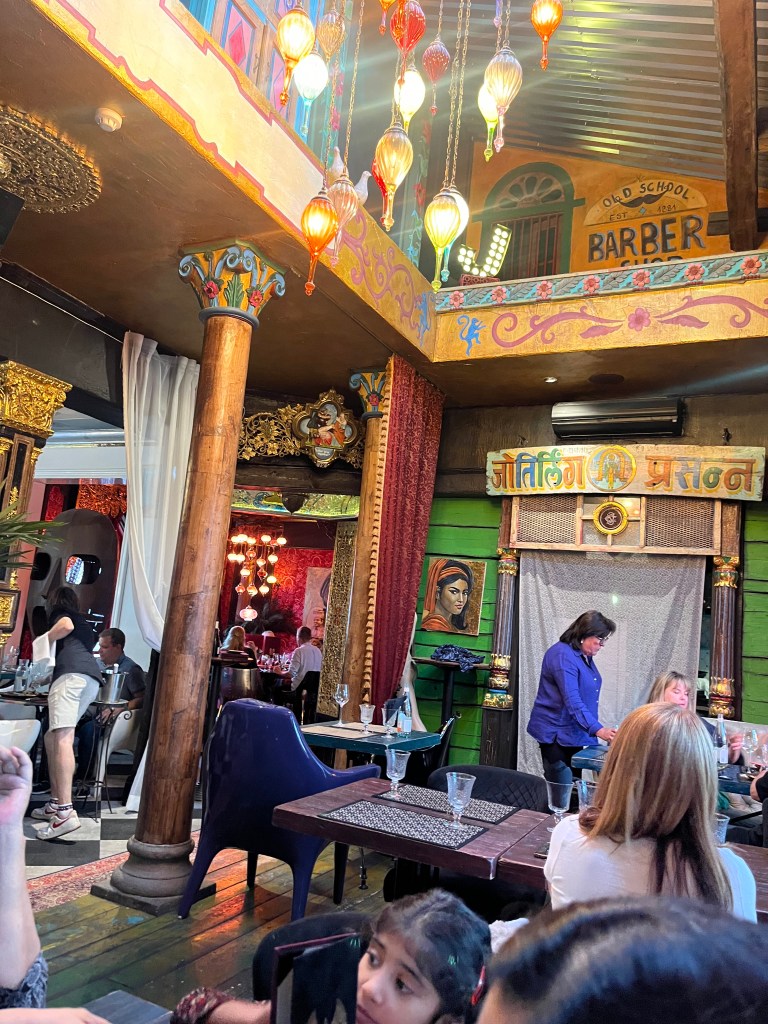
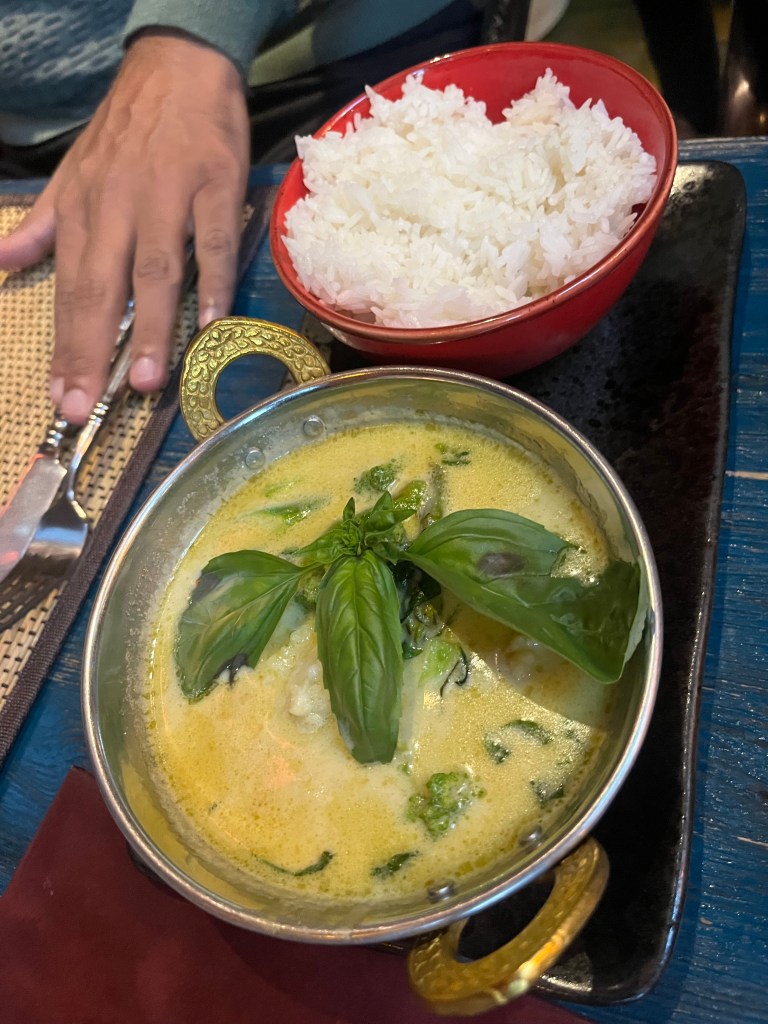
After settling in, we headed to Tai Boh, a Thai restaurant, for dinner. In Tai Boh it’s difficult to decide where to look – everything is so colorful and full of details. The restaurant is worth a visit just for the interior, but the food is also a true delight.The ambiance was amazing like a Thai market, and the food, including Thai red, green, and yellow curries, stir-fries, and salads, was superb. The unique drinks added to the experience.

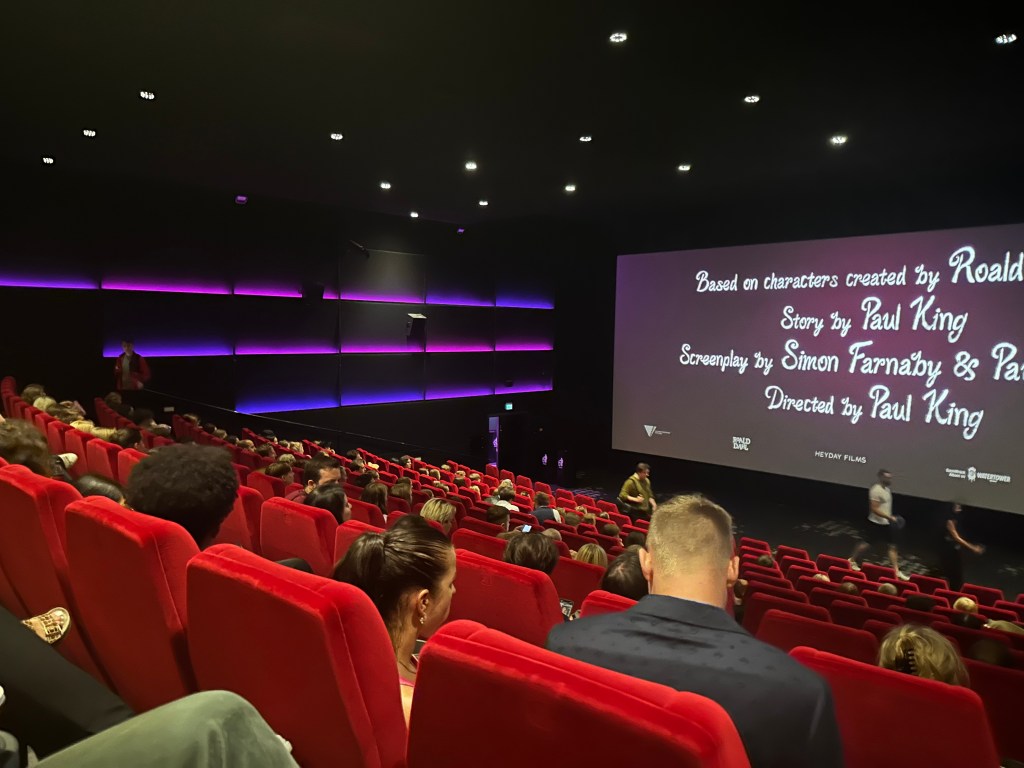
Post-dinner, my dad and I went to Coca-Cola Theatres to watch “Mission Impossible: Dead Reckoning Part 1.” The theater experience in Estonia was memorable, with state-of-the-art facilities and a lively atmosphere.

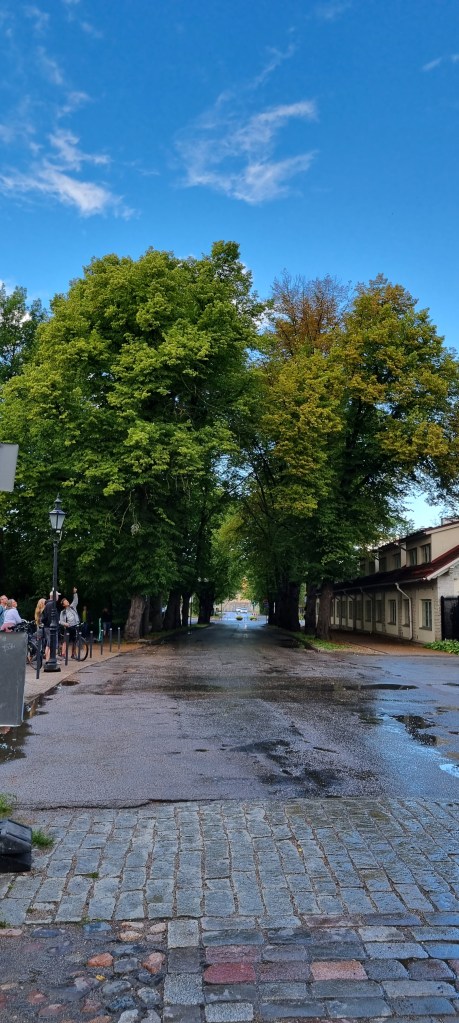
The next day we had a walking tour scheduled but due to heavy rains we decided to explore ourselves. Our self-guided tour began in Tallinn’s Old Town, a maze of cobblestone streets filled with history and charm. The quaint shops, friendly locals, and hidden courtyards added to its allure, making us feel like we had stepped back in time.

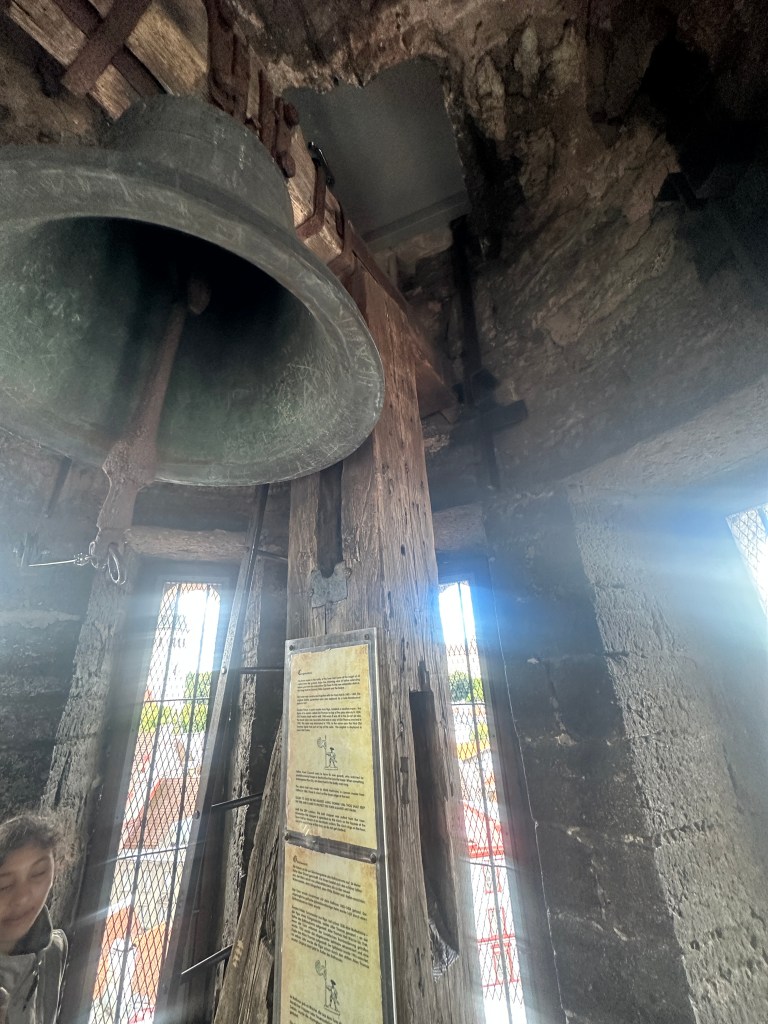
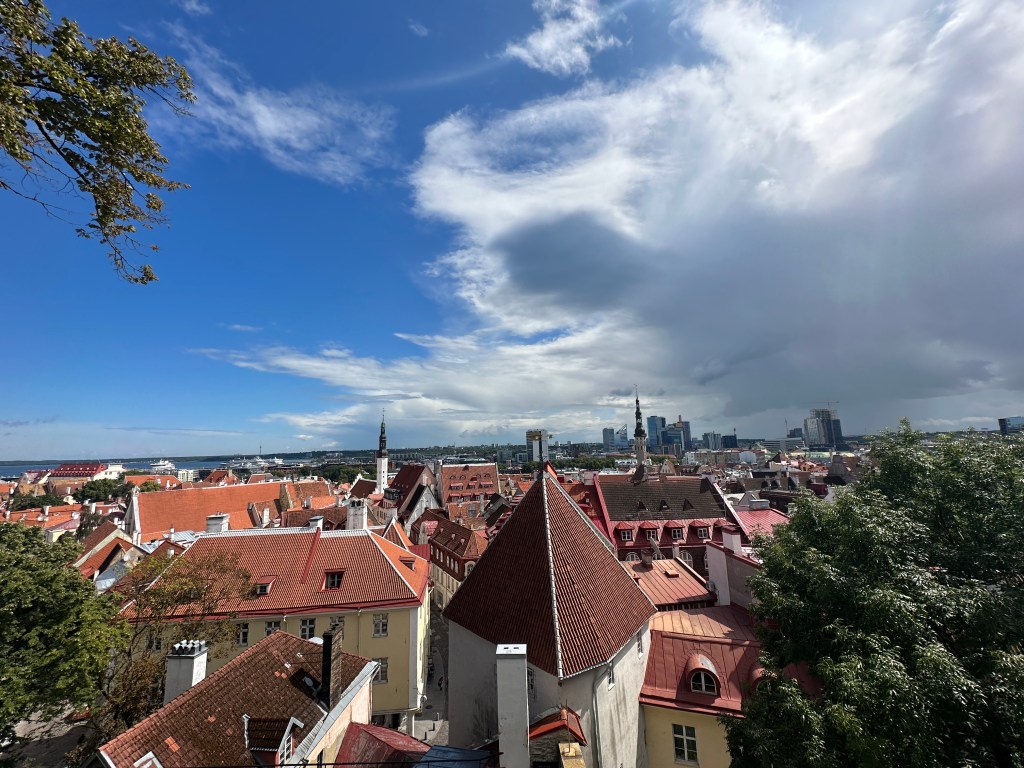
Our first stop was The Town Hall, standing tall since the 13th century. Paying a short fee we  decided to climb the tower with over 100 steps. The steps were steep but the end journey was fruitful. We got some nice views of tallinn old town and much needed shelter from heavy rains. 

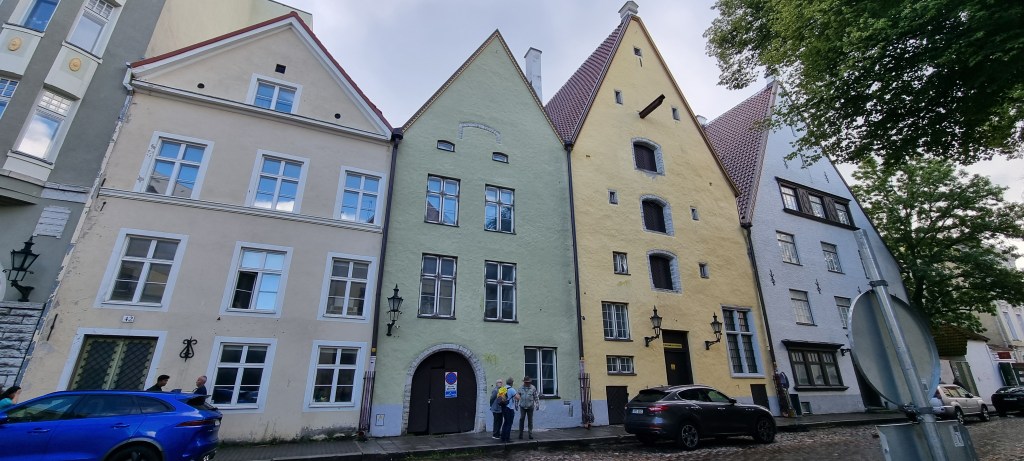
Our tour continued to Olaf Church, a historical gem with stunning interiors. The church’s tower, once the tallest structure in the world, was a testament to Tallinn’s architecture. The Three Brothers, houses from different centuries, allowed us to see the architectural evolution of the city. 

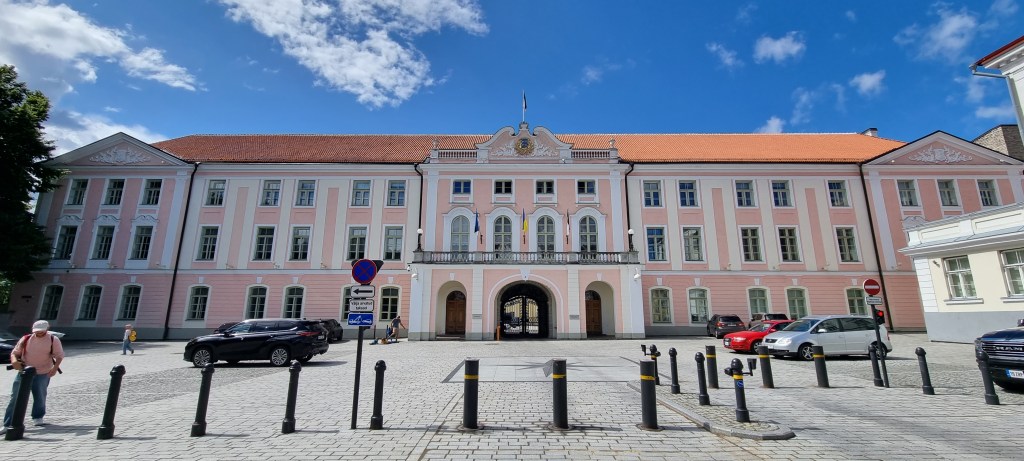
Next, we explored St. Mary’s Church, a blend of simplicity and elegance. Freedom Square was a bustling hub that echoed Estonia’s love for liberty. It was lively and the bustling shops and quaint cafes added to the charm

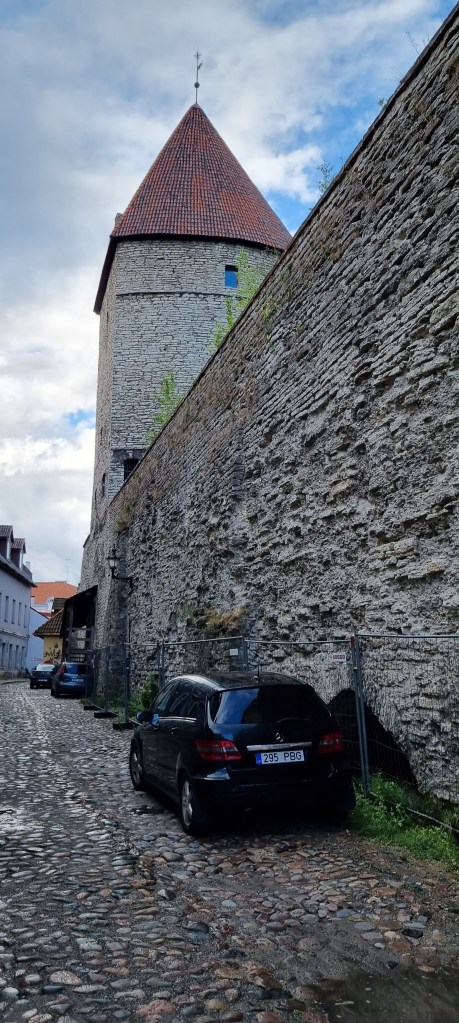
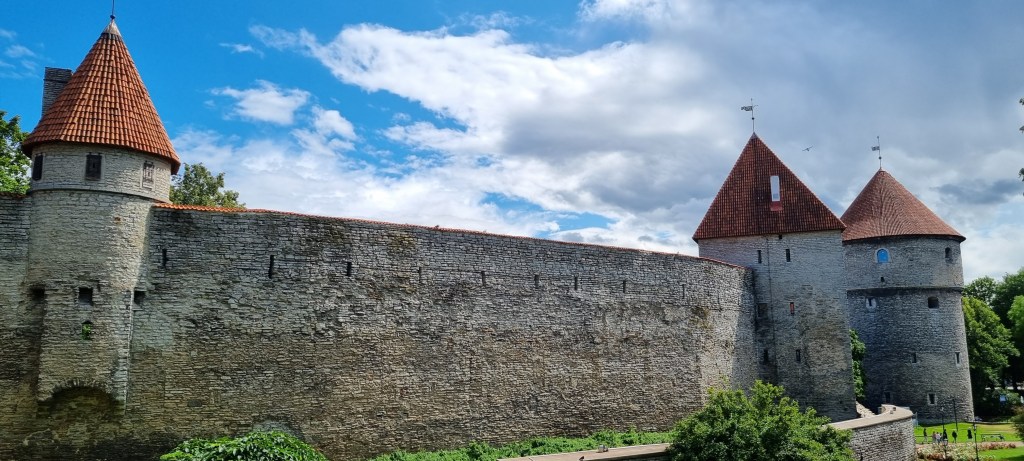
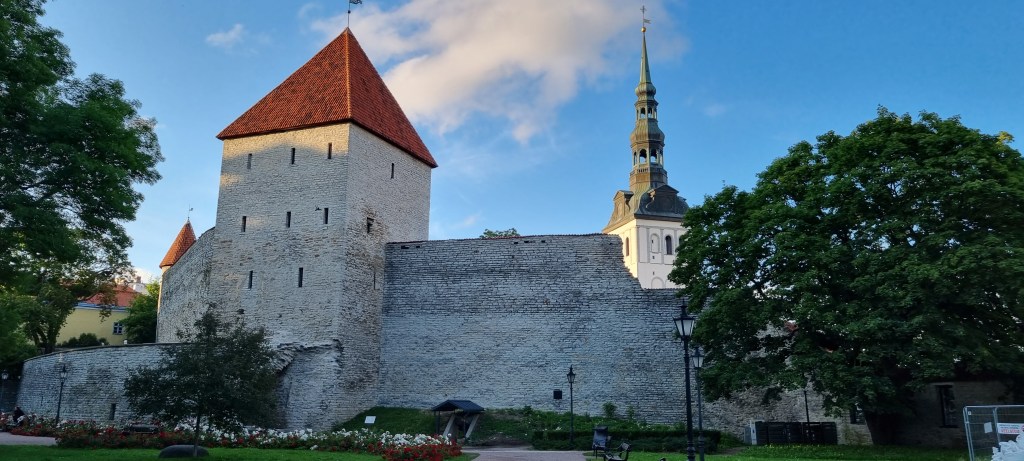
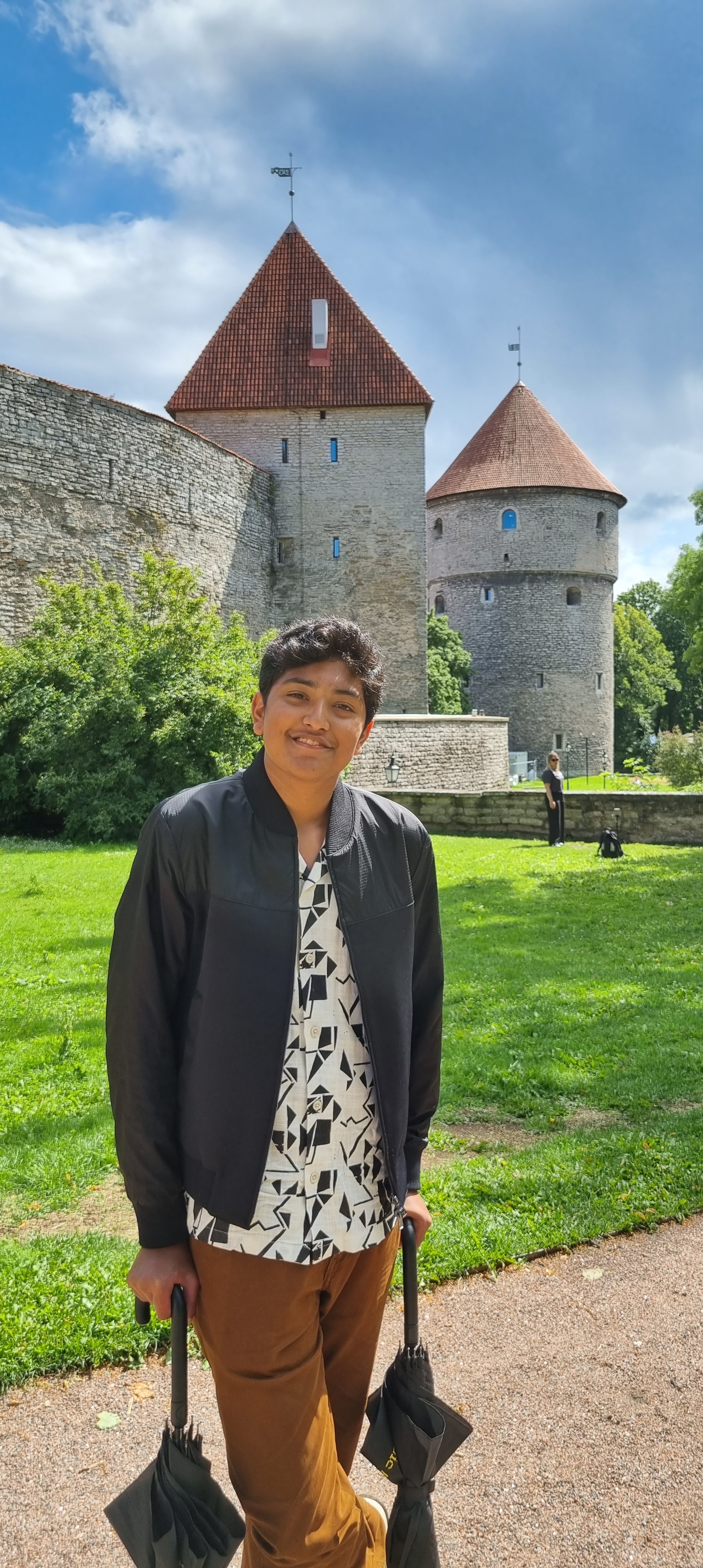
As we wandered through the city, the medieval City Wall caught our eye. This well-preserved structure whispered tales of Tallinn’s past, and the towers and gates offered a glimpse into the city’s defensive history

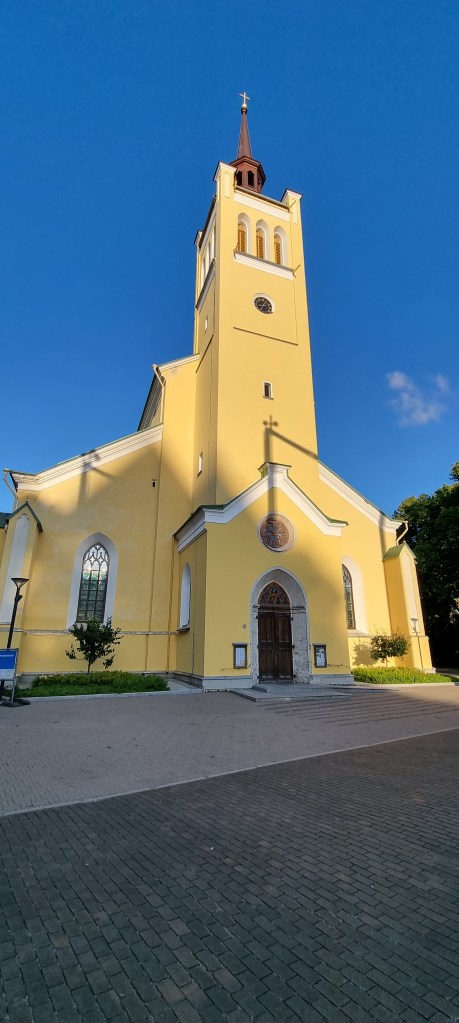
We then explored the Guilds, buildings that reflect the city’s merchant history. Each had its unique story, and the blend of architectural styles was a visual treat, showcasing Tallinn’s cultural richness. Some other monuments we saw were the Yellow St. john’s church church and the Swedish gates.

The Viewing Platform offered panoramic views of the city, a photographer’s paradise. However, the climb to reach the points is tiring. The sweeping vistas of Tallinn’s skyline were breathtaking, and we spent time just soaking in the beauty of the city from this vantage point.

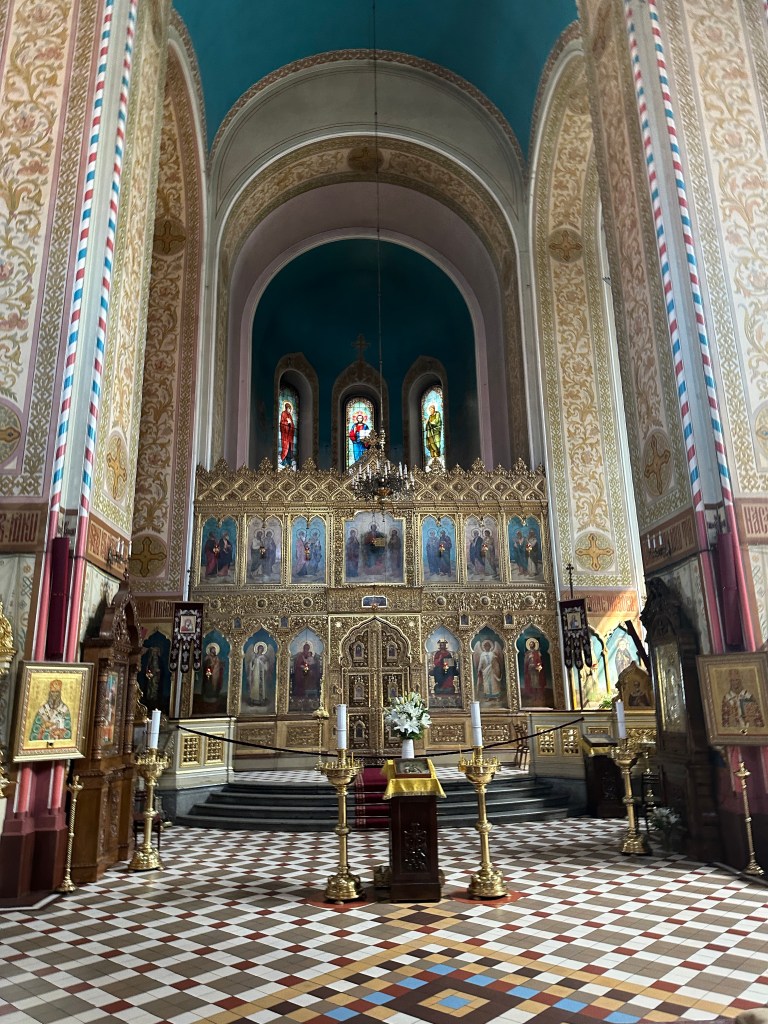
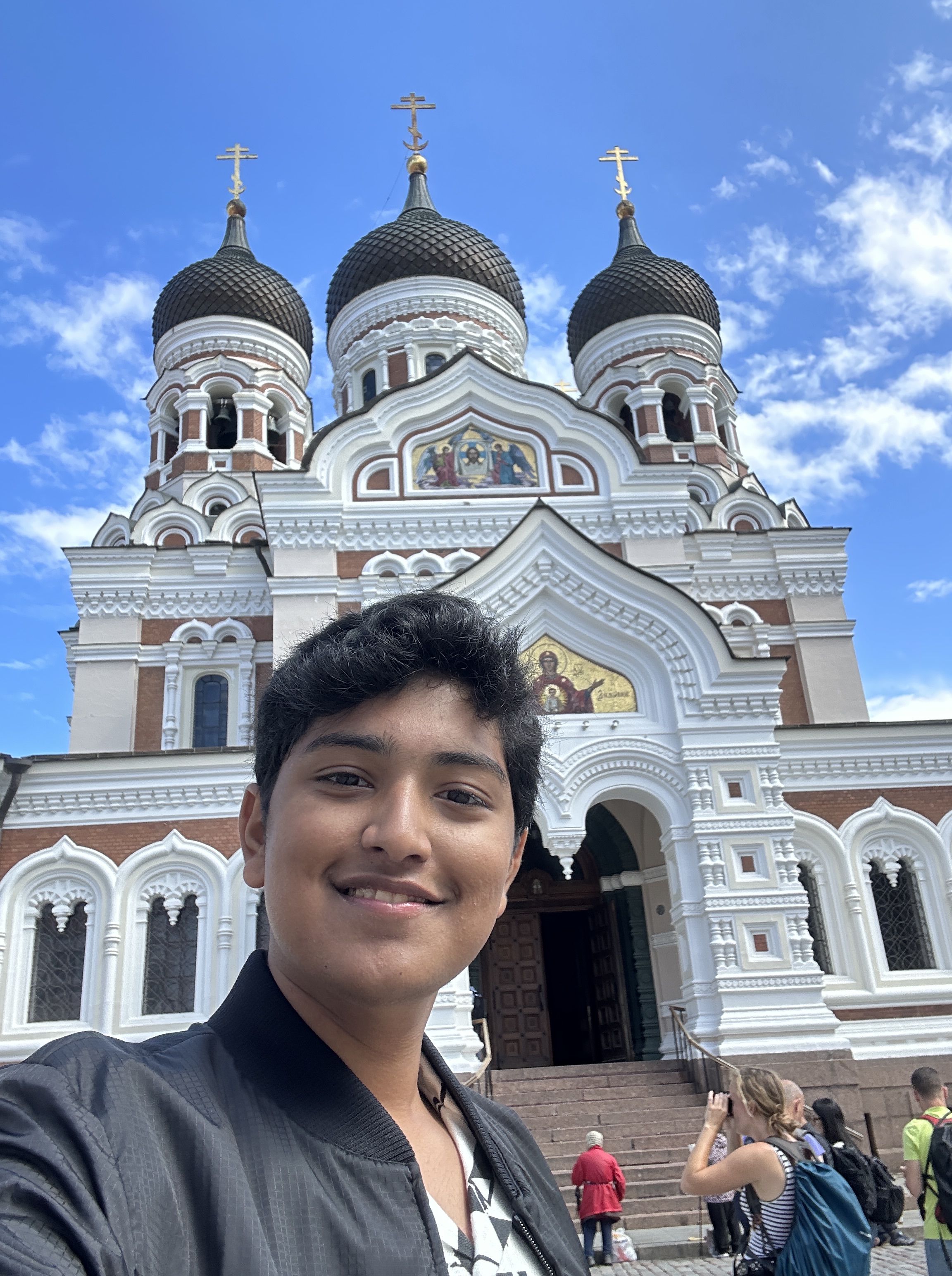
We then visited the Nevsky Cathedral, an architectural marvel where the ornate decorations and peaceful ambiance provided a soul-soothing experience. This trademark monument of Talinn, was eye-catching and also really picturesque. 

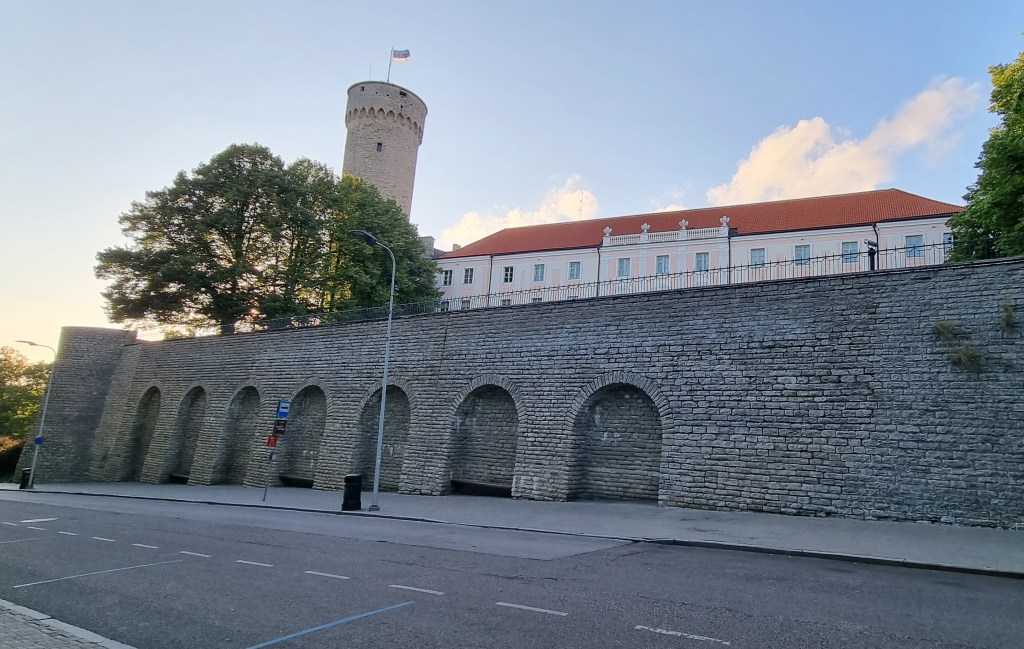
Finally, we reached Toompea Hill and Castle, a blend of history and beauty, offering breathtaking views. The castle’s history, architecture, and the views from the hill were highlights of our tour. The serenity of the place, coupled with the grandeur of the castle, left us in awe. Our exploration of Tallinn was a journey through time, where each site had its story, its beauty, and its place in the city’s rich tapestry.

Hungry from our exploration, we stopped for some traditional Estonian snacks en route as well. Lunch was at Texas Cantina, where delicious corn on the cob, fajitas, nachos, and chilli made us feel wholesome because of the home style portions.

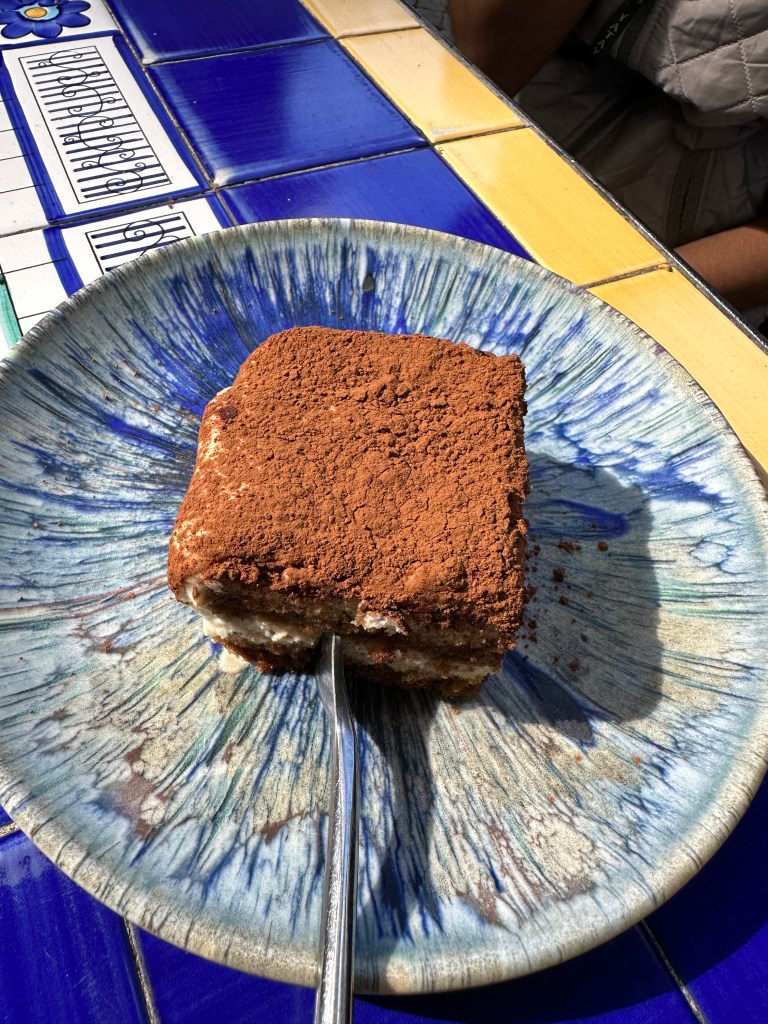
The afternoon was spent bolting around New Town, where we saw modern Tallinn and indulged in candied ginger and nuts. Our craving for Tiramisu led us to Amalfi, where we devoured three servings of the delicious dessert between 3 people.

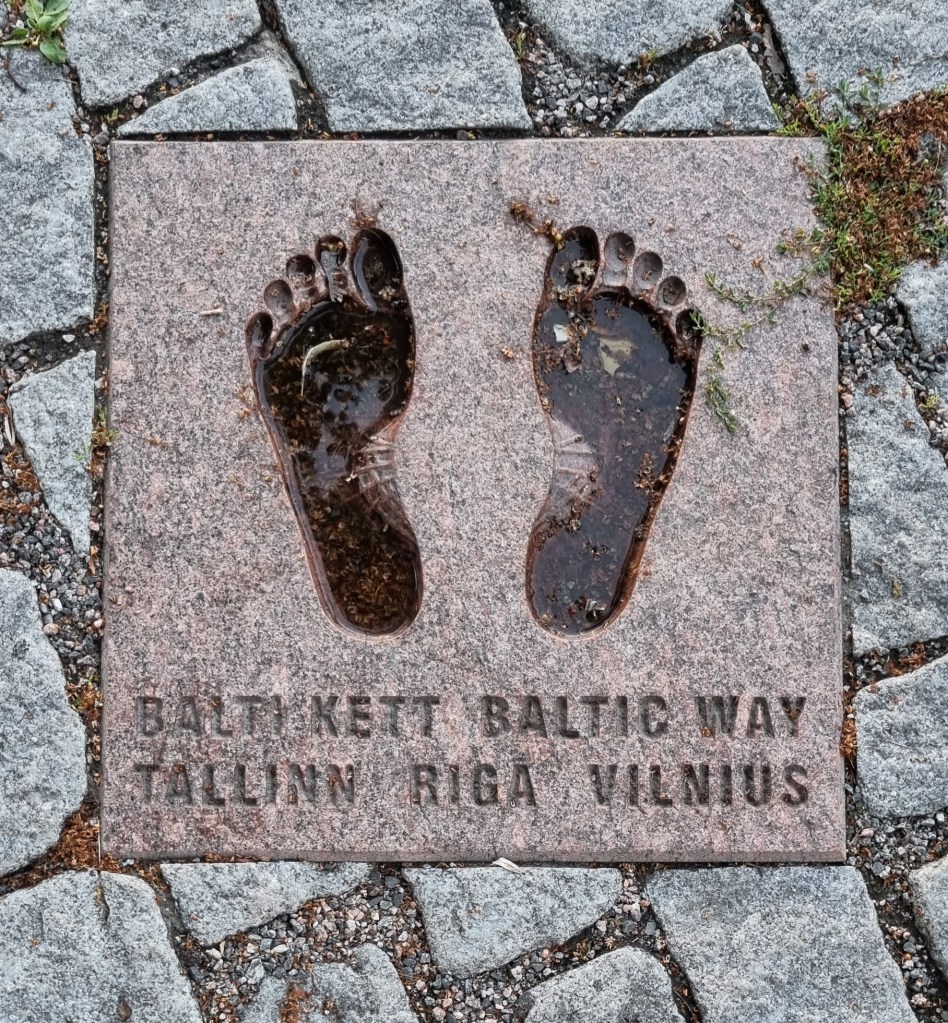
While we were doing our own activities, my dad and my uncle went out to explore other parts of the city, like the Baltic way footsteps and the parks. For people who don’t know, The Baltic Way was a peaceful political demonstration that occurred on August 23, 1989, where approximately two million people joined hands to form a human chain spanning over 600 kilometers across the three Baltic states – Estonia, Latvia, and Lithuania – in their drive for freedom from Soviet occupation.

Dinner at Maharaja on the main square was a delightful end to our time in Estonia. The amazing Indian food, wholesome spices, and fantastic atmosphere left us content towards the end.

Estonia, with its rich history, modern charm, and stunning architecture, left an indelible mark on our hearts. From the serene beaches of Pärnu to the vibrant streets of Tallinn, every experience was a cherished memory. 

Latvia

Latvia, my favorite Baltic country, welcomed us with open arms as we crossed the border at noon. A land of rich history, diverse geography, and cultural significance, Latvia’s blend of ancient traditions and modern sensibilities offers a unique experience for every traveler.

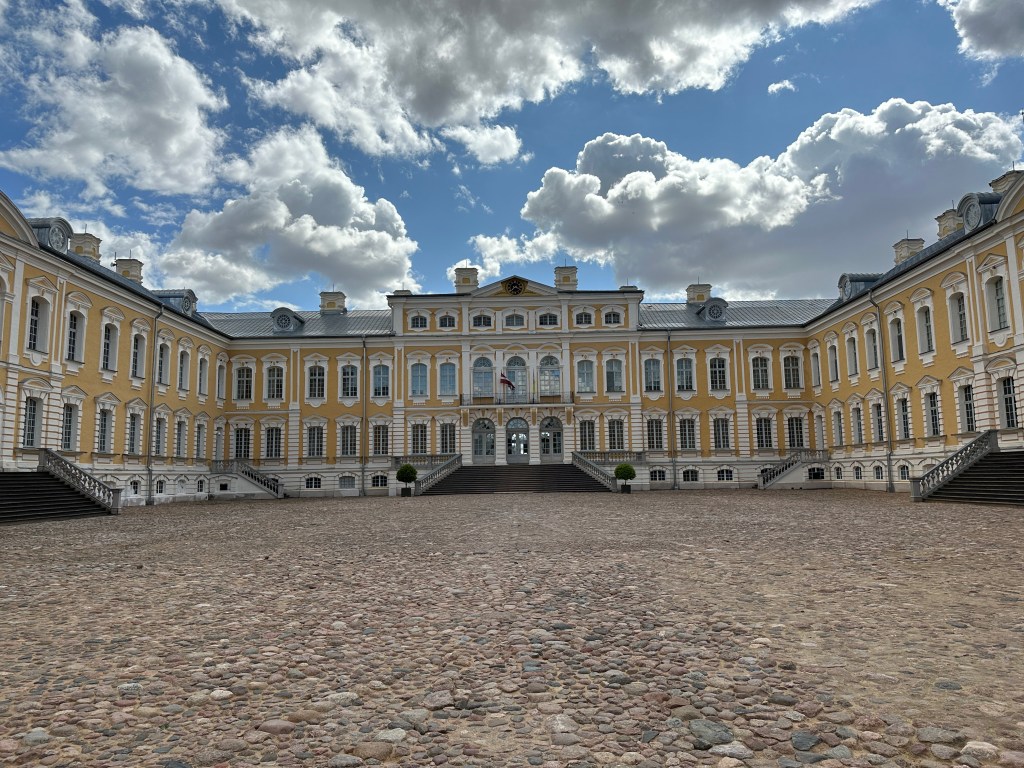
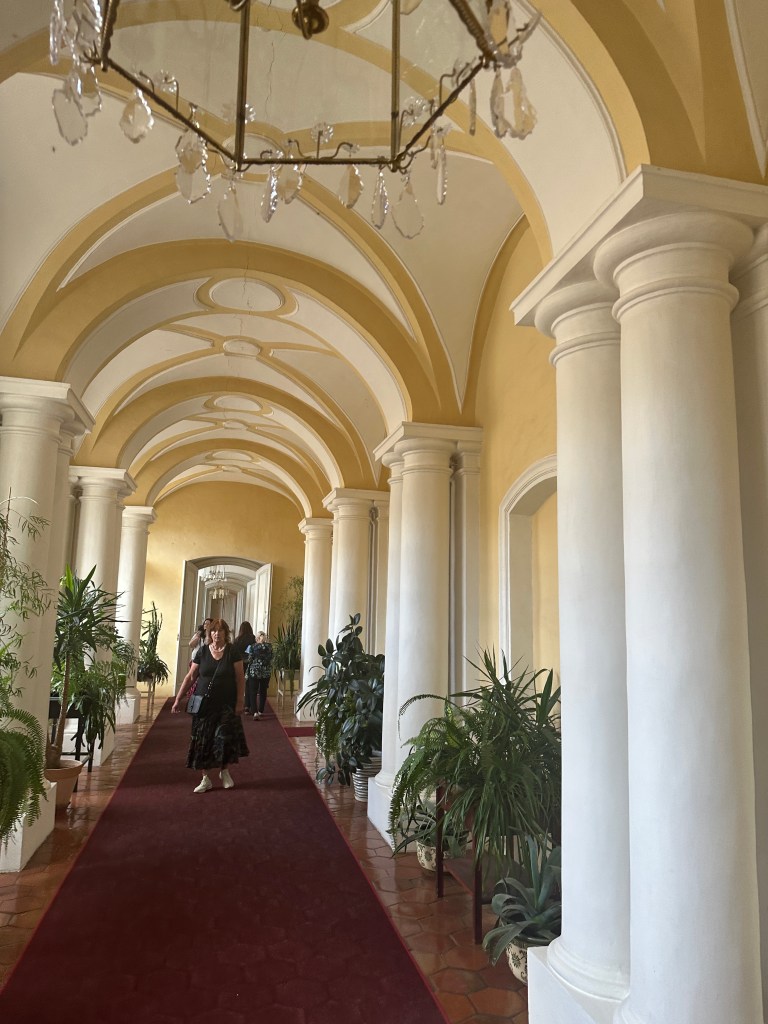
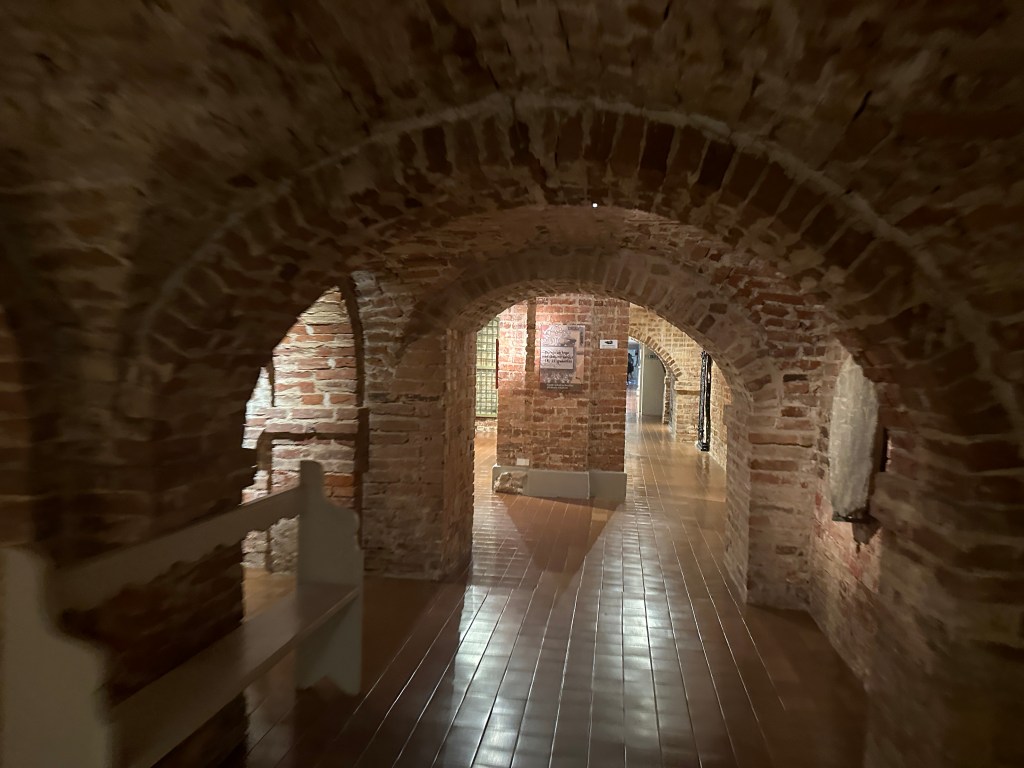
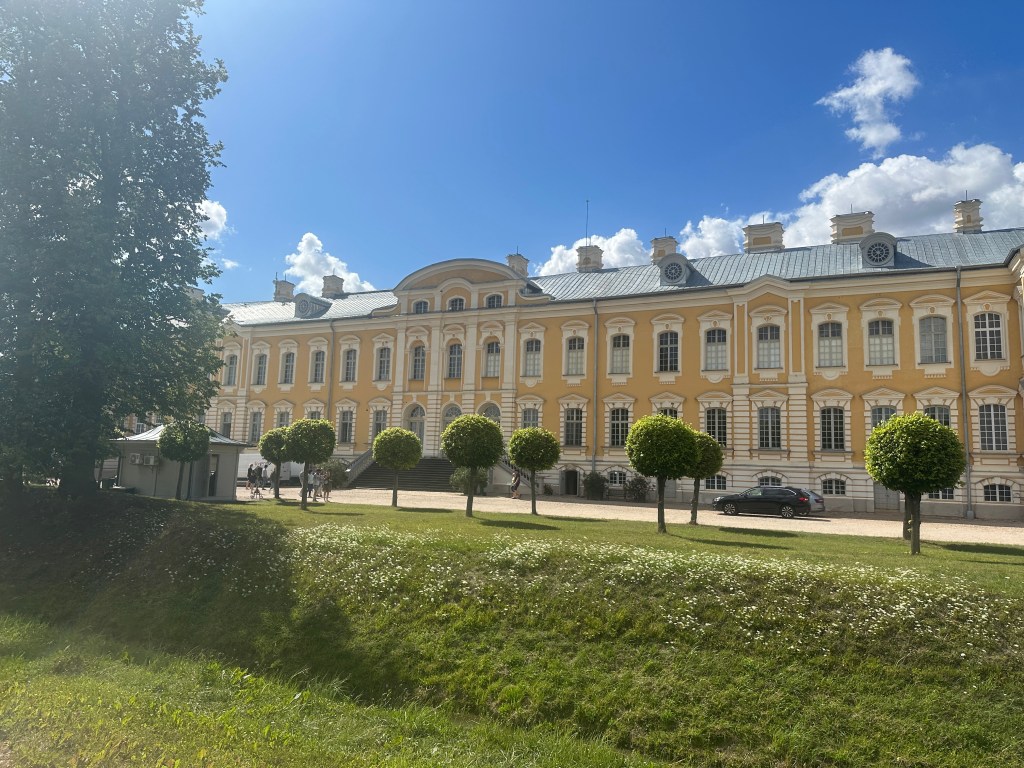
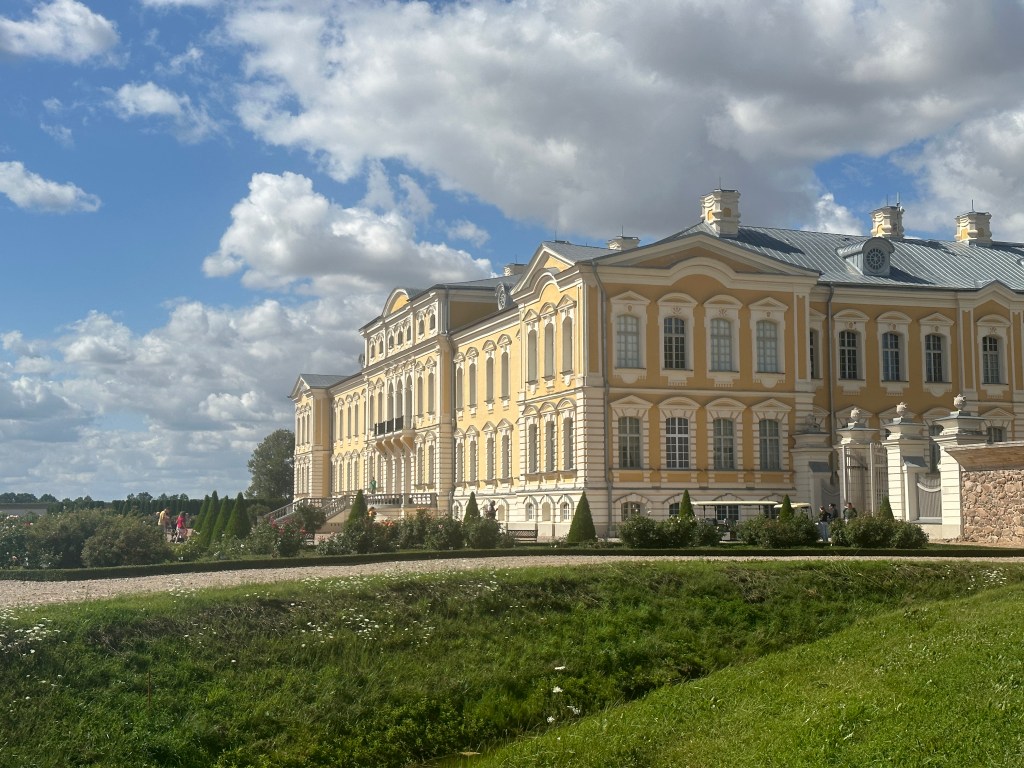
Our first stop was Rundale Palace, a Baroque masterpiece that stands as a symbol of Latvia’s grandeur. Known as the Versailles of East Europe, the museum, filled with art and artifacts, offered a glimpse into the country’s royal past. We strolled through its garden and the courtyard, making us marvel at the intricate flowers and amazing maintenance. Lunch at a nearby restaurant was a delightful affair, with pasta, tomato soup, and salad that tasted delicious.

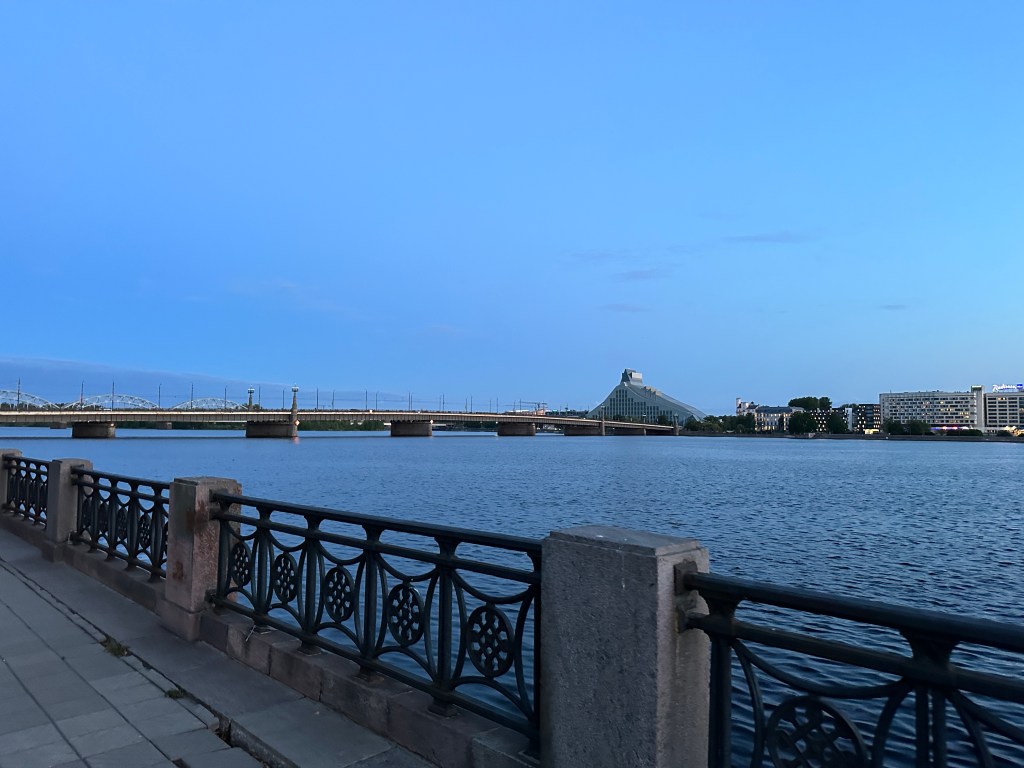
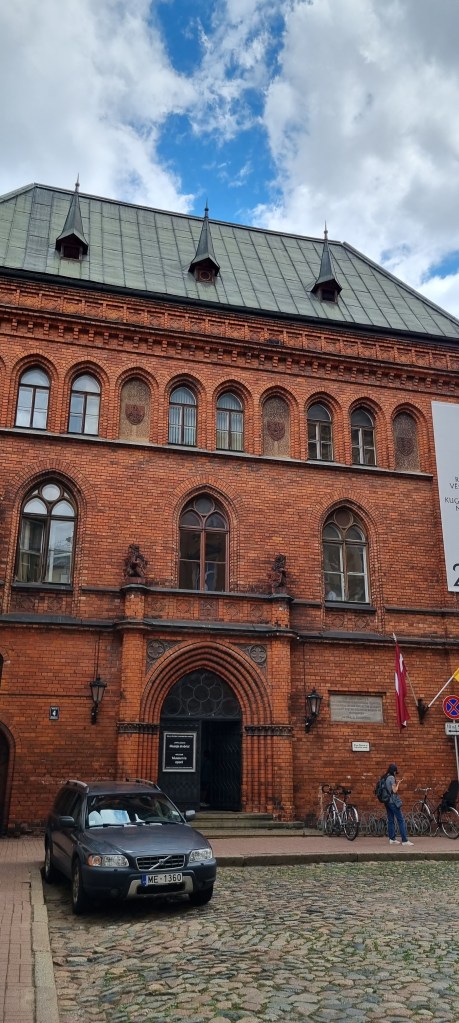
Next, we ventured to Riga which is a UNESCO heritage site in itself, the capital city known for its Art Nouveau architecture and charming old town. The city’s canals, historic monuments, and lively cultural scene make it a must-visit. We checked into the Grand Poet Hotel, a luxurious abode with amazing facilities like steam, sauna, pool, and spacious rooms facing a park. The welcoming staff added to our comfort, making us feel like honored guests.

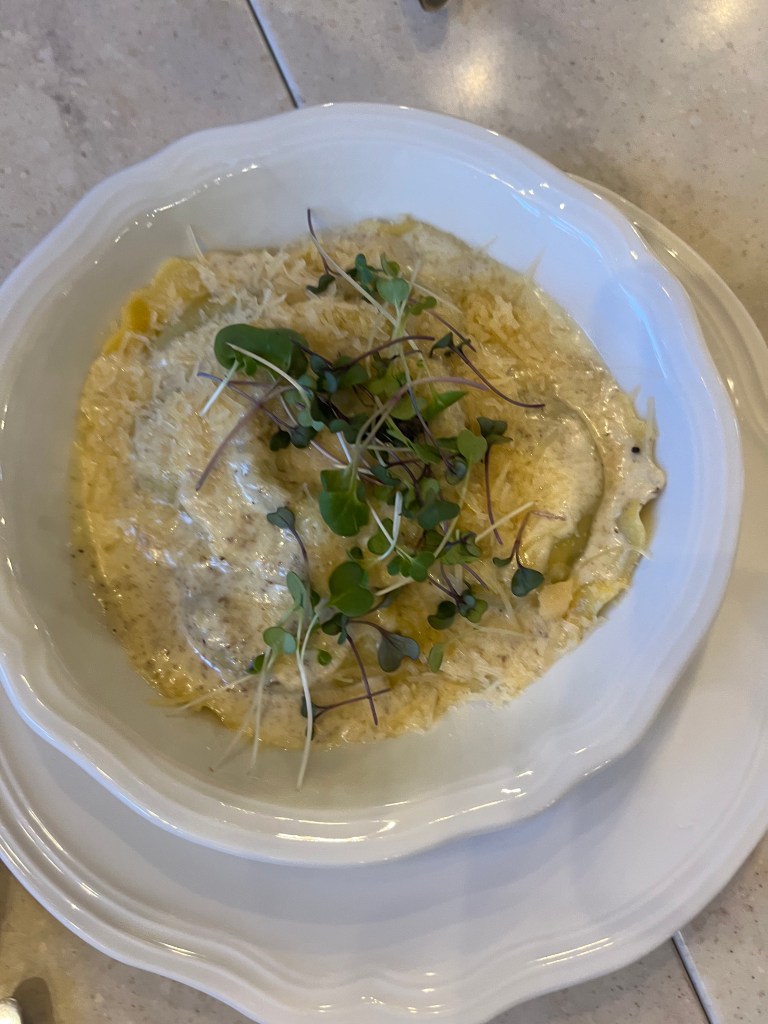
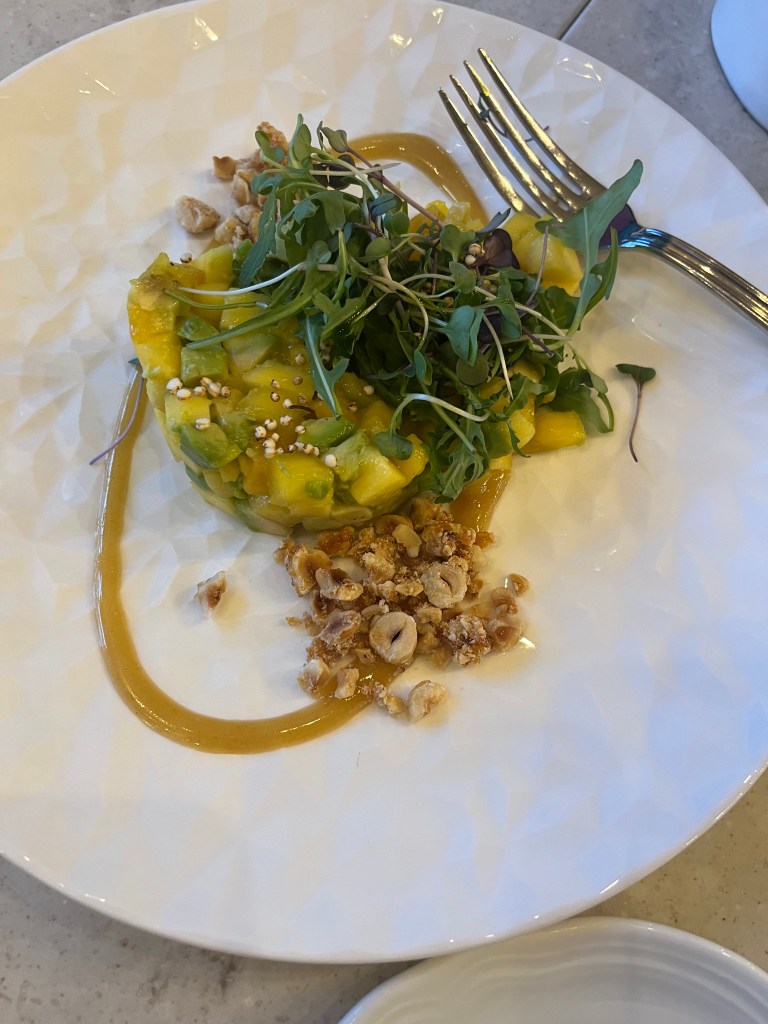
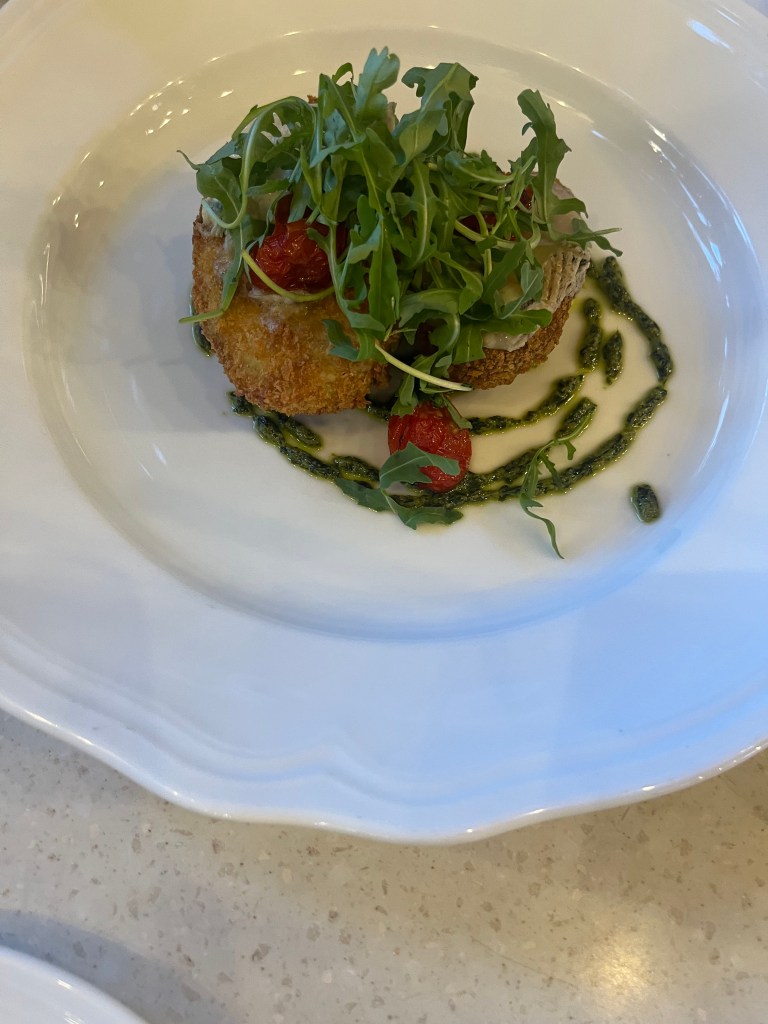
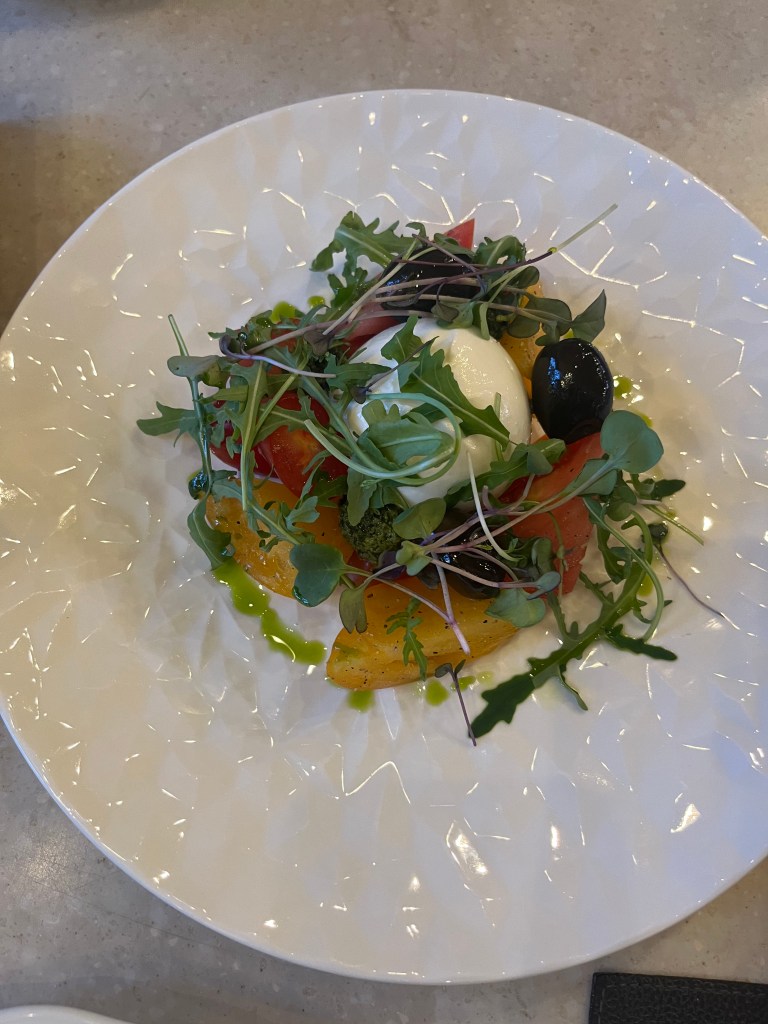
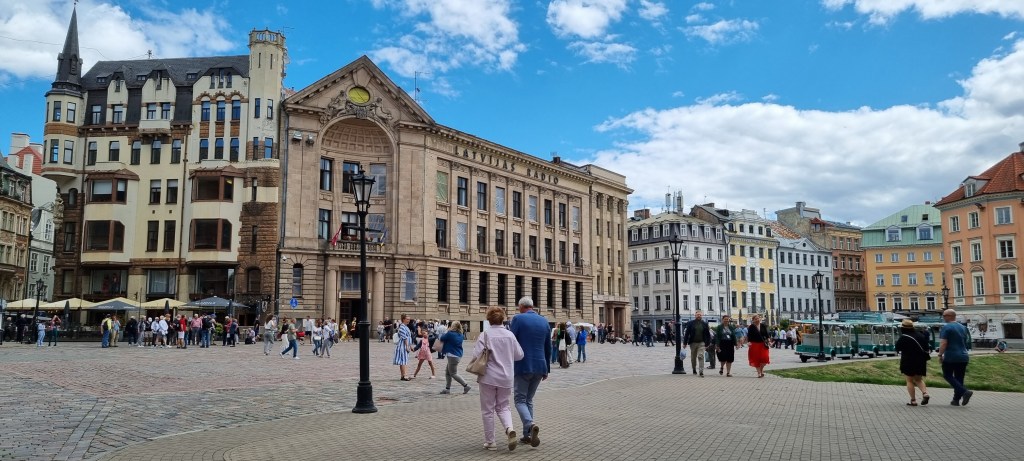
Our evening began with a short walk around the main square, absorbing the old town’s charm. The picturesque bridges, the laughter of locals, and the soft glow of street lamps created a magical atmosphere. We also saw the Freedom Monument en route. Dinner at Kolonade was a culinary journey, featuring dishes like goat cheese in a crispy herb cover, burrata cheese with colorful tomatoes, avocado-mango tartare, porcini ravioli, and bitter chocolate fondant along with creme brulee. The ambiance was cozy, but the service was marred by racial bias, leaving a bittersweet taste.

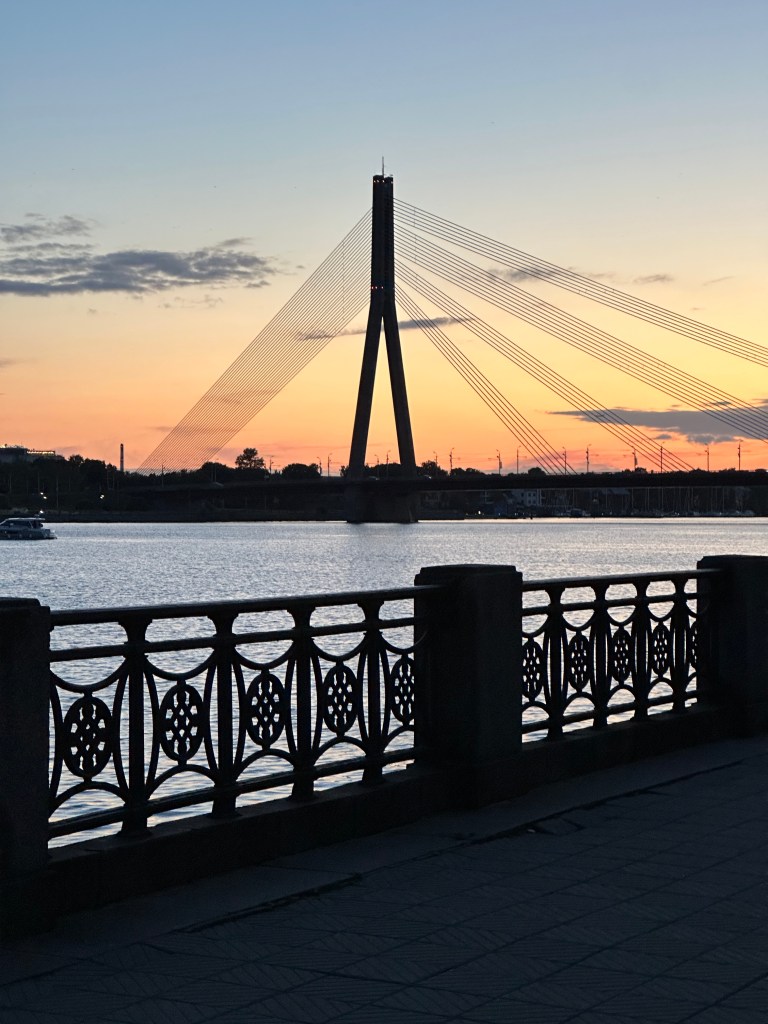
However, the sunset along the Gulf of Riga washed away the day’s troubles, painting the sky with shades of gold and pink.

The next morning’s walking tour was an exploration of Riga’s heart and soul:

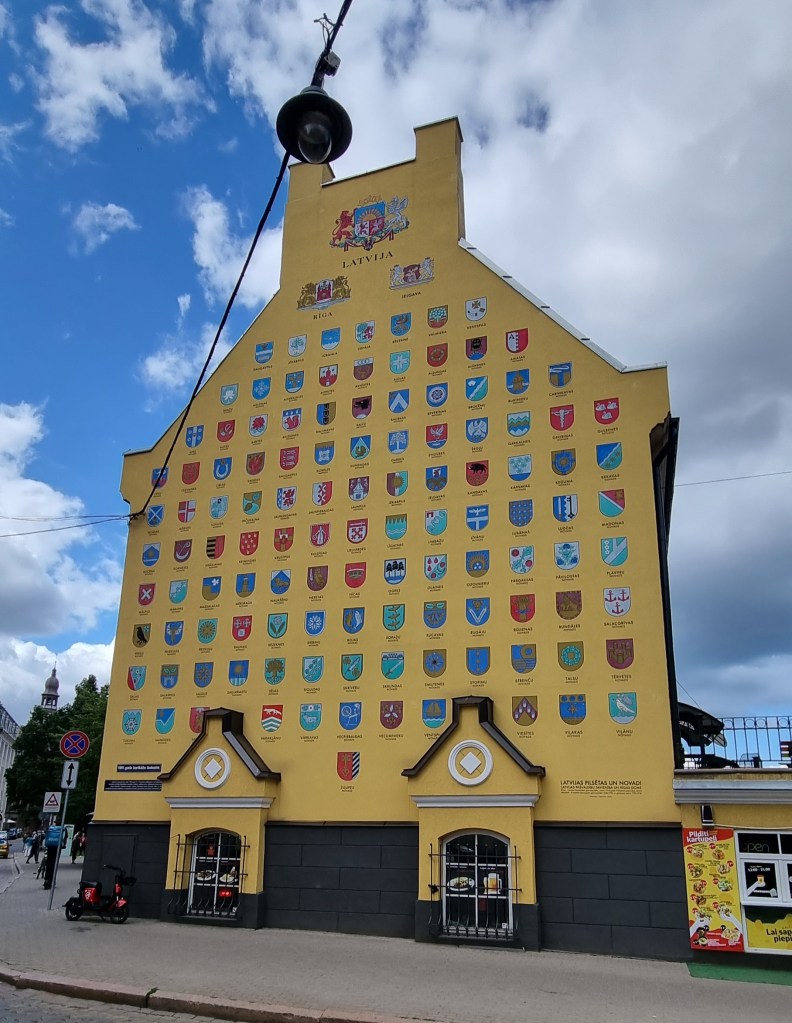
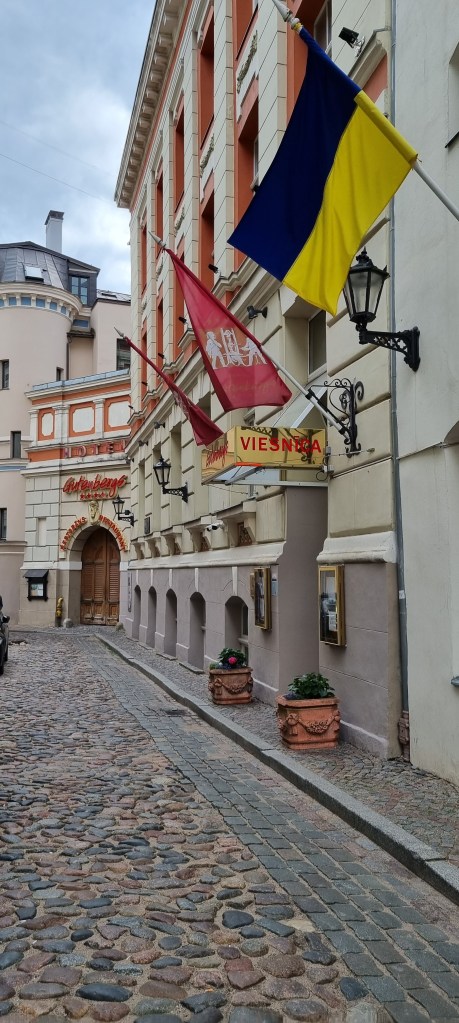
  • Old Town: Riga’s Old Town is a delightful maze of history and beauty, with cobblestone streets that whisper tales of the past. Quaint shops, hidden courtyards, and friendly locals add to its timeless charm. Every corner seems to hold a secret, waiting to be discovered. Some glimpses and moments from the Old town have been added below in a slideshow.
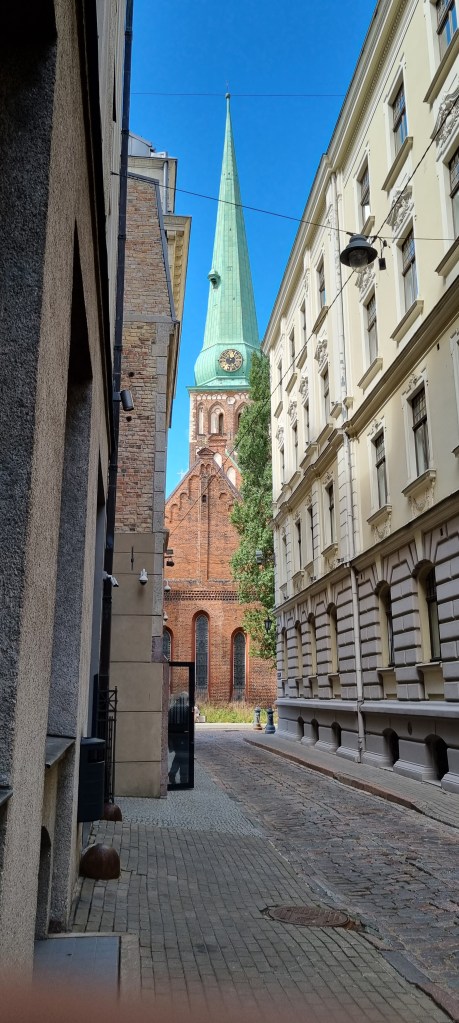
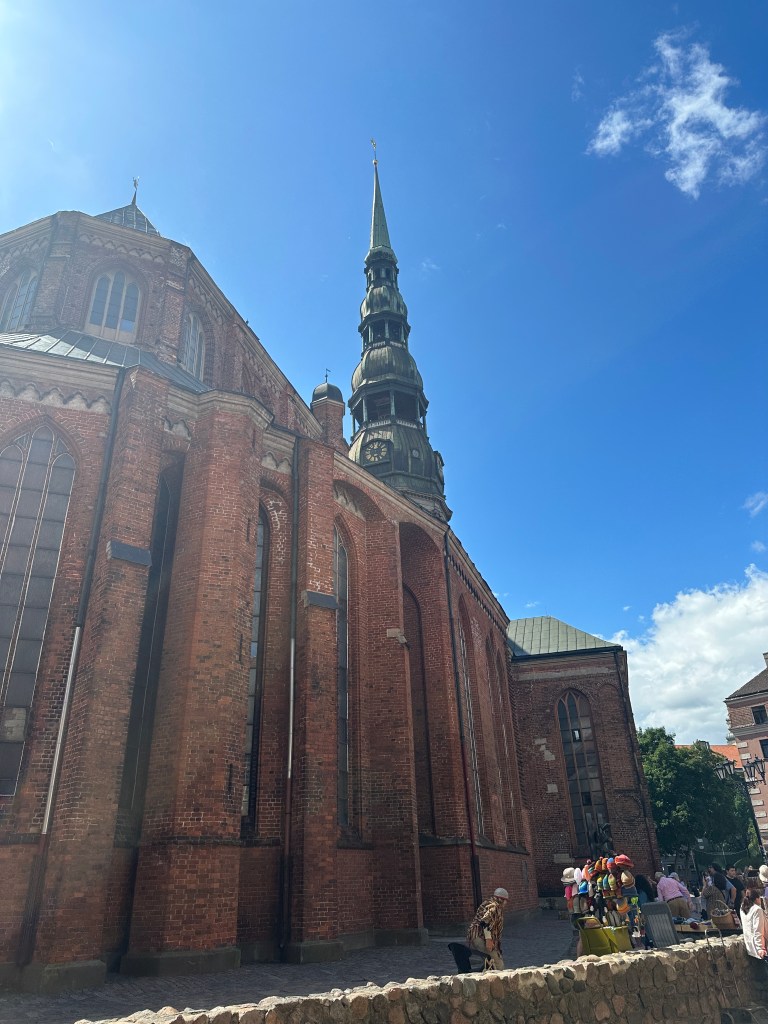
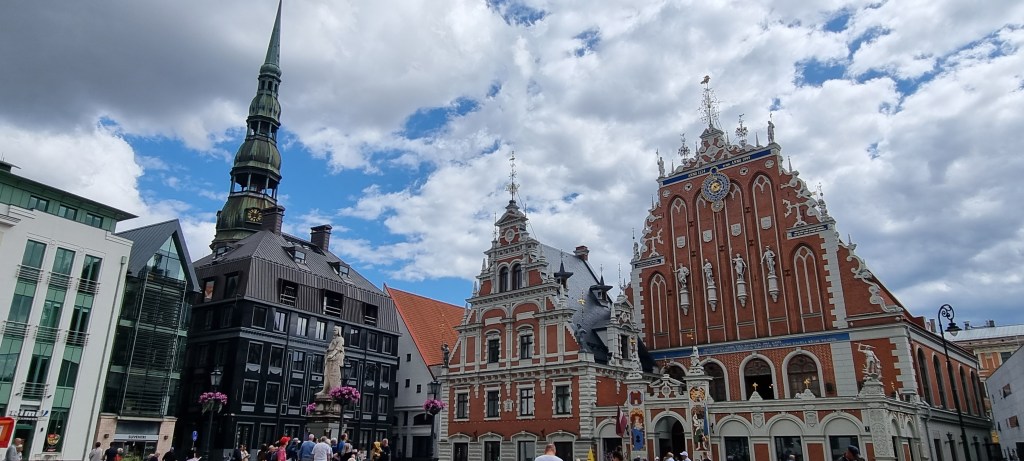
  • St. Peter’s Church: This Gothic masterpiece offers a panoramic view from its tower that’s simply awe-inspiring. Inside, the silence is a peaceful contrast to the bustling streets below, and the church’s history as a place of worship since the 13th century resonates in its walls.
  • The “Town Musicians of Bremen” sculpture nearby is a nod to the Brothers Grimm fairytale. Gifted by Bremen in 1990, it symbolizes four aging animals who run away to become musicians. The monument also carries political undertones and is considered a symbol of luck, with many visitors touching the animals’ faces in order.
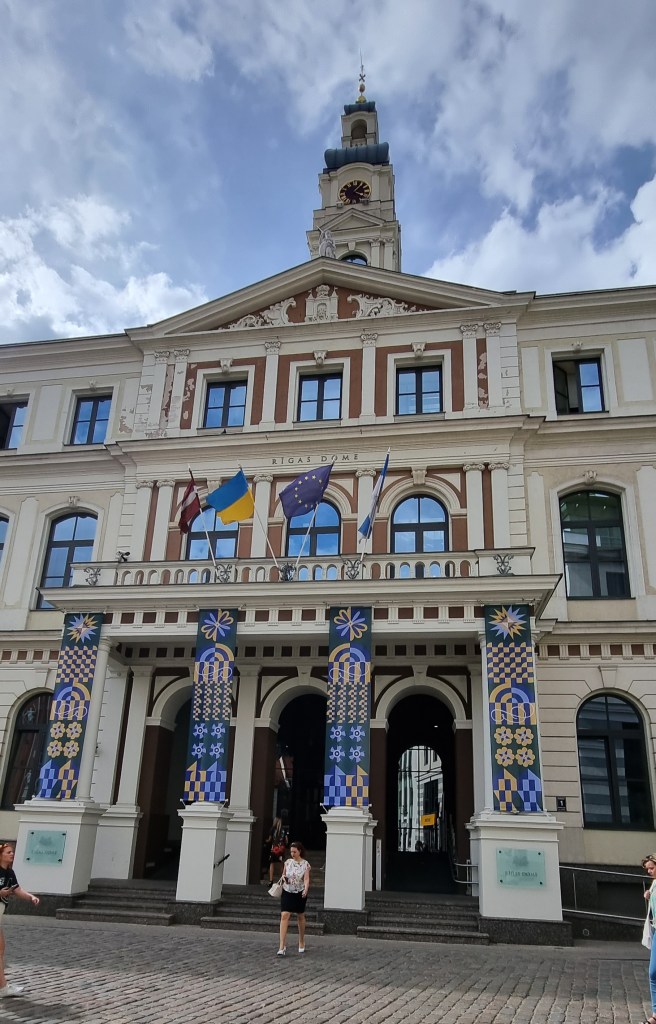
  • Town Hall: Standing tall since the 13th century, the Town Hall’s blend of Gothic and Baroque styles speaks of Riga’s civic pride. Its grandeur and intricate details are a testament to the city’s rich architectural heritage.
  • House of Blackheads: A stunning building with a rich history, originally built for a guild of unmarried merchants. Its intricate facade is a photographer’s dream, and the reconstructed interiors showcase the opulence of a bygone era.
  • Dome Cathedral: Home to one of the world’s largest organs, the melodies within the Dome Cathedral resonate with the soul. The stained glass windows, Gothic arches, and the blend of architectural styles create an ethereal beauty that’s both inspiring and calming.
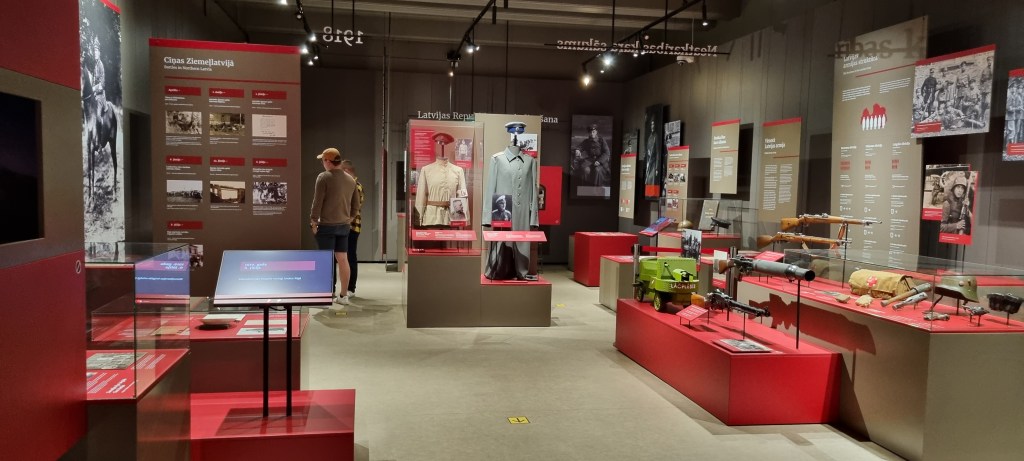
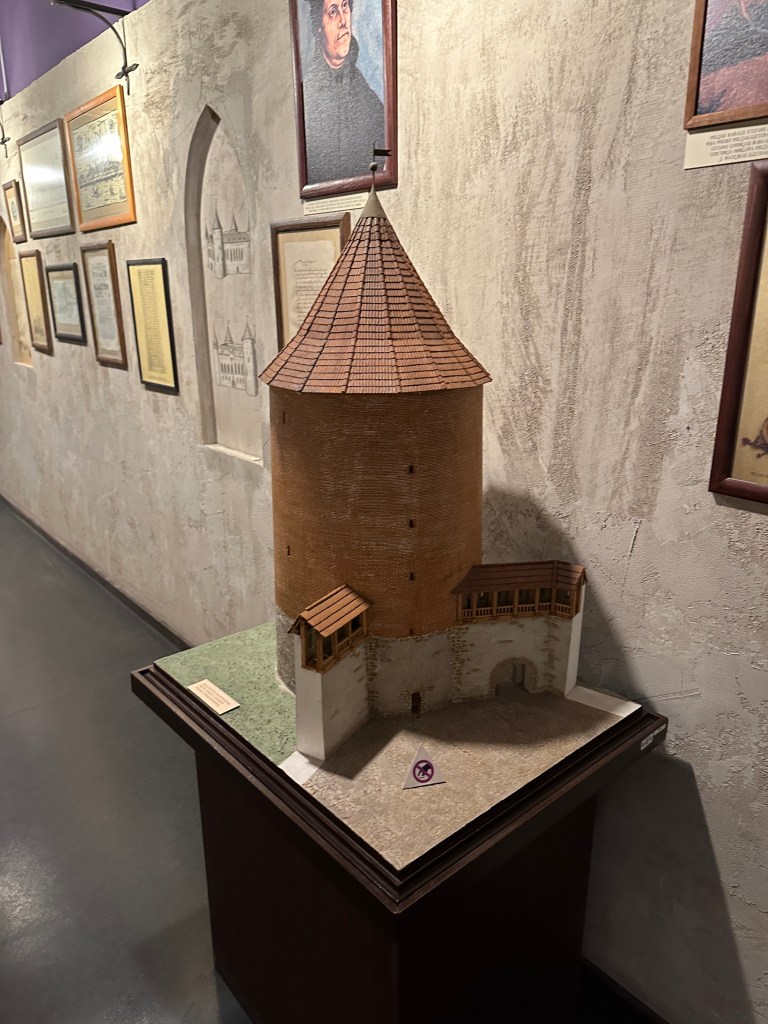
  • Powder Tower: A medieval reminder of Riga’s past, now housing the Latvian War Museum. Its thick walls hold secrets of wars and victories. The exhibitions on each floor are impressively maintained, offering a journey through Latvia’s military history.
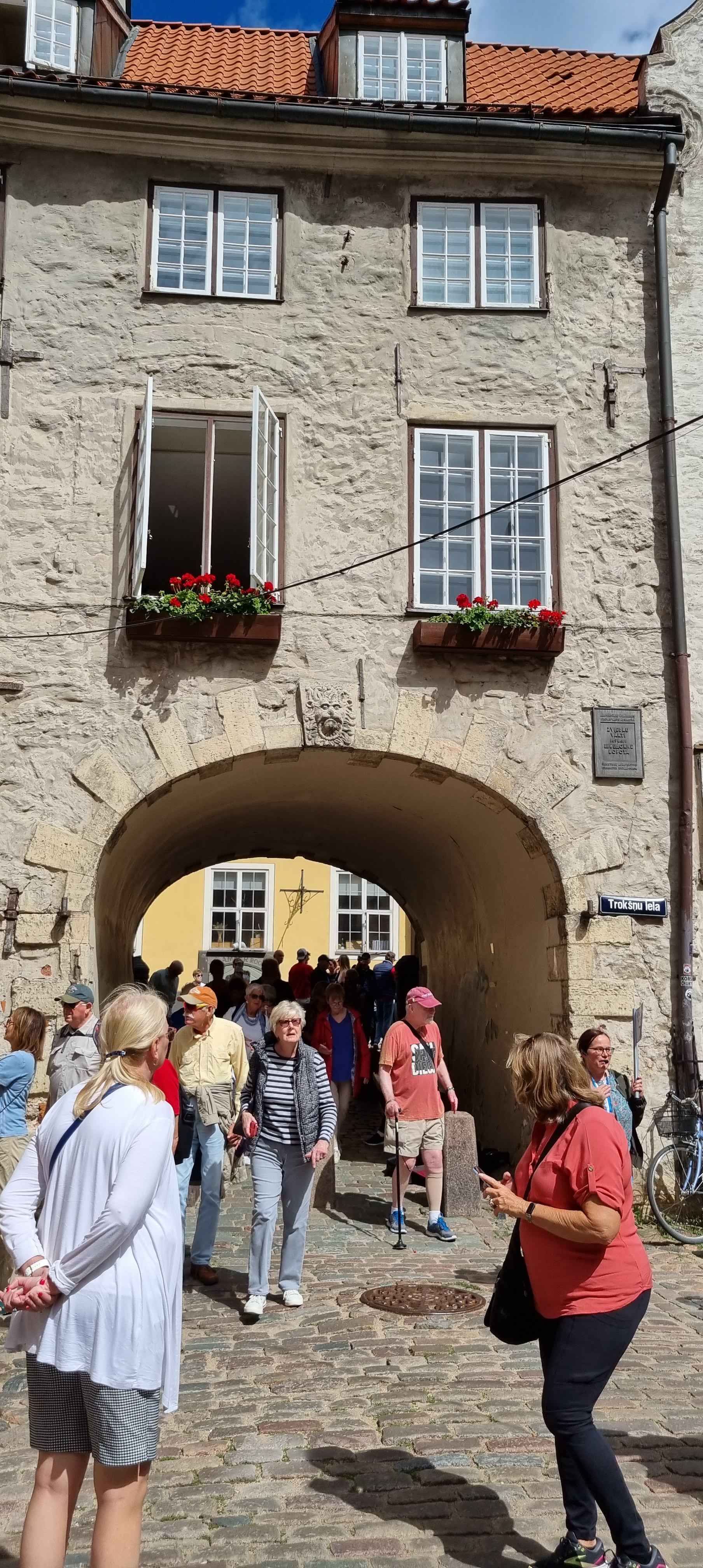
  • Swedish Gate: Built in 1698, this gate is a silent witness to Riga’s history. Walking through its arch, adorned with amazing architecture, feels like stepping back in time. The weathered stones and historical inscriptions add to its mystique.
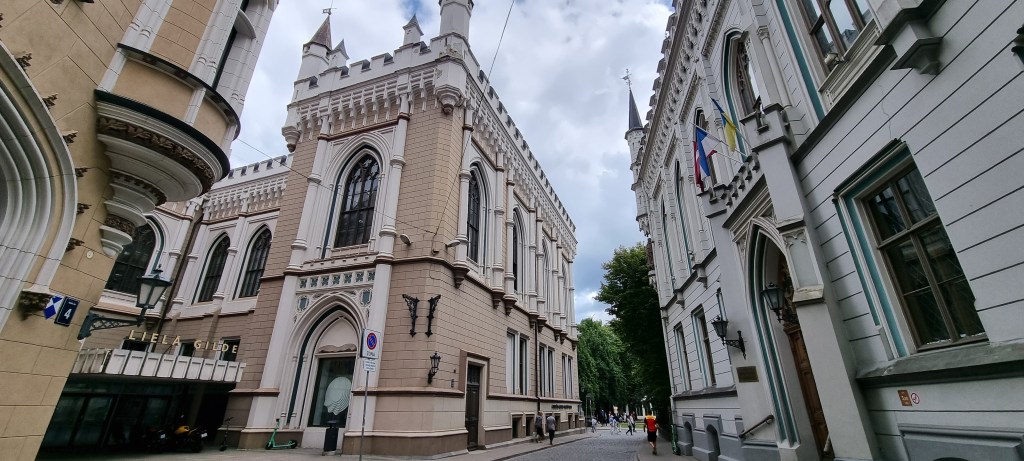
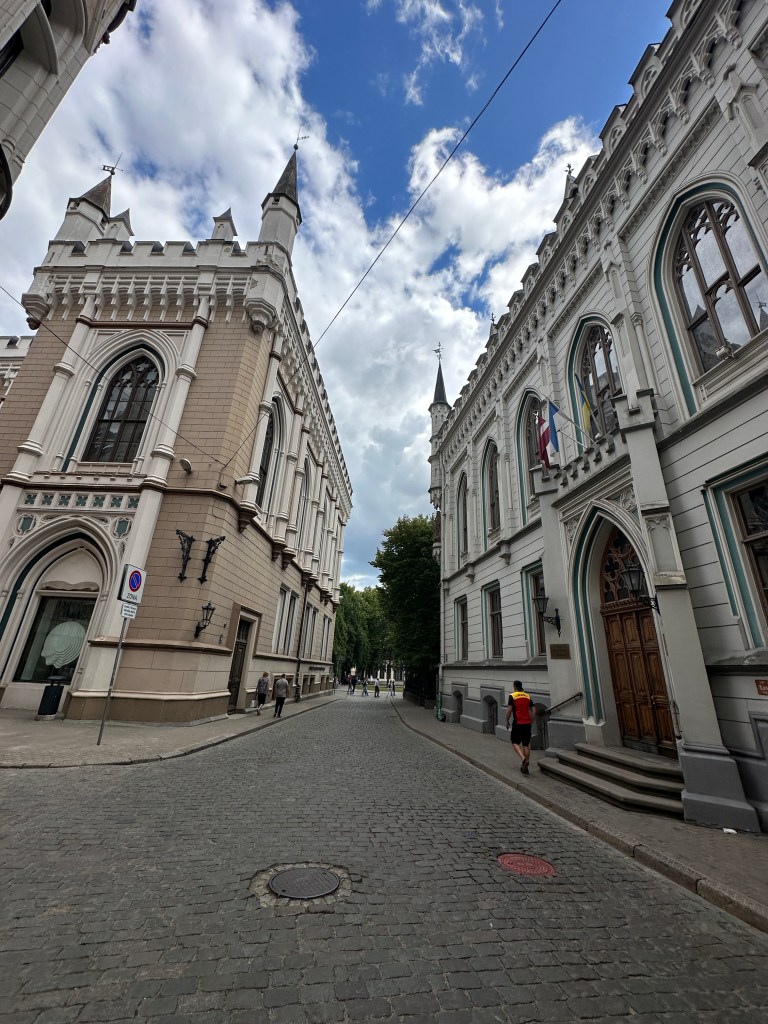
  • Small & Large Guild: These buildings, with their intricate designs, speak of Riga’s merchant past. The blend of architectural styles, from Gothic to Renaissance, is a visual treat, reflecting the city’s commercial heritage.
  • Three Brothers: A unique ensemble of houses from different centuries, showcasing architectural evolution. Each house has its unique character and story. Trying to capture all three buildings in one frame is a fun challenge for photographers, symbolizing the unity in diversity.
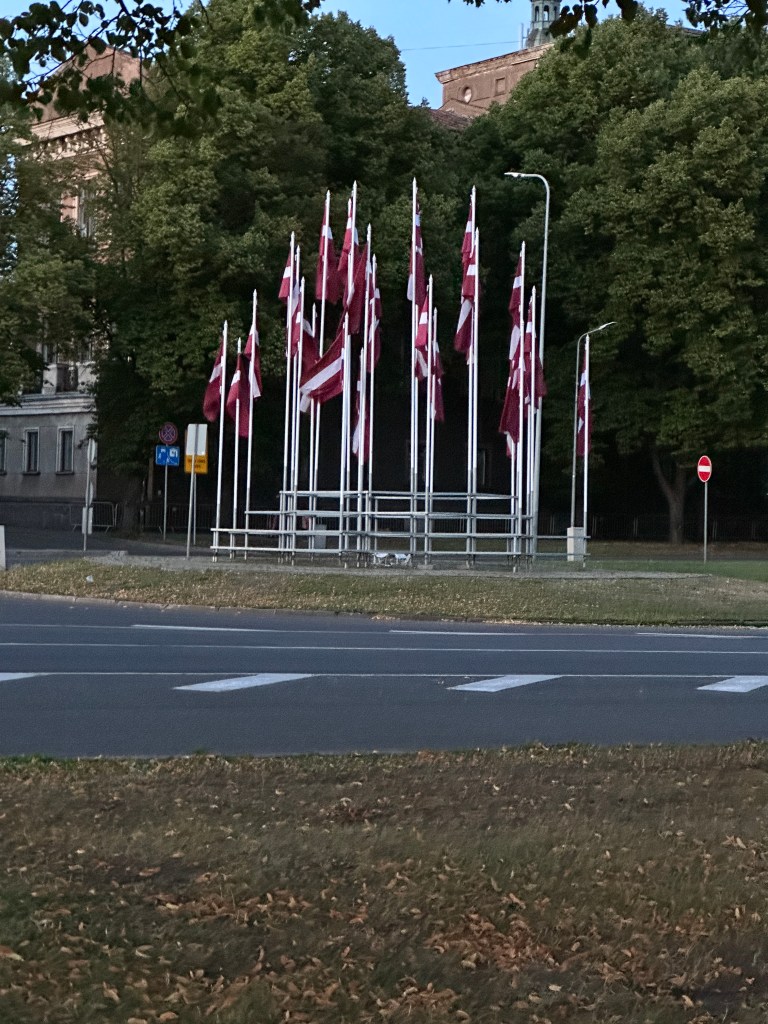
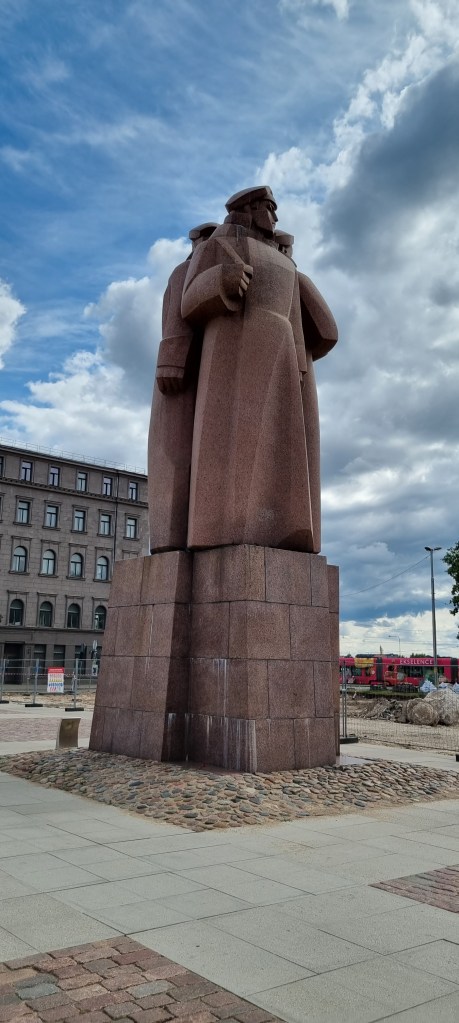
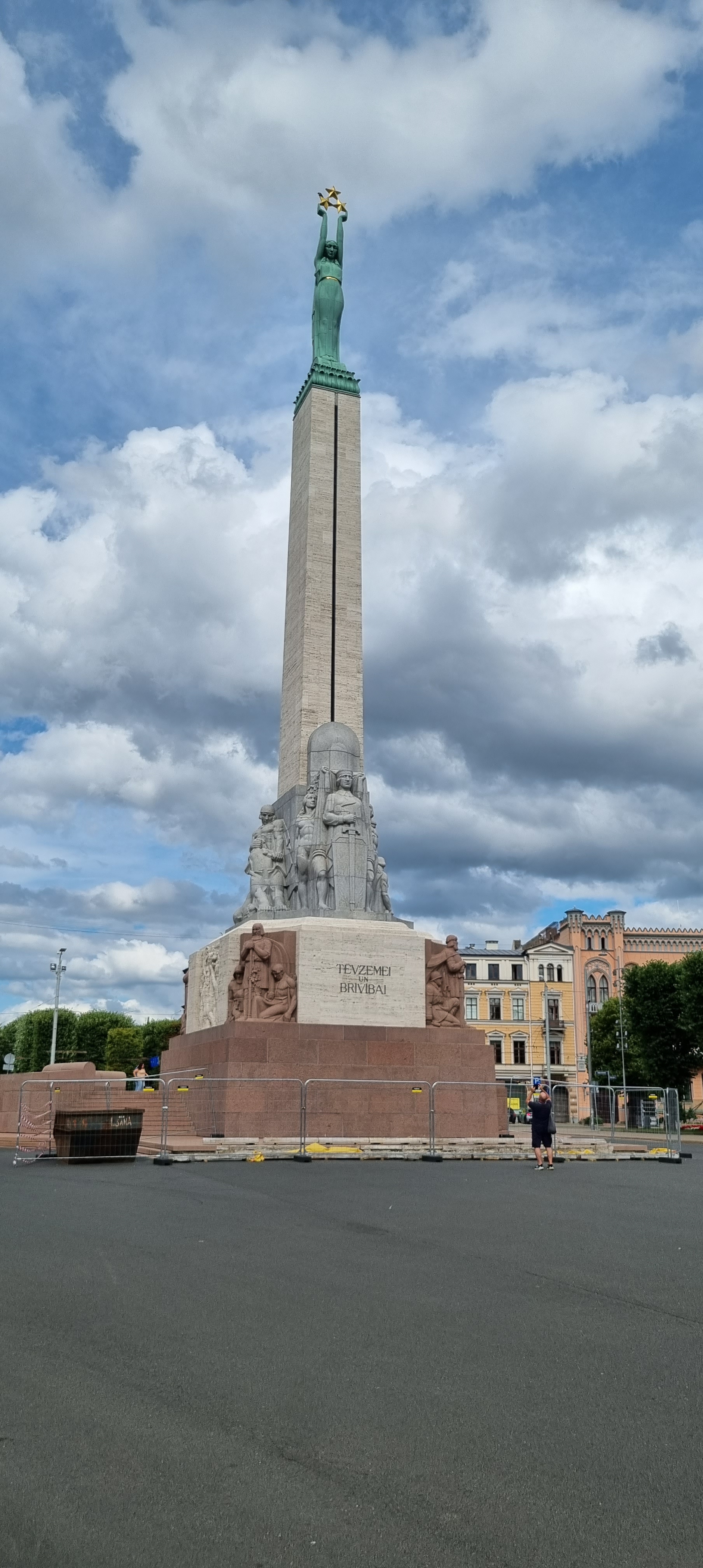
  • Freedom Monument: A 42-meter tall symbol of Latvia’s freedom and pride. Standing near the Brivibas Boulevard, it’s not just a monument but a rallying point for national pride. The sculptures and bas-reliefs depict Latvian culture and history.

Lunch at Piazza Italiana was a feast for the senses. The aroma of freshly baked bread, the lively chatter of fellow diners, and the taste of amazing pizzas, fresh spaghetti with shaved truffles, risotto, antipasti, and burrata created an unforgettable Italian experience right in the heart of Riga.

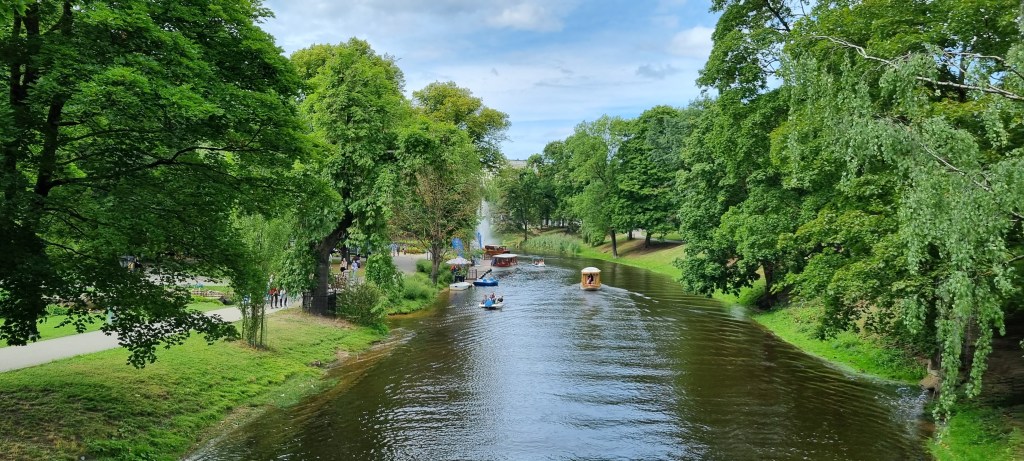
Our afternoon boat ride in the canals was a serene journey that started and ended at Bastejkalns Park, right in front of our hotel. The gentle lapping of the water, the reflections of historic buildings, and the soft breeze made it a memorable ride. The park’s lush greenery and tranquil ponds added to the beauty of the experience.

Dinner at Riviera was a Mediterranean delight. The asparagus, beet carpaccio, gazpacho, olives, bread, and other delicacies were crafted to perfection. The staff’s warmth, the antique ambiance, and the amazing desserts made it a must-visit experience. The complimentary dessert for my parents’ anniversary was a sweet touch, reflecting the restaurant’s attention to detail and personalized service.

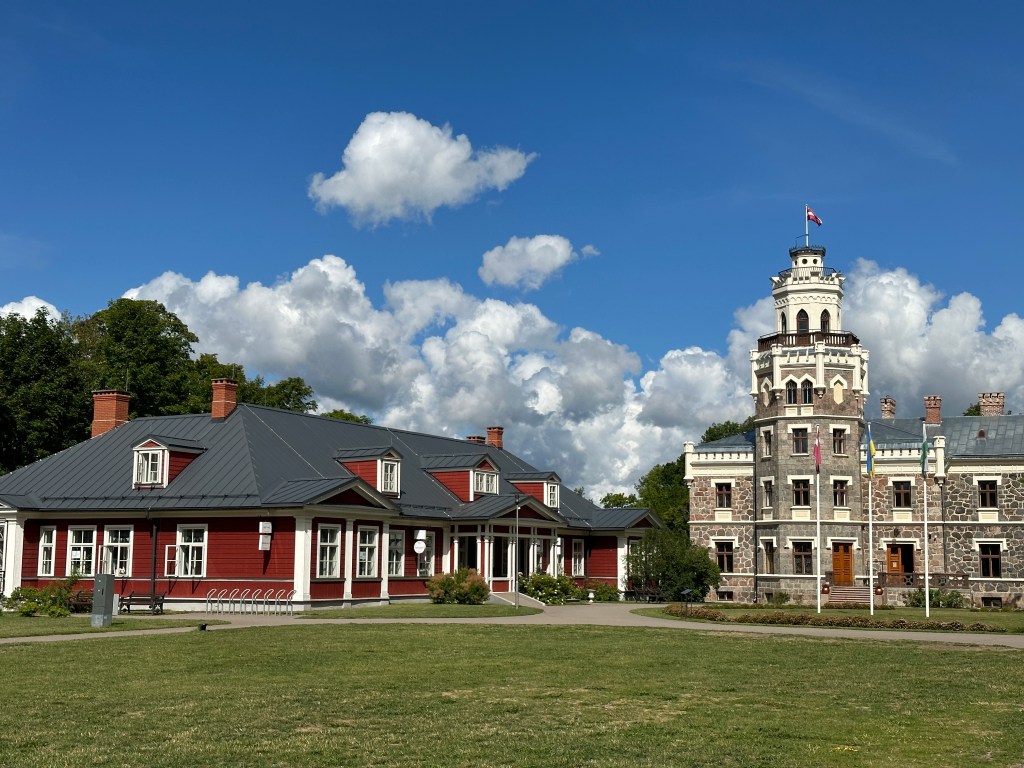
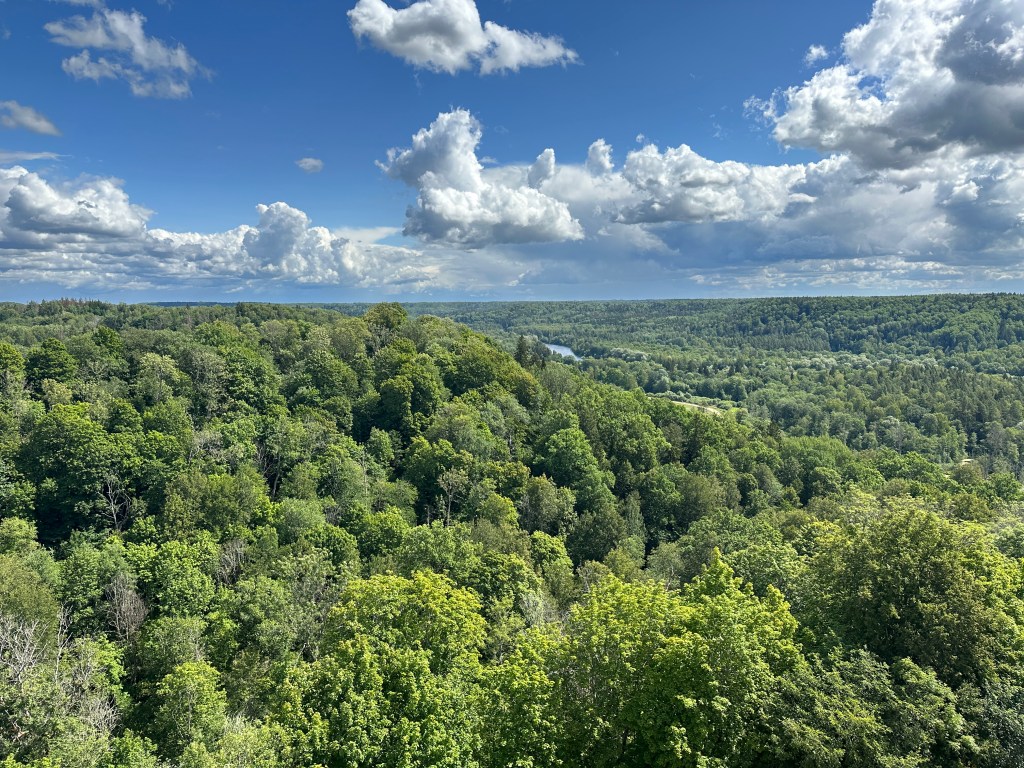
The next day, our journey took us to the enchanting Sigulda Castle. The architecture with brown and white ornate carpentry, with its blend of styles, spoke of different epochs, and the serenity of the place was palpable. We were the only tourists there, and the calmness was almost surreal. We had the whole place to ourselves, allowing us to explore at our leisure, absorbing the history and tranquility. Sigulda Castle’s location, amidst lush forests and near the river, added to its mystical charm.

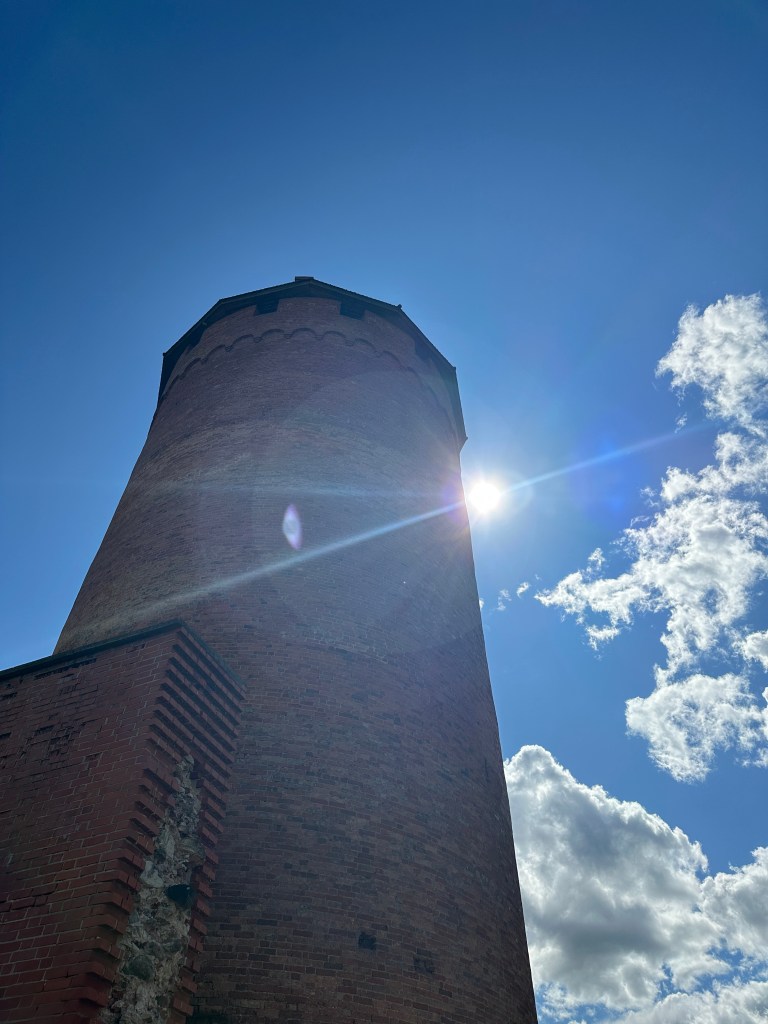
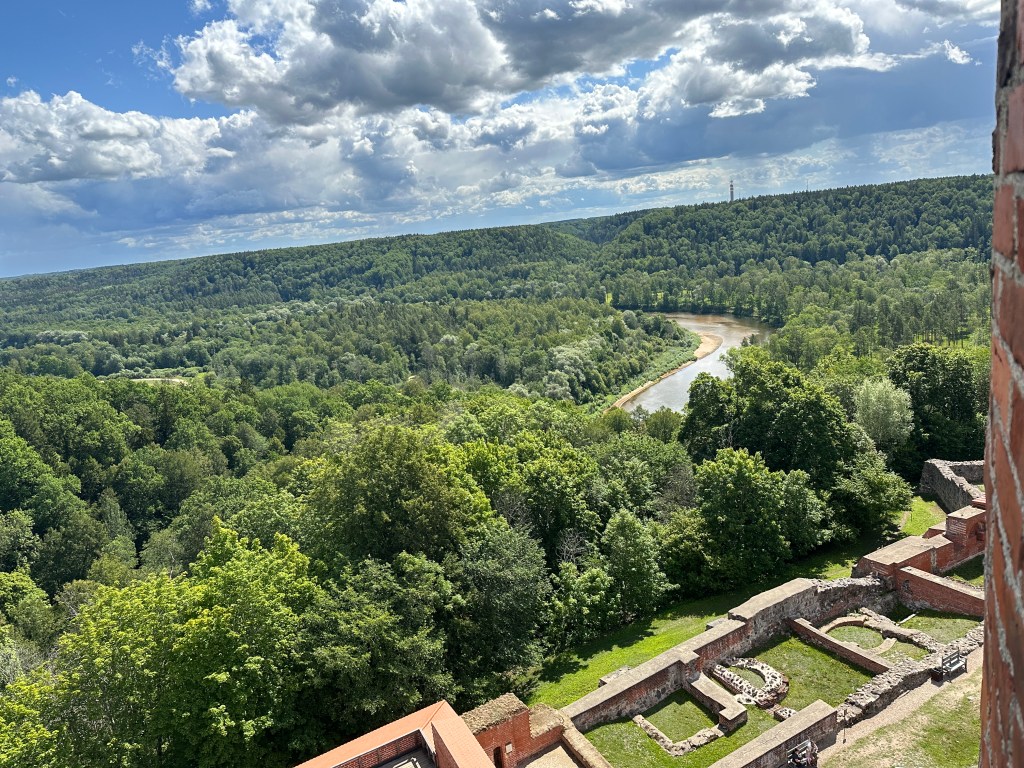
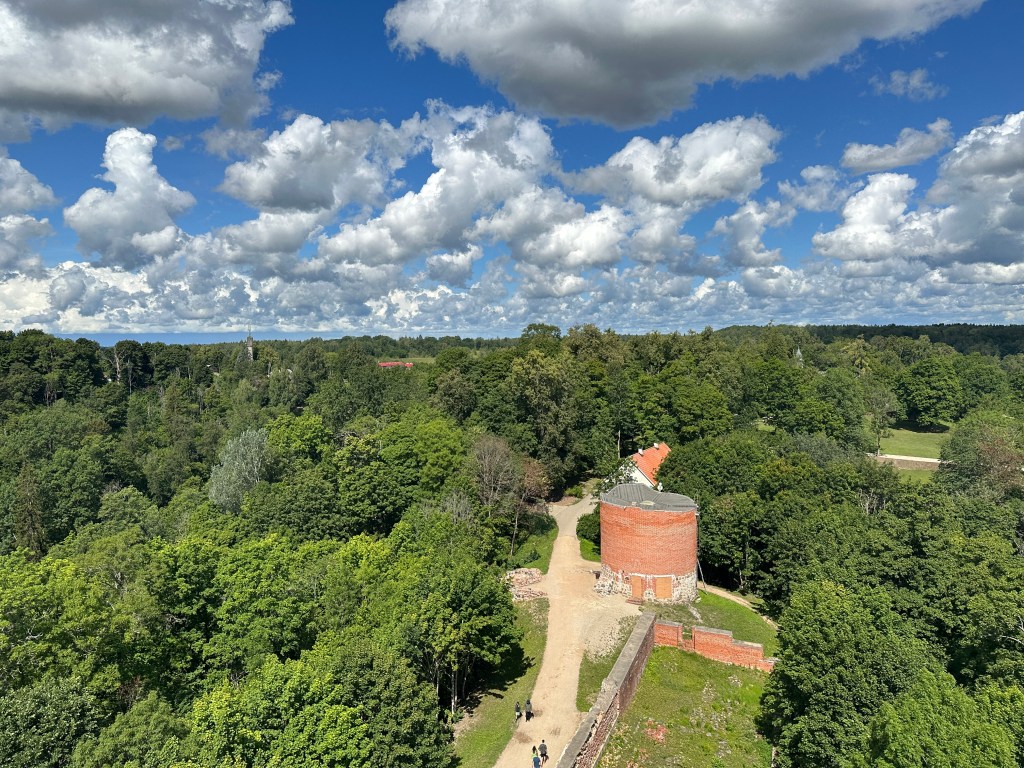
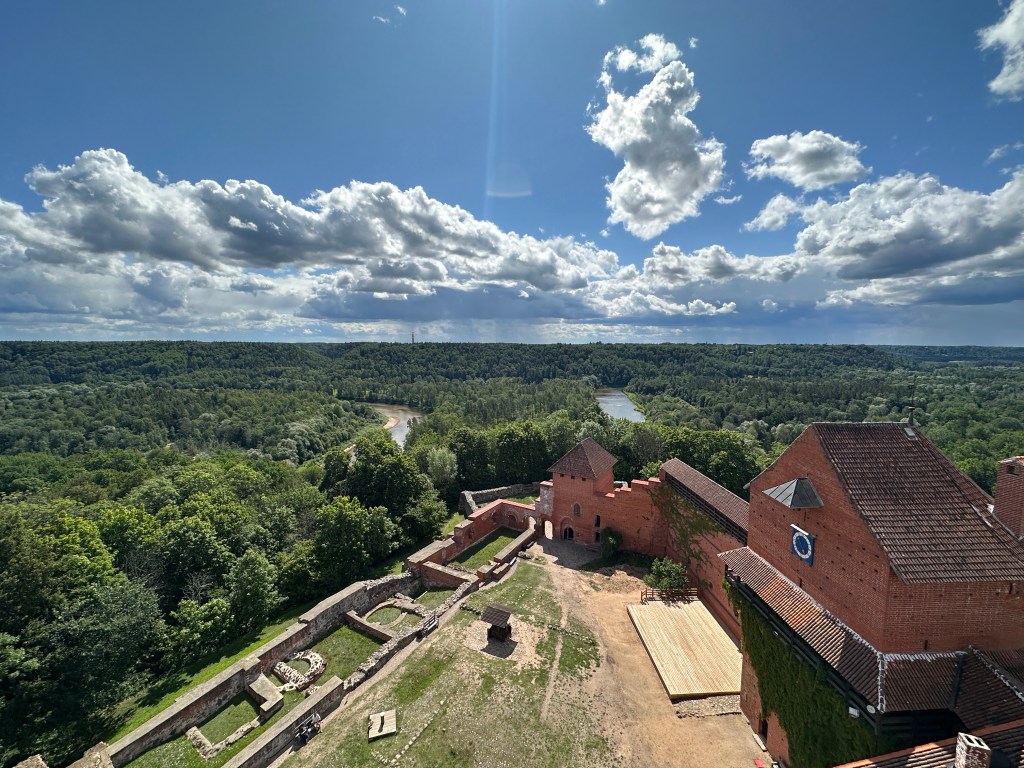
Turaida Castle, a red-brick fortress, stood as a majestic testament to Latvia’s moniker as the “Land of Castles.” The beautiful gardens surrounding the castle were a journey back in time, and the local legends, especially the tale of the Rose of Turaida, added a touch of romance. We explored the museum, walking through the ancient halls that showcased the castle’s history. The view from the top of Turaida was awe-inspiring, with the Gauja River winding through the valley below. Like Sigulda, we had Turaida to ourselves, allowing us to immerse ourselves in its calmness and beauty. The architecture, with its defensive walls and ornate details, was a fascinating blend of practicality and artistry.

From the vibrant streets of Riga to the serene landscapes of Sigulda and Turaida, each moment was a discovery. The blend of architectural marvels, culinary delights, and the warmth of the people left an indelible mark on our hearts. As we headed to Estonia, we carried with us not just memories but a piece of Latvia’s soul, a land that charmed us with its simplicity and richness.

Lithuania

Nestled in the heart of northeastern Europe, Lithuania is a captivating blend of rich history, vibrant culture, and stunning natural beauty. It is the southernmost and largest of the three Baltic states. Whether you’re wandering through the cobblestone streets of its capital, Vilnius, soaking in the tranquility of its thousands of lakes, or immersing yourself in the local art scene, Lithuania promises an enriching journey of discovery. Its diverse landscape, unique cuisine, and the warm hospitality of its people make it an off the beaten path destination for any avid traveler.

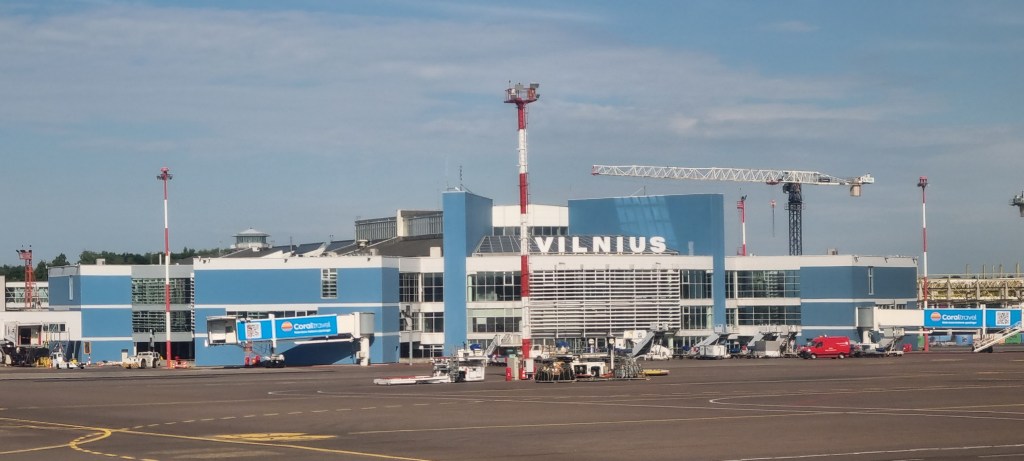
Our journey in Lithuania began at Vilnius Airport, the gateway to a city steeped in history and culture. Vilnius, the capital of Lithuania, is nestled in the southeast part of the country, at the confluence of the Neris and Vilnia rivers. The city is renowned for its Old Town, a UNESCO World Heritage site, which is one of the largest surviving medieval old towns in Northern Europe. The city’s history is a rich tapestry of diverse influences, from its establishment in the 14th century, through periods of Polish and Russian rule, to its present-day independence. Vilnius is a city where different cultures, religions, and styles coexist harmoniously, reflected in its architecture, which ranges from Gothic to Renaissance, Baroque to Neoclassical.

Our first stop was the Artagonist Art Hotel, a boutique hotel located in the heart of the city. The hotel is a modern boutique, blending contemporary design with a nod to Lithuania’s rich history. Each room is uniquely decorated by local artists, making it a living art piece. The staff are friendly and attentive, ensuring a comfortable and memorable stay. The hotel’s location is a major plus, with major attractions like the Vilnius Cathedral and Gediminas Tower just a short walk away. Some other hotels I recommend are Hilton Garden Inn Vilnius City Centre, Grand Hotel Kempinski Vilnius, ​​Relais & Châteaux Stikliai Hotel and St Palace Hotel.

For lunch, we headed to Bistro 18, a multi-cuisine restaurant near our hotel. The Indian curry was a delightful surprise, with a perfect spicy blend of spices that transported us to the streets of Delhi. The beetroot risotto was a standout, with the earthy beetroot perfectly complementing the creamy risotto. The pasta was cooked to al dente perfection, and the salad was fresh and vibrant.

After a leisurely stroll around town, soaking in the city’s charm, we retreated to our hotel for some rest before heading out for dinner at Cozy cafe. The cafe lived up to its name, with a warm and inviting atmosphere. Their signature cold beetroot soup was a revelation, a refreshing blend of flavors that was both comforting and exciting. The salads were fresh, the pizza was cheesy and delicious, the pasta was flavorful, and the shakshuka was a hearty end to the meal.

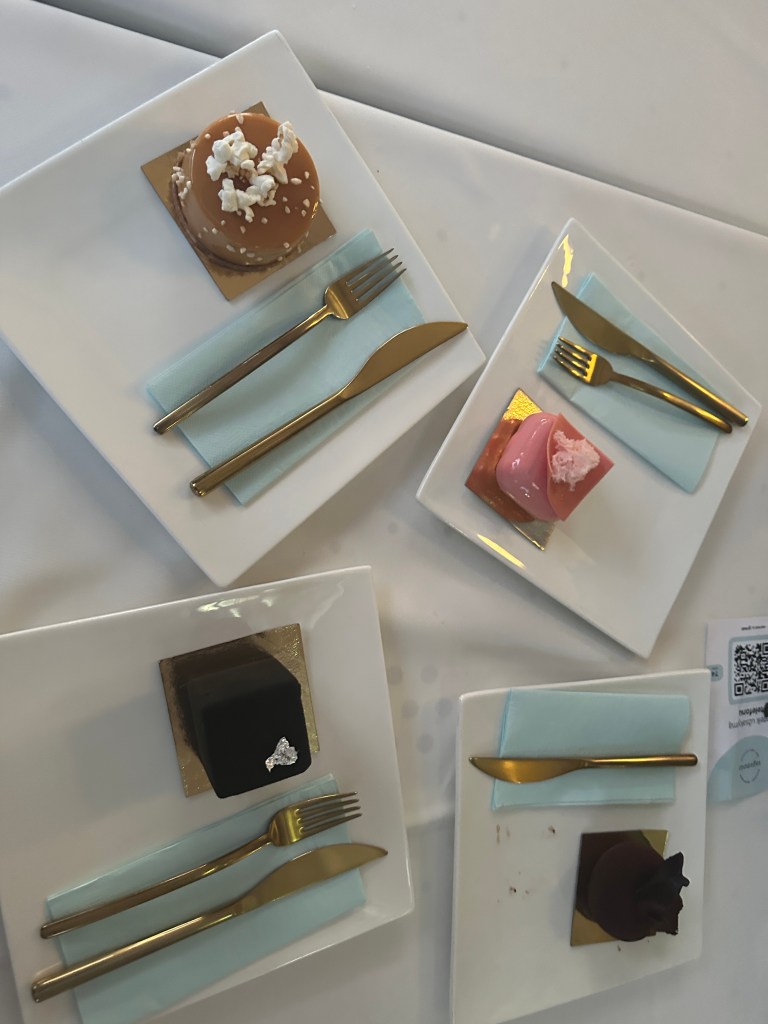
Our sweet tooth led us to Sugamour, a quaint dessert shop in the center of the city. This place is a must-visit for dessert lovers. The assortment of entremets and ice creams were a feast for both the eyes and the palate. Each dessert was a work of art, with complex layers of flavors and textures that were both unique and delicious. The shop’s cozy ambiance and friendly staff added to the overall experience.

My second day in Vilnius began with an early cup of coffee at Brew. The hand brew was a revelation, a fruity concoction that was a perfect start to our day. Our breakfast at the Artagonist was a delightful spread of local and international dishes, setting us up for the day’s adventures.

The walking tour of Vilnius was an enlightening journey through time, where each monument we visited was a testament to the city’s rich history and cultural heritage. Our first stop was the Old Town, a UNESCO World Heritage site, which is one of the largest surviving medieval old towns in Northern Europe. The cobblestone streets, the charming old buildings, and the vibrant atmosphere made me feel like I was stepping back in time. It was fascinating to see how the city has preserved its heritage while also adapting to the modern world. During this stop, I also grabbed a Batch brew and Tiramisu from Backstage coffee, which was nice and the tiramisu was quite soft and tasty. 

Next, we visited the Gates of Dawn, one of the most important religious, historical, and cultural monuments in Vilnius. Today, it is a significant site of Catholic pilgrimage in Lithuania. We then visited St. Anne’s Church, a stunning example of Gothic architecture. The intricate brickwork and the beautiful stained glass windows of the church were a sight to behold. The first floor is a cafe and above is the church. Onwards to the Church of St. Constantine and St. Michael, a Russian Orthodox church built in 1913 to commemorate the 300th anniversary of the Romanov dynasty. The church’s dazzling exterior and modest interior were a stark contrast. Despite being relatively ‘young’ compared to the other monuments, the church held its own charm and historical significance.

Our detour to Uzupis, a district of artists, was a delightful surprise. Declared as an independent republic by its inhabitants in 1997 as a prank on April Fools, Uzupis has its own constitution, president, throne, currency, and even a national day, which is the 1st of April. The bohemian spirit of Uzupis, its vibrant art scene, and the unique and comical constitution (which includes rights like “Everyone has the right to understand nothing” and “Everyone has the right to be unique”) made it a memorable part of our tour. It was like stepping into a different world, where creativity and freedom of expression were celebrated. I highly recommend reading the points in the picture below as it will definitely make you laugh.

Our tour then led us to the final stop, the Vilnius Cathedral, a magnificent structure that has stood the test of time. The cathedral has been rebuilt several times due to frequent fires, wars, and unstable soil under its foundation. The grandeur of the cathedral, its beautiful architecture, and the peaceful atmosphere inside was beautiful. 

The walking tour of Vilnius was a journey through time, a celebration of its history, culture, and spirit. It was a reminder of the city’s resilience, its ability to preserve its heritage while embracing the new, and its unique charm that makes it a unique destination.

For lunch, we headed to Rosehip, a vegan restaurant that served up hearty salads, wraps, and fries with homemade dips. The portions were generous, and the food was a refreshing change from our usual fare.

Post lunch, we explored the Gediminas Castle and Tower. The tower, the only remaining part of the Upper Castle, offers panoramic views of Vilnius. The castle’s history dates back to the 14th century, and it has served various purposes over the centuries, including being used as the city’s first observatory. The 360 degree view from the top was breathtaking, and we captured some memorable pictures against the backdrop of the city’s skyline.

Our next stop was the KGB Museum, housed in the former KGB building where the crimes of the Soviet regime were planned and executed for fifty years. The exhibits were a chilling reminder of the atrocities committed during the Soviet occupation. The prison cells and interrogation rooms were particularly haunting.

For dinner, we headed to Casa La Familia, a vegetarian pizza place that offered a cozy family dining experience. We were seated on the floor in a private area, which added to the homely ambiance. The pizzas were amazingly fired in their wood fired oven, but the standout dishes were the beet carpaccio and the portobello mushroom. The flavors were unique and left us wanting more. After dinner we went for another round of desserts and ice cream at Sugamour as the food was simply to die for. 

The next leg of our journey took us from Vilnius to Klaipeda, with enriching stops at Trakai Castle and Kaunas along the way.

We began our day with a drive to Trakai, a picturesque town located about an hour from Vilnius. Trakai is renowned for its stunning island castle, set amidst tranquil lakes. The Trakai Castle, a red-brick fortress dating back to the 14th century, is a symbol of Lithuania’s grand history. We explored the castle and walked around it, taking some of the best pictures of the entire trip. The serene tranquil beauty of Trakai, coupled with its historical significance, made for a memorable visit.

Next, we headed to Kaunas, Lithuania’s second largest city, about an hour and a half from Trakai. Kaunas’s blend of Gothic, Renaissance, and Baroque styles added to the city’s charm. We explored the Kaunas Castle and visited the Church of St. Michael the Archangel, a stunning Neo-Byzantine structure. The grand domes, intricate frescoes, and spiritual ambiance of the church were awe-inspiring. Kaunas’s lively streets, artistic vibe, and historical richness made our exploration engaging and fulfilling.

Lunch in Kaunas was at Agave, where the vibrant colors and flavors of Mexican cuisine delighted our taste buds. The homemade fajitas, well-spiced quesadillas, and delicious salads added a flavorful twist to our day. The lively atmosphere of the restaurant and the taste of authentic Mexican food in the heart of Lithuania made this meal a highlight.

From Kaunas, we continued to Klaipeda, a port city on the Baltic Sea, about two hours away. The maritime vibe, cobblestone streets, and historical buildings gave the city a unique charm. We checked into the Amberton Hotel, which turned out to be quite average. The staff was not particularly welcoming, and the overall experience was mediocre. The rooms were okay, but I would instead recommend Victoria or Michelson Hotel for a more comfortable stay.

Dinner was at Devi, where we enjoyed home-style Indian food. Though it took some time to arrive, the food was delicious and soulful, ending our day on a comforting note.

The next day’s adventure was the Curonian Spit, a UNESCO World Heritage site known for its unique landscapes. We explored Juodkrante where we cycled and had an exhilarating experience, with nature’s beauty unfolding at every turn.  We were set to explore the Hill of Witches, Sand Dunes, Nida, and however, our day took an unexpected turn when we faced a medical emergency. It was a stark reminder that travel is not always comfortable and enjoyable, and hardships can arise. Thankfully, we managed to handle the situation.

Lunch was at Manami (Asian Fusion), located in a nearby mall. The food was extraordinary! From the sushi to the best noodles I’ve ever had, the spring rolls, amazing drinks, and delicious starters like mushroom, eggplant, and edamame, everything was perfect.

We spent the evening exploring the mall and later walked along the canal in Klaipeda. Before that we made a quick visit to the Klaipeda beach, where we explored the beach and had some time there enjoying the breeze and the sound of waves. The beach was majestic and the water was cold, not ideal to bathe at this time.

Dinner was at a Lithuanian place called Agnostikas. We indulged in their signature dish, fried bread, the best cheese balls which were soft and gooey, sweet potato fries served with goat cheese and a lemon aioli, hummus, salads, and traditional Lithuanian vegetarian dishes. The flavors were authentic, and the ambiance was cozy and the riverside ambience made the experience thousand times better. 

The next day marked our transfer to Riga, but I began my day with a morning walk to have some specialty coffee at Musungas. The coffee was amazing and the ambience was better. I had a fruity citrusy coffee from Ethiopia which was to die for and brewed perfectly. 

Our stop in our transfer to Riga was at the Hill of Crosses, a site of pilgrimage with thousands of crosses, each telling a story of faith, hope, and resilience. The sight of the hill, covered in thousands of crosses, was both humbling and inspiring. We took our time to walk among the crosses, reflecting on their symbolism and feeling a profound connection to the collective faith they represented. At the moment the exact number of crosses is not known, but the estimated number is over 150,000! But this number is growing every day, because many visitors leave a cross in memory. The whispers of prayers, the gentle rustle of the wind, and the deep sense of spirituality made the Hill of Crosses an unforgettable experience.

Our journey through Lithuania was a rich tapestry of historical explorations, culinary delights, unexpected challenges, and spiritual reflections.

Poland

Our journey began in my hometown city of Kolkata, where we boarded a Vistara flight to Delhi. Upon landing, we checked into the Novotel in Delhi for a much-needed power nap. The hotel was a sanctuary of calm amidst the city’s hustle and bustle, and we woke up refreshed and ready for the next leg of our journey.

Our Finnair flight to Helsinki was a treat in itself as the brand new sustainable and eco friendly A350 aircraft was fresh and inviting. The seats were plush and comfortable, perfect for the 9-hour journey ahead. The in-flight entertainment system was impressive, with a wide array of movies and shows to choose from. The catering was exceptional, which offered us delicious appetizers along with exceptional mains and desserts. The cheese with their local jam was a treat. The flight attendants were attentive and courteous, making the journey even more enjoyable.

Finnair Flight

Upon landing in Helsinki, we were greeted by a modern, minimalist airport filled with local shops. The lounge was a haven of tranquility, with comfortable seating and a variety of vegetarian options such as salads like lemon roasted fennel and a beetroot salad. A much needed coffee which was strong and invigorating, was the perfect pick-me-up after a long flight.

Our next flight was a shorter one to Krakow, again with Finnair on a smaller Airbus A320. The service was consistent, and we were served a hot, delicious meal which was a Thai curry with chilli rice during the flight. The meal was a delightful surprise, with flavours that were both familiar and exotic.

Kraków, a city steeped in history and culture, is a gem in the heart of Poland. Its medieval charm, vibrant festivals, and rich academic heritage make it a must-visit destination. The city’s old-world charm was evident in its cobblestone streets and historic buildings. We checked into the H15 Francuski Hotel, a boutique establishment located in the heart of the city. The hotel was a blend of old and new, with antique furnishings and modern amenities. The rooms were spacious and comfortable, and the staff was welcoming and attentive.

Our first meal in Krakow was at Dolabella Due, a quaint café tucked away in a narrow lane in the old town. The food was delightful, with the pistachio gnocchi and mango panna cotta being the highlights. The Mamabella pizza with artichokes and sun dried tomatoes was prepared in a wood fired oven and also tasted authentic. However, the service left something to be desired. Despite this, the flavours of the food left a lasting impression, and we found ourselves reminiscing about the meal long after we had left the café.

Furthermore, we explored the city square, a vibrant hub of activity. The square was bustling with locals and tourists alike, making it a great place for people-watching. We indulged in some gelato and a White Kit Kat McFlurry from McDonald’s on our way back to the hotel. The gelato was creamy and delicious, a perfect treat for a warm summer day.

Square at night

I started my next day with a walk to L’isola Café, located 1.5 km away, for a cup of coffee. Krakow’s layout requires a fair bit of navigation, with numerous underpasses and crosswalks. On our way back, we rented a Lime scooter, a fun and efficient way to explore the city. These rentable scooters are a fun and efficient way to explore the city. They’re available at many spots in the city, and with speeds ranging from 5-20 km/h, they offer a unique and enjoyable way to take in the sights. At Lilsola, I enjoyed a cappuccino and avocado toast, and took a cold brew for the road. The coffee was rich and flavorful, the perfect start to my day.

Lilesola Cafe

Our next stop was Zakopane, a charming town nestled in the foothills of the Tatra Mountains. En route, we stopped at Chocholow, a quaint village known for its traditional wooden huts. The huts were a sight to behold, with their intricate carvings and rustic charm.

Zakopane itself was a bustling town, with a vibrant main street filled with shops and eateries. Trying the local cheese with cranberries was a culinary adventure, with the tartness of the cranberries perfectly complementing the creaminess of the cheese.

For lunch we went to a swiss restaurant on the end of the main street in Zakopane called Mała Szwajcaria. The servers did not speak English and the food was mediocre at best. The raclette with potato nest and the salad was the only dish that we enjoyed. The fondue’s texture was completely off and the bread was stale, the pierogi dumplings were thick and chewy, and the roesti was unseasoned. I’m not happy to say it, but it was not a very satisfactory meal.

Next, we took a funicular ride to the top of Gubalowka Hill. The view from the top was breathtaking, with panoramic views of the Tatra Mountains. One could easily spend a couple of hours at the top, enjoying the view, the food, and the gravity slide, a thrilling ride down the hill.

The thermal spas in Chocholow were a world in themselves. Spread across three floors, each level was a new realm of relaxation. The salt rooms offered a unique detoxifying experience, while the saunas helped us unwind and let go of all our stress. The variety of jacuzzis, each set at a different temperature, allowed us to find our perfect comfort zone. The artificial beach added a touch of whimsy to the experience. Along with these there are aroma rooms, water slides, pool bars, pool activities and much much more. It is impossible to explore the whole area in 3 hours. The spa was more than just a place to relax; it was a place to rejuvenate our mind, body, and soul. Undoubtedly, the highlight of the day.

The next morning, we hopped on our Lime scooters and headed to Veganic for a healthy breakfast. The smoothies, juices, and coffees were refreshing, but the food was the real star. The smoked tofu scramble on sourdough and ful medames with chili oil and pita bread were outstanding.

At 11:30, I downloaded an app called Krakow Tours and embarked on a self-guided tour of the city’s main sights. The Barbican, a fortified outpost once connected to the city walls, is a testament to Krakow’s medieval past. Its circular structure and numerous watchtowers offered a fascinating glimpse into the city’s history. St. Florian’s Gates, the only remaining part of the old city walls, was a majestic sight. The gate, adorned with a baroque roof and a statue of St. Florian, was a symbol of the city’s resilience. The sight of St. Mary’s Basilica, with its two uneven towers and stunning facade, was breathtaking. The interior was even more impressive, with its ornate altarpiece and beautiful stained glass windows.

The Cloth Hall, located in the center of the main square, was a hub of activity. The hall, once a major center of international trade, is now home to numerous stalls selling souvenirs and local crafts. I bought over there a lava stone bracelet and also a souvenir. The Church of St. Adalbert’s and the Jesuit Church stood in all their glory as well. The Wawel Cathedral, located on Wawel Hill, was a symbol of the nation’s identity.

The Wieliczka Salt Mine, Excavated from the 13th century, produced table salt continuously until 2007, making it one of the world’s oldest operating salt mines. The mine reaches a depth of 327 meters and extends via horizontal passages and chambers for over 287 kilometers. The mine is now an official Polish Historic Monument and a UNESCO World Heritage Site.

One of the most enchanting aspects of the mine is the legend about Princess Kinga, who is said to have thrown her engagement ring into one of the mine shafts in Hungary before leaving for Poland. On arriving in Kraków, she asked the miners to dig a deep pit until they come upon a rock. The people found a lump of salt in there and when they split it in two, discovered the princess’s ring. Kinga had thus become the patron saint of salt miners in and around the Polish capital. This is illustrated by the video attached below.

Visiting the Wieliczka Salt Mine was an unforgettable experience. The intricate carvings, the vast underground chambers, the sense of history and human endeavor, all combined to create an atmosphere of awe and wonder. The mine’s unique microclimate, rich in minerals and with a constant temperature of around 15-16 degrees Celsius, added to the sense of being in a different world, deep beneath the surface of the earth.

The guided tour of the mine was both informative and entertaining. The guide’s stories brought the history of the mine to life, and the various displays of salt-mining technology provided a fascinating insight into the challenges and ingenuity of the miners. The highlight of the tour was undoubtedly the visit to the underground chapel, with its stunning salt carvings and chandeliers. The sense of peace and tranquility in the chapel, deep beneath the earth’s surface, was truly remarkable. It is a place where history, culture, and natural beauty come together to create an experience that is both educational and deeply moving. It is a must-visit for anyone traveling to Poland.

For dinner, we went to the Hard Rock Cafe. Before dinner, we did some shopping at Zara, where the stock was impressive. At Hard Rock, we indulged in their signature cocktails, nachos, and mac and cheese. The baked apple crumble was the perfect end to our meal and our time in Krakow.

The next morning, we embarked on a journey that would prove to be one of the most poignant and heart-wrenching experiences of our lives. We had an early start, leaving at 7:30 am for a tour of Auschwitz and Birkenau, scheduled to begin at 9 am.

Auschwitz-Birkenau, the largest Nazi concentration and extermination camp, is a chilling reminder of the horrifying crimes committed during the Holocaust. It’s a place that leaves an indelible mark on your soul, a stark testament to the depths of human cruelty and the resilience of the human spirit.

Our tour began at Auschwitz I, the original camp. Walking through the gates bearing the cruelly ironic sign, ‘Arbeit Macht Frei’ (‘Work Sets You Free’), we were immediately confronted with the grim reality of the atrocities committed here.

We toured several of the brick barracks buildings, learning about the cruel practices of the guards and witnessing heartbreaking exhibits. One that particularly struck me was a collection of confiscated shoes, a stark reminder of the individuals who once wore them, each with their own story, dreams, and hopes, brutally stripped away. We saw the Wall of Death, where thousands of prisoners were executed, and the horrific living conditions of the inmates.

From Auschwitz I, we moved on to Auschwitz II, also known as Birkenau, the largest of the Auschwitz camps. Here, the scale of the extermination process reached its horrifying peak. The sight of the freight trains that brought victims to be ‘selected’ upon arrival was chilling. Those who seemed strong enough were selected to stay and work, while the rest were sent to gas chambers immediately.

We saw the remains of the gas chambers and crematoria, which were blown up by the Nazis in an attempt to hide their crimes. The sheer scale of Birkenau, the electric fences, the ominous guard towers, and the terrible living conditions in the barracks were a stark reminder of the inhumanity that occurred here.

Visiting Auschwitz-Birkenau was an emotionally draining experience. The weight of the atrocities committed here lingered long after the tour ended. It was a solemn reminder of one of the darkest chapters in human history, a place of immense suffering and loss. Yet, it also served as a testament to the resilience of the human spirit, a call to remember and honor the victims, and a stark warning to never let such horrors happen again.

After the tour, we had lunch at an Italian boutique restaurant in Jasna Gora called U Braci. The food was a welcome distraction, with delicious tomato soup, a fresh salad, goat cheese and caramelized onion bruschetta, pizza, and gnocchi. The meal was a comforting respite after the intense morning.

We then proceeded to Jasna Gora, a stop on our journey to Warsaw. Here, we saw the Black Madonna and the monuments around it. The Black Madonna, a revered icon of the Virgin Mary, is a symbol of hope and resilience, a stark contrast to the horrors we had witnessed earlier in the day.

Our day ended in Warsaw, the capital of Poland, is a city where history and modernity coalesce. Rebuilt from the ruins of World War II, it’s now a thriving metropolis, boasting a blend of architectural styles, vibrant arts, and a burgeoning culinary scene. From the historical charm of the Old Town to the contemporary buzz of its urban landscape, Warsaw offers a multifaceted experience that captivates and inspires. It’s a city that invites exploration, promising a rich tapestry of culture, tradition, and innovation.

As we reached we were checked into our apartments, the Mondreal, a luxury apartment in the square. The spacious rooms with modern amenities and extra perks like Chopard amenities, Netflix, and built-in Apple TV were a welcome comfort after a long and emotionally draining day.

For dinner, we headed to Maharani, where we enjoyed paneer, yellow dal, dal makhani, and chana. Except for the dal makhani, everything was superb, a fitting end to a day filled with intense emotions and experiences.

My morning in Warsaw began with the thrill of a long Lime scooter ride through the urban landscape of this dynamic city. The wind in my hair, the buzz of the city waking up, and the iconic sights like The Palace of Culture and Science and the POLIN Museum whizzing by, made for an exhilarating start to the day. My destination was Baken, a breakfast place renowned for its toasts and coffee. I indulged in their batch brew, a perfect blend of flavors, and their bread with whipped ricotta and fava beans, a delightful combination that set the tone for the day. The ride back to the hotel was equally enjoyable, with the city now fully awake and bustling.

After freshening up, our sightseeing adventure began with a visit to St. John’s Cathedral, a Gothic church with a rich history. Its stunning architecture and the serene atmosphere inside were a stark contrast to the busy city outside. Outside the cathedral, we treated ourselves to Trubochki, a local pastry that consists of a crisp waffle outside filled with whipped cream, that added a sweet touch to our historical exploration.

Then, we headed to the main square, a lively hub filled with cafes, shops, and street performers. We took a moment to admire the square’s beauty and enjoyed a refreshing lemonade, soaking in the local vibe.

Our next stop was the Royal Castle, a majestic structure that has played a significant role in Poland’s history. Inside, the castle’s opulent rooms, adorned with art and historical artifacts, told stories of Poland’s past. The Throne Room, with its golden decor and grandeur, was particularly impressive. The castle’s blend of architectural styles, from Gothic to Baroque, added to its charm. The Royal Apartments, filled with period furniture and art, offered a glimpse into the lives of Polish royalty. The castle’s history, architecture, and the stories it held within its walls were a fascinating insight into Warsaw’s heritage.

Lunch was at Literatka, a charming restaurant known for its fusion of traditional Polish cuisine with modern culinary techniques. We savoured cold beetroot soup, crispy potato pancakes, grilled veggies with pesto, and delicious pasta.
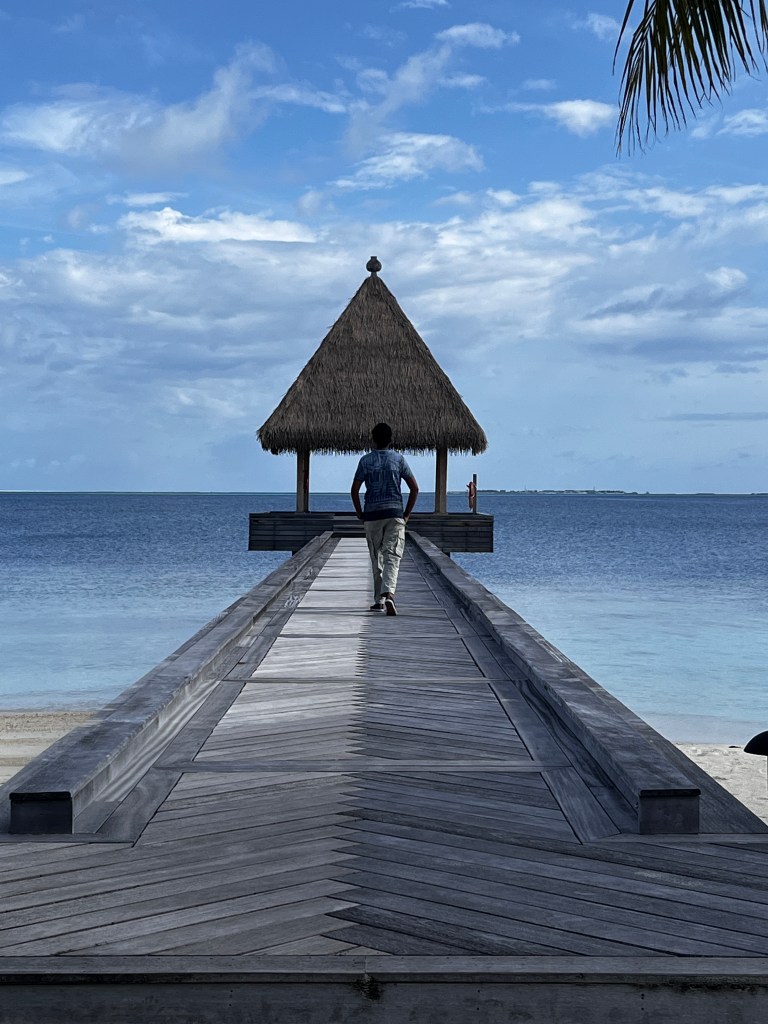
Post lunch, we continued our sightseeing, catching a glimpse of the Presidential Palace’s elegant facade and strolling down the main street, absorbing the city’s energy. Our exploration led us to the Barbican, a historical gateway leading into the old town. Its red-brick walls and medieval architecture were a reminder of Warsaw’s past. The Barbican, built in 1540, served as a fortification and is one of the few remaining relics of the complex network of historic fortifications that once encircled Warsaw. Walking through its archway, I felt transported back in time, imagining the soldiers who once guarded the city.

I then went Lime scootering across the city again to STOR, a coffee shop known for its unique offerings. The rose and Matcha Latte were indeed unique, a delightful twist to the usual coffee experience.

Pre-dinner drinks and snacks at U Barassa on the Main square were enjoyable, with crispy fries and refreshing drinks. Dinner at Frida on restaurant street was a culinary delight, with great nachos, stuffed avocados, corn on the cob, eggplants, tacos, and quesadillas. However, the experience was marred by an arrogant waiter who mishandled my grandfather’s phone and was rude and had a very unwelcoming attitude. Thankfully, our server was changed, and the new server was kind and sweet, salvaging the evening.

Post dinner, we indulged in ice cream, a sweet end to a day filled with exploration, flavors, and emotions. Warsaw, with its blend of history, modernity, culinary delights, and vibrant street life, had etched itself into my heart. It’s a city that offers a rich tapestry of experiences, making it a must-visit destination for any traveler.

Florida & Bahamas Cruise

I recently unearthed a travel blog from 2016 detailing a family trip to Florida and the Bahamas. This is my first ever travel blog, which showed my interests in travel writing. It was a joy revisiting those memories, although I realised the account lacked detail. The images are also not the best quality. Memory of those times has faded somewhat, and while I’ve done my best to enrich the narrative, there may still be gaps. I hope you enjoy this “blast from the past,” as much as I enjoyed reliving my memories.

It was an ordinary evening that turned extraordinary as we bundled into the car at 6:00 pm, brimming with excitement, and started our journey to Kolkata Airport. Being a frequent traveler, I am accustomed to economy class, but I thought, “Why not add a dash of comfort to our journey?” So, I asked her about the possibility of an upgrade to business class. To my delight, she replied affirmatively, her smile growing brighter.

Our flight arrived soon after, its massive structure imposing against the night sky. We boarded, found our seats, and after a scrumptious dinner on board, I dozed off. Upon waking up, the flashing lights of Dubai greeted me, an impressive beacon in the darkness of the night.

In Dubai, we found our way to the Emirates A380 lounge, a haven of comfort amid the bustling airport. The clock read 2:30 am as we boarded our connecting flight to New York. We spent our time sleeping, interspersed with entertainment from the onboard selection Freshened up with a hot cup of cappuccino, the rather long flight ended.

Upon arrival in New York, we swiftly hopped onto another flight to Orlando. From there, a friendly taxi driver navigated us to our abode for the duration of our visit, the enchanting Walt Disney Swan and Dolphin Resorts. The stunning architecture and vibrant atmosphere promised a memorable stay. The rooms are rather small, but the location and the perks are unlike any other. After all, you won’t be spending much time in the room anyway. 

Rejuvenated from a brief rest, we decided to explore Hollywood Studios. On reaching the ticket counter, we opted to extend our 5-day park hopper pass to a 7-day one, to make the most of our trip. The park hopper granted us access to all disney parks over 7 days, with transport. We opted for the fast pass, which had a steep price but was worth it as we spent hours of time skipping the queue. The highlight of our day was the spellbinding ‘Fantasmic’ show, which left us awe-inspired, and we retired to our hotel rooms with the magic of Disney lingering in our hearts.

On Day 1, we greeted the morning with enthusiasm. I savoured a hearty breakfast of eggs and cornflakes before we embarked on our expedition to the Epcot Centre. It was a day filled with thrilling rides from the exhilarating ‘Mission Space’ to the informative ‘Living with the Land’ boat ride that offered insights into modern cultivation practices. We also did the Indoor rides, which included Soarin and the Nemo ride, where we had lunch as well. Test track, another high speed ride was amazing and a ride not to be missed. I loved it a lot.

As the day wore on, we toured the World Showcase, marveling at the replicas of Chichen Itza in Mexico and the intricate temples in China. We also wondered around the beautiful showcase of Morocco, France, Canada and Norway. Dinner at the Boardwalk was an event in itself, as we feasted on sumptuous Italian food, entertained by a talented juggler performing with glasses and balls.
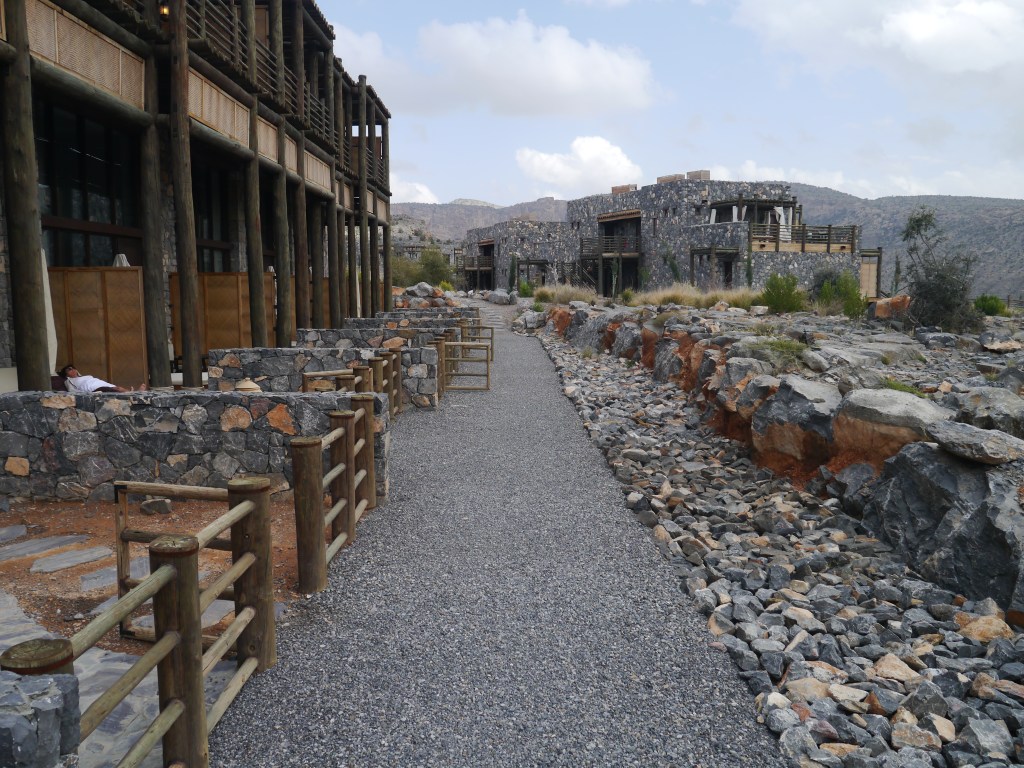
Our day ended with a thrilling ride on the Rock’n Roll rollercoaster at Hollywood Studios. As we nestled into our hotel beds, exhausted but content, I realized we were not just on a vacation, but a journey of discovery, thrill, and wonderment. This trip promised to be a treasure trove of memories that we would cherish forever.

Day 2, we hopped onto the Walt Disney shuttle bus that carried us to the water park, arriving just in time for the park opening at 9:50 am. Once there, we stashed our belongings in a locker, slathered on some sun tan lotion to protect our skin from the scorching Florida sun, and raced towards our first ride: the exhilarating Crush N Gusher and Storm Slides.

Our water-filled adventure continued as we tackled a 60-degree slide that made our adrenaline surge and our hearts pound with excitement. Around noon, we took a break for a delectable lunch of salad and burger, seated right by the Wave Pool. Suddenly, we heard a roar that sounded akin to a tsunami, only to realise it was the massive wave in the pool! We couldn’t resist diving in, letting the water wash over us and laughing at the unexpected surprise.

Post lunch, we floated along the Lazy River, soaking in the relaxing vibes and the warm sun. After a day filled with splashes and screams of delight, we headed back to our hotel for a much-needed afternoon nap.

Once we were refreshed, we made our way to Downtown Disney, an iconic shopping, dining, and entertainment centre. We found cute outfits for my sister, and indulged in sea salt caramel ice cream from Ghirardelli – an absolute must-try! Our visit ended with a peek at an impressive T-Rex statue before we hopped on a bus back to our hotel.

There’s something incredibly magical about walking into Universal Studios, and on Day 4 of our adventure, I found myself feeling like a little kid on Christmas morning. The energy, the excitement, the anticipation – it was palpable, contagious, and undeniably fun.

As I walked through the entrance, I couldn’t help but marvel at the park’s sheer scale. It’s not just a theme park – it’s a world unto itself, a universe of thrills and enchantment. Every detail, from the carefully crafted storefronts to the remarkably friendly staff, seemed to have been designed to immerse visitors in a truly fantastical experience.

As we strolled on, my heart pounded in anticipation. We had chosen the Incredible Hulk roller coaster as our first ride. As the ride rocketed off, I could hear nothing but the wind whistling past my ears and my own exhilarated screams. This was my first time ever on an upside down rollercoaster and boy oh boy it was an experience. 

We then ventured into the land of Spiderman. Riding the Amazing Adventures of Spider-Man was akin to stepping into a comic book – the 3D effects were so real, it felt like we were swinging through New York alongside our beloved web-slinger.

Transitioning from the bright, colourful world of superheroes, we entered into the heart of adventure at the Jurassic World. Here, we were transported back to a time when dinosaurs roamed the earth. From the heart-stopping drops of the Jurassic World VelociCoaster to the more laid-back yet equally enthralling Jurassic Park River Adventure.

A short walk from the world of dinosaurs, we entered the Revenge of the Mummy. As we embarked on this thrilling escape from the Mummy’s curse, I found myself laughing out loud at the pure, unadulterated fun of it all. It was a blend of fear, excitement, and utter joy that only a ride like this could inspire.Next, we cranked up the tunes at the Hollywood Rip Ride Rockit. With each twist and turn, we were rockstars, with our own chosen soundtrack blaring in our ears. 

Yet, the cherry on top of this day filled with thrills was the magical world of Harry Potter. The world was magical, and magnificent. The two rides – Hagrids roller coaster and Harry Potter and the Forbidden Journey ride – were immersive and well designed. I also indulged in some butter beer and some street performances which gave the place a feel. Boarding station 9 ¾ was also an interesting touch added. The train journey from the main park to Hogwarts is very unique. The train windows show schemes across the world of harry potter which is magical and a great touch to the overall experience.

As we exited Universal Studios, I found myself not just physically exhausted, but emotionally spent as well. We had experienced so much in a single day – the fear, the excitement, the joy, the wonder. It was an overload of the senses, a truly memorable experience. And as we enjoyed a much-needed meal at New Punjab, the day’s adventures replaying in our minds, I couldn’t help but feel incredibly grateful for such a day.

Day 5 began with an air of buzzing anticipation as we set off for the Kennedy Space Center. The excitement of exploring this epicentre of space exploration was palpable. We passed through the entrance, our digital tickets in hand, and stepped into a realm that embodied human ambition and curiosity.

The first thing on our agenda was an IMAX movie, which transported us to the vast depths of space. We journeyed through galaxies and observed celestial bodies right from our seats. It was like being an astronaut for a day, and the experience was nothing short of awe-inspiring.

Following this, we embarked on a guided bus tour of the Space Center that was chock full of information. The intricacies of the powerful SLS rocket, its structure and capabilities, left us all in awe. It felt like we were privy to the inner workings of the space missions, giving us a deeper appreciation for the magnitude of these undertakings.

We then had lunch amidst this intriguing environment, fuelling up for the next leg of our adventure. The Atlantis spaceship movie was next, painting a vivid picture of the iconic spacecraft and its voyages. The exhibits pièce de résistance, however, was the spaceship tunnel. Crawling through it and sliding down the 40-degree slide, we got to experience a simulated astronaut journey first-hand, an opportunity of a lifetime.

Day 6 arrived with a promise of more magical adventures, starting with retail therapy at Vineland Mall. Our shopping spree was accompanied by a food spree at Taco Bell. Nothing beats a hearty meal of nachos and pizza, especially when it’s one of Papa’s favourite American treats.

In the evening, we went to the Magic Kingdom. It was 9 pm and you might be wondering why we went so late. The answer is magic Hours. People residing in Diney get access to parks at odd hours to skip the whole queue. Queue times are literally less than 5 minutes, and we got through the whole park in 5 hours. We kick-started our night with the mesmerising Electric Street Parade before embarking on a host of thrilling rides. The Tales of Winnie the Pooh took us into the heart of Hundred Acre Woods, while the Seven Dwarfs Mine Train invited us into the dwarfs’ enchanting world. We did the Pirates of the Caribbean ride and the Barnstormer as well. 

Magic Kingdom Fireworks

The Space Mountain catapulted us into a cosmic adventure, filled with shooting stars and celestial satellites. Because of low lines, I did this ride twice.  Jungle Cruise took us on a delightful riverboat tour of Asia, Africa, and South America, while Splash Mountain had us giggling as we took a log flume ride through a Southern-themed spectacle.

Our grand finale for the day, however, came with the Big Thunder Mountain Railroad ride. Midway through the second run, the ride stalled! But the unexpected turn of events added a hint of adventure to the already thrilling day. Rescued by the ride operators, we had an unexpected behind-the-scenes peek. We returned to the hotel, our minds buzzing with stories of roller coasters, river cruises, and a behind-the-scenes adventure.


Our seventh day in Orlando began in the cosy confines of Pikabu, a charming eatery we’d come to frequent. Breakfast was followed by a trip to Blizzard Beach, where the sun blazed brightly above us. We made our entrance, eager for the thrills that awaited. The first of those was the Teamboat Springs, the world’s longest family white-water raft ride. Together, we navigated the winding currents and thrilling drops.

The Florida weather was as unpredictable as our adventures, and soon enough, a sudden downpour sent us scurrying to the Melt-Away Bay wave pool. The waves ebbed and flowed, matching our laughter and high spirits. As the rain abated, we split up to conquer more rides. A tactical move – mother in one queue, father and I in another.

I’d be remiss not to mention the heart-pounding adrenaline rush that was the Summit Plummet. At a height of 120 feet, it’s one of the tallest free-fall water slides in the world, and let me tell you, the descent was nothing short of electrifying. We also had our share of fun at the Downhill Double Dipper, racing each other down the twin tube slides.

That afternoon, we traded the snowy slopes of Blizzard Beach for the wild frontier of Disney’s Animal Kingdom. Our first stop was the Kali River Rapids, an exhilarating river raft ride through the lush jungle. It was a refreshing contrast to the morning’s icy adventures.

Lunch was an affair to remember at the Yak & Yeti Restaurant. The flavours of Asian cuisine tickled our taste buds, and the engaging map game kept me entertained.

Post lunch, it was time for the highlight of our visit – the Expedition Everest roller coaster. This ride isn’t just about the thrill, it’s an immersive journey through a Tibetan village at the base of Mount Everest. Racing forwards and backwards through the mountain, while an angry Yeti tries to thwart our path, was an experience unlike any other.

Our adventure continued at the Avatar: Flight of Passage. This breathtaking 3D ride took us soaring on a banshee over Pandora’s lush landscape. As we swooped over vast oceans and dense forests, it felt as if we were truly part of the Avatar universe.

The day wound down with a Kilimanjaro Safari through the African savannah, where we saw lions, giraffes, zebras, and more unique animals in an open environment from a jeep which was amazing. The adventure culminated in a thrilling ride DINOSAUR, back in time that took us face-to-face with these ancient beasts.

As we returned to our hotel, heads filled with memories of plummeting water slides, roaring Yetis, and majestic animals, it was clear that our Orlando adventure had left an indelible mark on us.

Next day, the journey from Orlando to Miami was as smooth as one could ask for, with a private Mercedes taxi that made us feel like VIPs. We reached the dock and were greeted by the magnificent Norwegian Sky. The sheer scale and beauty of the ship were captivating, and we knew our vacation had started.

We passed through the hustle of the check-in process and were intrigued by the diverse set of passengers. After exploring the luxurious interiors of the ship and settling into our well-furnished cabin with a balcony. The rooms were small but well designed and had a nice balcony area with views of the sea. We ended the day with a bellyful of laughter, courtesy of the onboard comedy show.
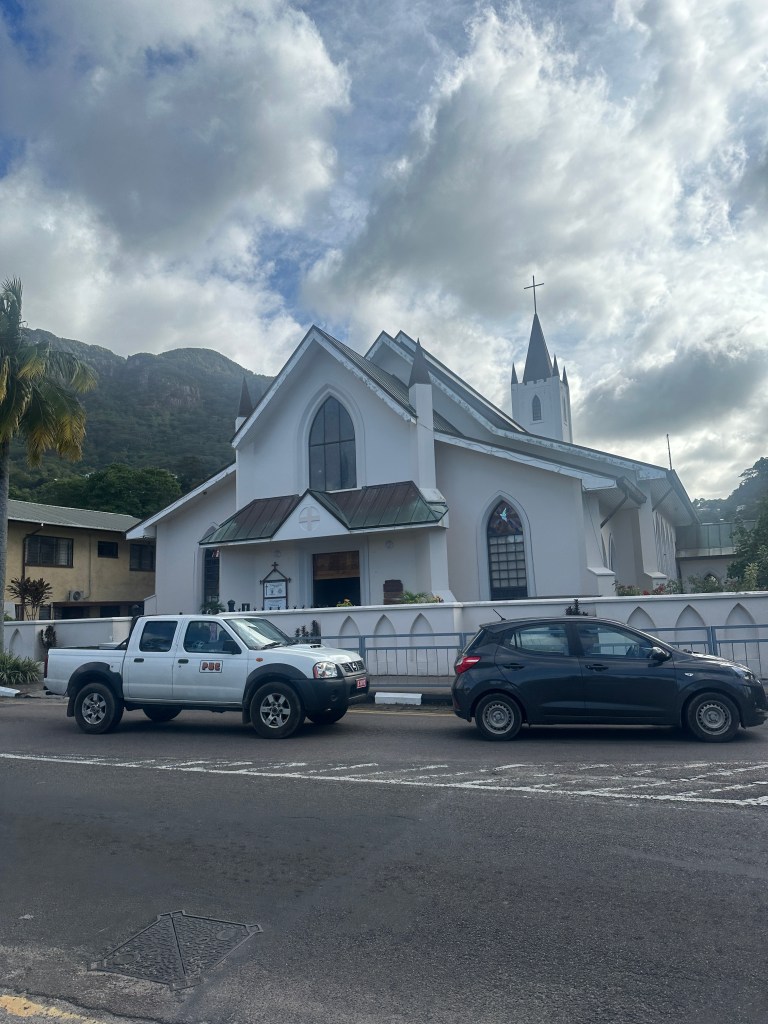
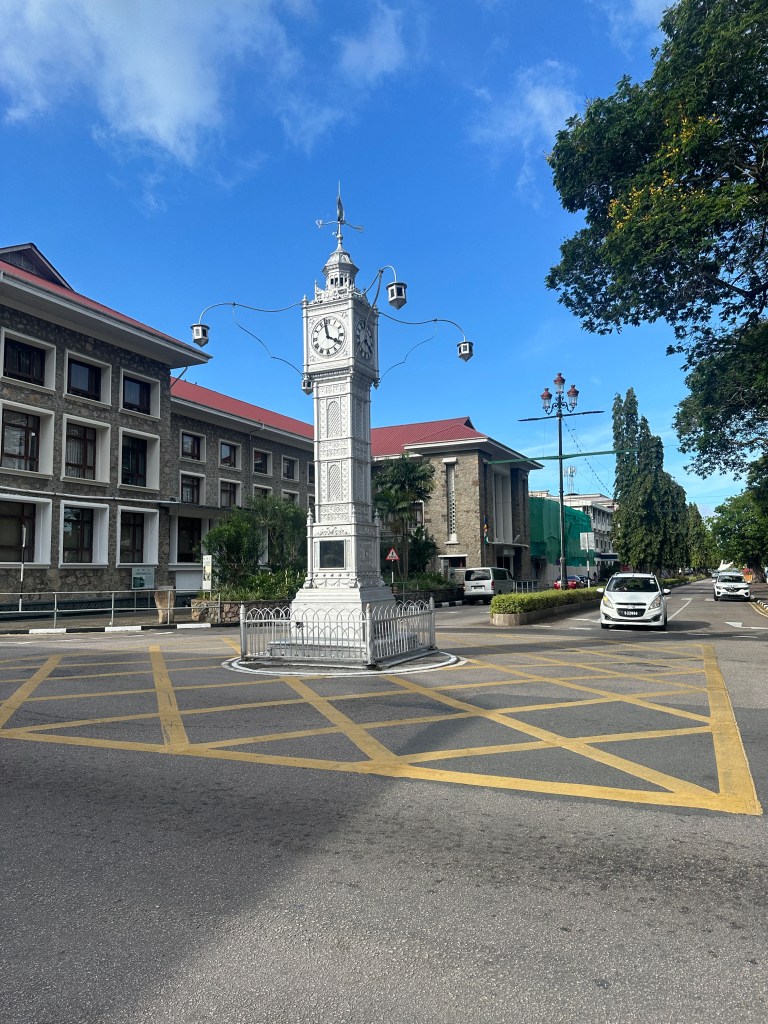
Our day began with an appetising breakfast and an exciting view of Freeport harbor. As we disembarked, we met a character dressed as a pirate who had a parrot on his back which was a nice touch who certainly added flair to our vacation pictures. We headed straight to the beach, where my father and I indulged in some water sports while my mother captured these delightful moments.

Post our beach adventure, we returned to the Norwegian Sky to continue our exploration. I dived into the onboard swimming pool while my parents enjoyed a rejuvenating dip in the hot tub. As evening fell, we decided to have dinner at La Italiago, an onboard Italian restaurant that served an exquisite range of pizzas and ended our meal with a delicious Chocolate Napoleon.

Our third day was packed with a variety of activities. While my parents pampered themselves with a spa treatment, I took the chance to lounge by the pool, enjoying the sun and the vibrant ship atmosphere. Later, we all participated in a game of Bingo, testing our luck amid bouts of laughter and cheers. I also played some games like mini golf, video games in the arcade and also shuffleboard, which I think I got addicted to. 

I spent the rest of the day engaging in several activities around the ship – from challenging my cognitive skills with Sudoku puzzles to admiring the fascinating ship architecture. An evening show, aptly named ‘Fountain,’ provided a blend of comedy and dance that kept us entertained.

On the fourth day, we allowed ourselves the luxury of sleeping in until 9:30 AM. The morning routine began as always, breakfast, followed by freshening up. The excitement for the day heightened as we left the cruise ship and stepped foot on the beautiful island of Nassau, the capital of The Bahamas.

Our first destination in Nassau was the famed Queen’s Staircase. This major landmark, carved out of solid limestone by slaves in the late 18th century, was a significant slice of Bahamian history.

Next, we journeyed to the world-renowned Atlantis Resort, the first of its kind to be built. The grandeur and magnificence of the resort were awe-inspiring, as was the exquisite marine habitat. Here, we indulged in a bit of retail therapy, browsing through an assortment of high-end boutiques. A sweet interlude was a scrumptious milkshake from Ben & Jerry’s, a delightful indulgence that added to our pleasant memories of Atlantis. Following this we did some touring and local shopping in Downtown Nasau. 

The afternoon sun greeted us as we returned to our cruise ship. Onboard, we witnessed a game of Deal or No Deal which was fun. The day concluded with a sumptuous dinner followed by a captivating show named ‘Las Vegas Nevada.’ The electric atmosphere and vibrant performances were a treat to our senses. Retiring to our room, we packed our bags, left them outside for collection, and surrendered to the call of a peaceful sleep.

Our final morning on the cruise was tinged with a sense of sweet sadness. After our last breakfast onboard, we packed our remaining belongings and bid adieu to the ship. A quick taxi ride later, we were checking into our new residence in Miami, the luxurious Ritz Carlton.

Despite the travel, we couldn’t resist the lure of the hotel’s inviting swimming pool. We spent the early afternoon lounging by the poolside, soaking up the warm Miami sun. This was followed by a leisurely stroll around the vibrant neighbourhood.

Lunch was a culinary adventure at Sushi Samba, where we savoured an array of unique fusion dishes that married Japanese, Brazilian, and Peruvian cuisines. The rest of the afternoon was dedicated to shopping, exploring the myriad stores that lined Miami’s bustling streets.

Our evening was highlighted by a special dinner at Hakkasan in the iconic Fontainebleau Hotel, for an exquisite meal of contemporary Chinese delicacies. After bidding goodbye to our friends, we ambled back to our hotel, ready for a good night’s rest.

The sixth day in Miami began with a flurry of shopping. We purchased a new suitcase and made a pit stop at Macy’s. My mother and I decided to savour a scrumptious Falafel meal at Maoz, while my father returned to the hotel to drop off our purchases.

The afternoon was pure relaxation. We lounged by the pool, revelling in the warmth of the Miami sun. Snacks of hummus, bean dip, and chips were enjoyed by the poolside. A refreshing mixed vegetable salad added a healthful touch to our lazy afternoon. We ended our day with a room-service dinner of delicious pasta, which was served with great care and presentation. With our bellies full and hearts content, we settled into a peaceful sleep.

Our seventh day started early at 7 AM. After a quick supermarket run for breakfast, we headed straight for the beach. The morning was spent building sand castles, soaking up the sun, and devouring delicious patties.

Lunch was a humongous single slice of pizza. Each of us managed to polish off an entire slice! The afternoon saw me playing solitaire and tennis at the hotel, while my parents spent some time at Nikki Beach with our relatives.

We rounded off the day with dinner at a Tapas bar near our hotel, where we savoured a scrumptious Paella. Exhausted yet satisfied, we headed back to our hotel to catch some much-needed rest.

Our final day in Miami began late, waking up at 10 AM. We started the day with shopping at Bal Harbour.

Our last evening was celebrated with a grand dinner at Zuma, where we indulged in contemporary Japanese cuisine. We were carried to the restaurant by boat which was spectacular. The flavours, the presentation, the ambiance, everything was unparalleled. It was the perfect way to end our Miami adventure. A few standout dishes were the sweet potato and asparagus robata grills, the sushi selection, the spinach salad and a not to be missed, the truffle rice pot. This was my first introduction to truffles and from that day, I have loved this delicacy. Zuma, as a chain in general, I can say is the best restaurant in the world for me. 

The day of departure arrived all too soon. We started our day with a repeat of the huge pizza slice, this time serving as our lunch. We then checked out of the hotel and headed to the airport.

Upon reaching New York, we indulged in a shopping spree at Ghirardelli, Godiva, and Lindt, stocking up on decadent chocolates. An in-flight meal was enjoyed, followed by me watching some movies and savouring a cappuccino at the aircraft bar.

The final leg of our journey was filled with in-flight video games and the growing excitement of returning home. On reaching Kolkata, after completing the immigration formalities, we collected our luggage, exited the airport, and finally returned home, carrying with us a suitcase full of memories from our unforgettable holiday in Florida.