Billy Offland

“Travel gives you consciousness — and then that consciousness inspires you to travel even more”

Please watch Billy Offlands Documentary Here on Prime Video : https://www.primevideo.com/detail/Pot-of-Gold/0NIFG9AJ2NTKVSZNA7T92IR401

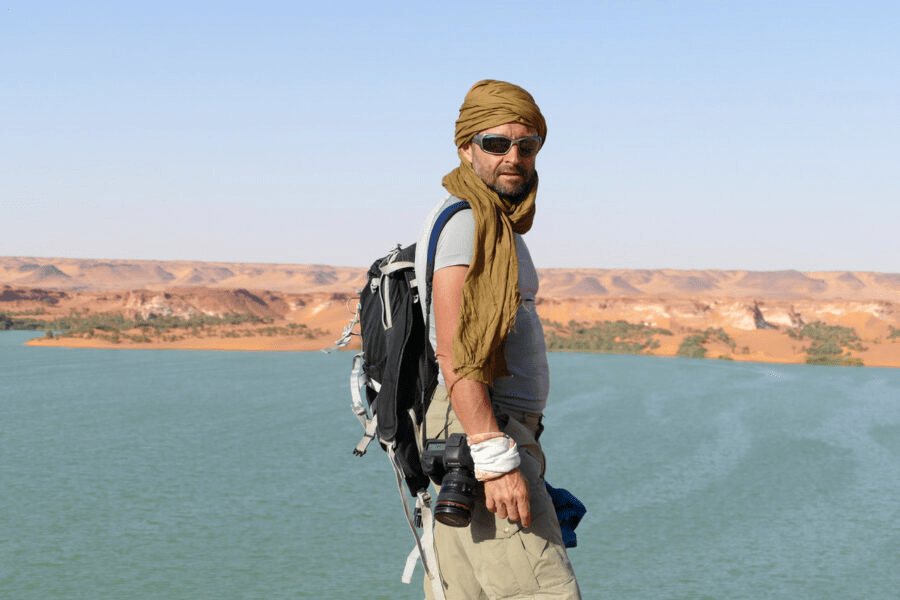
Billy Offland, 27, is the youngest verified Brit to have visited all 193 UN-recognised countries, according to Nomad Mania. But the statistic collapses quickly under its own weight. Because once you’ve crossed every border travel stops being aspirational and starts becoming ethical. This piece isn’t about finishing the world. It’s about what remains when movement turns into responsibility, when seeing too much makes ignorance impossible, and when travel no longer lets you look away.

What struck me wasn’t the achievement, but the philosophy that shaped it.

Billy grew up travelling. Not the kind of travel defined by resorts or rigid itineraries, but trips driven by curiosity and discomfort. His father believed in “seeing places before they were ruined” — a phrase Billy acknowledges is loaded, but also honest. It meant places like Bosnia and Herzegovina, remote Argentina, Oman, Indonesia long before its quieter corners became mainstream, and a childhood where school holidays stretched into experiences rather than escapes. Travel wasn’t a break from education; it was education.

That early exposure planted a seed. Billy didn’t grow into a traveller chasing novelty — he grew into someone chasing understanding.

By the time he was travelling solo, that mentality had hardened into instinct. He worked in São Tomé and Príncipe, crossed Madagascar, earned his divemaster certification, and slowly stitched together a worldview shaped by repetition and contrast. Diving became a turning point. Seeing coral reefs up close — not once, but repeatedly — changed everything. Places like the Maldives, pristine one year and visibly deteriorated the next, made environmental decline impossible to ignore.

“People don’t act because they don’t see it,” he said. “When you see it physically, it hits differently.” Indonesia became central to this awakening. Raja Ampat in West Papua, Bunaken in Sulawesi — underwater worlds so alive they felt unreal. But even there, urgency lingered. Climate change and coral reefs are not patient companions.

This awareness shaped how Billy travelled next. He didn’t just move through countries — he embedded himself within stories. He sought environmentalists, conservationists, and people living at the edges of global systems. From Congo to the Central African Republic, from Cameroon to Djibouti and Somaliland, he saw both collapse and resilience. Dzanga-Sangha National Park in the Central African Republic stood out — a place so remote that just reaching it felt like a commitment. But that commitment mattered. “If people don’t go,” he said, “those places lose support. And then they disappear.”

Yet Billy is honest about the weight of it all. Global environmental collapse is overwhelming. UN conferences feel distant. Policy feels abstract. What saved him from paralysis was reframing scale. “If you get scared by the size of the problem,” he told me, “break it down to something local.” Pick a reef. A forest. A valley. A species. “Pick your passion and try to do whatever you can.”

Despite visiting every country, Billy doesn’t romanticize constant interaction. In fact, much of his travel was quiet. Walking markets with AirPods in. Observing. Blending in. “You’re interrupting someone’s normal life,” he said. “That’s a privilege.” He’s wary of loud tourism, of presence without respect. His approach balanced observation with participation — knowing when to speak and when to disappear.

That said, some interactions are unavoidable — especially when travelling solo, on a budget, over land. Billy crossed Africa largely by bus, moving continuously through countries rather than hopping between capitals. That style forced connection. You speak to drivers. To strangers beside you. You ask questions because you have no plan. “Local knowledge is everything,” he said. “If people come to Manchester, good luck finding the good places without asking someone.”

We spoke about the difference between “travel” and “holiday.” Billy doesn’t judge either, but he’s clear: deep travel is hard. It takes time, skill, patience, and a tolerance for discomfort. Crossing from Djibouti into Somaliland, pushing deep into Congo’s rainforest, or navigating Central African Republic is not aspirational content. It’s exhausting. “Most people wouldn’t enjoy it,” he said. “And I don’t blame them.”

But for a few, there’s an obligation — especially when that travel supports fragile ecosystems or forgotten communities. And even that phase doesn’t last forever. “I couldn’t replicate that travel now,” he admitted. Youth, resilience, and foolish courage played their part. Some journeys are time-bound.

I never ask my guests their favourite country, instead I ask them what are some regions or places which hold a special place in their heart. For Billy, Indonesia topped the list for depth and accessibility. Damascus in Syria stood out historically — one of the world’s oldest continuously inhabited cities, layered with memory. Africa offered unmatched adventure. Brazil surprised him with simplicity — beaches, presence, ease. Uzbekistan gave him a surreal memory: a techno festival on the banks of the Aral Sea. Context defines experience.

Diving surfaced again when we spoke about community. Whether in Malaysia’s Tioman Island, Southeast Asia, or beyond, dive shops form instant tribes. Sport does the same. Billy spoke about wearing a Manchester United badge across Africa, playing rugby in Fiji, football with Afghans in Pakistan, cricket opening doors across India and Pakistan.

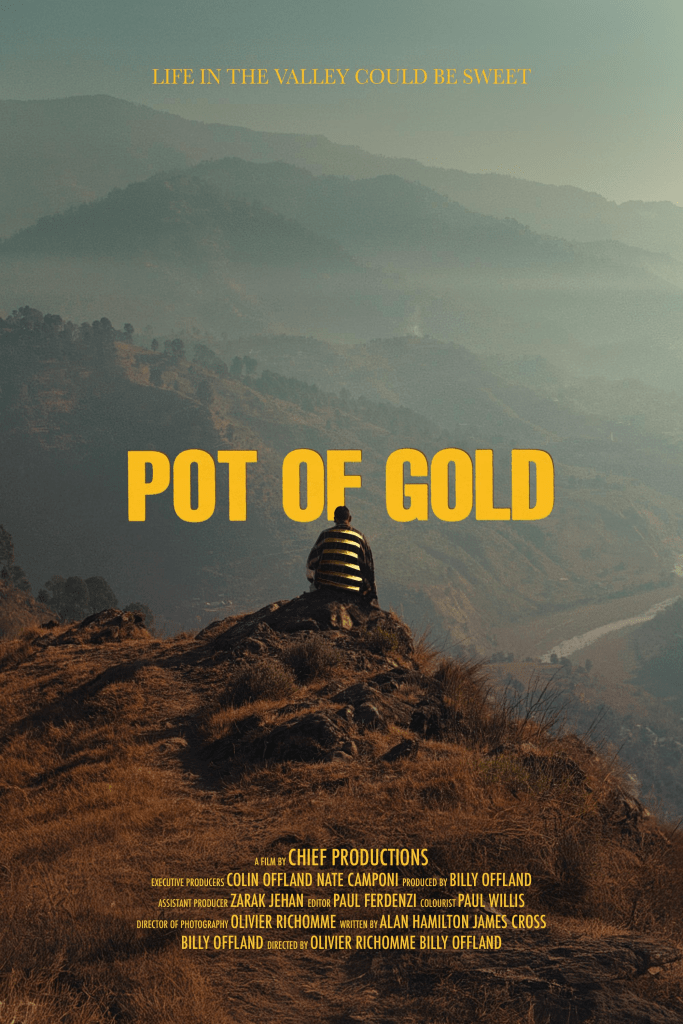
One of the most grounded moments of our conversation centred on Azad Kashmir in Pakistan. Billy spent months there filming a documentary on beekeepers and honey production called “Pot of Gold” — not in the tourist-heavy northern regions, but in a quiet valley called Dir Kot. There was no reason to go there unless you had purpose. Heavy militarisation contrasted with extraordinary warmth. Tea. Community. People dropping in unannounced. “People are not their politics,” he said. “Most people are just thinking about lunch and their kids.” I have seen this documentary and it is absolutely stunning. The cinematography and the underlying message of climate change is absolutely beautifully told. 

Yet he also acknowledged a blind spot. Solo, deep travel can miss broader political and historical context. Guides, often dismissed by independent travellers, offer something essential. Billy admitted he looks forward to returning to places like Pakistan, Syria, Brazil, or Tunisia with less time and more structure — forced to listen, to contextualize, to zoom out.

If dropped into a new country tomorrow, Billy wouldn’t open a map. He’d walk. Find food. Sit down. Ask questions. Photography, for him, is just another excuse to move slowly, to wait, to notice.

This conversation wasn’t about finishing the world. It was about relating to it. From Japan to Malaysia, Singapore to Indonesia, Congo to CAR, Pakistan to Indian Kashmir by reflection, Tunisia to the United States, Palau, Micronesia, Marshall Islands, Kiribati, Nauru, Fiji, Thailand — the geography mattered, but the insight mattered more.

Travel, when done honestly, doesn’t simplify the world. It complicates it. And maybe that’s the point.

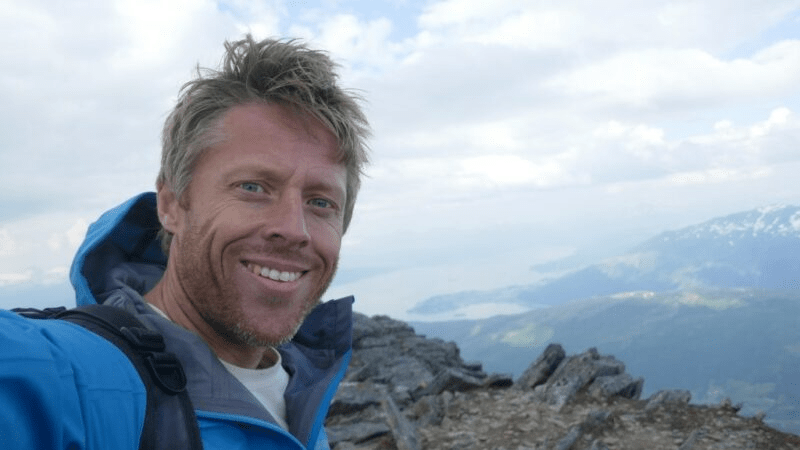
Boris Kester

“Follow Your Heart, Just Go

Follow Boris Here on his website : https://boriskester.com/

Read the Preface of his book here : https://boriskester.com/preface/


See his stunning images here : https://www.traveladventures.org/


Follow him on instagram here : https://www.instagram.com/boris_traveladventures/

The first thing you notice when speaking to someone who has travelled to every country in the world is not the number itself. It’s calm. The clarity. The sense that they have seen enough of humanity — its beauty, its contradictions, its patterns — to understand something the rest of us spend years trying to grasp. 

My conversation with Boris Kester carried exactly that feeling. There was no grand introduction, no dramatic claim about having completed all 193 nations. Instead, there was a quiet confidence shaped by decades of movement, thousands of encounters, and a lot of curiosity. 

Boris told me he wasn’t born with the dream of visiting every country; no one is. But his life began in motion. At just five months old, his parents placed him in a travel cart and took him on a two-day train ride to Greece, followed by a boat to Crete. Even before he could “walk or talk,” he was absorbing foreign sounds, foods, people, and rhythms. He didn’t consciously remember any of it, “but this is what basically started to make me a traveler,” he said. Before turning ten, he was keeping diaries and excitedly counting countries.

Much later, after passing the halfway mark without ever intending to, a major life event pushed him to reevaluate everything. “That’s when I decided: this will be my life goal.” He committed to the remaining 75 countries with purpose, discipline, and curiosity.

As he spoke, I felt echoes from my own childhood — being pushed through Hong Kong in a pram, scratching countries off my gifted map, widening my world one tiny patch at a time. Some people stumble into travel while are quietly shaped by it long before they realise. As we called it, we caught the travel bug. What we both shared was curiosity. “We share a very genuine curiosity,” he said. “You look at a map and imagine every place — and you want to know what it actually looks like when you go there.”

But as we discussed, many people today avoid the unknown. They chase the familiar: Paris, Italy, Santorini, the places everyone posts. Others avoid entire regions because of misconceptions, stereotypes, or fear. I told him how people ask me where Tunisia is when I mention I’m going — as if the unfamiliar is automatically unsafe or unworthy.

Boris nodded, and his perspective was sharp: “People should travel where they want — but they miss out on so much. Famous places are crowded every day of the year now. And unknown places hold the real magic.” He emphasised that most negative assumptions are just that — assumptions. “The reality on the ground is almost always very different from the image you have before going.”

That led us to the essence of travel: people. For him, travel is far less about scenery than human connection. “In the end, travel is about connecting — understanding how people live and why they do things the way they do.” And this connection goes both ways. Locals ask where he’s from, what his life is like. Stories are exchanged, worlds grow larger, and stereotypes dissolve.

His encounters illustrated this beautifully. When he was 18, two Moroccan boys befriended him, eager to practise English — until they suddenly tried to recruit him into a drug-smuggling deal. A harsh early lesson: some people have agendas. But the very next year, in Finland, when he lost his wallet, a poor elderly couple took him into their home, fed him, sheltered him, and even paid for his return journey. 

But the story that reshaped him most came from a remote island in Kiribati. When asked where he was from, he explained the Netherlands — near Germany and France. The man looked confused and asked, “So how many hours by boat between Netherlands and Germany?” When Boris explained there was no boat — you could drive, take a train, even walk — the man was stunned. “Why would you have borders if there is no sea?” he asked. And suddenly it clicked for Boris: for people whose entire lives revolve around islands, land borders make no sense. “It made me question why borders exist at all. Countries are invented by humans — arbitrary lines. Yet we treat them like absolute truths.”

He also told me about a moment in Sudan that stayed with him forever: a mother and her young son, clearly poor and wearing worn-out clothes, whom he had spent a long bus journey wondering how he might help, only to discover at the end that they had quietly paid for his ticket without even telling him — an act of generosity that left him humbled and emotional.

That revelation fed into a lesson travel taught him. “When you speak to people one-on-one, you realise we are so similar. But at the same time, people fear others who look or sound different. That is the tragedy of humankind.” He added, “99.9% percent of people are good. They’ll help you, welcome you, feed you. But we still generalise and say ‘those people are bad.’ It makes no sense.”

Eventually, we reached his final country. Strangely, it was not a remote Pacific island or a war zone, but Ireland. Most travellers save the hardest nation for last — Yemen, Somalia, Nauru. But Boris planned differently. “I wanted to celebrate with family and friends. If I finished in the Pacific, no one would come.” So he held Ireland for the end. He walked over the border from Northern Ireland, knowing that the moment he took one more step, the quest of almost 20 years would be complete. It felt surreal. The real emotion came later, standing before the UN Headquarters in New York, walking past each flag from Afghanistan to Zimbabwe in alphabetical order, remembering — really remembering — every story, every struggle, every kindness.

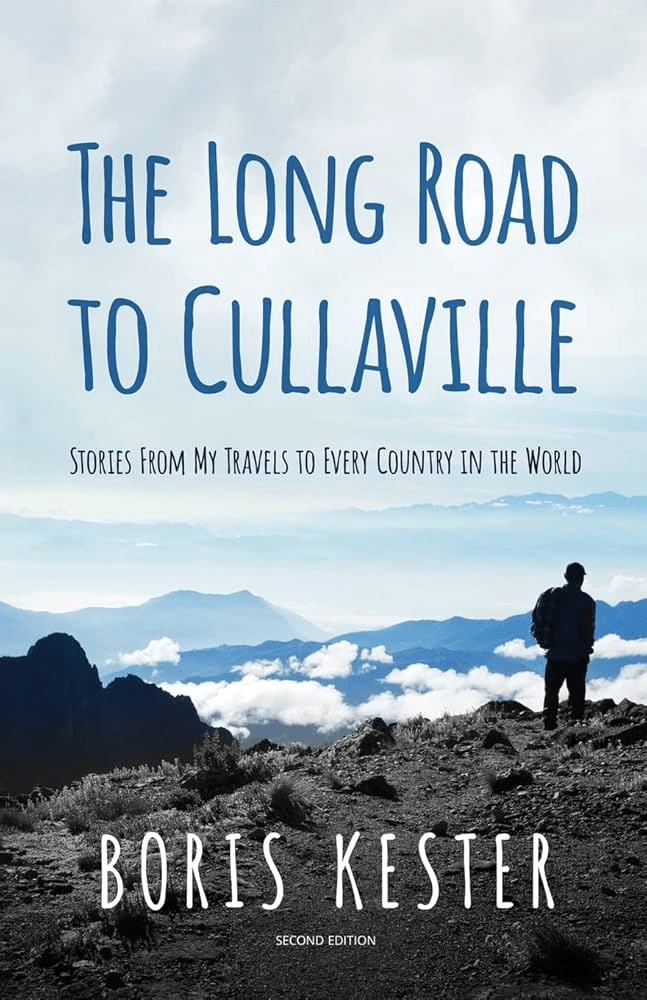
Those memories became his book, The long road to Cullaville. It isn’t a guidebook. It isn’t about attractions. It is about reality — the unseen, unheard, unfiltered truth of places we misunderstand. He wrote it because people constantly asked if travel was dangerous. “I wanted to show the reality, not confirm the bias,” he said. He is soon publishing his second book Wonderheart, whose message is clear: “Follow your heart, don’t be afraid.”

I asked what still excites him now that he has been everywhere. His answer was simple and beautiful. “Curiosity. This naive, pure curiosity. Even a small waterfall can make me emotional. Just knowing I’m going to see something new already excites me.” I understood instantly. I had once stood before a simple wadi in Oman and felt unexpectedly emotional — not because it was the largest or most famous, but because something inside me shifted. Some places touch a part of you you didn’t know was waiting.

When I asked him to name places that truly fascinated him, he immediately mentioned the Pacific, admitting he had once assumed it would be dull because he imagined nothing more than beaches and small islands, but after spending three months travelling through the region, he realised how wrong he had been: “The Pacific surprised me more than anything,” he said, describing volcanoes, ancient ruins, wildly different cultures and how “every island has its own identity.” He added that when you travel with an open mind, almost every country surprises you — not always in big ways, but in the small, intimate moments that stay with you long after you leave. So I asked him a question I pose to every traveller: if he were dropped into a completely new place, how would he explore it? He didn’t hesitate: “I’d try to meet someone,” he said, explaining that his first instinct is always to talk to a local, find a common language if possible, and understand the place through the people who live there, because that, to him, is where the real soul of a destination lies.

When I asked what advice he would give to a 19-year-old traveler like me, he smiled. “Just go. Don’t rush. Take your time. Don’t be afraid. Travel slowly, and you’ll learn more than any school or college can teach you.” We also spoke about privilege — and how we admire travelers from Malawi, Togo, or countries with weaker passports, especially women who navigate far greater challenges yet still chase their dreams. “It proves anyone can travel if they truly want to. It may be harder, but not impossible.”

The world is vast, complicated, gentle, chaotic, heartbreaking, beautiful — and overwhelmingly human. And if there is one lesson we can carry from someone who has seen every corner of it, it is this: Follow your heart, not the map. The world will meet you halfway.

Gunnar Garfors

Start Small, Stay Curious

Speaking to Gunnar Garfors felt less like interviewing a record-holding traveller and more like sitting down with someone who has allowed the world to shape him with an unusual openness. Gunnar is the first person to visit every country in the world twice, he’s written books that have redefined how people think about travel, and he holds several world records that sound outrageous even when said out loud. Yet, when our conversation began, what struck me most was his simplicity. He didn’t decide to become a world traveler. There was no dramatic moment where he declared, “This is my life.” He said it almost casually: he just loved travel from an early age — out of curiosity, out of the joy of seeing new places, and out of the thrill of discovering that Norway wasn’t the center of the universe. “Everywhere else is completely different,” he told me, and realizing that was powerful enough to keep him going.

Gunnar spoke about travel not as something that changed him, but something that revealed him. And the first thing it revealed, he said, was privilege. Coming from Norway — a stable democracy with strong passports, high living standards, and the luxury of long holidays — he understood early on how fortunate he was. Recognising that shaped the way he travels. When you move through the world knowing you’re privileged, you naturally approach people with more humility, more patience, more willingness to learn. “Everyone grows up believing they’re from the center of the universe,” he said, “but then you travel and see others believe the same — and they’re also right in their own way.”

A theme that kept resurfacing was his belief that travel is not observation — it is participation. Too many travellers today, he said, move through places with the objective of taking the perfect photograph, recreating the same scene they saw on Instagram. “Copycat tourism,” he calls it. Stunning photos show people alone in breathtaking locations, but in reality, those spots are overflowing with crowds. And rather than discovering the world, travellers are simply repeating each other. Gunnar isn’t against photography — far from it. He believes you get better photographs when you talk to locals, when you are guided to the most meaningful corners of a place. Travelers rely on Google Maps and TripAdvisor reviews written by other travellers, but the true experts are always the people who live there, the locals.

He talked about language barriers, shyness, cultural differences, religion — all the things that stop people from interacting with locals. Those are just merely excuses. “Just smile. It’s free”.And he’s right. A smile opens doors. A simple hello opens conversations. Even without language, there are drawings, gestures, and body language. He told me a funny story of ordering food in Iran by drawing cows, sheep, and bread in his notebook because no one spoke English. The restaurant understood immediately. I related this deeply — in Tokyo, a local friend took me into a hidden lane to eat authentic soba noodles I would never have discovered on my own. Experiences like that don’t come from maps; they come from people.

Naturally, I had to ask him about going to every country twice. Most people dream of visiting all countries once, but doing them twice sounds impossible. When you like something, you revisit it as his response. You don’t go to your favorite restaurant once; you return. Countries evolve, cultures shift, atmospheres change. If you revisit after ten or fifteen years, you notice transformations in people, cities, energy. And sometimes, you simply go back to meet people again, because travel is made of relationships. But the challenge, he said, is always choosing between going back to a place you love or seeing something new. 

We spoke about why travellers should go beyond hotspots and explore lesser-visited countries — something he knows well, having written a book about the twenty least visited nations called “Elsewhere: A Journey to the World’s Least-visited Countries”. He sees mass tourism becoming a real problem, driven by the influencer mindset where people chase the same experiences. That’s why he believes travellers should intentionally explore offbeat regions. Not only do you get richer experiences, but you help distribute tourism money to villages, towns, and families who genuinely benefit from it — instead of pouring money into global hotel chains where profits leave the country. He also highlighted how staying in local hotels and eating local food makes travel more rewarding and helpful for local and the global economy. My own stay at a lady’s riad in Meknes (Morocco) came to mind where I had the most authentic local experience — no Marriott could replicate that.

When I asked him which regions he feels especially connected to, he spoke fondly of Kerala in India which is a state in the southwest — exploring the backwaters, eating local food, and even accidentally stealing coconuts with his brother before paying the farmer. Hardly anyone outside India truly understands how magical Kerala is, he said. He described Central Asia with admiration — vast landscapes, sincere hospitality, and the warmth of being treated like a guest, not a walking bag of cash. Africa, too, holds a special place for him. His wife is from Sudan, a country with some of the kindest people he has ever met, despite its current conflict. Madagascar, with its terrible roads but unmatched natural wonders, left a deep impression. And then there’s Norway — his own home — which many tourists misunderstand by sticking to Oslo alone. “The real Norway,” he said, “is in the fjords, in northern villages, in the midnight sun and the northern lights.”

We also spoke about his world records — visiting six continents in one calendar day, nineteen countries in twenty-four hours, and 23 US states in 24 hours. But he refuses to call these achievements “travel.” They are logistical challenges, fun to do with friends, but lacking cultural experience. “You don’t speak to anyone, you don’t eat local food, you don’t learn anything,” he said. They’re accomplishments, yes, but not travel. And he finds it amusing when people count airport transits as country visits. “If you don’t meet the people or taste the food, what’s the point?” I agreed completely as it is my philosophy as well.

Later in our conversation, I asked what he would do if dropped into a completely unknown country with no plan. He would simply walk. Walking is how he maps a place — by absorbing its smells, sounds, and rhythms. It’s how he figures out which neighborhoods feel alive, which ones feel peaceful, where markets are, where local life happens. 

Hardships are natural in a journey as extensive as Gunnar’s, so I asked him how he overcame difficult moments. “By being humble,” he said. “By remembering how privileged I am to travel at all.” He believes attitude influences outcomes. When I asked what came after visiting every country twice, he said there doesn’t need to be a next big goal. “There’s always something new to see, even in my own village,” he said. I found that beautiful — the idea that wonder is not tied to grand achievements but to everyday curiosity.

Before ending, I asked the one question I always ask world travelers: What advice would you give to young travelers like me? His answer was simple and one I’ll remember for sure: “Start small. Don’t travel far at first. Try it. See if you really like it. Not everyone does. Be humble. Talk to locals. Build friendships. That’s what travel is about.”

As we said goodbye, he told me to visit Norway soon. I smiled because my lock screen is literally a picture of Norway’s fjords — and because, like him, I believe the world is too big, too beautiful, and too full of stories to ever stop exploring. Talking to Gunnar didn’t just inspire me. It reshaped the way I want to travel next — with more curiosity, more patience and more humility.


Bhutan

Bhutan, the Land of the Thunder Dragon, is a tiny Himalayan kingdom that feels like a secret whispered by the mountains. Tucked between India and China, it’s a place where happiness isn’t just a buzzword—it’s a way of life, thanks to their famous Gross National Happines philosophy. With prayer flags fluttering in the breeze, monasteries perched on cliffs, and a culture that’s as vibrant as it is serene, Bhutan is unlike anywhere else. I’ve been lucky enough to visit twice—once with my maternal grandparents and once with my paternal ones—and each trip left me with memories I’ll carry forever.

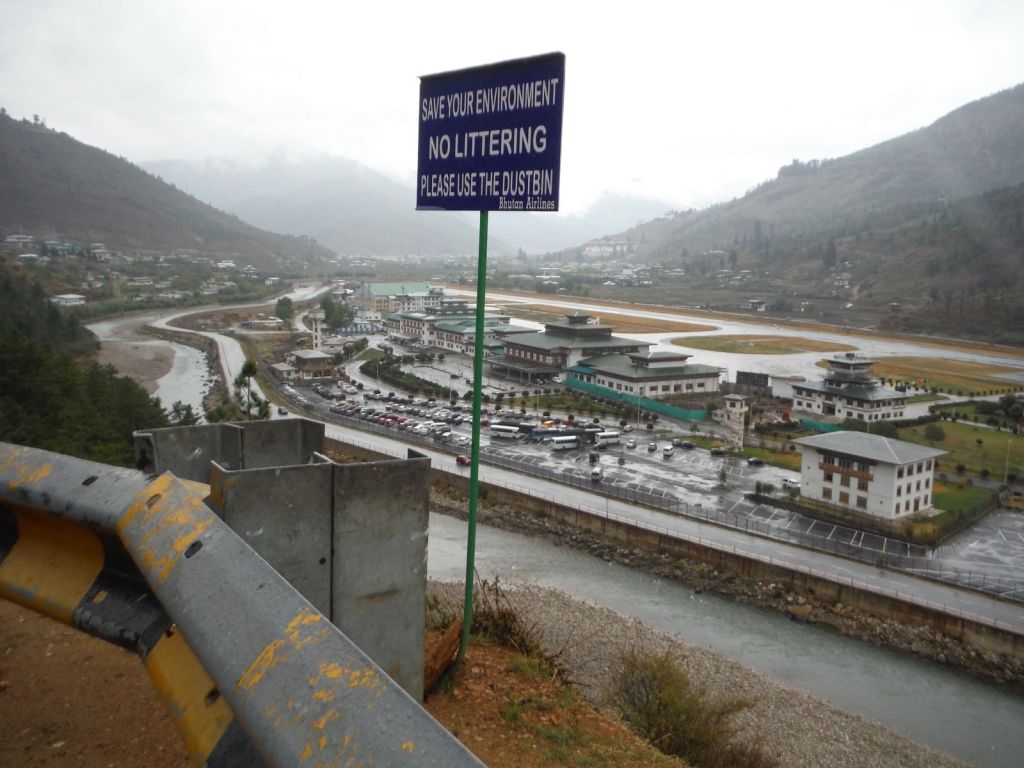
Getting to Bhutan is an adventure in itself. The easiest way is to fly into Paro International Airport, one of the most scenic (and slightly nerve-wracking) airports in the world, surrounded by towering peaks. Flights usually come from cities like Delhi, Kolkata, or Bangkok, operated by Drukair or Bhutan Airlines. If you’re feeling adventurous, you can also enter overland from India via Phuentsholing, Jaigaon, or Gelephu, though the road trip adds a few extra hours of winding Himalayan views. Once you’re in, you’ll need a visa (arranged through a licensed Bhutanese tour operator) and a guide—tourism here is tightly regulated to preserve the country’s magic.

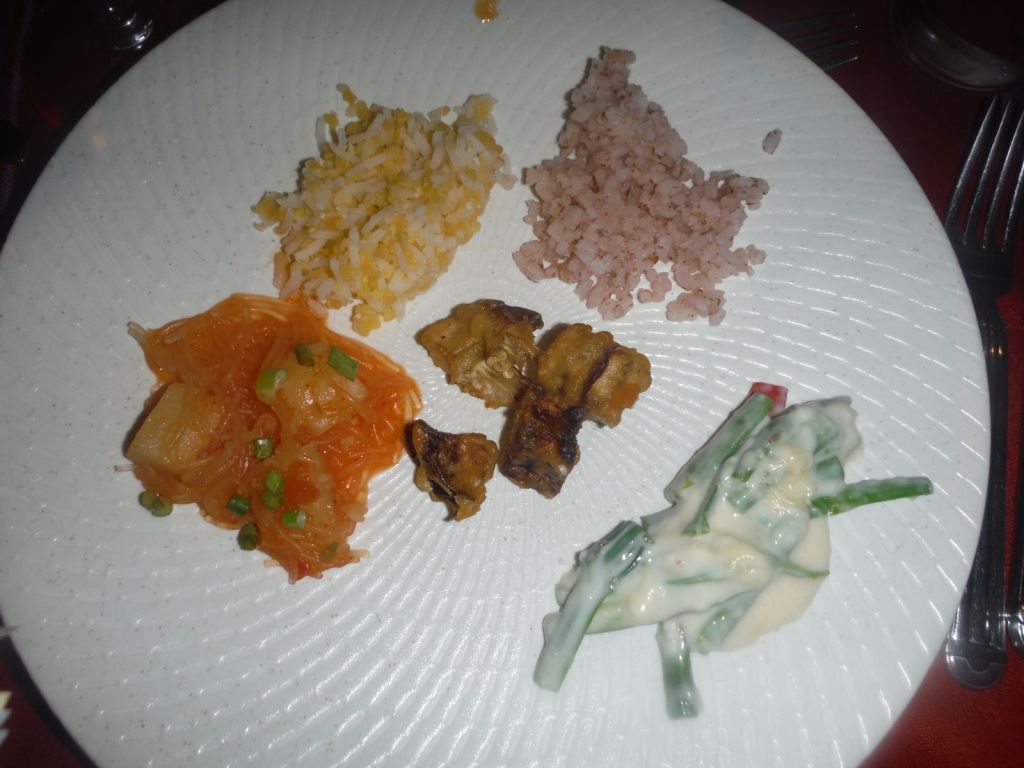
Bhutan’s specialties? Think pristine landscapes, a peaceful vibe like nowhere, a deep-rooted Buddhist heritage, and a commitment to sustainability that’s downright inspiring. From the national animal, the takin, to the colorful festivals called tshechus, there’s something enchanting around every corner. Since I’m writing this blog years after my visits, I won’t dive into food recommendations—memory’s a bit fuzzy on the specifics—but I’ll absolutely share some Bhutanese dishes you have to try: ema datshi (spicy chili and cheese), kewa datshi (potato and cheese), shamu datshi (mushroom and cheese), and nutty red rice. Trust me, your taste buds will thank you.

So, let’s dive in!

Trip One 

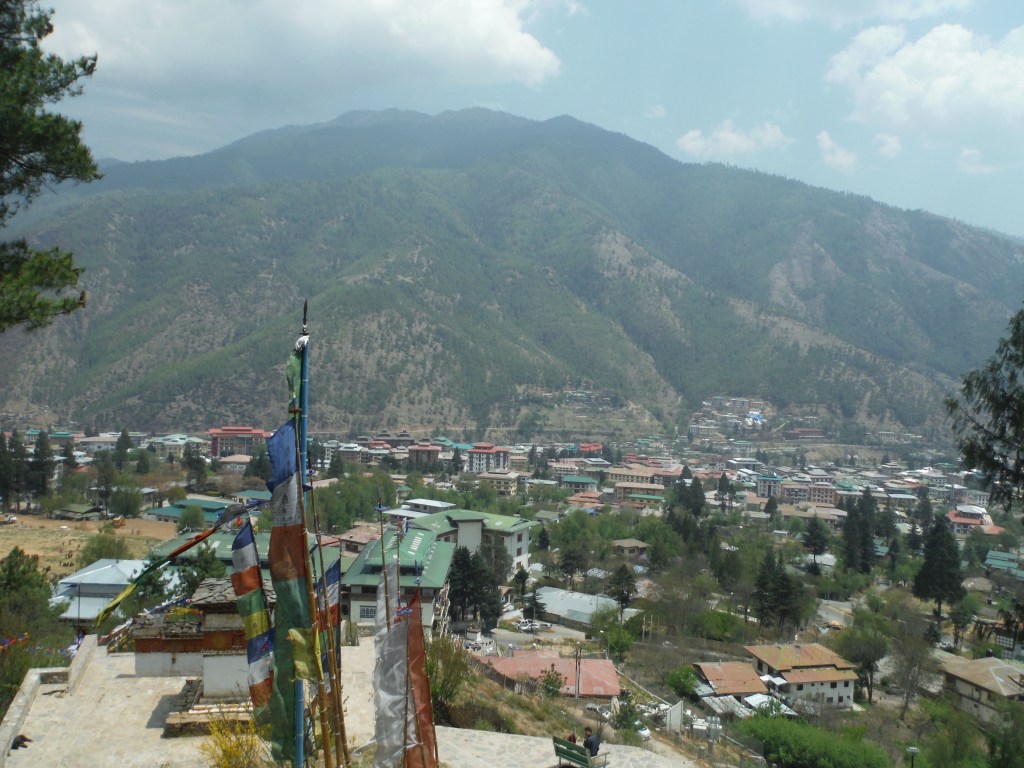
My first trip to Bhutan was when I was pretty young, and since my maternal grandparents weren’t big on long treks, we kept it mellow. We stuck to key sites and leaned hard into hotel life—which, honestly, was a treat. We stayed at the luxurious Taj Tashi in Thimphu, where the blend of Bhutanese design and modern comfort made every moment feel special. In Paro, we checked into Zhiwa Ling (now rebranded as Six Senses Bhutan), a stunning property with jaw-dropping views. I got miserably sick in Paro—fever, sniffles, the works—so I spent most of my time there curled up in bed, gazing out at the misty mountains. Thimphu, though? That’s where the magic happened for me. I loved the energy of the capital, the way it buzzed quietly with life, and the cozy evenings we spent sipping tea by the hotel fireplace. It was a soft landing into Bhutan, and I wouldn’t trade it for anything.

Trip Two

We followed this itenary

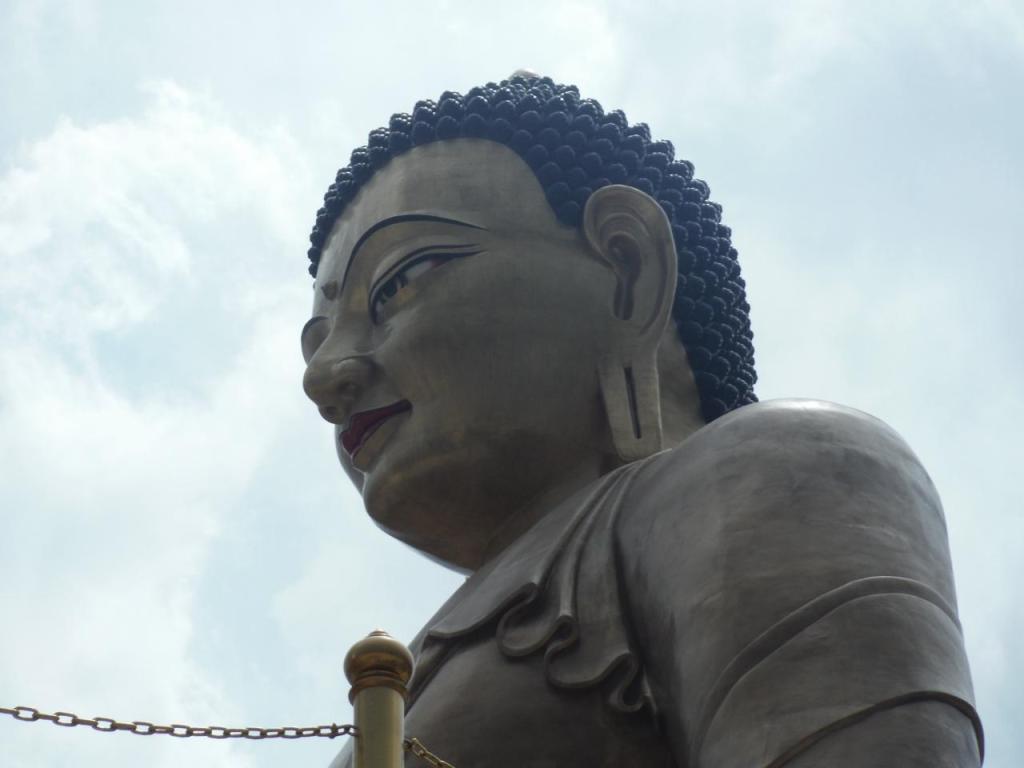
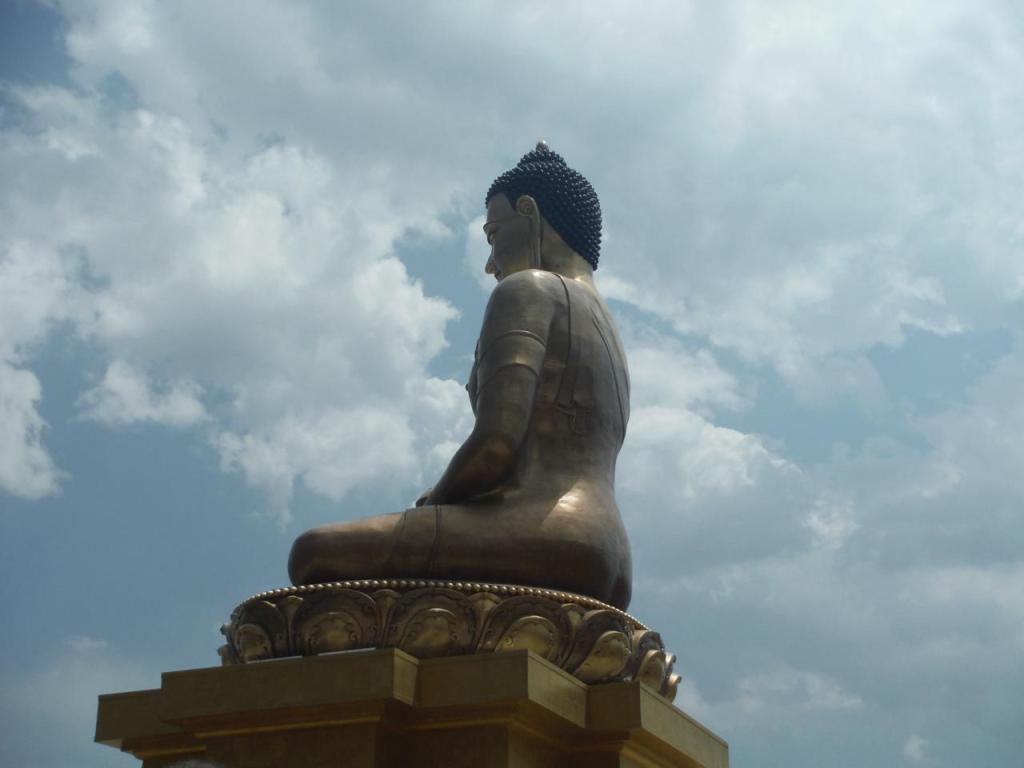
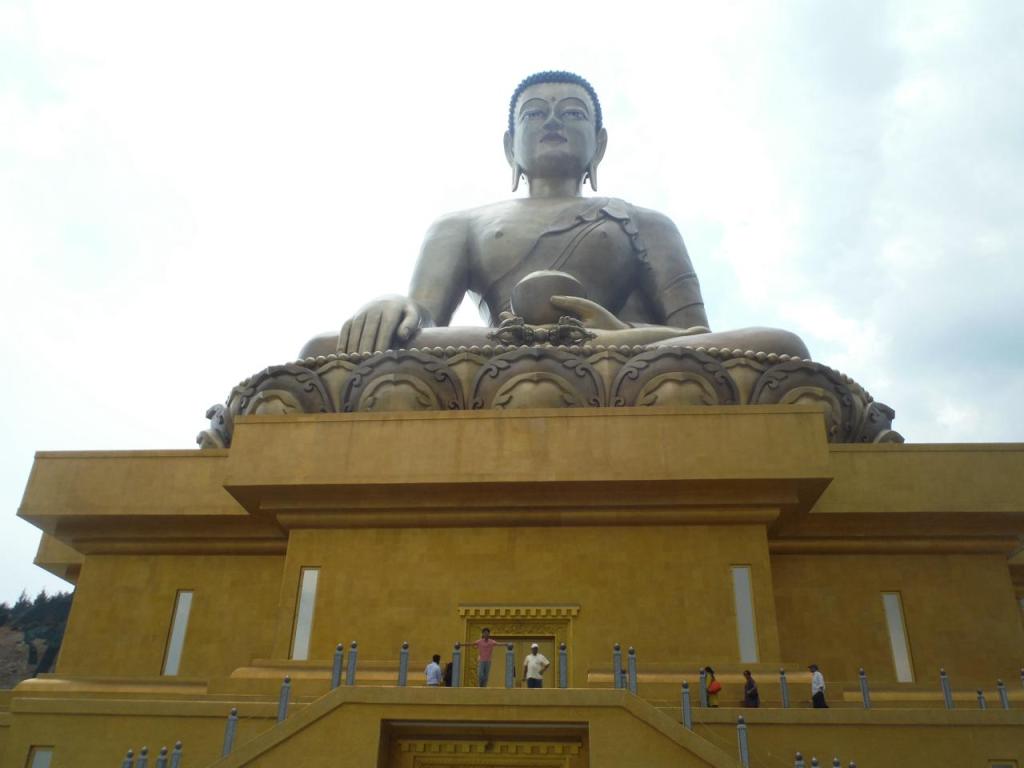
Day 1: Arrive in Paro, transfer to Thimphu, visit Buddha Dordenma.
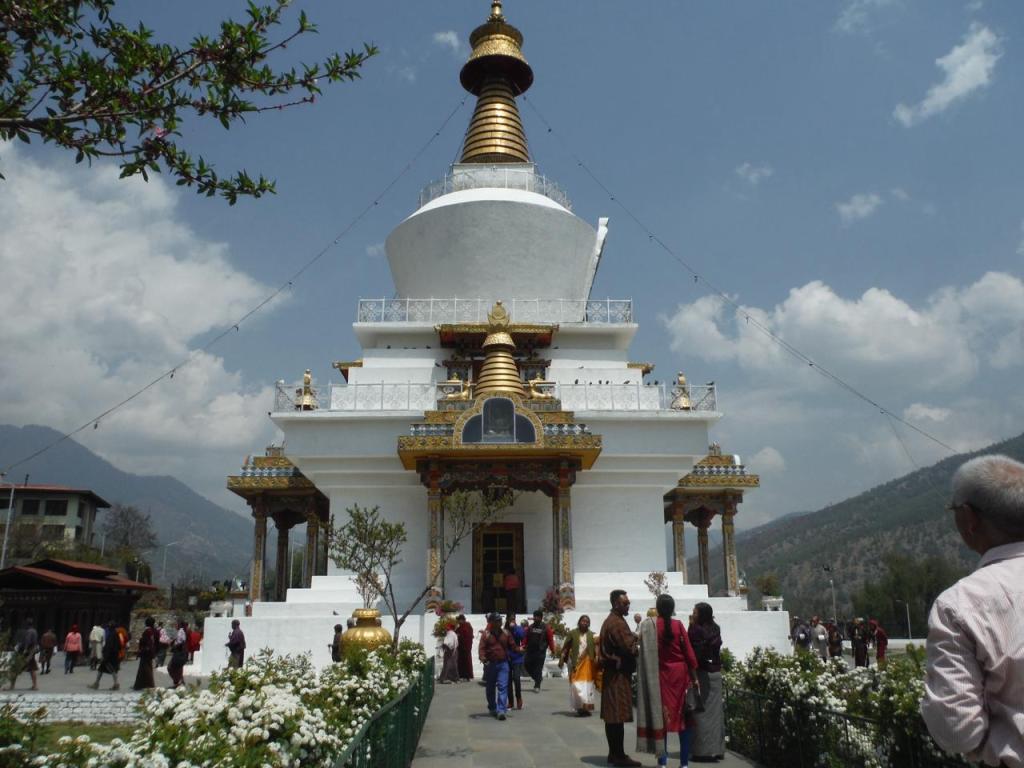
Day 2: See Memorial Chorten, Changangkha Temple, Takin Preserve, Bhutan Postal Museum, Tashichho Dzong.
Day 3: Day trip to Punakha via Dochula Pass, see Punakha Dzong.
Day 4: Relax in Thimphu, enjoy pool and spa at Le Méridien.
Day 5: Transfer to Paro, visit Paro Rinpung Dzong, Kyichu Lhakhang.
Day 6: Visit Tigers Nest, stroll Paro streets.

Day 1 :Fast forward to my second trip, this time with my paternal grandparents, and I was ready to soak it all in. We landed at Paro’s postcard-perfect airport, where the plane swoops between the peaks of the himalayas. And if you’re lucky enough, you can even catch a glimpse of Everest. Our guide, Ugyen Cruise Dorji, greeted us with a warm smile and whisked us off to Thimphu on a scenic drive. Prayer flags danced in the wind, and the roads were so well-kept. I learnt that it is illegal to go to many mountains, so a lot of Bhutan is untouched and preserved, making it one of the most beautiful countries I have ever been to. 

We checked into Le Méridien Thimphu, a sleek hotel with massive rooms, right in the city center—we even scored a suite upgrade. That first day, we visited the Buddha Dordenma, a giant golden statue overlooking the valley. It’s hard to describe the peace that hits you standing there, with the breeze carrying the faint sound of monks chanting. That evening, we strolled through Thimphu’s streets, popping into a local diner for dinner. The vibe was laid-back, the people were friendly, and the atmosphere were very nice. For dinner we ended up having an Italian meal in a small cozy restaurant. 

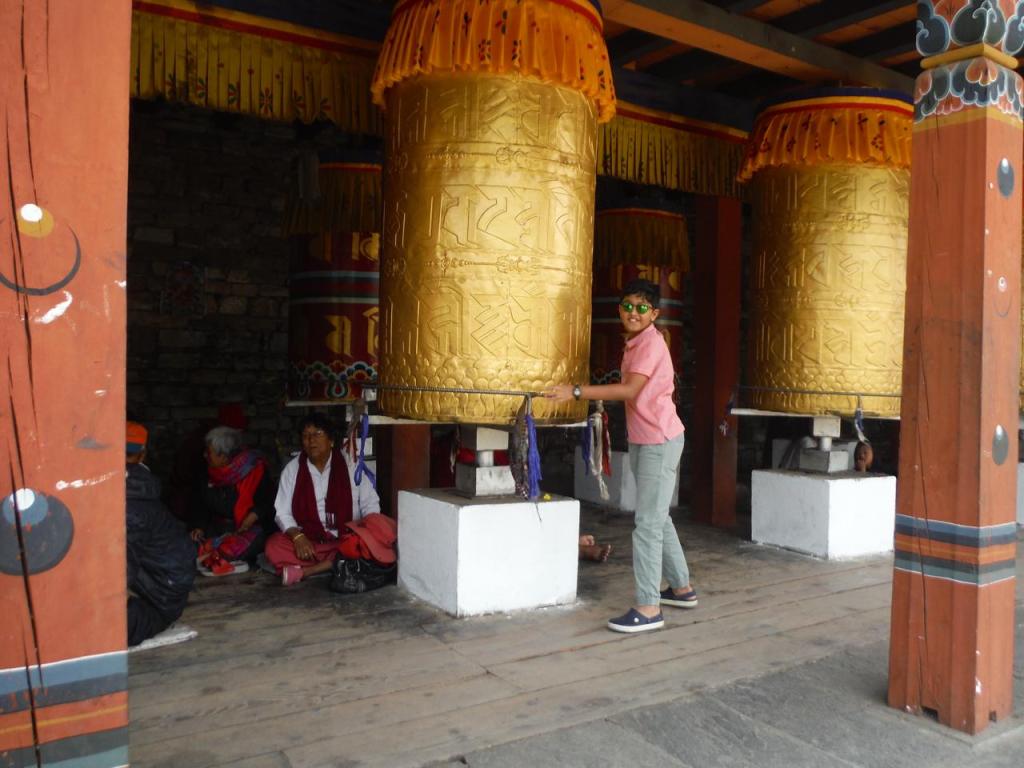
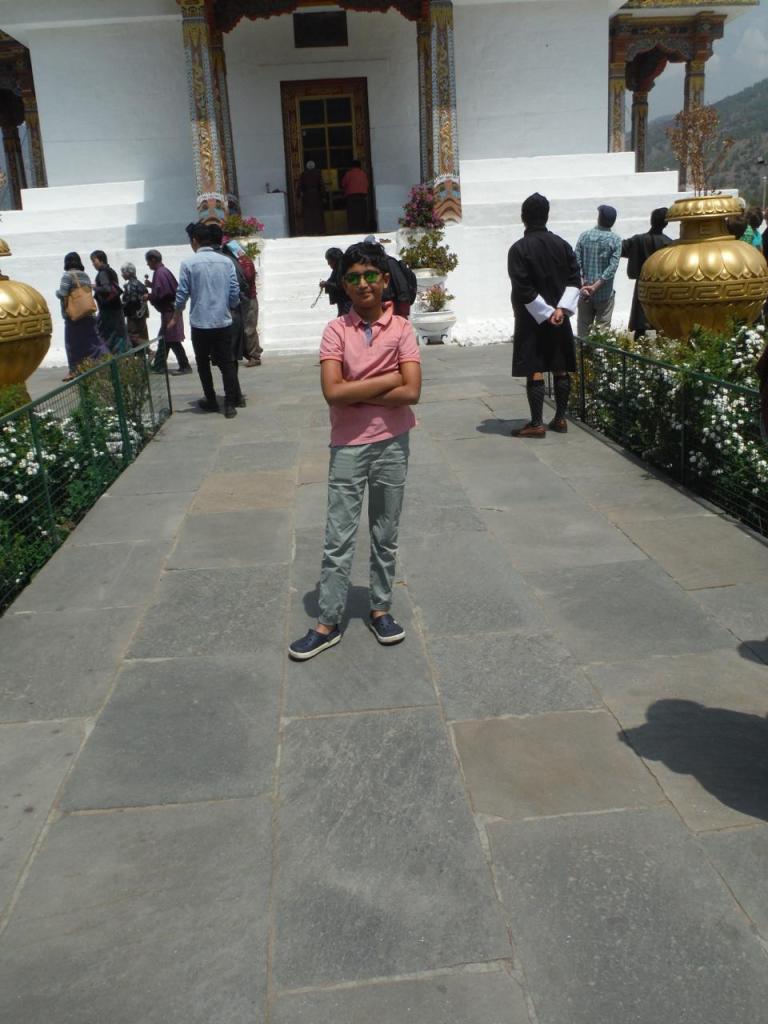
Day 2 : We kicked off with a killer breakfast at the hotel—pancakes, fresh fruit and some local bhutanese delicacies. We hit the Memorial Chorten, a whitewashed stupa buzzing with locals, dressed in traditional attire, moving silently in a clockwise path around the white stupa, spinning golden prayer wheels with every step. Each spin was like a quiet wish, and I remember standing there, completely still, just observing in awe of the peace of the place. A chorten, I learned, is a type of Buddhist stupa—essentially a monument that symbolizes peace and harmony. 

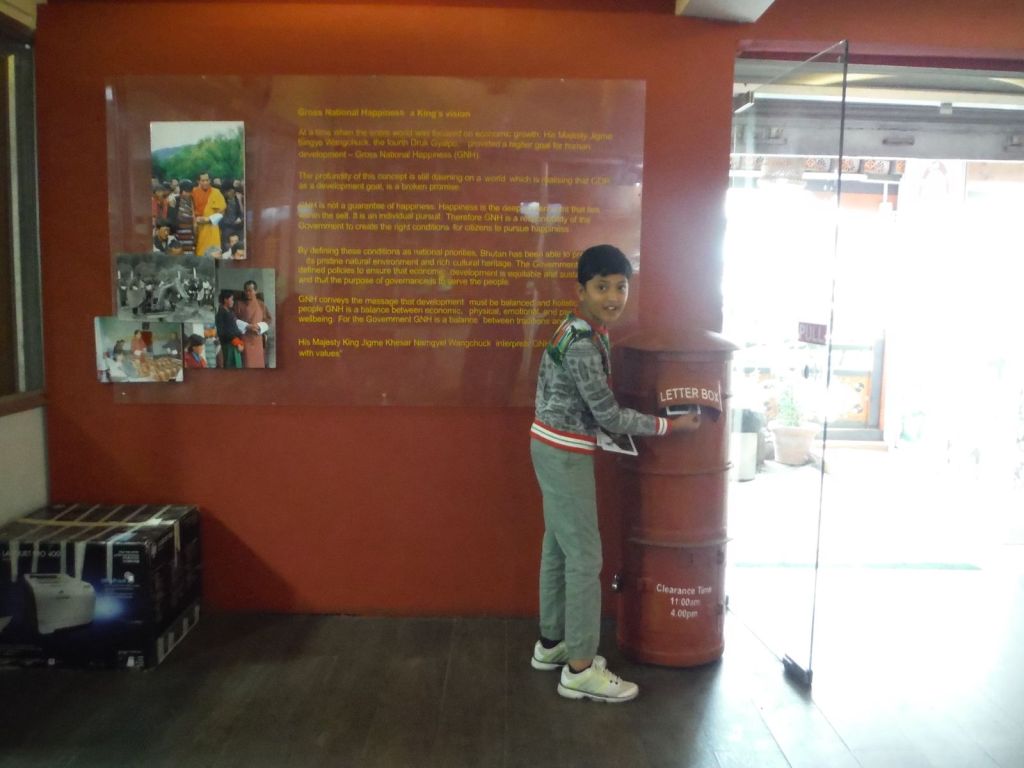
We then climbed up to Changangkha Temple. Perched on a hilltop, it offered sweeping views of Thimphu that made my heart skip. Next, the Takin Preserve introduced us to the takin—Bhutan’s national animal, which looks like a mashup of a goat and a cow. It’s weirdly adorable. On a family friend’s tip, we swung by the Bhutan Postal Museum, which sounds niche but was a total gem. Stamps tell stories here, and learning about GNH ( Gross National Happiness ) was a highlight—Bhutan’s all about balancing progress with well-being, and it shows.

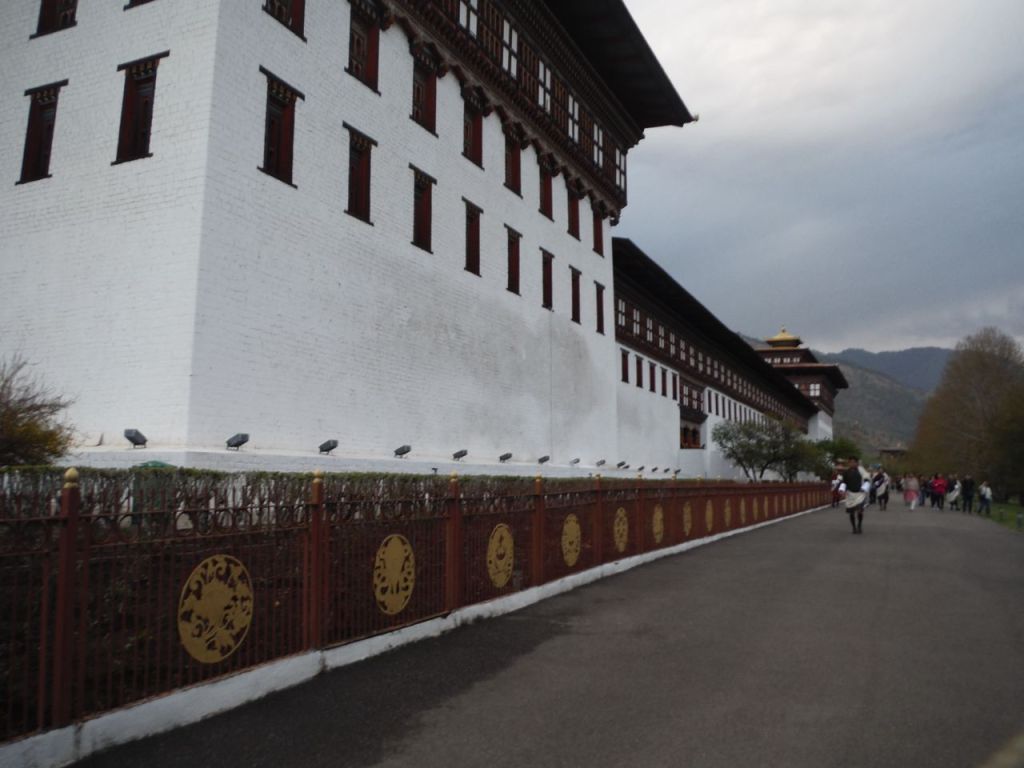
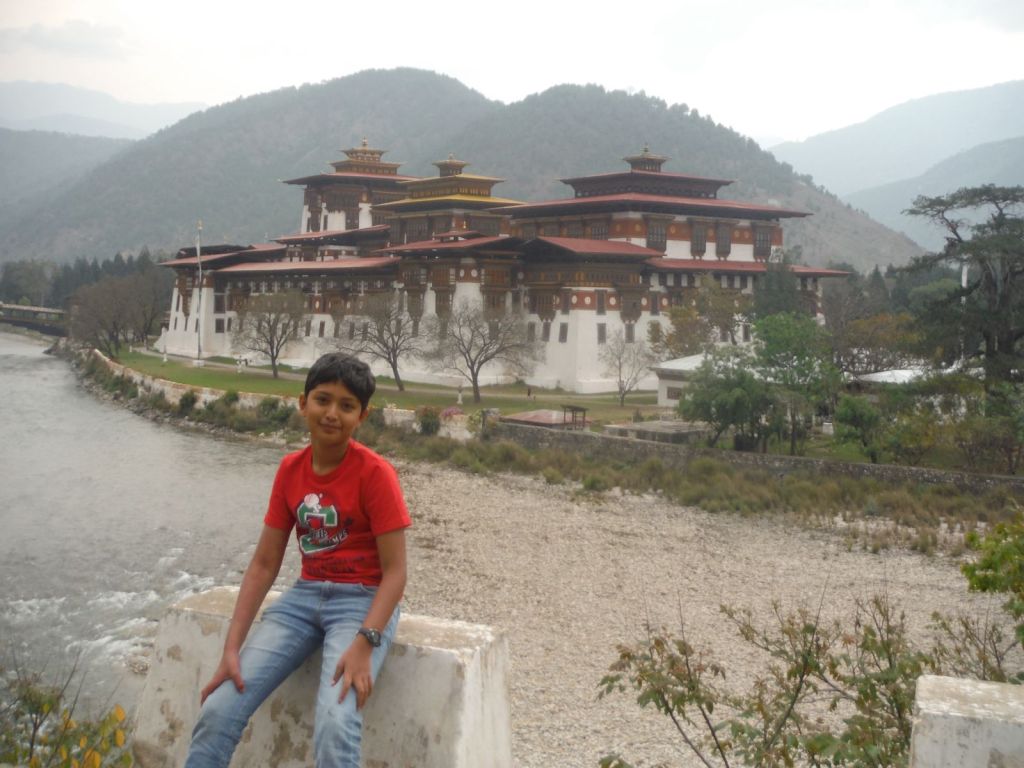
The grand finale of the day was Tashichho Dzong, a fortress-monastery hybrid that’s pure architectural eye candy. A dzong is a traditional Bhutanese building that doubles as a religious and administrative hub, and this one was decked out with intricate woodwork and golden roofs. I could’ve stared at it for hours. For dinner, we headed to Taj Tashi for a Bhutanese feast—ema datshi, kewa datshi, shamu datshi, and red rice. The flavors were bold, spicy, and comforting all at once, and the hotel’s ambiance made it unforgettable. 

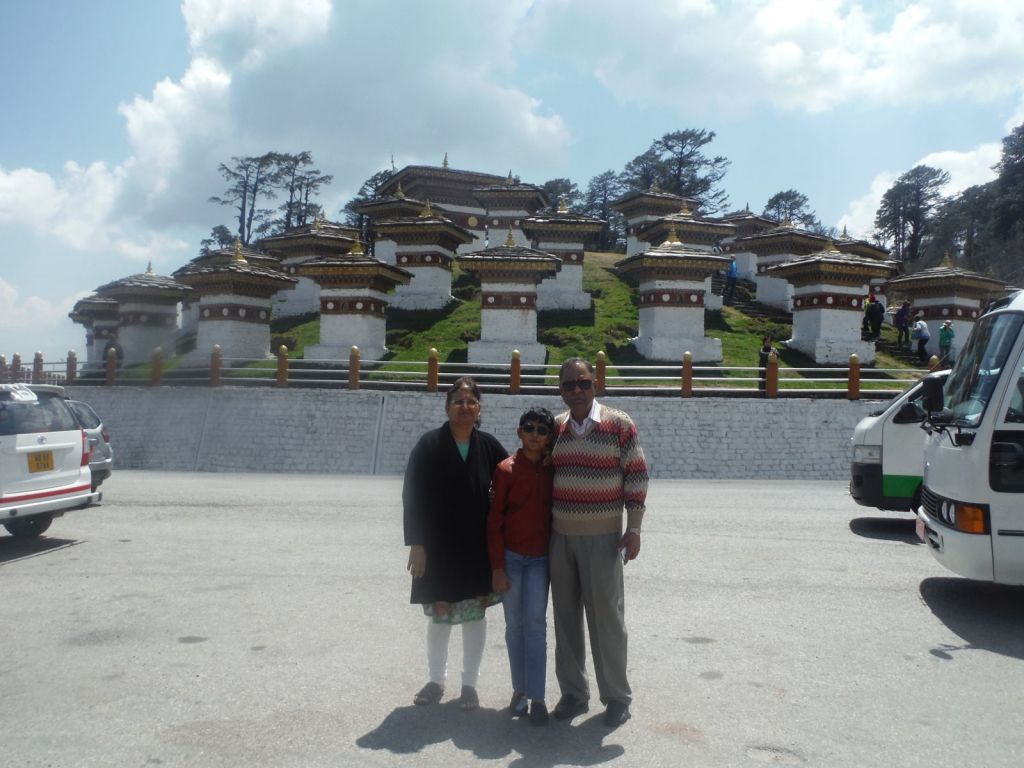
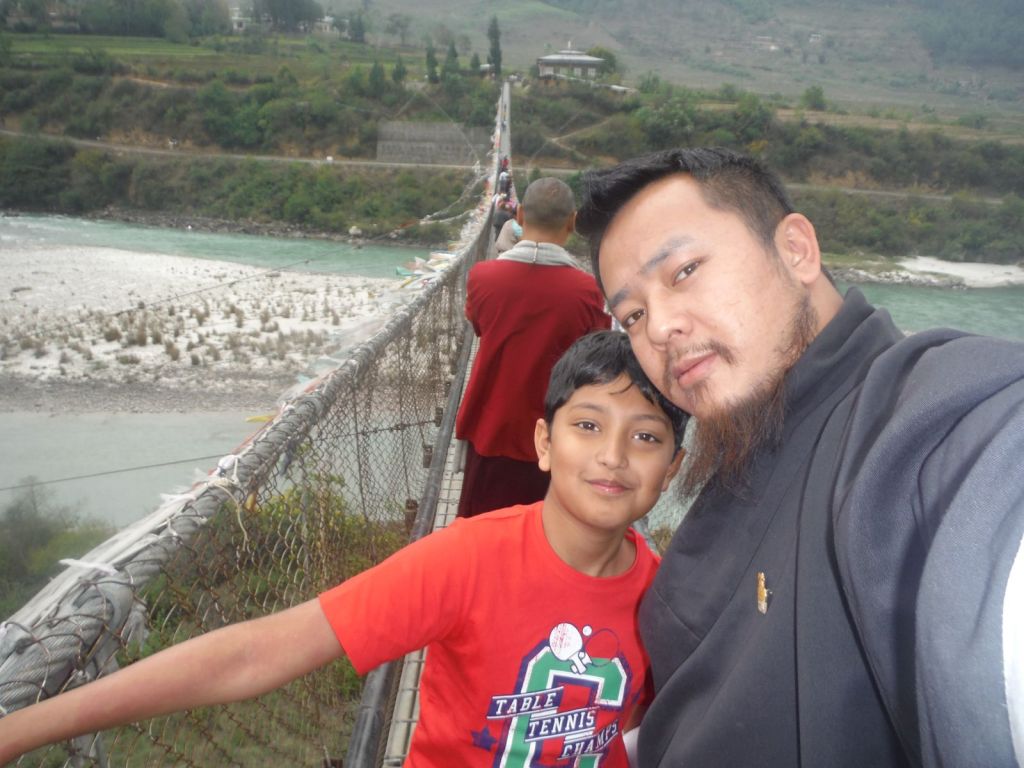
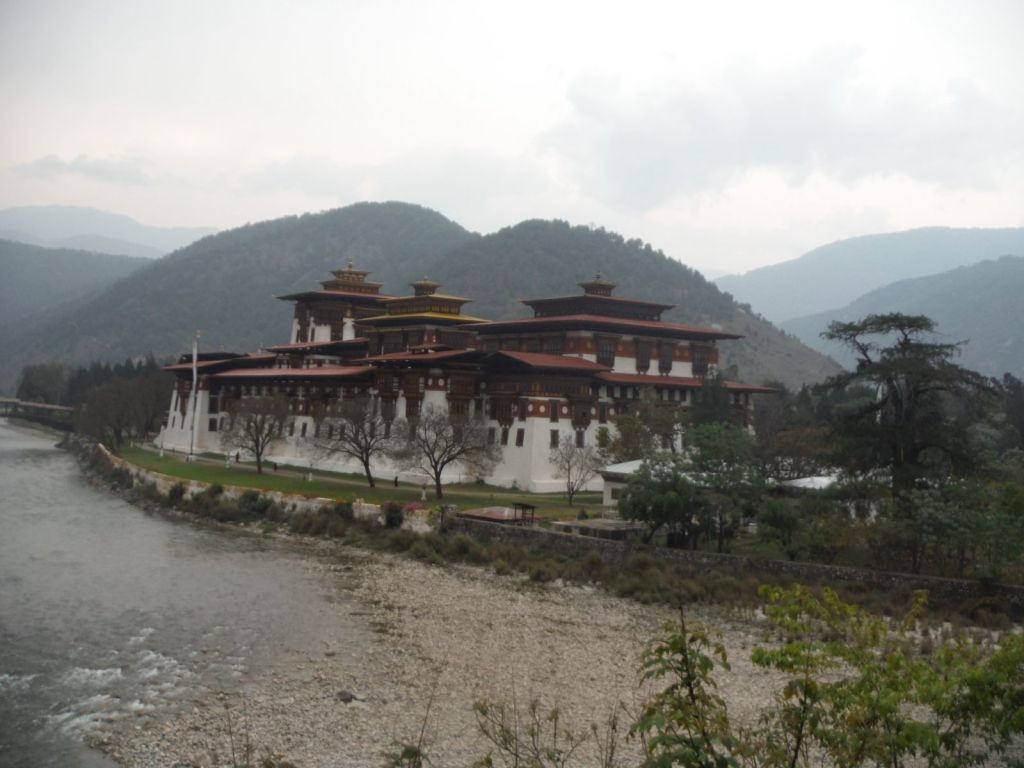
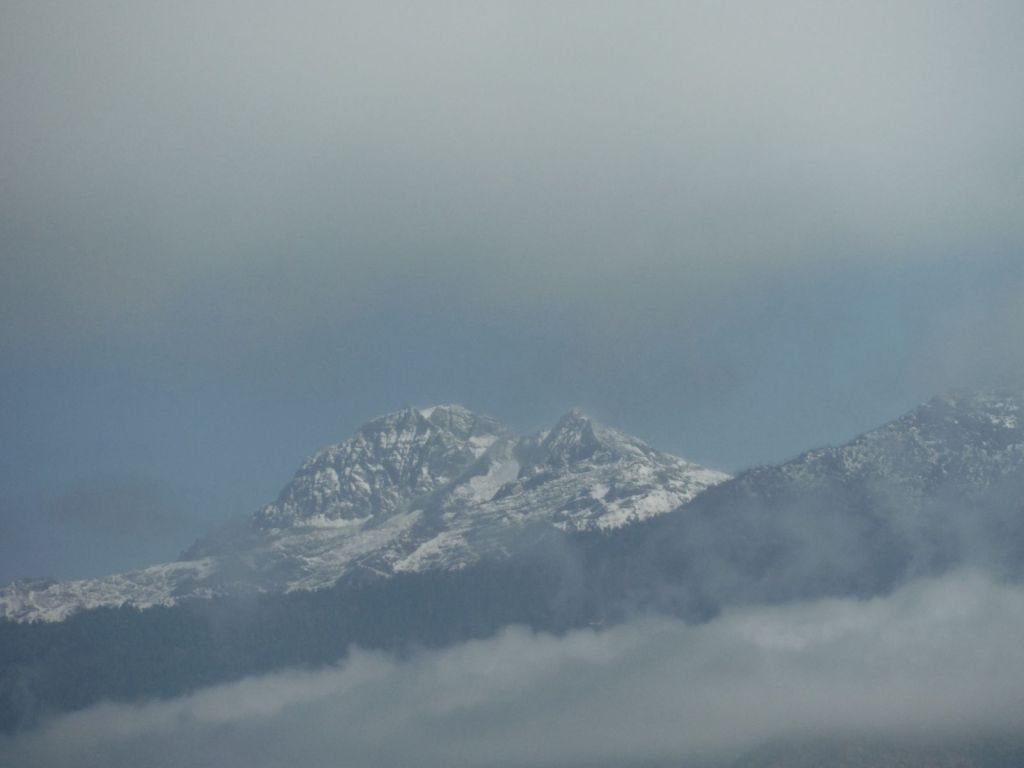
Day 3 : This was long but very memorable: a day trip to Punakha. We stopped at Dochula Pass, where 108 chortens dot the hillside and the Himalayan panorama left me speechless. I also saw the himalayan peaks through a binocular which was very special. I sipped tea, snapped photos, and tried not to freeze in the crisp mountain air. Then came Punakha Dzong. Built at the confluence of the Pho Chhu and Mo Chhu rivers, the dzong stood like a guardian of time. Its wooden bridge, the colours of its windows, and the massive central courtyard were almost too perfect. I walked around, in complete awe. The place wasn’t just beautiful—it was alive. You could hear chants, water flowing, the occasional laugh, and still feel a deep, serene silence underneath it all. This was easily one of the most beautiful and picturesque places I had ever seen.

Day 4 : This day was all about chilling. We splashed around in Le Méridien’s pool, booked spa treatments that melted every ounce of stress, and wandered the city center. I snagged some lemongrass perfumes (still my favorite scent) and handmade crafts as souvenirs. Dinner was at a burger joint whose name escapes me, but that veggie burger? Juicy, flavorful, texturally perfect—hands down the best I’ve ever had. I’m still chasing that high.

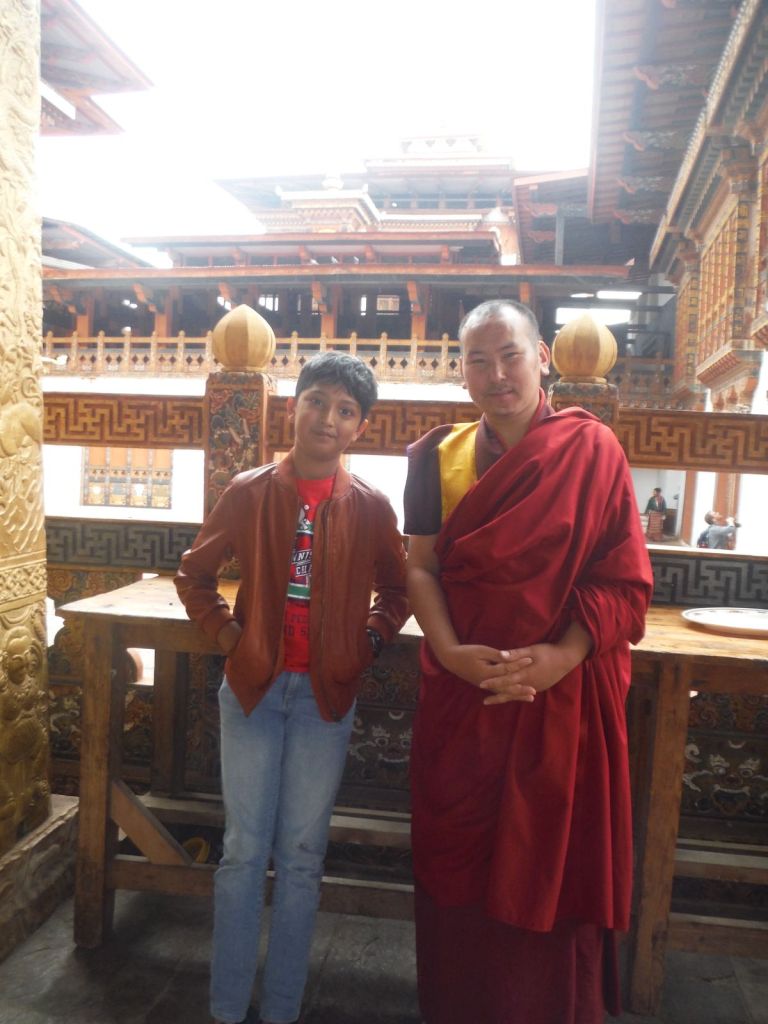
Day 5 : Next, we transferred to Paro, stopping for a bird’s-eye view of the airport that made me gasp all over again. We stayed at Naksel Boutique Hotel & Spa, a gorgeous spot with Himalayan vistas that felt like a hug from nature. It’s a bit off the usual path, but that just added to the charm. That day, we explored Paro Rinpung Dzong—another breathtaking fortress—and Kyichu Lhakhang, one of Bhutan’s oldest temples. The serenity was unreal.

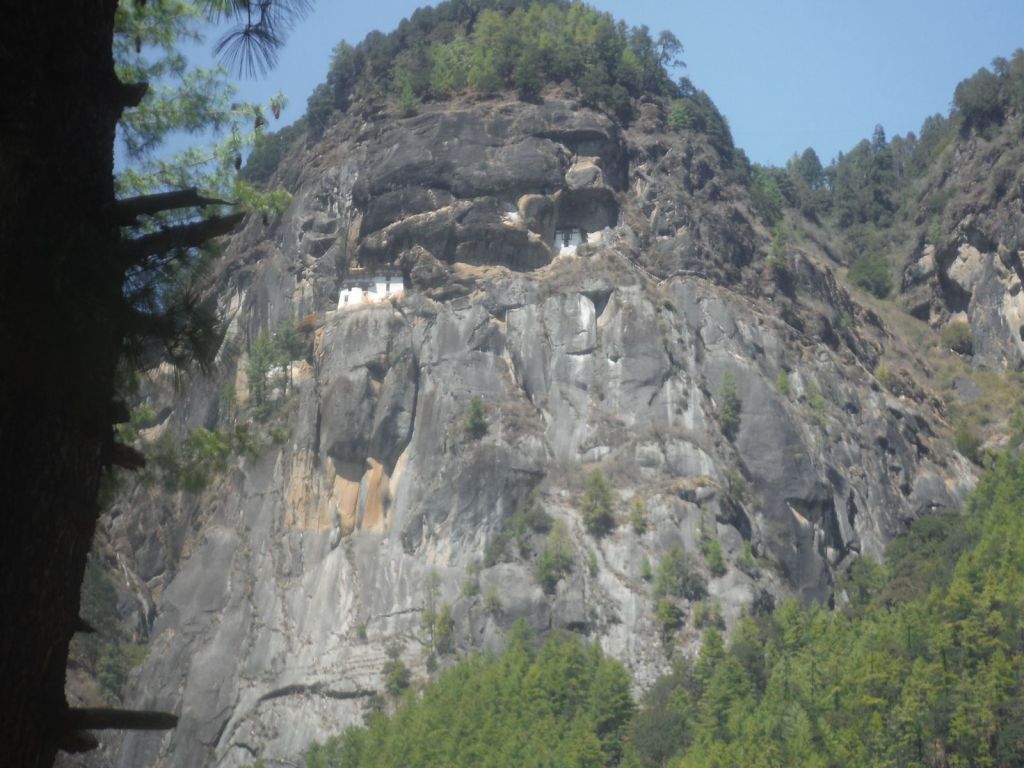
Day 6 : Our last day was low-key. Tiger’s Nest (Paro Taktsang) loomed above us, but with my grandparents along, we skipped the steep hike and saw the monument from below. Instead, we strolled Paro’s streets, soaked in the Himalayan views from our hotel, and let the trip sink in. It was the perfect goodbye.

Bhutan’s a place that sneaks into your soul. Whether it was sipping tea at Dochula Pass, marveling at dzongs, or just breathing in that crisp mountain air, every moment felt like a gift. There is this peace about Bhutan, a kind of serenity, which I haven’t felt anywhere else.  It’s a country that doesn’t dazzle with spectacle—it humbles you with silence, with balance, with intention. My two trips—one gentle, one immersive—showed me different sides of this kingdom, and I’d go back in a heartbeat. If you’re craving a mix of adventure, culture, and peace, Bhutan’s calling your name. Just don’t ask me for burger joint specifics—I’m still kicking myself for forgetting that name!

My Top 5 Bucket List Destinations

Travel isn’t just about going places; it’s about experiencing something so transformative that it leaves a mark on your soul. These five adventures are at the very top of my bucket list because they represent dreams I’ve been holding onto for years. Each one is special for its own reason—whether it’s the thrill, the beauty, or the sheer magic of the experience.

1. Antarctica 

Antarctica has always fascinated me. It’s one of the most untouched places on Earth, where the sheer scale of nature is humbling. Only about 15000 people visit Antarctica every year. The idea of walking among penguins, seeing massive glaciers up close, and crossing the Drake Passage again ( as I have done it one on my cruise from Argentina to Chile ) excites me and terrifies me in equal measure. It’s not an easy trip to plan—it’s remote, super expensive, and challenging—but that’s exactly why I want to go. Standing on this icy continent would feel like stepping into a different world. 

2. Bora Bora

Bora Bora feels like the ultimate escape. Imagine waking up in an overwater bungalow, surrounded by turquoise lagoons and endless skies with majestic mountains in your view. It’s on my bucket list because it’s the kind of place where time seems to stand still. I want to dive in coral gardens, kayak through calm waters, and just take it all in. Spending a few days here would be a dream come true, a complete disconnect from the world.

3. Seeing the Northern Lights

The Northern Lights have an almost mythical allure for me. The idea of watching greens, purples, and blues dance across the night sky feels like being a part of something special. Whether it’s Iceland, Tromsø, or Finland’s Lapland, I don’t care where I see it—I just want to be there. It’s not just the sight of the auroras; it’s the whole experience of being in the Arctic, camping under freezing skies, and waiting for that magical glow to appear.

4. Everest Base Camp

Trekking to Everest Base Camp feels like the ultimate adventure. It’s not just about reaching the base of the tallest peak in the world; it’s about the journey itself. Walking through Sherpa villages, crossing suspension bridges, and taking in the majesty of the Himalayas would be unforgettable. I want to do this trek because it’s both a physical and mental challenge, and it promises breathtaking views that photos can never do justice. This isn’t just a hike—it’s an accomplishment. 

5. Experiencing Cherry Blossoms in Japan

Springtime in Japan have seemed magical to me. The cherry blossoms, transform the country into a wonderland of pink and white. I want to sit under a blooming cherry tree in Kyoto, sipping coffee and soaking in the peaceful atmosphere. 

Each of these places represents more than just a destination—they’re dreams shaped by curiosity, wonder, and a desire to experience the extraordinary. These are the kinds of adventures that remind us why we explore, why we push ourselves beyond our comfort zones, and why the world is worth discovering. Until then, these dreams remain my inspiration—a reminder that the world is vast, magical, and waiting. And one day, I’ll turn them into memories that I’ll carry with me forever.

Top 5 Adventure Activities I Have done while Travelling

Adventure is the heartbeat of my travels. It’s what pushes me out of my comfort zone, makes my heart race, and leaves me with stories I can’t stop telling. For me, it’s not just about the thrill; it’s about the connection with nature, the people I share it with, and the personal growth that comes from embracing the unknown. Here are five adventures that have left an indelible mark on me.

1. Scuba Diving, Andaman Islands and Seychelles

There’s nothing quite like diving into the underwater world. In the Andaman Islands, I experienced my first dives, swimming through coral reefs alive with vibrant fish, rays, and the occasional curious turtle. The stillness underwater, broken only by the sound of your breath, feels like entering another realm entirely.

Then came my PADI Open Water certification in the Seychelles—a series of dives that deepened my love for the sport. One dive, in particular, stands out: the moment I swam alongside a school of barracudas in crystal-clear waters. Diving has this magical ability to silence the noise in your head, transporting you to a state of pure mindfulness. It’s not just an activity; it’s an escape.

2. Tobogganing, Slovenia

Slovenia surprised me in more ways than one, but tobogganing near Lake Bled was an unexpected thrill. Imagine sitting on a sled, gripping the handles, and hurtling down a twisting track with panoramic views of the lake below. It wasn’t just the rush of the ride that made it special—it was the pure joy of thrill, the cool mountain air, and the surreal beauty of the scenery. It was the perfect mix of adrenaline and nature.

3. Dune Bashing in Oman

The first time I tried dune bashing, I had no idea what to expect. Sitting in a 4×4, we sped across Oman’s golden dunes, climbing steep slopes and sliding down impossibly soft sands. To top it off, I got to ride an ATV through the dunes, the engine cutting through the silence of the desert. It wasn’t just about the adrenaline—it was about experiencing the beauty of the desert in such a beautiful way.

4. Glacial Expeditions in Chile and Argentina

The icy landscapes of Chile and Argentina were an adventure that felt otherworldly. We explored Glaciers like the Pia Glacier and Condor Glacier aboard zodiacs—small, inflatable boats designed for navigating rugged waters. These boats allowed us to get incredibly close to towering glaciers, where you could hear the ice cracking and groaning as it shifted. One unforgettable moment was watching a massive chunk of ice calve from a glacier and crash into the water, sending waves rippling toward us. You can see the video of the falling glacier by clicking here and viewing the linked blog. Crossing the Drake Passage to reach Cape Horn was an adventure in itself. The seas were wild and unpredictable. This expedition wasn’t just an adventure; it was a connection to the raw, untamed beauty of the Earth.

5. Paragliding in Ölüdeniz, Turkey

Ölüdeniz is famous for its stunning landscapes, and paragliding here is one of the most sought-after adventures in the world. The turquoise blue lagoon, the sandy beaches, and the lush green mountains create a view that’s nothing short of magical. When I signed up for paragliding, I knew it would be thrilling, but the experience far exceeded my expectations. Running off the edge of a mountain with nothing but a parachute strapped to my back felt both terrifying and exhilarating. As we soared through the sky, the breathtaking coastline of Ölüdeniz stretched out below me. The peacefulness of floating through the air, combined with the adrenaline of being so high above the ground, made this adventure unforgettable.

Paragliding in Ölüdeniz isn’t just about the thrill; it’s about experiencing the beauty of one of Turkey’s most iconic landscapes from a perspective that few people get to enjoy. It was a once-in-a-lifetime experience that left me with a profound appreciation for the natural world.

Adventure isn’t always about extreme sports—it’s in the little moments too. The hike to the Seven Lakes of Bulgaria pushed me to my limits, but the views at the top were worth every step. Walking through Patagonia, surrounded by towering peaks and sprawling glaciers, felt like being at the edge of the world. Even a Segway tour in Budapest turned into an unexpectedly fun way to explore the city’s charm.

Then there’s the wild beauty of a safari in the Serengeti, where every rustle in the grass makes your heart skip a beat, and snorkeling in the Great Barrier Reef, where the underwater world is so vibrant it feels like stepping into a painting.

Adventure is essential to my travels because it makes every journey personal, every moment unforgettable. It’s the thrill of trying something new, the beauty of stepping into the unknown, and the stories that stay with you long after the trip is over. If there’s one thing I’ve learned, it’s this: adventure is everywhere—you just have to say yes.

Top 5 Historical Destinations I have visited

Traveling to historical landmarks is always special, but for me, it’s more than just visiting iconic places. It’s about immersing myself in the stories they hold, imagining the lives that unfolded there, and marvelling at how these sites have stood the test of time. Over the years, I’ve been fortunate to visit some truly remarkable historical places, and these five stand out as unforgettable experiences.

1. Abu Simbel, Egypt

The Pyramids of Giza are undeniably iconic and standing before the towering Great Pyramid, with the Sphinx silently guarding the desert, was surreal. But if I’m honest, Abu Simbel stole my heart. There’s something magical about the way the colossal majestical statues of Ramses II rise from the rock. The story of its relocation to save it from rising waters makes it even more remarkable. While the Pyramids are a symbol of ancient Egypt’s grandeur, Abu Simbel felt more intimate and awe-inspiring to me with awe inspiring carvings.

2. The Colosseum, Rome, Italy

Visiting the Colosseum was a dream come true, but I’ll admit I was a bit disappointed to see part of it scaffolded due to the Jubilee Year renovations. Even so, walking through its arches and picturing the gladiatorial battles that once captivated thousands was incredible. It was hard not to feel the weight of history in such a grand amphitheater. Despite the scaffolding, the Colosseum’s majesty was undeniable.

3. The Taj Mahal, Agra, India

This visit was a complete surprise. I had no idea I’d be going to Agra to see the Taj Mahal, and when I saw it for the first time, I was overwhelmed. Pictures don’t do justice to the ethereal beauty of its white marble, shimmering in the sunlight. Knowing it was built as a symbol of eternal love made the experience even more moving. Wandering through its perfectly symmetrical gardens and seeing the intricate details up close made this surprise trip one of the most memorable moments of my travels.

4. Ephesus, Turkey

Few ancient sites are as well-preserved as Ephesus, and it truly feels like stepping back in time. Walking along its marble streets, past through the ruins was like being transported to the height of Greek and Roman civilisations. Every corner of Ephesus tells a story, from its grand temples to its simple homes. I loved how immersive the experience was—it’s one of those places where you can close your eyes and imagine the bustling life that once filled its streets.

5. Split, Croatia

Staying in Split’s old town was like living in medieval times. The heart of the city, Diocletian’s Palace, isn’t just a ruin—it’s a thriving part of daily life, with shops, cafes, Air Bnb’s and homes woven into its walls. Waking up and walking through its narrow streets felt like stepping into another era. The blend of Roman architecture and vibrant modern life made Split a unique historical experience. It wasn’t just a visit—it was an immersion into history.

There are so many incredible places that deserve a spotlight beyond my top five. The rock caves of Cappadocia, with their ancient dwellings and underground cities were marvelous to view. In Morocco, the earthen fortress of Aït Ben Haddou which is a stop in the saharan trade route was unforgettable, with incredible architecuture. Then there’s the Tiger’s Nest Monastery in Bhutan, perched on a cliffside—it’s as much about the serene spirituality of the destination as the challenging trek to reach it. One of the most emotionally powerful places I’ve visited is Auschwitz-Birkenau in Poland, a site that stands as a stark reminder of history’s darkest chapters. Walking through its grounds was deeply humbling and very emotional.

For me, historical travel isn’t just about ticking off destinations—it’s about connecting with the past and appreciating the journey that brought us here. These places are more than monuments; they are lessons, inspirations, and windows into the stories of our shared history. Let me know if there are places where you felt the same in the comments below.

Top 5 Underrated Countries I Have Been To

While I’ve been fortunate enough to visit some of the most iconic destinations in the world, there’s something special about discovering places that fly under the radar. These destinations might not be at the top of everyone’s bucket list, but they hold their own unique charm, offering incredible experiences without the crowds. Here are five underrated places I’ve visited that deserve more recognition.

1. Slovenia

Slovenia is a small country, but it packs a punch when it comes to natural beauty and charm. Lake Bled, with its picturesque island church and castle perched atop a cliff, feels like something out of a fairy tale. Exploring the incredible Postojna Caves, with their vast chambers and stalactites, was an otherworldly experience. For adventure seekers, Mount Vogel offers breathtaking views and an escape into pristine alpine landscapes. And let’s not forget Ljubljana, Slovenia’s capital—a city that charms you with its colorful architecture, pedestrian-friendly streets, and vibrant culture. It’s a place that combines natural wonders and urban delights effortlessly and I place I loved the most in the south of Europe.

2. Oman

Oman is a country that stays true to its roots. Unlike its glitzy neighbors, Oman offers an authentic Middle Eastern experience. There are no towering skyscrapers here—just a landscape of mountains, dunes, and stunning beaches. I was mesmerized by the contrast between the bustling charm of Muscat and the serene beauty of the desert. Oman’s mix of history and nature, from its ancient forts to the Wahiba Sands, makes it a place that feels both timeless and unique. It’s perfect for those who want to experience authentic Arabian culture, with a big plus in hospitality, luxury and local charm. The people are exceptionally warm and the country is beautiful.

3. Latvia

Latvia is an oasis of calm and serenity. Its capital, Riga, blends medieval charm with art nouveau elegance, and its cobbled streets are a joy to explore. Beyond the city, the countryside is dotted with castles, like the beautiful Turaida Castle, surrounded by lush greenery. Latvia is known as the land of castles. The country has a peacefulness that’s hard to find elsewhere, making it the perfect escape for those seeking tranquility. Latvia’s beauty lies in its ability to offer quiet, meaningful moments amidst stunning landscapes and historic sites. Latvia is underrated in the sense it is laid back and a place where there are less tourists and you feel immersed unlike popular sites like Rome, Paris and London.

4. Morocco

Morocco is a feast for the senses, from its vibrant colors to its tantalizing aromas. The blue-washed streets of Chefchaouen are a photographer’s dream, while the historic cities of Fez, Meknes, and Rabat offer a glimpse into Morocco’s rich past. The cinematic landscapes of Aït Ben Haddou transport you to another era, and the bustling souks of Marrakesh are a treasure trove of spices, textiles, and handicrafts. And of course, the food—Moroccan cuisine is unmatched, with its fragrant tagines, fluffy couscous, and endless cups of mint tea. Every corner of this country is brimming with culture and history, making it one of the most dynamic places I’ve visited.

5. Romania

Romania is a country that feels like stepping into a fairytale storybook. The medieval towns of Sibiu and Brașov are filled with colorful houses, cobbled streets, and towering churches. The legendary Bran Castle, often associated with Dracula, is a must-visit, but Peleș Castle, with its intricate architecture and royal charm, left an even bigger impression on me. Bucharest, the capital, is a mix of historic elegance and modern energy. Romania’s beauty lies in its ability to surprise—you’ll find enchanting villages, sprawling forests, and a rich cultural history that’s often overlooked with outstanding cuisine and amazing experiences.

These five destinations have left a lasting impact on me because of their authenticity, charm, and the sense of discovery they offer. They may not have the same fame as Paris or Tokyo, but that’s what makes them so special. Whether it’s the serene lakes of Slovenia, the golden dunes of Oman, or the vibrant markets of Morocco, each of these places has its own unique story to tell. If you’re looking to explore beyond the usual tourist spots, these underrated gems should be at the top of your list.

What are your favorite underrated places? Let me know—I’m always looking for new destinations to explore!

Top 5 Countries with the Best Cuisine

Food has always been more than just sustenance for me—it’s a window into the soul of a culture. From the comforting spices of India to the minimalist brilliance of Spain and the indulgent delights of Italy, every country offers its own unique story on a plate. In this blog, I’ll take you on a journey through some of the best food experiences I’ve had while traveling the world, celebrating the flavors that left a lasting impression and the cuisines I dream of exploring next.

1. Italy 

    It’s impossible to talk about food and not mention Italy. With its 20 distinct regions, each boasting its own culinary identity, Italy truly feels like a gastronomic wonderland. Though I’ve only explored three regions over two trips, every meal was a revelation. From perfectly al dente pasta to pizzas straight from their birthplace in Naples, the food is diverse and unforgettable. The sandwiches, made with fresh ciabatta or focaccia bread, are simple yet divine. Italy isn’t just about the big names like tiramisu; it’s the local delights that steal the show—cannoli, panettone, and the indulgent maritozzo are treats not to be missed. Pastas alone offer infinite variety, and during my visits to Rome and the Amalfi Coast, I sampled dishes like cacio e pepe, spaghetti alla Nerano, lemon linguine, and rich amatriciana. Every bite was an ode to tradition and freshness. And then there are the drinks: nothing beats a shot of espresso to start the day or a glass of limoncello to end it. Beyond these classics, I discovered delights like meloncello and Montenegro, each offering a new taste of Italy’s vibrant drink culture. Italy is, quite simply, a food lover’s dream.

    2. Spain 

    Though my visit to Spain was short, the food left a lasting impression. Spain is home to some of the most flavorful and minimalist cuisines, where the focus is always on letting high-quality ingredients shine. One standout moment was enjoying a hearty paella at a century-old establishment in Madrid. I was traveling non-stop for two months at the time, and this paella was hands down the best meal of the entire journey—so good, it’s unforgettable. Even as a vegetarian, I found Spain’s cuisine to be surprisingly accommodating. Tapas bars offered vibrant plates celebrating vegetables, like simply sautéed asparagus, crystal bread with fresh tomato, padron peppers, and olives that were almost too good to be true. And then there’s the olive oil—Spain’s liquid gold. I loved it so much, I couldn’t resist bringing a few bottles home. The Mercado de San Miguel was a highlight for its variety, from fresh cheeses to cold cuts. And of course, no trip to Spain would be complete without churros—crispy, golden, and served with thick, velvety chocolate. Spain’s food may be simple, but it’s executed with such perfection that every bite feels extraordinary.

    3. Tukrey 

    Turkey is a culinary powerhouse, and after much thought, I’ve concluded that Turkish cuisine edges out as my favorite when compared to Morocco’s—though Moroccan food deserves a special shoutout for blowing my mind. The sheer diversity and variety of dishes in Turkey, from savory street food to decadent desserts, make it a gastronomic destination like no other. One of my favorite experiences was savoring a hot kumpir at 2 a.m. from a street vendor in Istanbul. The baked potato, stuffed with toppings like corn, cheese, and olives, was pure comfort food after a day of exploring. Another highlight was nibbling on roasted chestnuts outside the Hagia Sophia, their aroma lingering in the cool evening air. I also spent an afternoon sampling Turkish delight outside the Grand Bazaar, with endless flavors like pistachio and rose—it was hard to pick a favorite! Not to forget baklava, with its flaky layers and sweet syrup, an absolute classic. Breakfast in Turkey might top it all. In Cappadocia, at a cozy rock hotel, traditional breakfasts of simit, olives, honeycomb, and cheeses were served as hot air balloons filled the sky. From shawarma to gözleme, Turkey’s cuisine is diverse, hearty, and unforgettable.

    4. Argentina

    Argentina is a paradise for food lovers, and while it’s renowned for its legendary steaks, I found plenty to enjoy as a vegetarian. Empanadas quickly became a favorite—crispy pastries filled with cheese, corn, or vegetables, each bite packed with flavor. In Bariloche, the decadent chocolate was unforgettable, and I couldn’t resist the creamy sweetness of dulce de leche, perfect on fresh bread or by the spoonful. One dish that stood out was provoleta, a grilled provolone cheese seasoned with herbs and olive oil, oozing with flavor. Humitas, a tamale-like dish made with corn and cheese, wrapped in corn husks, were a comforting treat. Argentina’s sandwiches de miga, light and layered with fresh veggies and spreads, became my go-to snack for road trips. Even the iconic chimichurri sauce, traditionally paired with meat, was a revelation when drizzled over roasted veggies or fresh bread. The variety of vegetarian options and the bold, fresh flavors ensured I never felt left out in a country so celebrated for its meat. Argentina’s cuisine is proof that great food transcends dietary boundaries, offering something special for every palate.

    5. India 

    India’s cuisine is a celebration of diversity, complexity, and tradition—there’s truly nothing like it. While classics like dal makhani, paneer butter masala, dosa, and sambar are renowned for good reason, it’s the incredible regional specialties that make the country’s food scene so unique and unforgettable. From the nadru yakhni of Kashmir to Goa’s xacuti and cafreal curries, and from soft appam with cold coconut milk in Tamil Nadu to hearty undhiyu in Gujarat, each dish offers something extraordinary. Add to that Rajasthan’s smoky dal baati churma and Bihar’s rustic litti chokha, and it becomes clear that India’s culinary treasures are as varied as its landscapes. What truly sets Indian food apart is its balance of flavors and the sheer depth in every bite. Whether it’s the meticulous layering of flavors in a biryani or the comforting simplicity of a home-cooked khichdi, Indian food speaks to the heart. No matter where you go, food in India connects deeply to its culture and traditions. It’s an experience of joy and discovery, whether you’re sampling street food in a bustling market, enjoying a thali laden with variety, or relishing sweets like jalebi and gulab jamun. For me, no other cuisine comes close to the love and pride I feel for India’s food. It’s a journey in itself.


    Food is the heart of every culture, and each country I’ve visited has offered its own unforgettable flavors. While I’ve raved about favorites like Italy, Spain, and India, special mentions must go to the bold spices of Moroccan cuisine and the vibrant balance of Thai food, both of which amazed me. Looking ahead, I dream of savoring dishes in Mexico, Greece, Japan and Korea. Here’s to the many more culinary adventures to come!

    Indian Aviation

    The Indian aviation sector has long been a challenging market, often described as a “graveyard” for airlines. Regulatory complexities, high operating costs, fluctuating fuel prices, and fierce competition have left many carriers struggling to stay airborne. Iconic names like Kingfisher Airlines, Jet Airways, GoAir, and now the merger of Vistara with Air India stand as testaments to the volatility of this industry. Amidst this turbulence, IndiGo’s meteoric rise—and now its potential stumbles—adds an intriguing chapter to this saga.

    The Indian aviation industry is witnessing significant growth, driven by the expanding middle class and increasing demand for flight connectivity. In FY2024, domestic passengers reached 306.7 million, reflecting a robust 13.5% year-on-year (YoY) growth. The international market recorded 69.64 million passengers, with an impressive 22.3% YoY growth (IBEF). India has now surpassed Indonesia and Brazil to become the third-largest domestic aviation market globally.

    However, only a handful of major players dominate the current market. The graph below highlights the key players and their respective market shares.

    To understand how the Indian aviation landscape evolved, it is essential to examine the rise and fall of past airlines. Kingfisher Airlines, launched by Vijay Mallya in 2005, and IndiGo, founded in 2006, entered the market around the same time. Kingfisher’s motto, “Fly the Good Times”, failed to resonate due to its king-size prices and operational inefficiencies. Indian consumers, being highly price-sensitive, preferred cost-effective options, even opting for inconvenient flight timings to save money. This misjudgment of market needs was a major misstep for Kingfisher and, later, Jet Airways.

    Through a Kingfisher lens, its attempt to operate multiple hubs with premium offerings was unsustainable, given the high costs and operational inefficiencies. By contrast, through an IndiGo lens, the hub-and-spoke model thrived in the Indian market. IndiGo’s centralized hubs in Delhi and Mumbai optimized operations, maximizing fleet utilization and offering affordability—a winning strategy in a price-conscious market.

    At its peak, Kingfisher Airlines held a 19.9% market share, closely matched by IndiGo’s 17.6%. However, the key difference lay in their fleet sizes. Kingfisher operated a larger fleet, resulting in higher fuel costs and greater operational expenses, which were unsustainable. IndiGo, on the other hand, achieved a similar market share with fewer planes, demonstrating the efficiency of its low-cost model and centralized operations. This contrast is highlighted in the chart below.

    This disparity led to Kingfisher’s fuel ratio to revenue skyrocketing to 50%, an unsustainable figure. Combined with debts exceeding $3 billion USD, the airline ceased operations. Similarly, Jet Airways, which prioritized luxury over affordability, failed to cater to the Indian market’s value-driven preferences, ultimately leading to its downfall.

    GoAir, on the other hand, was a low cost carrier, which was doing okay until it faced significant operational challenges due to persistent engine issues with its Pratt & Whitney-powered Airbus A320neo aircraft. By May 2023, these problems led to the grounding of 25 aircraft, accounting for 50% of its fleet. (AirInsight) This substantial reduction in operational capacity severely impacted the airline’s profitability and market presence, leading to insolvency in 2023.

    So, while all the airlines fail, how did Indigo Succeed. Firstly Indigo undestood the Indian Market.
    IndiGo’s success lies in its deep understanding of the Indian aviation market and its ability to learn from competitors’ mistakes. As the saying goes, “Smart people learn from their mistakes, but the real smart ones learn from others’ mistakes.” IndiGo identified the need for low-cost aviation and made strategic decisions to keep costs sustainable. They eliminated frills such as in-flight meals and IFE (In-Flight Entertainment) screens, focusing instead on affordability. With 96 employees per aircraft and an average expenditure to establishment cost of only 11.01%, IndiGo maintained exceptional cost efficiency.

    IndiGo also pioneered the Sale and Leaseback model, which became a cornerstone of its financial sustainability. By ordering 100 aircraft from Airbus in one of the largest deals in aviation history, IndiGo secured bulk discounts, reducing the cost of each aircraft by 50%. For example, an aircraft costing ₹800 crore was acquired for ₹400 crore. They then sold these planes to companies like BOC Aviation for ₹500 crore, booking a profit of ₹100 crore, and leased the planes back. This model ensured both short-term liquidity and long-term sustainability.

    Coupled with its efficient hub-and-spoke model, IndiGo has demonstrated consistent revenue growth and, notably, was the only Indian airline to book a profit in 2024.

    IndiGo also operates the largest fleet in the Indian aviation sector, giving it a significant operational edge.

    Despite IndiGo’s success, fuel prices remain a major challenge for Indian airlines. Fuel costs account for 35-40% of airline revenue, severely impacting profitability. This high dependency on fuel makes airlines vulnerable to price fluctuations.

    Fuel prices are also highly volatile due to geopolitical factors. With a significant portion of crude oil imported from Russia, the ongoing conflict has introduced unprecedented uncertainty, further destabilizing airline profits.

    In India, VAT on Aviation Turbine Fuel (ATF) ranges from 4% to 30%, depending on the state—examples include Andhra Pradesh and Telangana with lower rates (4%) and Maharashtra and Delhi imposing higher rates (up to 30%). In contrast, globally, ATF taxes are significantly lower, often below 20% or even tax-exempt in many regions. This disparity puts Indian airlines at a competitive disadvantage, inflating costs and squeezing profit margins compared to international carriers. This has led to the cease of Operations for many airlines.

    Now coming to the almost duopoly of Indian Aviation and How air India plans to Crush Indigo. Air India placed an order for 470 planes with the option to buy 370 more. Unlike IndiGo’s focus on short-haul routes within Asia, Air India’s fleet diversity includes long-haul aircraft, allowing it to dominate lucrative international markets. Air India’s consolidation of its four brands—Air India, Vistara, AirAsia India, and Air India Express—into two streamlined entities (full-service and low-cost carriers) enhances operational efficiency. The integration aligns domestic and international strategies, with a focus on premium services and price-sensitive markets. Furthermore, Air India’s investment in on-time performance (90.8% vs IndiGo’s 87.5%), customer experience, and Tata’s financial muscle positions it as a premium alternative to IndiGo’s budget model.

    While Air India aggressively expands its fleet and operations, IndiGo finds itself navigating turbulent skies. The airline reported a staggering ₹3,000 crore increase in expenses compared to the previous financial year, driven in part by a ₹586 crore rise in lease payments.

    In addition, the volatile fuel market has further strained IndiGo’s finances, with fuel costs surging by an additional ₹800 crore compared to the last financial year. The ongoing geopolitical instability, particularly the reliance on Russian crude oil, has added uncertainty to fuel pricing, exacerbating the airline’s challenges.

    These escalating expenses have culminated in IndiGo reporting a net loss of ₹987 crore for the July-September 2024 quarter, marking a sharp turn from its previously consistent profitability.

    The future of aviation in India is set for unprecedented growth, driven by rising passenger demand and strategic expansions. By 2027, air travelers are projected to reach 400 million, positioning India as the third-largest aviation market globally. To meet this demand, Indian airlines must focus on international connectivity, reducing reliance on foreign carriers, which currently carry 60-65% of India’s international passengers.

    Air India, with its Star Alliance membership and long-haul fleet diversity, is well-positioned to dominate the international segment. It already serves 39 international destinations across five continents, leveraging exclusive airport slots and alliances for seamless connectivity. IndiGo, despite its dominance in the domestic market with a 58% share, has limited international reach, operating only to the edges of Asia. Expanding beyond short-haul routes is critical for IndiGo to stay competitive globally.

    Indigo Operations
    Air India Operations

    Operational efficiencies like route optimization and on-time performance are essential to attract international passengers. While Air India leads in on-time performance (90.8% vs. IndiGo’s 87.5%), both carriers must invest in customer experience and fleet expansion. Lowering Aviation Turbine Fuel (ATF) taxes and improving airport infrastructure will also be crucial for enabling Indian airlines to capture a larger share of international markets, boosting their global competitiveness.