When Coldplay announced three shows in Singapore, I was beyond excited. They’ve always been more than just a band to me — their songs resonate deeply, and there’s something magical about their music that feels personal. Naturally, I was ready to snag tickets the moment they went on sale at 10 AM in June 2023, nearly a year before the concert.
But, oh boy — Ticketmaster had other plans. My queue number was 938,000. Let that sink in. With the National Stadium’s capacity at around 60,000, and assuming people buy an average of 4 tickets each, that’s only about 45,000 people getting lucky. You do the math. I lost hope, my friends lost hope, and it felt like Coldplay was slipping away.
Then, thanks to the insane demand, they announced two more shows. Still no luck for me. Then came a sixth and final show — and that’s when fate worked its magic. A friend called me saying, “I GOT THE TICKETS!” I was thrilled to my core. Coldplay on January 31st, 2025, in Singapore.
We got there early and found a great spot in the standing deck. The atmosphere was already buzzing, and then… Coldplay happened.
The experience was pure magic. It’s hard to put into words how good they were live — the energy, the visuals, the music. Every song hit differently, and the vibe was electric. It felt like the entire stadium was one, singing along, swaying to the beats, and living in that moment together.
I captured some videos from the concert — short clips, because I wanted to be present and live the moment rather than watch it through my phone. And, of course, I didn’t record A Sky Full of Stars, because Coldplay has a beautiful tradition: they ask the audience not to record that song and just experience it fully. And trust me, that moment is etched in my memory forever.
And guess what? I’m watching Coldplay again now in Mumbai, and I couldn’t be more excited! I’ve seen them once, and the fact that I get to experience their magic all over again is a dream come true.
So enough of my blabbering. Here’s a video of some unforgettable memories from Singapore. Enjoy. 💙💛
Travel isn’t just about going places; it’s about experiencing something so transformative that it leaves a mark on your soul. These five adventures are at the very top of my bucket list because they represent dreams I’ve been holding onto for years. Each one is special for its own reason—whether it’s the thrill, the beauty, or the sheer magic of the experience.
1. Antarctica
Antarctica has always fascinated me. It’s one of the most untouched places on Earth, where the sheer scale of nature is humbling. Only about 15000 people visit Antarctica every year. The idea of walking among penguins, seeing massive glaciers up close, and crossing the Drake Passage again ( as I have done it one on my cruise from Argentina to Chile ) excites me and terrifies me in equal measure. It’s not an easy trip to plan—it’s remote, super expensive, and challenging—but that’s exactly why I want to go. Standing on this icy continent would feel like stepping into a different world.
2. Bora Bora
Bora Bora feels like the ultimate escape. Imagine waking up in an overwater bungalow, surrounded by turquoise lagoons and endless skies with majestic mountains in your view. It’s on my bucket list because it’s the kind of place where time seems to stand still. I want to dive in coral gardens, kayak through calm waters, and just take it all in. Spending a few days here would be a dream come true, a complete disconnect from the world.
3. Seeing the Northern Lights
The Northern Lights have an almost mythical allure for me. The idea of watching greens, purples, and blues dance across the night sky feels like being a part of something special. Whether it’s Iceland, Tromsø, or Finland’s Lapland, I don’t care where I see it—I just want to be there. It’s not just the sight of the auroras; it’s the whole experience of being in the Arctic, camping under freezing skies, and waiting for that magical glow to appear.
4. Everest Base Camp
Trekking to Everest Base Camp feels like the ultimate adventure. It’s not just about reaching the base of the tallest peak in the world; it’s about the journey itself. Walking through Sherpa villages, crossing suspension bridges, and taking in the majesty of the Himalayas would be unforgettable. I want to do this trek because it’s both a physical and mental challenge, and it promises breathtaking views that photos can never do justice. This isn’t just a hike—it’s an accomplishment.
5. Experiencing Cherry Blossoms in Japan
Springtime in Japan have seemed magical to me. The cherry blossoms, transform the country into a wonderland of pink and white. I want to sit under a blooming cherry tree in Kyoto, sipping coffee and soaking in the peaceful atmosphere.
Each of these places represents more than just a destination—they’re dreams shaped by curiosity, wonder, and a desire to experience the extraordinary. These are the kinds of adventures that remind us why we explore, why we push ourselves beyond our comfort zones, and why the world is worth discovering. Until then, these dreams remain my inspiration—a reminder that the world is vast, magical, and waiting. And one day, I’ll turn them into memories that I’ll carry with me forever.
Adventure is the heartbeat of my travels. It’s what pushes me out of my comfort zone, makes my heart race, and leaves me with stories I can’t stop telling. For me, it’s not just about the thrill; it’s about the connection with nature, the people I share it with, and the personal growth that comes from embracing the unknown. Here are five adventures that have left an indelible mark on me.
1. Scuba Diving, Andaman Islands and Seychelles
There’s nothing quite like diving into the underwater world. In the Andaman Islands, I experienced my first dives, swimming through coral reefs alive with vibrant fish, rays, and the occasional curious turtle. The stillness underwater, broken only by the sound of your breath, feels like entering another realm entirely.
Then came my PADI Open Water certification in the Seychelles—a series of dives that deepened my love for the sport. One dive, in particular, stands out: the moment I swam alongside a school of barracudas in crystal-clear waters. Diving has this magical ability to silence the noise in your head, transporting you to a state of pure mindfulness. It’s not just an activity; it’s an escape.
2. Tobogganing, Slovenia
Slovenia surprised me in more ways than one, but tobogganing near Lake Bled was an unexpected thrill. Imagine sitting on a sled, gripping the handles, and hurtling down a twisting track with panoramic views of the lake below. It wasn’t just the rush of the ride that made it special—it was the pure joy of thrill, the cool mountain air, and the surreal beauty of the scenery. It was the perfect mix of adrenaline and nature.
3. Dune Bashing in Oman
The first time I tried dune bashing, I had no idea what to expect. Sitting in a 4×4, we sped across Oman’s golden dunes, climbing steep slopes and sliding down impossibly soft sands. To top it off, I got to ride an ATV through the dunes, the engine cutting through the silence of the desert. It wasn’t just about the adrenaline—it was about experiencing the beauty of the desert in such a beautiful way.
4. Glacial Expeditions in Chile and Argentina
The icy landscapes of Chile and Argentina were an adventure that felt otherworldly. We explored Glaciers like the Pia Glacier and Condor Glacier aboard zodiacs—small, inflatable boats designed for navigating rugged waters. These boats allowed us to get incredibly close to towering glaciers, where you could hear the ice cracking and groaning as it shifted. One unforgettable moment was watching a massive chunk of ice calve from a glacier and crash into the water, sending waves rippling toward us. You can see the video of the falling glacier by clicking here and viewing the linked blog. Crossing the Drake Passage to reach Cape Horn was an adventure in itself. The seas were wild and unpredictable. This expedition wasn’t just an adventure; it was a connection to the raw, untamed beauty of the Earth.
5. Paragliding in Ölüdeniz, Turkey
Ölüdeniz is famous for its stunning landscapes, and paragliding here is one of the most sought-after adventures in the world. The turquoise blue lagoon, the sandy beaches, and the lush green mountains create a view that’s nothing short of magical. When I signed up for paragliding, I knew it would be thrilling, but the experience far exceeded my expectations. Running off the edge of a mountain with nothing but a parachute strapped to my back felt both terrifying and exhilarating. As we soared through the sky, the breathtaking coastline of Ölüdeniz stretched out below me. The peacefulness of floating through the air, combined with the adrenaline of being so high above the ground, made this adventure unforgettable.
Paragliding in Ölüdeniz isn’t just about the thrill; it’s about experiencing the beauty of one of Turkey’s most iconic landscapes from a perspective that few people get to enjoy. It was a once-in-a-lifetime experience that left me with a profound appreciation for the natural world.
Adventure isn’t always about extreme sports—it’s in the little moments too. The hike to the Seven Lakes of Bulgaria pushed me to my limits, but the views at the top were worth every step. Walking through Patagonia, surrounded by towering peaks and sprawling glaciers, felt like being at the edge of the world. Even a Segway tour in Budapest turned into an unexpectedly fun way to explore the city’s charm.
Then there’s the wild beauty of a safari in the Serengeti, where every rustle in the grass makes your heart skip a beat, and snorkeling in the Great Barrier Reef, where the underwater world is so vibrant it feels like stepping into a painting.
Adventure is essential to my travels because it makes every journey personal, every moment unforgettable. It’s the thrill of trying something new, the beauty of stepping into the unknown, and the stories that stay with you long after the trip is over. If there’s one thing I’ve learned, it’s this: adventure is everywhere—you just have to say yes.
Traveling to historical landmarks is always special, but for me, it’s more than just visiting iconic places. It’s about immersing myself in the stories they hold, imagining the lives that unfolded there, and marvelling at how these sites have stood the test of time. Over the years, I’ve been fortunate to visit some truly remarkable historical places, and these five stand out as unforgettable experiences.
1. Abu Simbel, Egypt
The Pyramids of Giza are undeniably iconic and standing before the towering Great Pyramid, with the Sphinx silently guarding the desert, was surreal. But if I’m honest, Abu Simbel stole my heart. There’s something magical about the way the colossal majestical statues of Ramses II rise from the rock. The story of its relocation to save it from rising waters makes it even more remarkable. While the Pyramids are a symbol of ancient Egypt’s grandeur, Abu Simbel felt more intimate and awe-inspiring to me with awe inspiring carvings.
2. The Colosseum, Rome, Italy
Visiting the Colosseum was a dream come true, but I’ll admit I was a bit disappointed to see part of it scaffolded due to the Jubilee Year renovations. Even so, walking through its arches and picturing the gladiatorial battles that once captivated thousands was incredible. It was hard not to feel the weight of history in such a grand amphitheater. Despite the scaffolding, the Colosseum’s majesty was undeniable.
3. The Taj Mahal, Agra, India
This visit was a complete surprise. I had no idea I’d be going to Agra to see the Taj Mahal, and when I saw it for the first time, I was overwhelmed. Pictures don’t do justice to the ethereal beauty of its white marble, shimmering in the sunlight. Knowing it was built as a symbol of eternal love made the experience even more moving. Wandering through its perfectly symmetrical gardens and seeing the intricate details up close made this surprise trip one of the most memorable moments of my travels.
4. Ephesus, Turkey
Few ancient sites are as well-preserved as Ephesus, and it truly feels like stepping back in time. Walking along its marble streets, past through the ruins was like being transported to the height of Greek and Roman civilisations. Every corner of Ephesus tells a story, from its grand temples to its simple homes. I loved how immersive the experience was—it’s one of those places where you can close your eyes and imagine the bustling life that once filled its streets.
5. Split, Croatia
Staying in Split’s old town was like living in medieval times. The heart of the city, Diocletian’s Palace, isn’t just a ruin—it’s a thriving part of daily life, with shops, cafes, Air Bnb’s and homes woven into its walls. Waking up and walking through its narrow streets felt like stepping into another era. The blend of Roman architecture and vibrant modern life made Split a unique historical experience. It wasn’t just a visit—it was an immersion into history.
There are so many incredible places that deserve a spotlight beyond my top five. The rock caves of Cappadocia, with their ancient dwellings and underground cities were marvelous to view. In Morocco, the earthen fortress of Aït Ben Haddou which is a stop in the saharan trade route was unforgettable, with incredible architecuture. Then there’s the Tiger’s Nest Monastery in Bhutan, perched on a cliffside—it’s as much about the serene spirituality of the destination as the challenging trek to reach it. One of the most emotionally powerful places I’ve visited is Auschwitz-Birkenau in Poland, a site that stands as a stark reminder of history’s darkest chapters. Walking through its grounds was deeply humbling and very emotional.
For me, historical travel isn’t just about ticking off destinations—it’s about connecting with the past and appreciating the journey that brought us here. These places are more than monuments; they are lessons, inspirations, and windows into the stories of our shared history. Let me know if there are places where you felt the same in the comments below.
While I’ve been fortunate enough to visit some of the most iconic destinations in the world, there’s something special about discovering places that fly under the radar. These destinations might not be at the top of everyone’s bucket list, but they hold their own unique charm, offering incredible experiences without the crowds. Here are five underrated places I’ve visited that deserve more recognition.
1. Slovenia
Slovenia is a small country, but it packs a punch when it comes to natural beauty and charm. Lake Bled, with its picturesque island church and castle perched atop a cliff, feels like something out of a fairy tale. Exploring the incredible Postojna Caves, with their vast chambers and stalactites, was an otherworldly experience. For adventure seekers, Mount Vogel offers breathtaking views and an escape into pristine alpine landscapes. And let’s not forget Ljubljana, Slovenia’s capital—a city that charms you with its colorful architecture, pedestrian-friendly streets, and vibrant culture. It’s a place that combines natural wonders and urban delights effortlessly and I place I loved the most in the south of Europe.
2. Oman
Oman is a country that stays true to its roots. Unlike its glitzy neighbors, Oman offers an authentic Middle Eastern experience. There are no towering skyscrapers here—just a landscape of mountains, dunes, and stunning beaches. I was mesmerized by the contrast between the bustling charm of Muscat and the serene beauty of the desert. Oman’s mix of history and nature, from its ancient forts to the Wahiba Sands, makes it a place that feels both timeless and unique. It’s perfect for those who want to experience authentic Arabian culture, with a big plus in hospitality, luxury and local charm. The people are exceptionally warm and the country is beautiful.
3. Latvia
Latvia is an oasis of calm and serenity. Its capital, Riga, blends medieval charm with art nouveau elegance, and its cobbled streets are a joy to explore. Beyond the city, the countryside is dotted with castles, like the beautiful Turaida Castle, surrounded by lush greenery. Latvia is known as the land of castles. The country has a peacefulness that’s hard to find elsewhere, making it the perfect escape for those seeking tranquility. Latvia’s beauty lies in its ability to offer quiet, meaningful moments amidst stunning landscapes and historic sites. Latvia is underrated in the sense it is laid back and a place where there are less tourists and you feel immersed unlike popular sites like Rome, Paris and London.
4. Morocco
Morocco is a feast for the senses, from its vibrant colors to its tantalizing aromas. The blue-washed streets of Chefchaouen are a photographer’s dream, while the historic cities of Fez, Meknes, and Rabat offer a glimpse into Morocco’s rich past. The cinematic landscapes of Aït Ben Haddou transport you to another era, and the bustling souks of Marrakesh are a treasure trove of spices, textiles, and handicrafts. And of course, the food—Moroccan cuisine is unmatched, with its fragrant tagines, fluffy couscous, and endless cups of mint tea. Every corner of this country is brimming with culture and history, making it one of the most dynamic places I’ve visited.
5. Romania
Romania is a country that feels like stepping into a fairytale storybook. The medieval towns of Sibiu and Brașov are filled with colorful houses, cobbled streets, and towering churches. The legendary Bran Castle, often associated with Dracula, is a must-visit, but Peleș Castle, with its intricate architecture and royal charm, left an even bigger impression on me. Bucharest, the capital, is a mix of historic elegance and modern energy. Romania’s beauty lies in its ability to surprise—you’ll find enchanting villages, sprawling forests, and a rich cultural history that’s often overlooked with outstanding cuisine and amazing experiences.
These five destinations have left a lasting impact on me because of their authenticity, charm, and the sense of discovery they offer. They may not have the same fame as Paris or Tokyo, but that’s what makes them so special. Whether it’s the serene lakes of Slovenia, the golden dunes of Oman, or the vibrant markets of Morocco, each of these places has its own unique story to tell. If you’re looking to explore beyond the usual tourist spots, these underrated gems should be at the top of your list.
What are your favorite underrated places? Let me know—I’m always looking for new destinations to explore!
Food has always been more than just sustenance for me—it’s a window into the soul of a culture. From the comforting spices of India to the minimalist brilliance of Spain and the indulgent delights of Italy, every country offers its own unique story on a plate. In this blog, I’ll take you on a journey through some of the best food experiences I’ve had while traveling the world, celebrating the flavors that left a lasting impression and the cuisines I dream of exploring next.
1. Italy
It’s impossible to talk about food and not mention Italy. With its 20 distinct regions, each boasting its own culinary identity, Italy truly feels like a gastronomic wonderland. Though I’ve only explored three regions over two trips, every meal was a revelation. From perfectly al dente pasta to pizzas straight from their birthplace in Naples, the food is diverse and unforgettable. The sandwiches, made with fresh ciabatta or focaccia bread, are simple yet divine. Italy isn’t just about the big names like tiramisu; it’s the local delights that steal the show—cannoli, panettone, and the indulgent maritozzo are treats not to be missed. Pastas alone offer infinite variety, and during my visits to Rome and the Amalfi Coast, I sampled dishes like cacio e pepe, spaghetti alla Nerano, lemon linguine, and rich amatriciana. Every bite was an ode to tradition and freshness. And then there are the drinks: nothing beats a shot of espresso to start the day or a glass of limoncello to end it. Beyond these classics, I discovered delights like meloncello and Montenegro, each offering a new taste of Italy’s vibrant drink culture. Italy is, quite simply, a food lover’s dream.
2. Spain
Though my visit to Spain was short, the food left a lasting impression. Spain is home to some of the most flavorful and minimalist cuisines, where the focus is always on letting high-quality ingredients shine. One standout moment was enjoying a hearty paella at a century-old establishment in Madrid. I was traveling non-stop for two months at the time, and this paella was hands down the best meal of the entire journey—so good, it’s unforgettable. Even as a vegetarian, I found Spain’s cuisine to be surprisingly accommodating. Tapas bars offered vibrant plates celebrating vegetables, like simply sautéed asparagus, crystal bread with fresh tomato, padron peppers, and olives that were almost too good to be true. And then there’s the olive oil—Spain’s liquid gold. I loved it so much, I couldn’t resist bringing a few bottles home. The Mercado de San Miguel was a highlight for its variety, from fresh cheeses to cold cuts. And of course, no trip to Spain would be complete without churros—crispy, golden, and served with thick, velvety chocolate. Spain’s food may be simple, but it’s executed with such perfection that every bite feels extraordinary.
3. Tukrey
Turkey is a culinary powerhouse, and after much thought, I’ve concluded that Turkish cuisine edges out as my favorite when compared to Morocco’s—though Moroccan food deserves a special shoutout for blowing my mind. The sheer diversity and variety of dishes in Turkey, from savory street food to decadent desserts, make it a gastronomic destination like no other. One of my favorite experiences was savoring a hot kumpir at 2 a.m. from a street vendor in Istanbul. The baked potato, stuffed with toppings like corn, cheese, and olives, was pure comfort food after a day of exploring. Another highlight was nibbling on roasted chestnuts outside the Hagia Sophia, their aroma lingering in the cool evening air. I also spent an afternoon sampling Turkish delight outside the Grand Bazaar, with endless flavors like pistachio and rose—it was hard to pick a favorite! Not to forget baklava, with its flaky layers and sweet syrup, an absolute classic. Breakfast in Turkey might top it all. In Cappadocia, at a cozy rock hotel, traditional breakfasts of simit, olives, honeycomb, and cheeses were served as hot air balloons filled the sky. From shawarma to gözleme, Turkey’s cuisine is diverse, hearty, and unforgettable.
4. Argentina
Argentina is a paradise for food lovers, and while it’s renowned for its legendary steaks, I found plenty to enjoy as a vegetarian. Empanadas quickly became a favorite—crispy pastries filled with cheese, corn, or vegetables, each bite packed with flavor. In Bariloche, the decadent chocolate was unforgettable, and I couldn’t resist the creamy sweetness of dulce de leche, perfect on fresh bread or by the spoonful. One dish that stood out was provoleta, a grilled provolone cheese seasoned with herbs and olive oil, oozing with flavor. Humitas, a tamale-like dish made with corn and cheese, wrapped in corn husks, were a comforting treat. Argentina’s sandwiches de miga, light and layered with fresh veggies and spreads, became my go-to snack for road trips. Even the iconic chimichurri sauce, traditionally paired with meat, was a revelation when drizzled over roasted veggies or fresh bread. The variety of vegetarian options and the bold, fresh flavors ensured I never felt left out in a country so celebrated for its meat. Argentina’s cuisine is proof that great food transcends dietary boundaries, offering something special for every palate.
5. India
India’s cuisine is a celebration of diversity, complexity, and tradition—there’s truly nothing like it. While classics like dal makhani, paneer butter masala, dosa, and sambar are renowned for good reason, it’s the incredible regional specialties that make the country’s food scene so unique and unforgettable. From the nadru yakhni of Kashmir to Goa’s xacuti and cafreal curries, and from soft appam with cold coconut milk in Tamil Nadu to hearty undhiyu in Gujarat, each dish offers something extraordinary. Add to that Rajasthan’s smoky dal baati churma and Bihar’s rustic litti chokha, and it becomes clear that India’s culinary treasures are as varied as its landscapes. What truly sets Indian food apart is its balance of flavors and the sheer depth in every bite. Whether it’s the meticulous layering of flavors in a biryani or the comforting simplicity of a home-cooked khichdi, Indian food speaks to the heart. No matter where you go, food in India connects deeply to its culture and traditions. It’s an experience of joy and discovery, whether you’re sampling street food in a bustling market, enjoying a thali laden with variety, or relishing sweets like jalebi and gulab jamun. For me, no other cuisine comes close to the love and pride I feel for India’s food. It’s a journey in itself.
Food is the heart of every culture, and each country I’ve visited has offered its own unforgettable flavors. While I’ve raved about favorites like Italy, Spain, and India, special mentions must go to the bold spices of Moroccan cuisine and the vibrant balance of Thai food, both of which amazed me. Looking ahead, I dream of savoring dishes in Mexico, Greece, Japan and Korea. Here’s to the many more culinary adventures to come!
The Indian aviation sector has long been a challenging market, often described as a “graveyard” for airlines. Regulatory complexities, high operating costs, fluctuating fuel prices, and fierce competition have left many carriers struggling to stay airborne. Iconic names like Kingfisher Airlines, Jet Airways, GoAir, and now the merger of Vistara with Air India stand as testaments to the volatility of this industry. Amidst this turbulence, IndiGo’s meteoric rise—and now its potential stumbles—adds an intriguing chapter to this saga.
The Indian aviation industry is witnessing significant growth, driven by the expanding middle class and increasing demand for flight connectivity. In FY2024, domestic passengers reached 306.7 million, reflecting a robust 13.5% year-on-year (YoY) growth. The international market recorded 69.64 million passengers, with an impressive 22.3% YoY growth (IBEF). India has now surpassed Indonesia and Brazil to become the third-largest domestic aviation market globally.
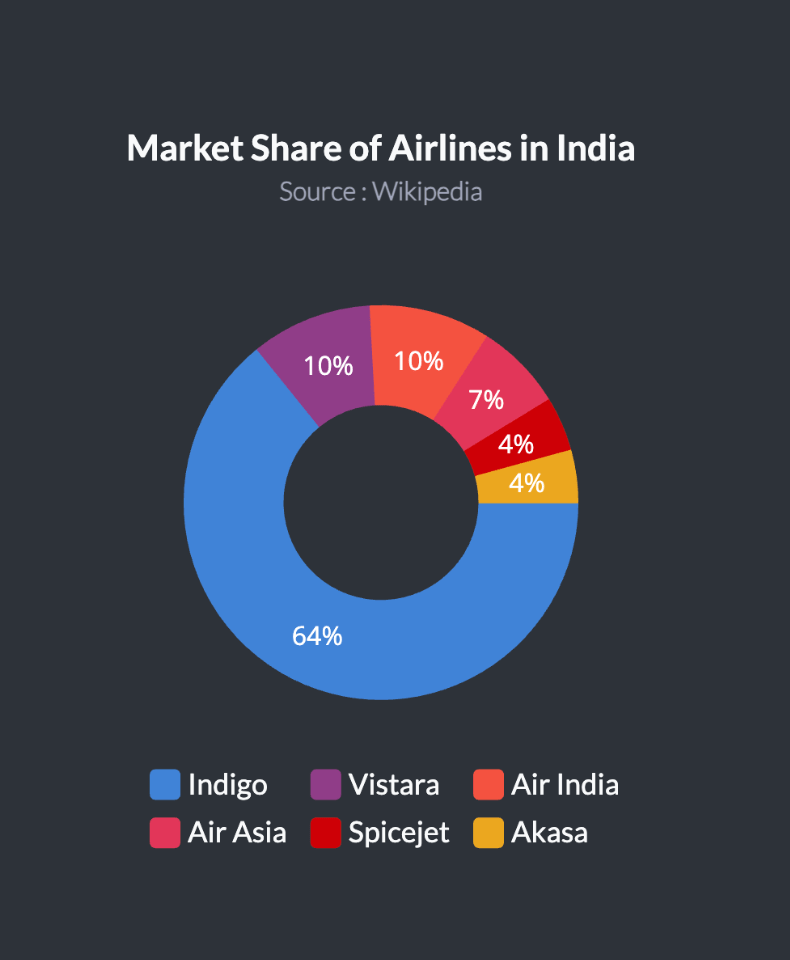
However, only a handful of major players dominate the current market. The graph below highlights the key players and their respective market shares.
To understand how the Indian aviation landscape evolved, it is essential to examine the rise and fall of past airlines. Kingfisher Airlines, launched by Vijay Mallya in 2005, and IndiGo, founded in 2006, entered the market around the same time. Kingfisher’s motto, “Fly the Good Times”, failed to resonate due to its king-size prices and operational inefficiencies. Indian consumers, being highly price-sensitive, preferred cost-effective options, even opting for inconvenient flight timings to save money. This misjudgment of market needs was a major misstep for Kingfisher and, later, Jet Airways.
Through a Kingfisher lens, its attempt to operate multiple hubs with premium offerings was unsustainable, given the high costs and operational inefficiencies. By contrast, through an IndiGo lens, the hub-and-spoke model thrived in the Indian market. IndiGo’s centralized hubs in Delhi and Mumbai optimized operations, maximizing fleet utilization and offering affordability—a winning strategy in a price-conscious market.
Point to Point ModelHub & Spoke Model
At its peak, Kingfisher Airlines held a 19.9% market share, closely matched by IndiGo’s 17.6%. However, the key difference lay in their fleet sizes. Kingfisher operated a larger fleet, resulting in higher fuel costs and greater operational expenses, which were unsustainable. IndiGo, on the other hand, achieved a similar market share with fewer planes, demonstrating the efficiency of its low-cost model and centralized operations. This contrast is highlighted in the chart below.
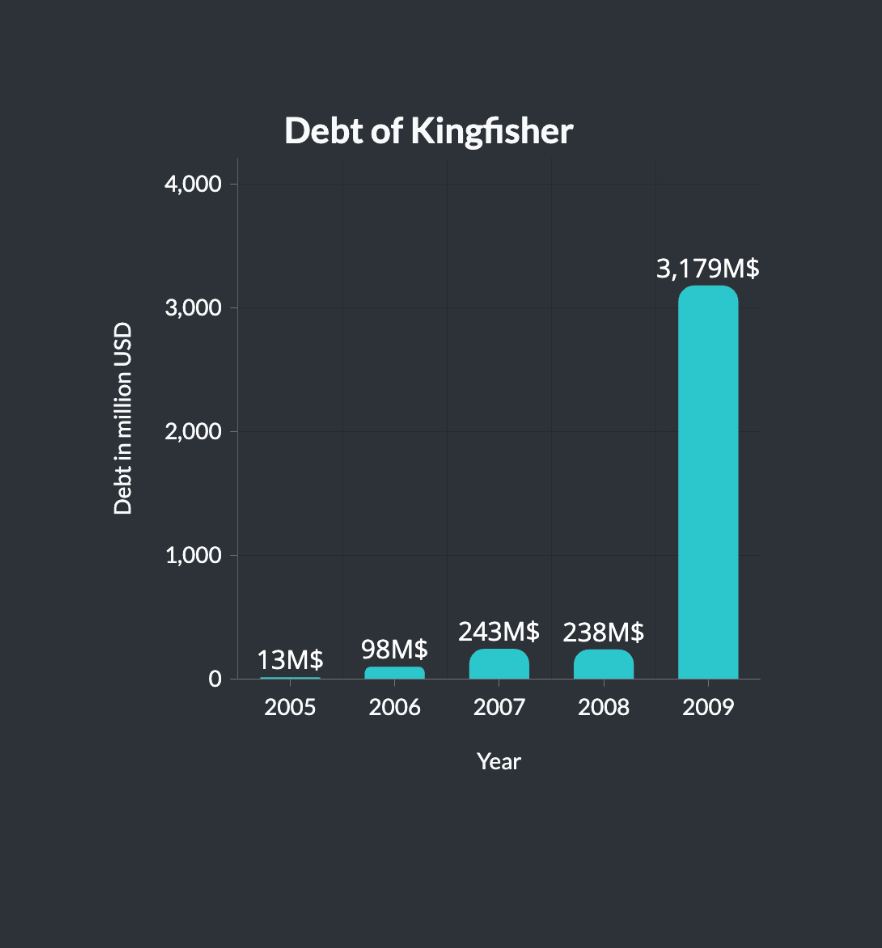
This disparity led to Kingfisher’s fuel ratio to revenue skyrocketing to 50%, an unsustainable figure. Combined with debts exceeding $3 billion USD, the airline ceased operations. Similarly, Jet Airways, which prioritized luxury over affordability, failed to cater to the Indian market’s value-driven preferences, ultimately leading to its downfall.
GoAir, on the other hand, was a low cost carrier, which was doing okay until it faced significant operational challenges due to persistent engine issues with its Pratt & Whitney-powered Airbus A320neo aircraft. By May 2023, these problems led to the grounding of 25 aircraft, accounting for 50% of its fleet. (AirInsight) This substantial reduction in operational capacity severely impacted the airline’s profitability and market presence, leading to insolvency in 2023.
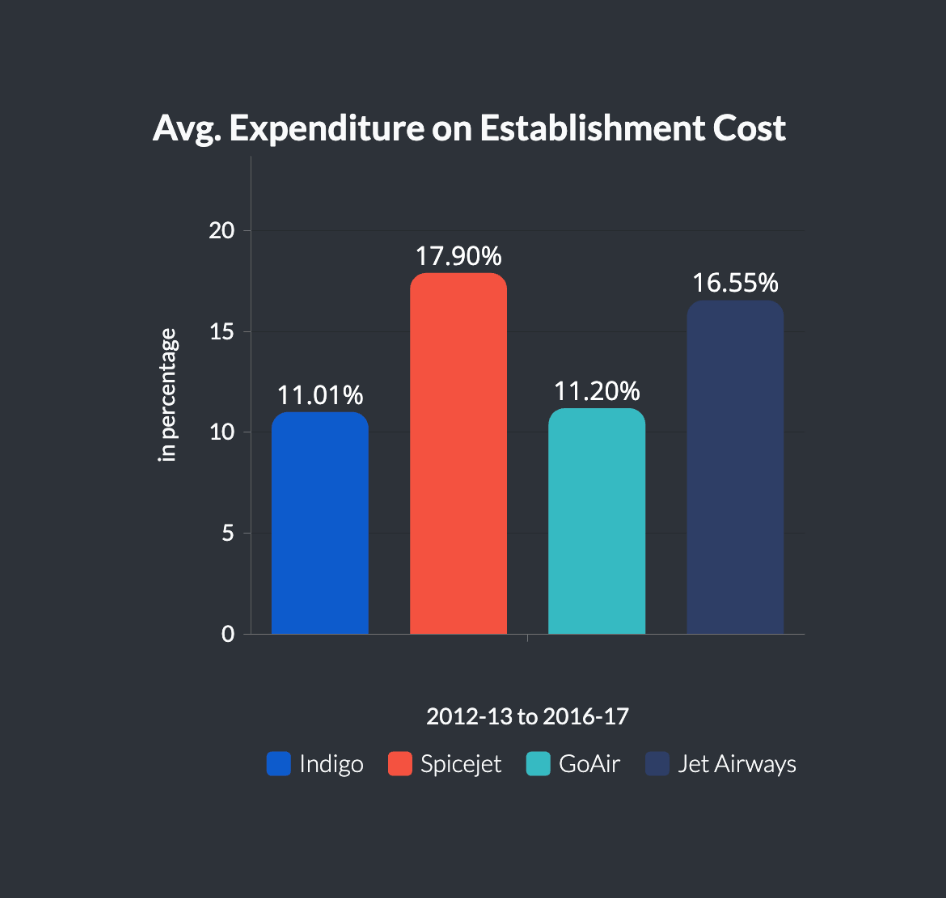
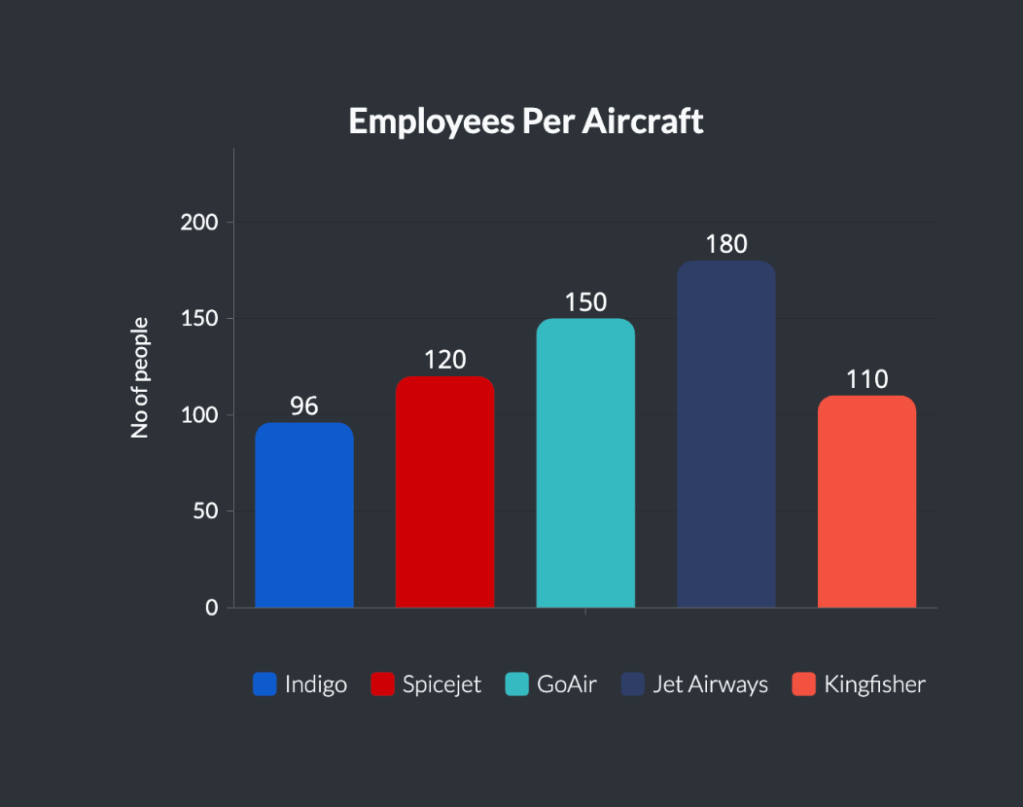
So, while all the airlines fail, how did Indigo Succeed. Firstly Indigo undestood the Indian Market. IndiGo’s success lies in its deep understanding of the Indian aviation market and its ability to learn from competitors’ mistakes. As the saying goes, “Smart people learn from their mistakes, but the real smart ones learn from others’ mistakes.” IndiGo identified the need for low-cost aviation and made strategic decisions to keep costs sustainable. They eliminated frills such as in-flight meals and IFE (In-Flight Entertainment) screens, focusing instead on affordability. With 96 employees per aircraft and an average expenditure to establishment cost of only 11.01%, IndiGo maintained exceptional cost efficiency.
IndiGo also pioneered the Sale and Leaseback model, which became a cornerstone of its financial sustainability. By ordering 100 aircraft from Airbus in one of the largest deals in aviation history, IndiGo secured bulk discounts, reducing the cost of each aircraft by 50%. For example, an aircraft costing ₹800 crore was acquired for ₹400 crore. They then sold these planes to companies like BOC Aviation for ₹500 crore, booking a profit of ₹100 crore, and leased the planes back. This model ensured both short-term liquidity and long-term sustainability.
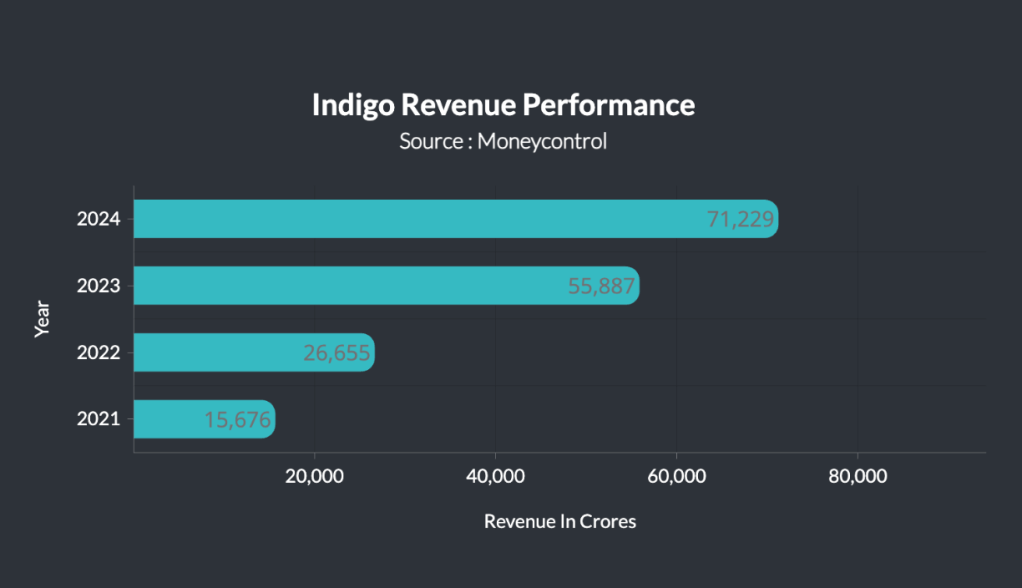
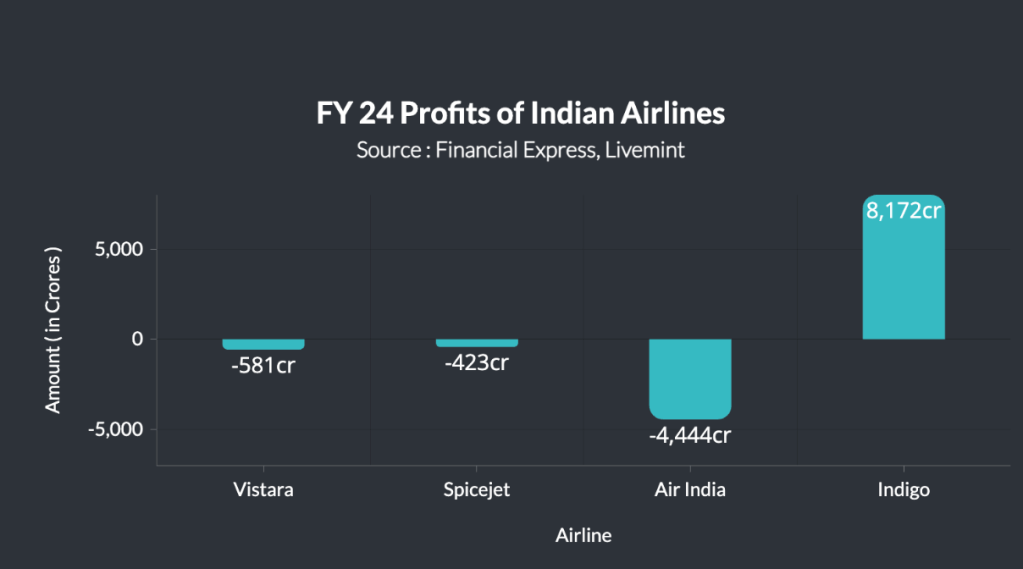
Coupled with its efficient hub-and-spoke model, IndiGo has demonstrated consistent revenue growth and, notably, was the only Indian airline to book a profit in 2024.
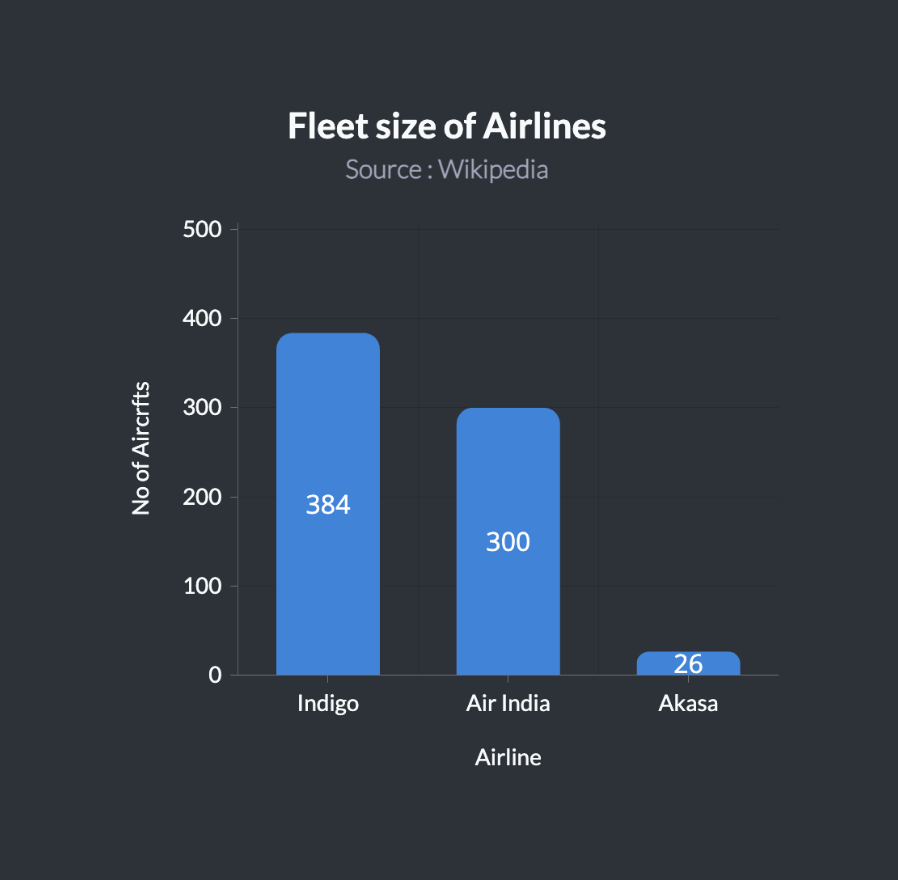
IndiGo also operates the largest fleet in the Indian aviation sector, giving it a significant operational edge.
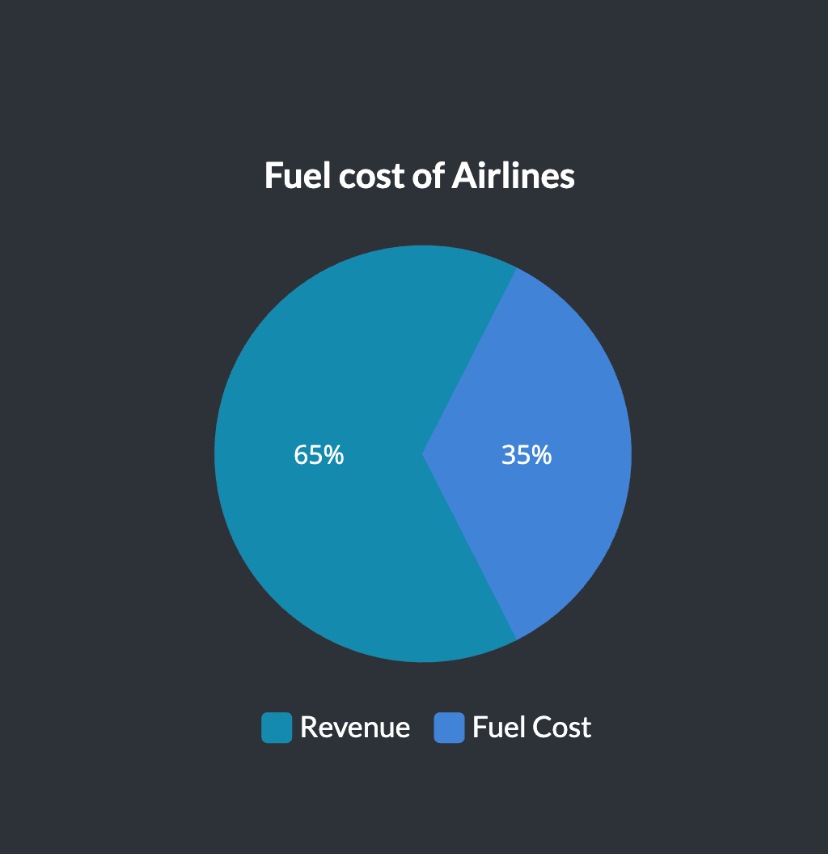
Despite IndiGo’s success, fuel prices remain a major challenge for Indian airlines. Fuel costs account for 35-40% of airline revenue, severely impacting profitability. This high dependency on fuel makes airlines vulnerable to price fluctuations.
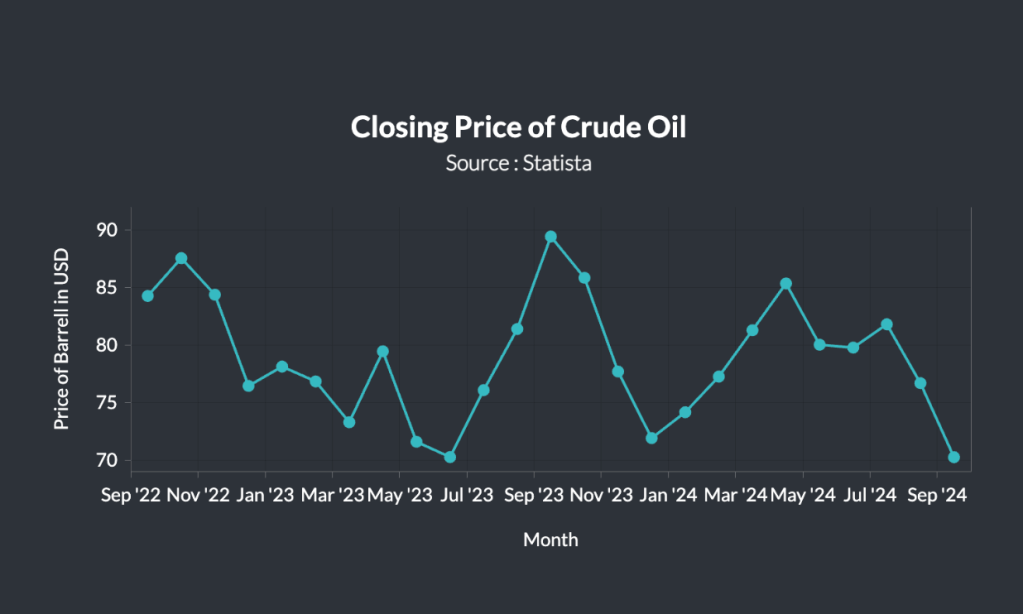
Fuel prices are also highly volatile due to geopolitical factors. With a significant portion of crude oil imported from Russia, the ongoing conflict has introduced unprecedented uncertainty, further destabilizing airline profits.
In India, VAT on Aviation Turbine Fuel (ATF) ranges from 4% to 30%, depending on the state—examples include Andhra Pradesh and Telangana with lower rates (4%) and Maharashtra and Delhi imposing higher rates (up to 30%). In contrast, globally, ATF taxes are significantly lower, often below 20% or even tax-exempt in many regions. This disparity puts Indian airlines at a competitive disadvantage, inflating costs and squeezing profit margins compared to international carriers. This has led to the cease of Operations for many airlines.
Now coming to the almost duopoly of Indian Aviation and How air India plans to Crush Indigo. Air India placed an order for 470 planes with the option to buy 370 more. Unlike IndiGo’s focus on short-haul routes within Asia, Air India’s fleet diversity includes long-haul aircraft, allowing it to dominate lucrative international markets. Air India’s consolidation of its four brands—Air India, Vistara, AirAsia India, and Air India Express—into two streamlined entities (full-service and low-cost carriers) enhances operational efficiency. The integration aligns domestic and international strategies, with a focus on premium services and price-sensitive markets. Furthermore, Air India’s investment in on-time performance (90.8% vs IndiGo’s 87.5%), customer experience, and Tata’s financial muscle positions it as a premium alternative to IndiGo’s budget model.
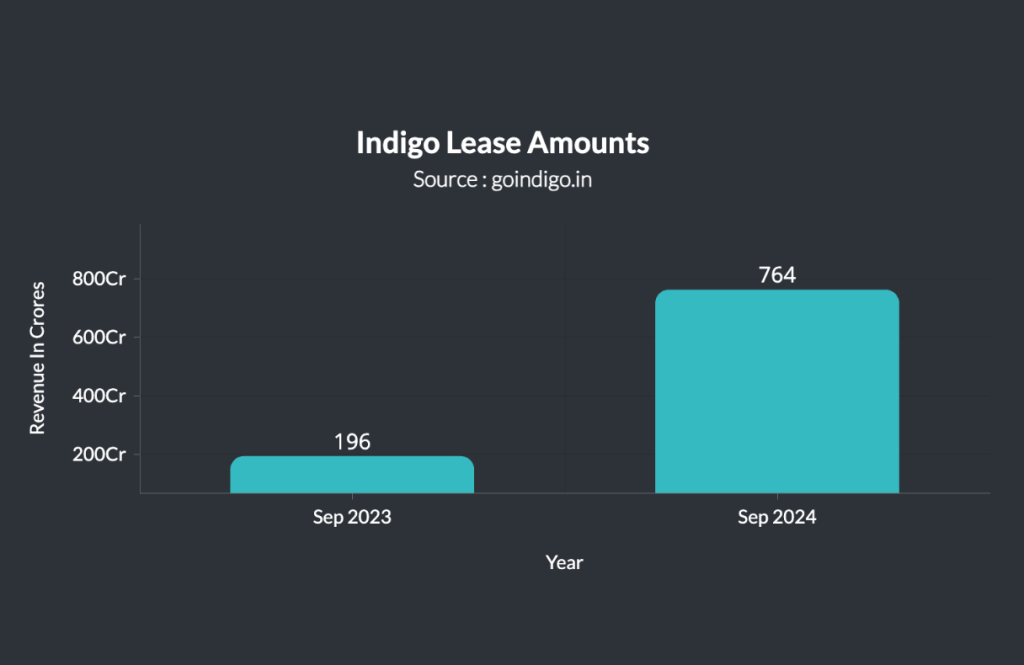
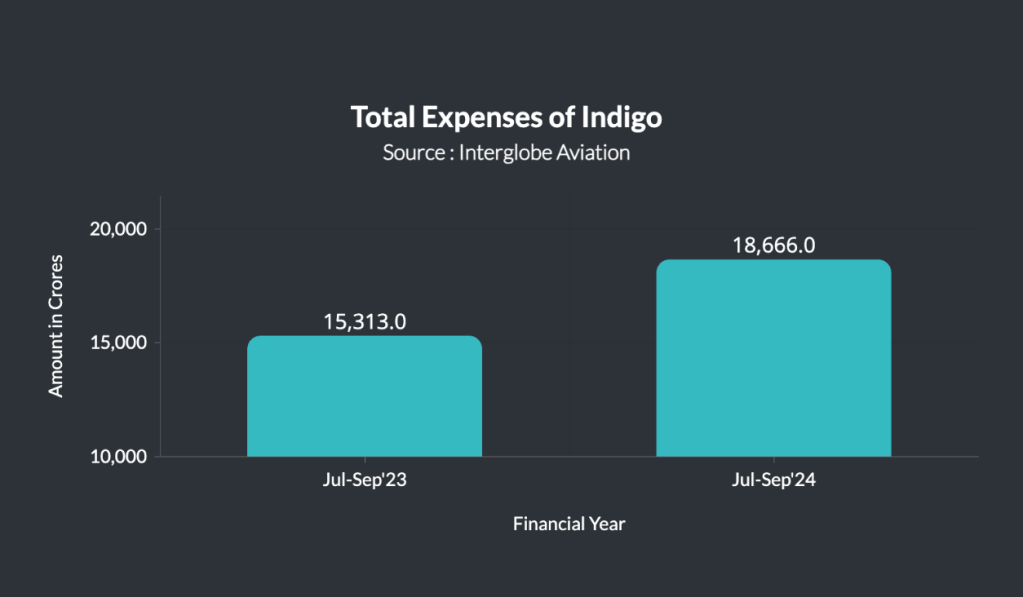
While Air India aggressively expands its fleet and operations, IndiGo finds itself navigating turbulent skies. The airline reported a staggering ₹3,000 crore increase in expenses compared to the previous financial year, driven in part by a ₹586 crore rise in lease payments.
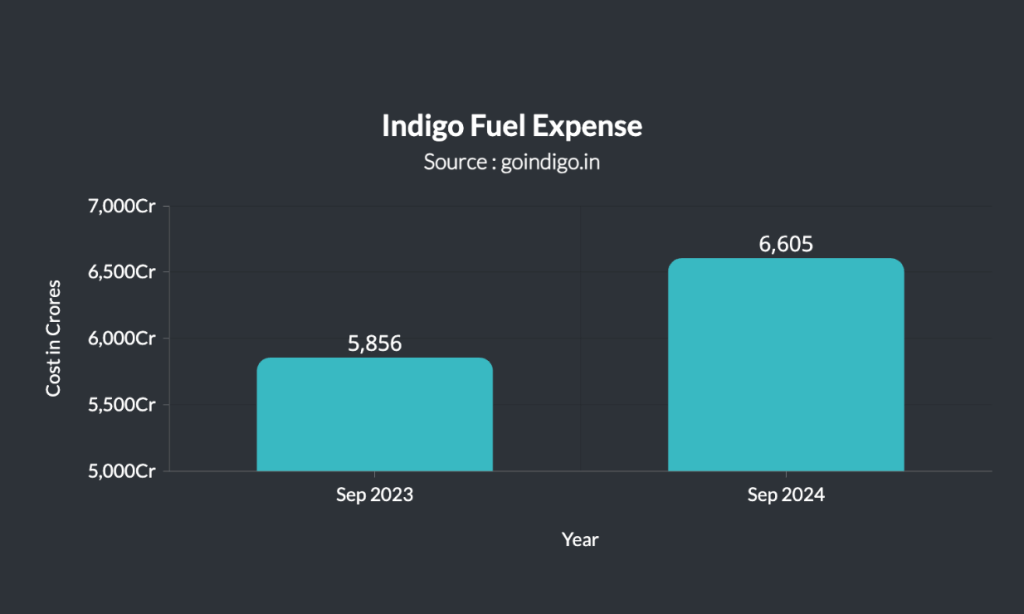
In addition, the volatile fuel market has further strained IndiGo’s finances, with fuel costs surging by an additional ₹800 crore compared to the last financial year. The ongoing geopolitical instability, particularly the reliance on Russian crude oil, has added uncertainty to fuel pricing, exacerbating the airline’s challenges.
These escalating expenses have culminated in IndiGo reporting a net loss of ₹987 crore for the July-September 2024 quarter, marking a sharp turn from its previously consistent profitability.
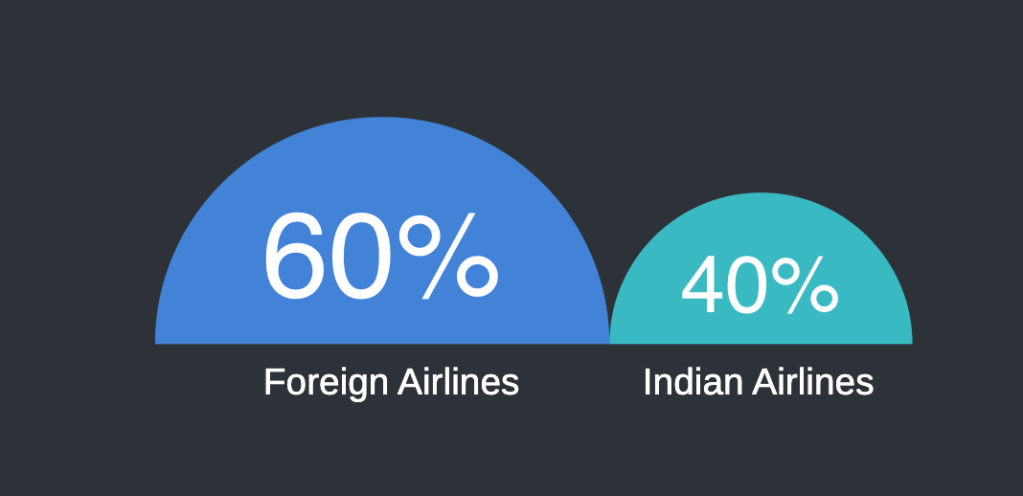
The future of aviation in India is set for unprecedented growth, driven by rising passenger demand and strategic expansions. By 2027, air travelers are projected to reach 400 million, positioning India as the third-largest aviation market globally. To meet this demand, Indian airlines must focus on international connectivity, reducing reliance on foreign carriers, which currently carry 60-65% of India’s international passengers.
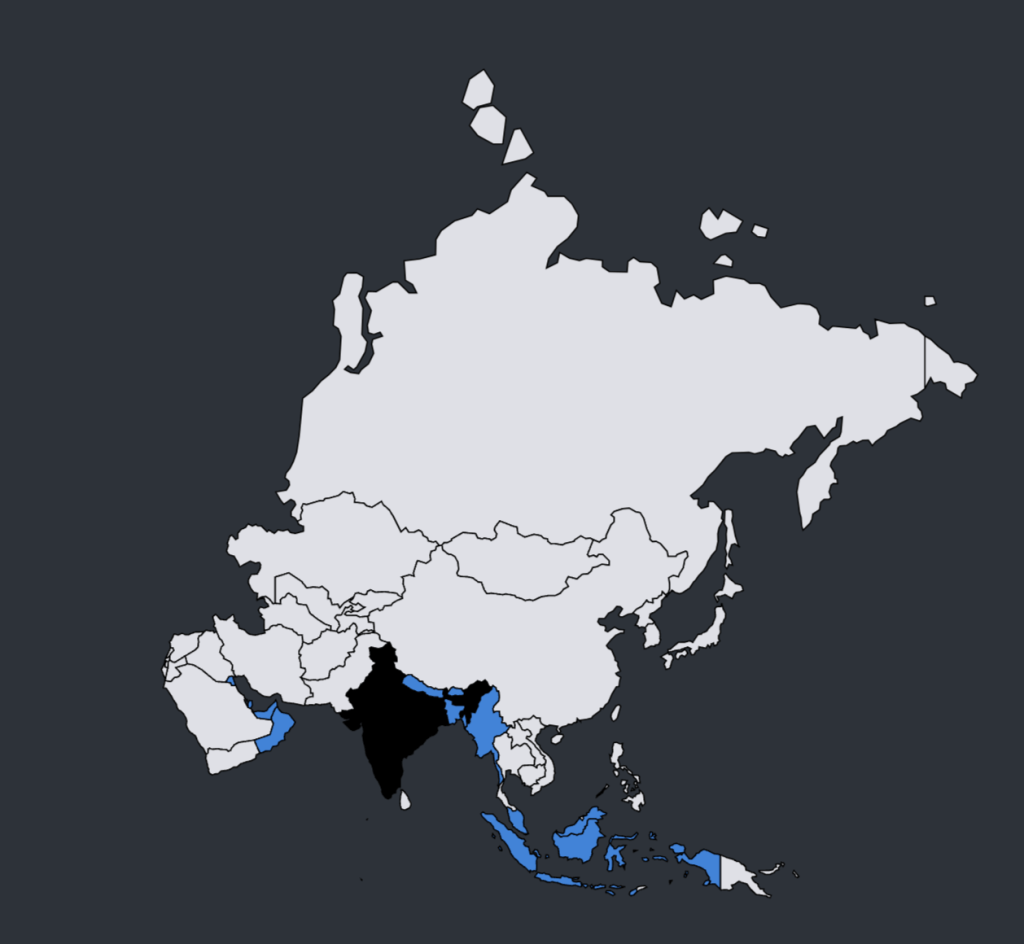
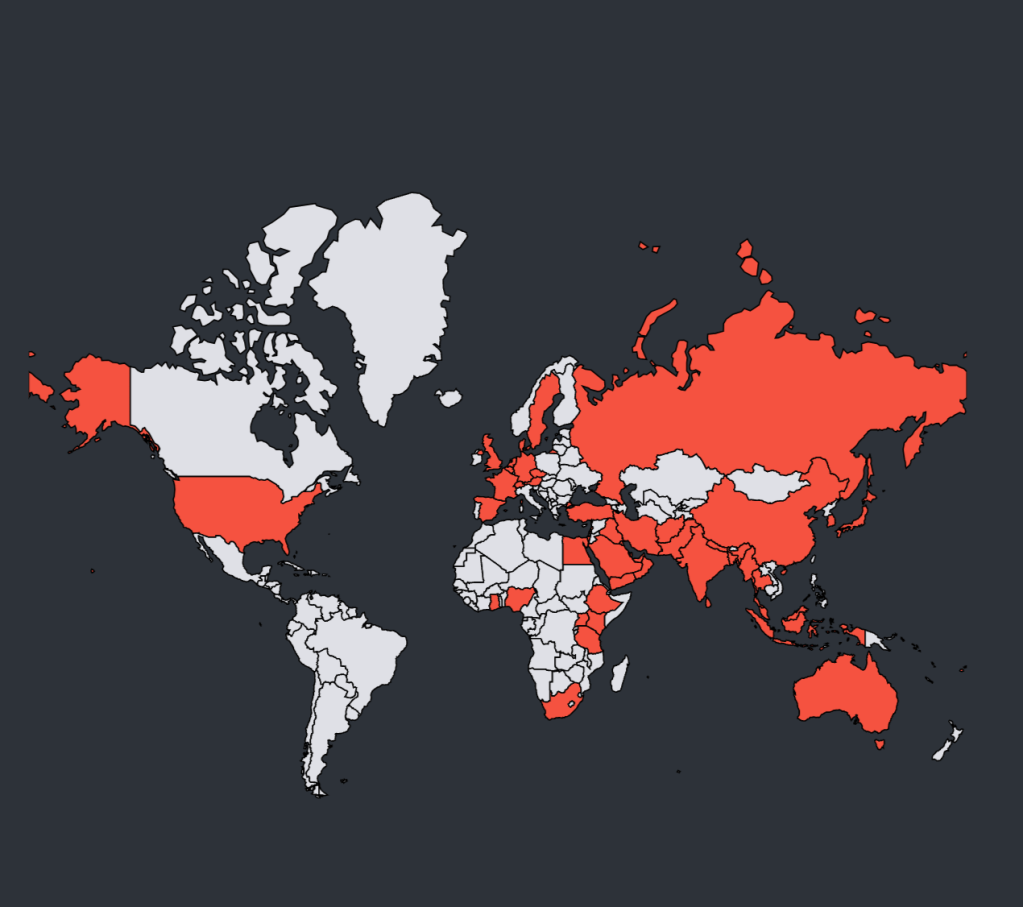
Air India, with its Star Alliance membership and long-haul fleet diversity, is well-positioned to dominate the international segment. It already serves 39 international destinations across five continents, leveraging exclusive airport slots and alliances for seamless connectivity. IndiGo, despite its dominance in the domestic market with a 58% share, has limited international reach, operating only to the edges of Asia. Expanding beyond short-haul routes is critical for IndiGo to stay competitive globally.
Indigo OperationsAir India Operations
Operational efficiencies like route optimization and on-time performance are essential to attract international passengers. While Air India leads in on-time performance (90.8% vs. IndiGo’s 87.5%), both carriers must invest in customer experience and fleet expansion. Lowering Aviation Turbine Fuel (ATF) taxes and improving airport infrastructure will also be crucial for enabling Indian airlines to capture a larger share of international markets, boosting their global competitiveness.
This is a personal reflection on airlines I’ve experienced so far—definitely not an exhaustive list, but one grounded in firsthand journeys. For clarity, these reviews are largely from a Business Class perspective, though I’ll share insights on Economy cabins wherever relevant.
This blog is designed to serve as a dedicated space for airline reviews, appreciation, and comments about international flights. I’ve chosen to exclude smaller regional or low-cost carriers such as Ryanair, Spirit, Scoot, Indigo, Drukair, Air Arabia, and others, focusing instead on global airlines offering full-service experiences.
At the end, I’ve also included a bucket list of airlines I’m eager to explore. As I tick them off, I’ll add them to the main list and keep updating both sections to make this a truly comprehensive flight review page. After all, flying isn’t just about getting from A to B—it’s part of the journey itself!
The sky is not the limit, it is where adventures begin.
Emirates
Emirates has set the gold standard for global air travel, and having flown in all three classes—Economy, Business, and First—I can confidently say it delivers a consistently exceptional experience. Each cabin offers unique features, making Emirates a favourite of mine for international flights.
Economy:
Emirates Economy feels a step above with its thoughtful service and high-quality meals served with metal cutlery, offering an elevated experience rare in this class. The cabins are pristine, and the seats feel fresh and modern, making even long-haul flights enjoyable. Details like “Do Not Disturb” stickers, polaroid souvenirs, and generous luggage allowances enhance the journey. The fleet’s consistency in quality adds to the appeal, though the higher price can be a deterrent.
Business:
Emirates Business Class offers an unmatched blend of luxury and efficiency. From personalized greetings to immaculate cabins, every detail is thoughtfully curated. The food rivals fine dining, and the A380 onboard lounge provides a unique, exclusive space mid-flight. The ground experience is equally stellar, with the massive Dubai lounge offering diverse food options and luxury amenities. Onboard, the BVLGARI amenity kits and impeccable attention to detail, like frequent towel service, elevate the journey. The older cabins may not match the newer ones in freshness, but the service quality is always consistent and the seats are very comfortable and spacious.
First:
Flying Emirates First is nothing short of a dream. The experience begins with a chauffeured Mercedes S-Class transfer and continues in a private suite with closing doors, a personal minibar, and a full lie-flat bed embellished with the signature Emirates gold touches screaming opulence. The meals, served on demand as a multi-course fine dining experience, are exquisite, though the only gripe I have is that I couldnt have a dish off the menu as it was not avaiable. From Porsche Design pyjamas to the sheer quality of the amenities to Dom Perignon Champagne, every detail exudes opulence. Even the smallest touches, like personalized greetings and perfectly laid table settings, showcase Emirates’ commitment to excellence. This is air travel at its finest and truly sets a benchmark for luxury. Probably the best Flight Experience I have ever had in my life ever, but of course with a steep price tag.
Qatar Airways
Flying with Qatar Airways has been an absolute joy, no matter the class. I’ve experienced both their economy and the much-celebrated Qsuite, and let me tell you—it’s the attention to detail that truly sets them apart.
Starting with economy, I was genuinely impressed. The cabin felt spacious, the seats were comfortable with great legroom, and the adjustable headrest made long hours manageable. That said, I did feel the bedding in economy could be improved—it’s decent, but after a few hours, I found myself wishing for something softer. The food, however, exceeded my expectations. From the freshly baked bread rolls to the flavorful main courses, every meal felt curated with care. The staff’s warm service added an extra layer of comfort, always checking in with a smile and making sure I had everything I needed.
Then, there’s the Qsuite—a completely different league. From the moment I stepped into the suite, I was blown away by the incredible privacy, with sliding doors that felt like I was in my own mini-cabin. This feels not like a business class but a first-class suite. The lie-flat seat, paired with luxurious bedding, made for a restful journey, though I almost didn’t want to sleep with such an extensive à la carte menu calling my name. The food? Simply exquisite. Every dish tasted as if it was prepared by a chef, with bold flavours and impeccable presentation. The table layout with a candle is also very well curated. The seat design in ergonomic and very spacious with enough space for your goodies too. All in all a wonderful experience.
One of my favourite moments was the layover at Hamad International Airport. The Al Mourjan Lounge is something else entirely—its design, serenity, and culinary offerings make it feel more like a luxury hotel than an airport lounge. Sipping on fresh juice while watching flights take off through the floor-to-ceiling windows was an experience I’ll always treasure.
Air India
Air India often gets a bad rap, but my experience flying with them internationally—twice to London and Milan—tells a different story. With four flights under my belt, I’ve had the chance to assess what they offer, and while there’s room for improvement, they deserve more credit than they get. Let’s start with the food, which was nothing short of perfection for an Indian palate. The flavors were bold, authentic, and spicy—the kind of meals you don’t expect at 30,000 feet. As someone who genuinely enjoys airplane food, Air India delivered a satisfying culinary experience. The lounges, however, are where things truly shine. The Encalm Lounge in Delhi and the Adani Lounge in Mumbai are great. They’re modern, elegant, and have plenty food options to make the pre-flight experience reach new heights. I didn’t mention these lounges in other airline reviews because those aren’t the carrier’s flagship offerings, but they are being used by multiple airlines. The seats in business class were lie-flat but stuck in a dated 2-2-2 configuration. While functional, they don’t offer the privacy or direct aisle access you’d expect today. However, with the new A350 fleet rolling out, Air India is finally moving to a 1-2-1 configuration, which is a step in the right direction. The service was average—neither exceptional nor poor—but small touches like the comfortable pajamas and a well-stocked amenity kit stood out as thoughtful details. Air India has a solid product with plenty of potential. With fleet upgrades and consistent service improvements, it can easily rank among the top carriers. For now, I’m optimistic and look forward to flying their new fleet soon.
ITA airways
Flying with ITA Airways, Italy’s main carrier based in Rome, was an experience of contrasts. While the cabin design reflected modern luxury and fine Italian aesthetics, the overall journey left much to be desired. Let’s start with the positives. The seats were beautifully designed, modern, and exuded a sense of Italian luxury that one might expect. Premium economy and economy cabins looked spacious and well-thought-out, with sleek touches that stood out. My seat was comfortable and roomy, and the two amenity kits were a pleasant surprise. The first included a face mask, and the second was a unique hygiene kit with seven different lotions and applicators—an impressive and thoughtful touch. Unfortunately, everything else fell flat. The service was underwhelming, and I noticed a pattern that I’m hesitant to overlook—it felt almost racist. Darker-skinned passengers, including myself, were given noticeably less attention. I rang the call button and waited over 30 minutes for a response, only to give up entirely. It was disheartening and frustrating, to say the least. The food was another letdown. With Italy being a culinary powerhouse, I had high hopes after seeing the menu, but the reality was bland and uninspiring. For an Italian airline, the food failed to capture even a hint of the country’s gastronomic excellence. While the cabin design was impressive, the lackluster service and disappointing food made the flight unenjoyable. ITA Airways has the potential to be exceptional, but until they address these glaring issues, I can’t say I’d willingly fly with them again. And yes—the best part of the flight was that it eventually ended.
EgyptAir
EgyptAir, the flagship carrier of Egypt, left me underwhelmed. While there are aspects worth noting, the overall experience felt outdated, disorganized, and riddled with inefficiencies. The journey starts with the on-ground experience, which I can only describe as weird—a term I never thought I’d use in an aviation review. At immigration, locals seem to breeze through as if entering a shopping mall, with minimal oversight or care. It gave the whole process an unsettling lack of seriousness, a major red flag for any international traveller. The aircraft itself was equally disappointing. The fleet is old, with seats that feel worn out, filthy, and far from modern standards. Comfort is not something EgyptAir delivers, and the lack of attention to detail is glaring. The food onboard is mediocre at best—edible but far from memorable. As for the crew, they appeared completely uninterested in their duties. On two separate occasions, I noticed the flight attendants spending extended periods in the cockpit, and at one point, the pilot was casually seated next to me. It made me genuinely question who was controlling the plane—a moment of humour but also concern. The underlying issue seems to stem from budget constraints. As a government-run airline, it’s clear that resources are lacking to modernize the fleet or improve service. Privatization feels like the only path forward, but given the current state of affairs, the future for EgyptAir doesn’t seem particularly bright. Unless significant changes are made, EgyptAir risks falling further behind in a highly competitive industry. For now, it’s hard to recommend unless absolutely necessary.
Kenya Airways
Kenya Airways, the Pride of Africa, has left me with mixed feelings over the years. My first two journeys with Kenya Airways, back in 2015, were from India to Nairobi and back. At the time, the experience was acceptable. The service was decent, the cabin felt fresh, and the food was okay—not great, but nothing to complain about. It was a solid, middle-of-the-road experience. Fast forward to 2024, and the story took a sharp turn for the worse. The service on my recent flights was, quite frankly, shocking. I can only describe it as mean and rude. At one point, we were scolded for simply asking for butter. It left me stunned—what airline considers that acceptable behaviour? While the food was a passable 6/10, the standout was the coffee. It was easily the best I’ve had on any airline, a small highlight in an otherwise disappointing experience. The cabin, however, was a different story. The seats were filthy, and my legrest was broken. Despite the crew’s attempts, they couldn’t fix it, leaving me without proper support for five long hours. It’s a basic expectation for a seat to be functional, and this failure added to the frustration. Kenya Airways clearly has potential, as my earlier flights showed, but their recent performance has been a disappointment. Until they address these glaring issues, I can’t say I’d look forward to flying with them again. At least the coffee gave me a reason to smile—briefly.
Air Seychelles
Flying with Air Seychelles was a mixed experience that left me hopeful for its future but aware of its current shortcomings. The airline operates an okay fleet of A320s, which are functional but lack the wow factor that other regional carriers might offer. The cabin itself is fresh and clean, which is always a plus, though the seats could use an upgrade in both design and comfort. On the bright side, the ample legroom and good-quality bedding and blankets made the journey reasonably comfortable. When it comes to food, Air Seychelles falls short. The meals onboard were below average, lacking flavor and creativity, though they were not entirely inedible. The lounge experience was better, with a pleasant and welcoming atmosphere, though the food offered in the lounge was just average. The standout feature of my experience was the hospitable staff. The crew were warm, and attentive, and did their best to elevate the overall journey with smiles and genuine care. This level of service added a much-needed positive touch to the flight. It’s clear that Air Seychelles has scope for improvement. With better onboard meals, upgraded seating, and a focus on refining the small details, they could elevate their offerings significantly. For now, it’s a functional airline with potential—but it has a way to go before truly standing out.
Finnair
If I had to sum up Finnair in one word, it would be ‘shocking’—in the best way possible. This airline redefines European aviation with a perfect blend of Nordic design, hospitality, and thoughtful details that elevate the flying experience. The journey began on the ground at the Helsinki Lounge, and it was fantastic. Minimalist yet luxurious, the Nordic design shone through every corner. The food, coffee, and service were exceptional, setting the tone for what was to come. Finnair’s attention to detail is remarkable, and their welcoming ambience is second to none. Onboard, I was equally impressed. The cabins were fresh, exuding the subtle scent of Nordic wood and blueberries. The lie-flat seats are ergonomic and unique—no traditional back recline, but rather a spacious design where the leg rest transitions into a comfortable lie-flat experience. It’s innovative and surprisingly comfortable. The welcome drink—a delicious blueberry juice—was served in an Iittala Nordic glass, a detail that felt so thoughtfully Finnish and elegant. It made for a stunning first impression. The menu promised a great culinary experience and was delivered. While it wasn’t the best meal I’ve ever had onboard, it was definitely commendable. The service was warm, with a crew that genuinely cared for passengers, ensuring a delightful experience throughout. Finnair is easily the brightest gem in European aviation, blending Nordic sophistication with heartfelt hospitality. It’s minimalist luxury at its finest, and I can’t wait to fly with them again.
Garuda Indonesia
With Garuda Indonesia being a multiple-time winner of SKYTRAX’s Best Airline award, my expectations were sky-high. Unfortunately, my experience turned out to be a mixed bag. The lounge in Denpasar left much to be desired. It felt basic, with plenty of room for improvement. However, the in-flight service was exceptional, showcasing the renowned South Asian hospitality. The crew was warm and welcoming, which elevated an otherwise average flight experience. The seats in business class were comfortable and well-maintained. However, the food was a complete letdown—a total miss in terms of flavor and presentation. Adding to the disappointment, the amenity kit was underwhelming, lacking the thoughtful touches you’d expect from a premium airline. The soft product was where things really fell apart. No menus were distributed. Worse still, the crew had no information about the food, forcing me to look it up myself. The blankets were scratchy and even gave me rashes, while the provided headphones were so poor they seemed to amplify noise rather than cancel it. The airline needs serious upgrades in its soft offerings to stand out. While I wouldn’t actively avoid Garuda in the future if it offered the best schedule or value, I wouldn’t go out of my way to choose it again for business class either.
Thai Airways
I’ve flown Thai Airways twice on the short SIN-BKK route, and while the experience was acceptable for a short flight, I can see potential issues for longer journeys. Starting with the positives, the food and service were good. The crew was attentive, and the meals served onboard were flavorful and satisfying. Thai’s business class seats convert into full flat beds, which is always a plus, especially for long-haul flights. However, the 2-2-2 configuration lacks privacy, a significant drawback for business class passengers accustomed to more modern layouts like 1-2-1. The IFE screens were damaged and dated, detracting from the entertainment experience. Additionally, the cabin offers no dedicated storage space, making it inconvenient to stow personal items during the flight. The lounge was quite good, with delicious food that stood out, but it wasn’t perfect. It lacked views, and the seating options were limited in terms of variety, which made it feel less premium compared to lounges offered by competitors.
Oman Air
Oman Air truly stands out as a hidden gem in the world of aviation, delivering an exceptional business class experience that exceeds expectations. From its lounge to its seats to its service, the airline has mastered the art of luxury travel. The journey begins at the brand-new Muscat airport, where Oman Air’s lounge is nothing short of fantastic. It’s the perfect place to relax before a flight, setting a high standard for what’s to come. Onboard, Oman Air features apex seats in a 2-2-2 configuration. While this layout might seem unpopular at first glance, each passenger enjoys direct aisle access, thanks to the innovative design. Oman Air’s attention to detail extends to its amenities, which are among the best in business class. Partnering with Amouage, the amenity kits feel premium and high-end. The inclusion of pajamas and slippers elevates the comfort level further, offering a first-class touch to a business class experience. The dine-on-demand concept is a standout feature. You can enjoy two meals during the flight, and the food quality and presentation rival what you’d expect in first class. The vegetarian biryani I had was one of the best dishes I’ve ever experienced in the air. The table setup and plating were impeccable, showcasing the airline’s commitment to excellence. In a time when many airlines are cutting back, Oman Air is investing in creating a superior business class product. It’s refreshing to see such dedication to quality.
TurkishAirlines
Flying with Turkish Airlines is not just a journey; it’s an experience in luxury and thoughtfulness, starting long before you step onboard. From the lounge to the cabin, every detail exudes excellence and hospitality.Let’s begin with the lounge in Istanbul, which is hands-down the best I’ve ever seen. With features like an F1 mini racing track, multiple live cooking stations, an incredible food spread, and elegant décor, it’s a place where you can easily spend an entire day. It’s more than a lounge—it’s an oasis for travellers. The Istanbul Airport itself matches this grandeur, with luxurious seating and modern amenities that set it apart. Business class passengers enjoy perks like VIP immigration and, where necessary, a comfortable and private bus transfer to the flight. These touches make even the ground experience feel special. Onboard, Turkish Airlines continues to impress. The cabin is beautifully aesthetic, with modern seats that are both comfortable and stylish. The food deserves a special mention, with an onboard chef crafting meals that are as delicious as they are beautifully presented. The dessert trolley is a delightful finishing touch. The bedding in business class is luxurious and ensures a restful journey. The staff were warm and professional, enhancing the overall experience. From start to finish, Turkish Airlines delivers a seamless blend of comfort, luxury, and thoughtful details. I eagerly look forward to flying with them again—it’s truly a five-star experience in every way.
Royal Air Maroc
My journey with Royal Air Maroc from London Heathrow to Marrakech was, unfortunately, a letdown. While the cabin itself looked promising, the overall experience fell short in multiple areas, leaving much to be desired. The seats, though aesthetically pleasing, were broken, making it difficult to relax during the flight. For a premium airline, this level of maintenance was disappointing. Adding to the frustration, the food was bland and uninspiring, far from the flavorful cuisine you might expect from a Moroccan carrier. The service was equally underwhelming, with the crew coming across as dismissive and inattentive. It’s one thing to have mediocre food, but pairing it with poor service makes for a truly unpleasant experience. On a positive note, the amenity kit was surprisingly good, with thoughtful inclusions that added a touch of luxury to an otherwise disappointing flight.
Singapore Airlines
Having flown with Singapore Airlines countless times in both economy and business class, I can confidently say they’re among the best airlines in the world—though there’s always room for improvement. My experience in business class was nothing short of spectacular, particularly on my journey to Australia. The seats were spacious, thoughtfully designed, and perfect for long-haul comfort. Paired with an exceptional soft product—from delicious food to the warmest hospitality—it’s a level of luxury that few airlines can match. Even on older fleets, where the cabins show their age, the crew’s impeccable service and attention to detail more than made up for it. The Changi Lounge adds to the experience with its incredible variety of food, plentiful seating options, and fantastic views of the runway. Economy class, however, has been more of a mixed bag. As someone who’s flown over 30 times between India and Singapore during my two years of study in Singapore, I’ve seen the highs and lows. The food has always been consistently good, but the seating experience varies greatly by aircraft. On older 747s, the seats feel outdated and lack sufficient legroom, making longer flights less comfortable. On the A350s, however, it’s a completely different story. The cabins are fresh and modern, with thoughtful touches like USB charging ports, mobile phone holders, and adjustable headrests—all blessings on long-haul flights. Regardless of the class, Singapore Airlines’ service always shines. The crew’s professionalism and warmth elevate every journey. For me, Singapore Airlines is a benchmark for excellence, combining comfort, hospitality, and innovation. While economy could use upgrades on older fleets, their business class and overall consistency make them a pleasure to fly.
This blog explores Rome, Naples, and Pompeii. Between Naples and Rome, we spent 4 nights on the Amalfi Coast (click here). Now, let’s dive into the more metropolitan side of the trip. But, a quick disclaimer: I was a bit under the weather, so I couldn’t dive into every detail as much as I’d like. Plus, this trip was more about food and leisure, so forgive me if I skim over some iconic sights. Ok, now back to the blog!
Our trip to Italy kicked off with our arrival in Rome, though the welcome wasn’t exactly five stars. After navigating immigration lines that stretched out for nearly an hour, we found the airport wasn’t the best either. We hurried over to catch a train to Rome Termini, only to be met with yet another line—this time for tickets. With the service queue looking like something out of a marathon, we ditched the wait and grabbed tickets on an app called Omio (seriously, do yourself a favor and download the app). Even with all that hustle, our train still departed 30 minutes late because let’s just say Italy is known for not being on time unlike Japan or Switzerland.
At Rome Termini, where we had a lunch that reduced the travel fatigue by quite a bit. Lunch at the popular joint Wagamama included the katsu curry, gyozas, and edamame were exactly what we needed to refuel—washed down with some refreshing drinks, of course. Feeling more refreshed, we headed back to the station for our 12:30 train, only to find it delayed by two hours. At that point, it felt like all of Rome had hit pause, with trains seemingly going nowhere. All trains were delayed, some even for 5 hours. Even once we boarded our .Italo train, uncertainty lingered, but when it finally got moving, it was all smooth sailing at 300 km/h. We reached Naples in just an hour.
Rome Airport Train StationWagamamaWagamama Food
Upon arriving in Naples, we hopped into a 15-euro taxi that took us to our accommodation, Its Room, located in Centro Storico, the old town heart of the city. The place was surprisingly spacious for its price, and the location? Absolutely perfect—a solid 10/10. Naples is a city that takes time to grow on you. It’s not the cleanest or most pristine place, especially when compared to other European cities. The streets are narrow, the buildings show their age, and there’s a sense of organized chaos that’s always in motion. But if you give it a chance, Naples reveals its real gems and charm in unexpected ways.
A square in NaplesNaplesNaplesNaples
Our first stop was Museum Café, where we were greeted by a lively, energetic vibe that made us feel right at home. The staff was warm and welcoming, and the drinks were a delight. We tried the classic Aperol Spritz, and thanks to a perfectly chosen prosecco, it stood out as one of the best we’ve had. The real star, though, was a drink made with basil and caper jam. It was like sipping liquid pesto, and I mean that in the best way possible—completely unexpected but absolutely delicious.
Msesum CafeMuseum Cafe
From there, we made our way to the Sansevero Chapel Museum, a masterpiece where art and architecture blend together. The sculptures here are so intricate, they seem to blend into the walls, giving the space a life of its own. A short walk later, we arrived at the Santa Chiara Church, an ancient structure dating back to 1340. While its medieval architecture stands out in a city as bustling as Naples, the interior left us feeling a bit underwhelmed. The peaceful cloisters offer a nice respite from the bustling streets, but compared to other churches we’d visit, this one didn’t leave as much of an impression. It’s worth seeing for its history, but don’t expect it to wow you.
Across the square, the Chiesa del Gesù Nuovo didn’t make much of an impression from the outside, but once you step inside, it’s a whole other story. The facade may have been recently deciphered as musical notes, but it’s the baroque interior that stuns. There are massive, intricate paintings by Francesco Solimena, and you’re left wondering where to even begin exploring its beauty.
Chiesa del Gesu NuovoChiesa del Gesu Nuovo
After a brief look at the grand exterior of San Carlo Theatre, we wandered through Galleria Umberto I, a cross-shaped, Art Nouveau-style shopping gallery with a stunning glass dome. The gallery’s murals, sculptures, and mosaic floors made it more than just a shopping destination; it was a visual treat. We ended our walking tour of the city at Piazza del Plebiscito, one of the largest squares in the Campania region, where the expanse of over 27,000 square feet made it feel even grander, though by the time we arrived, the square had settled into nighttime silence.
San Carlo TheatreGalleria Umberto I Naples by the sea
By now, our walk had brought us to the coast, where we strolled along the beachfront before heading to Diego Vitagliano for dinner. This place came highly recommended, and it didn’t disappoint. The pizza was hands-down the best of the trip. A crispy crust, perfect sauce, and melted cheese that hit all the right notes. While the Aperol left something to be desired, the pizza more than made up for it.
Diego VitaglianoPizza Margharetia
The next morning, we had a leisurely start with breakfast at All’Antico Vinaio, the famous sandwich spot. While the sandwich itself was good, the mix of hot and cold ingredients threw off the experience a bit. The contrasting temperatures didn’t quite blend well, and I would have much preferred if the whole sandwich had been served at a uniform temperature. The bread, however, was exceptional. After breakfast, we headed to Via Toledo, the main shopping street of Naples. This city has long been known for its master tailors, who have perfected the art of crafting high-quality suits at unbeatable prices. I stumbled upon historic stores offering a beautifully crafted suit for just €150—something hard to resist.
I wasn’t feeling too well, so I took a short rest back at our accommodation before we headed out for lunch at Re Larzonne, where we enjoyed a feast of pasta and eggplant parmigiana, alongside other delicious dishes. The service was top-notch, and the atmosphere was just right. I also recommend Volta, which was my second choice and another excellent spot for great pasta. We didn’t go inside the Archaeological Museum, but the building itself, viewed from the outside, is grand and imposing.
We spent part of the afternoon exploring Spaccanapoli, the narrow street that cuts straight through Naples in half. It’s alive with the chaos of the city and captures the very essence of what Naples is all about. Our last stop was the Naples Duomo, a magnificent Gothic cathedral that left a lasting impression. The intricate details, soaring arches, and rich history make it a place you can’t skip. Inside, the frescoes and chapels are awe-inspiring, with every inch of the cathedral steeped in grandeur.
Duomo InteriorArcheological Museum Duomo CeilingDuomo DomeDuomo Interior
Feeling recharged, we went back to Museum Café—yes, it was that good—for another round of drinks before our final culinary adventure of the day: Sorbillo. Gino Sorbillo is said to be one of the best pizza makers in the world, and this place lived up to its reputation. We waited about 30 minutes before finally being seated, but the piping hot Neapolitan pizzas arrived within 15 minutes. While the pizza was classic, pillowy and flavorful, I found myself preferring the crispy style from Diego Vitagliano. However, Sorbillo is definitely a must-visit. Another iconic spot we didn’t get to try was Da Michele, famous for its margarita pizzas. Though my health didn’t allow for another pizza adventure, the locals swear by it, so I’d recommend adding it to your list.
Margherita Marinara
The next morning, a €85 Uber took us straight to Pompeii—a must-visit when Mount Vesuvius is a constant presence in the distance. Pompeii, famously buried by ash after Vesuvius erupted in 79 AD, lets you step back in time and walk the streets as they were the day before the eruption. Without any plans or tours, we arrived, saw the long ticket line, and quickly bought tickets online—a real time-saver. As we wandered through the vast ruins, the sheer scale and history were overwhelming, leaving us in awe of the ancient world. The site also offers incredible photo opportunities, with the ruins and Mount Vesuvius as a dramatic backdrop. While we didn’t dive deep into its history, the scale and grandeur of the ruins were breathtaking, reminding me of sites in Turkey and Morocco. Divided into districts with houses, amphitheaters, and more, Pompeii is easy to get lost in, but we enjoyed going with the flow, soaking in the grandeur of it all.
Pompeii RuinsPompeii AmphitheatrePompeii RuinsGarden in PompeiiPompeii AmphitheatrePompeii Map
Exiting Pompeii, we strolled around the town and visited the main church, which, to be honest, had a calm and laid-back vibe. It’s neat, clean, and feels like a charming small town. For lunch, we landed at Cosmo, a fine dining spot also featured in the Michelin Guide. Not your typical trattoria, but a welcome shift. We indulged in unique dishes paired with wine and a highlight: cheeses served with six different jams. Mixing and matching the cheeses with the jams made for an exciting, flavorful experience. Definitely a spot worth visiting. After some gelato, finding a cab back to Naples proved challenging, so we hopped on a bus instead.
Once back in Naples, we aimed to get from Central Station to Via Toledo for some shopping. Thinking the metro would be quick, we were sorely mistaken. The metro lines were disorganized, the station filthy, and we waited a solid 15 minutes before one finally arrived. Nearly an hour later, we reached our destination—walking might’ve been faster!
After some shopping and exploring, we returned to the hotel, but couldn’t resist venturing out again. We stumbled upon Shanti Art, a lively spot for drinks, where the cocktails hit just right. For dinner, we opted for Jamon, a tapas spot on Piazza San Domenico. The bread, salad with stracciatella, and the vibrant atmosphere, facing the Obelisk, made it unforgettable. Still a bit hungry, we hopped over to La Pokeria for a make-your-own poke bowl. The food was fantastic, with a modern vibe that matched the meal perfectly. Highly recommended!
La Pokeria
The next day, we made our way to the Amalfi Coast—which I’ve written about in another post. From there, we caught a transfer to naples and a train from Naples back to Rome, which was thankfully on time. Rome—a city of legends, history, and countless stories. As a first-time visitor, I was beyond excited to explore every corner, having only ever read about its grandeur and seen glimpses in movies. The energy in Rome is palpable, with its cobblestone streets alive with the buzz of life, ancient ruins standing proudly alongside bustling cafes, and the perfect mix of chaos and charm that makes it so uniquely unforgettable.
We were staying in the Campo de’ Fiori area of Rome—a great spot since the city is spread out, with major sites on both sides of the Tiber River. Staying here meant we were perfectly in the middle, with everything just a short walk or metro ride away. Our accommodation, SuityRhome, was spacious and comfortable—lucky, since many of the good places were sold out. After all, Rome is one of the most visited cities in the world. We visited in 2024, which, in hindsight, wasn’t the best year for a trip. With 2025 being a Jubilee Year where millions of pilgrims flood rome, there were barricades and scaffolding at many major sites as they prepared for the grand event.
Our first stop: the Pantheon, one of Rome’s best-preserved ancient monuments. Walking inside, you’re instantly struck by its massive dome—the largest unsupported dome in the world. The oculus at the top lets in natural light, creating a magical atmosphere. It’s impossible not to feel the history and grandeur of the place.Tip: buy tickets in advance, or you’ll spend a good chunk of time in line.
Next, we made our way to the famous Trevi Fountain, a masterpiece of Baroque art and arguably the most beautiful fountain in the world. It’s said that if you throw a coin over your left shoulder into the fountain, you’re destined to return to Rome—naturally, we couldn’t resist. The fountain was as stunning as expected, but the crowds were another story. It’s hard to appreciate its beauty when you’re sharing it with half the city. Oh, and keep an eye out for scammers. But the highlight for us? Grabbing gelatos from Venchi, just around the corner from the fountain. Hands down, the best gelato of our entire trip—don’t miss it! Next up, we headed to the Chiesa di Sant’Ignazio di Loyola, known for its stunning ceiling. There’s usually a long line for the famous mirror photo, but honestly, waiting an hour isn’t worth it. A selfie works just as well—sometimes even better!
PantheonChiesa di Sant’Ignazio di LoyolVenchiTrevi FountainTrevi Fountain Crowd
We continued our self-guided tour with a stop at Largo di Torre Argentina which are some ruins in the middle of the city where the juxtaposition of history and modern life here is fascinating. Our final stop of the day was Piazza Navona, one of Rome’s most famous squares. Surrounded by baroque architecture, fountains, and lively street performers, it was the perfect spot to soak in the vibrant atmosphere.
My mother wasn’t feeling well, and the craving for Indian food hit hard, so I headed to Jaipur in Trastevere for some takeout. The food did not disappoint—we licked our plates clean, the flavors hitting the spot perfectly.
Pro tip for getting around Rome: taxis are outrageously expensive, and the city is huge. Instead, use electric scooters. They’re cheap, efficient, and easy to use—just download apps like Bird or Lime, pay a few euros, and you’re off. Just make sure you’re 18 or older to ride.
The next morning, at 8:30 AM, I hopped on a scooter and made my way 3 km to Vatican City, the smallest country in the world and home to some of the most important religious and artistic treasures on the planet. I had booked a guided tour with skip-the-line access, and at sharp 10 AM, we breezed in—no fuss, no long wait. The first stop was the Vatican Museums, an enormous collection of art and artifacts that spans thousands of years. From ancient sculptures to Renaissance masterpieces, it’s a place where history and art collide in the most spectacular way. The sheer size of the museums is mind-blowing, and you could easily spend days there. However, it was also packed—trust me when I say, it was super crowded, so navigating the crowds was part of the adventure.
The highlight, of course, was the Sistine Chapel, where Michelangelo’s famous frescoes adorn the ceiling. Seeing The Creation of Adam in person was nothing short of awe-inspiring—no photos are allowed, but the memory of that stunning artwork stays with you. From there, we moved on to St. Peter’s Basilica, the largest Catholic church in the world. Even with parts of it under renovation for the upcoming Jubilee Year, the scale and beauty of the basilica were breathtaking. Walking inside, the grand dome and intricate sculptures felt larger than life. It’s a place that commands awe and reverence, no matter your faith.
St Peters BasilicaSt Peters BasilicaSt Peters BasilicaSt Peters BasilicaSt Peters BasilicaVatican City Vatican City
Later that day, we headed to Via del Corso, Rome’s bustling shopping street, to do some shopping and rack up our daily steps. By 5 PM, hunger hit hard, so we stopped for an early dinner—because when in Italy, why not? We tucked into some delicious spaghetti arrabbiata and tonnarelli cacio e pepe, two iconic Roman dishes that were just what we needed.
That evening, we crossed the river into Trastevere, a lively, bohemian neighborhood with narrow cobblestone streets and an energy that’s infectious. This area is the heart of Rome’s nightlife, with buzzing piazzas, street performers, and packed restaurants spilling onto the streets. We opted for Mexican food at Pico’s Taqueria, where the food was great, the margaritas even better, and the atmosphere electric. Trastevere is the kind of place where you can lose track of time, caught up in the vibrant, fun-filled vibe of the neighborhood—it’s a must for anyone looking to experience Rome’s nightlife.
Hedera Picos Taqueria
The last day in Rome was a banger, and we made sure to go out with a bang. We kicked things off with a visit to the Roman Forum, the ancient heart of the Roman Empire. Walking through this sprawling archaeological site, you can almost feel the history beneath your feet. Right next door is the iconic Colosseum, a massive amphitheater that once hosted gladiator fights and grand spectacles. Standing in front of it, the sheer size and history of the place are humbling. You can’t help but imagine the roaring crowds and epic battles that once took place within its walls.
Roman ForumColosseum
After our dose of ancient history, we did some last-minute shopping for food items to take back home—balsamic, cheese, and spices were at the top of the list. Then, we stopped at Wok to Walk for a custom stir-fry, which hit the spot. After a short break, we made our way to Roscioli Salumeria con Cucina, a deli-restaurant combo known for its incredible pasta and fresh veggies. When in Rome, don’t miss the artichokes—they’re a must-try and absolutely delicious.
After some rest, we took a quick detour to see the iconic Spanish Steps, where the view from the top was as breathtaking as expected. We also made a stop at the grand Monument to Victor Emmanuel II, an imposing structure dedicated to Italy’s first king. It was a perfect little sightseeing break before heading back to Via del Corso for one final shopping spree.
Later, we wrapped up the trip with dinner at Zuma, my absolute favorite restaurant in the world. I’ve been to Zuma in Maldives, Bangkok, Dubai, Istanbul, Miami, London, and more, and it never disappoints. The robata grills were perfection, the salad and starters were unbelievable, and the drinks were top-notch. The service was personal, and the vibe? Let’s just say the crowd looked like the top 1% of the top 1%. The decadent Zuma chocolate dessert was the perfect finale to our Italy adventure.
Edamame and Padron peppersDrinks SushiMiso Eggplant Mushroom Zuma Chocolate Vibe and Atmosphere
Although we managed to see a lot, there were still some key places in Rome that we missed. We didn’t make it to the Villa Borghese Gardens, a beautiful public park, or the Galleria Borghese, which houses incredible Renaissance and Baroque art. We also missed out on Castel Sant’Angelo, known for its panoramic views of the city, the Capitoline Museums, and the historic Palatine Hill. The Catacombs of Rome were another notable miss, as well as a more in-depth visit to the Villa Borghese Gardens. On the food side, we didn’t have the chance to stop at Tonnarello or Osteria da Fortunata, both highly recommended for classic Roman dishes.
As our trip came to a close, Italy left us with unforgettable memories of breathtaking sights and incredible meals where every day was filled with something special. We left knowing we’d only scratched the surface of this beautiful country, eager to return someday.
The Amalfi Coast, a stretch of rugged coastline in southern Italy, is dotted with colorful towns that cascade down cliffs overlooking a stunning, deep blue sea. With its dramatic geography—where mountains literally meet the Mediterranean—it’s no wonder the Amalfi Coast is on everyone’s Instagram feed. Honestly, it was one of the main reasons I decided to make Italy my next destination in October 2024. But let me tell you, my motivation wasn’t just for the views. I’m not ashamed to admit that pasta had a big role in it too.
A lemon pasta at a spot called Forma in Singapore completely inspired this greatly. I didn’t know pasta could taste like that. It was the best pasta dish I’d ever had, and I became obsessed with visiting its birthplace. This journey led me to the Amalfi Coast, where the lemons are as huge as a size of a head. But hey, if your idea of a vacation includes jaw-dropping views, endless pasta, and trying to not spill your gelato while navigating what feels like a never-ending staircase, you’re in for a treat. Let’s dive into what makes this place so ridiculously irresistible.
The dish in Singapore which inspired this trip in 2022
Our Amalfi Coast itinerary was simple but sweet:
Day 1: Capri
Day 2: Positano
Day 3: Day trip to Amalfi/Ravello
Day 4: Positano
I’ll also talk about Sorrento and some other notable spots. But first, how to get to the Amalfi Coast. While you could drive from Rome, it’s neither budget-friendly nor particularly stress-free. Instead, I recommend taking the train from Rome to Naples and then hopping on a ferry to your destination. Capri, being an island, requires a ferry ride regardless, and ferry tickets are affordable and easy to grab right before departure. Just don’t forget to check the ferry schedules unless you fancy some downtime by the docks.
Now, a disclaimer—I was down with a fever, cough, and cold during this part of the trip, which meant we took things a little slower than planned. But I’ll share what I managed to see, as well as what I missed, so you don’t miss out on the essentials. This part of our trip was intentionally more relaxed—less about packing in sights and more about soaking up the atmosphere, p.s. and a lot of limoncello.
Our adventure began with a quick ferry ride from Naples to Capri. Though we only stayed a day, I’d recommend spending 2-3 days here to really appreciate Capri’s charm and exclusivity. From the marina, we took a taxi to Malafemmena Guest House on Via Roma, Capri Town’s main street. The location was perfect, offering incredible views and proximity to the island’s best spots. Hungry after our journey, we wandered over to Gran Caffè R. Vuotto, just two minutes from the hotel, where the burrata and eggplant parmigiana were nothing short of spectacular. Capri may be known for its luxury, but it knows how to do comfort food right.
Capri View from Via RomaLemon ShopGran CaffeVia Roma
Though Via Roma is on the pricier side, it’s worth a stroll for its mix of high-end shops and local brands. The street also offers some of the best views on the island, making it a must-see. Unfortunately, I wasn’t feeling great, so after lunch, I retreated to the hotel for some rest. But if you’re in better health, Giardini di Augusto is just a short walk away, offering spectacular views of the Faraglioni rock formations and the dramatic Via Krupp.
Another spot I had on my list but couldn’t visit due to the flu was Anacapri, a quieter, more local town on the other side of Monte Solaro. It’s known for its laid-back vibe and charming restaurants, which I’m sure would have been a nice contrast to the more bustling Capri Town.
If you have time, don’t miss Villa San Michele. The villa is home to an impressive collection of ancient artifacts, including sarcophagi fragments and a granite sphinx, all set against stunning views of Capri. It’s one of those places that blends history with beauty in a way only Italy seems to master.
For dinner, we made a reservation at the famous Da Paolino restaurant, a must-visit if you’re in Capri. The restaurant is set in a lemon grove, and many of the dishes pay homage to Capri’s signature citrus. We indulged in grilled mozzarella, lemon tagliolini, and a few other delights, but it was the atmosphere that really made the meal unforgettable.
Zucchini flowers and Bruschetta Caesar SaladLemon TaglioniAmbience of Da Paolino
The next morning, we started the day with a quick walk around town and some obligatory gelato. We had planned a boat tour to see Capri’s famous grottos, including the Blue Grotto, but had to skip it due to my illness. If you’re in good health, this tour is highly recommended. Instead, we spent our remaining time in Capri soaking in the views and picking up a few local souvenirs before heading back to the mainland.
Aglio e OlioPorcini RisottoGnocchi ci allo SorrentinoFraglioni Rocks
Our next stop was Positano, a place I’d been dreaming of visiting ever since I first saw a picture of it. Every other place in Italy I’d visited had left me in awe, and I had a strong feeling Positano would be no different. Spoiler alert: it wasn’t. Picture a cliffside town with pastel-colored buildings stacked one on top of the other, overlooking the shimmering blue sea—Positano is Italy at its most picturesque, where every view feels like it’s out of a postcard. But like all good things, getting here isn’t exactly straightforward. Positano is tucked away along the Amalfi Coast, without direct access to airports or train stations. It’s a bit of a challenge, but worth every effort. Once you’re there, you quickly realize why it’s one of the most iconic spots on the coast, and trust me, the struggle to arrive becomes part of the charm.
Naples to Positano: 1h 15m by car
Sorrento to Positano: 45m by car, 45m by ferry
Amalfi to Positano: 40m by car, 20m by ferry
Capri to Positano: 50m by ferry
If you’re planning to drive, I recommend hiring a private driver over renting a car. The roads are narrow and winding, making the drive a bit stressful for the uninitiated. However, if you’re after that quintessential Amalfi Coast experience, consider renting a vintage Fiat or Vespa for a day to cruise along the famous coastal roads—it’s straight out of an Italian dream.
When we finally arrived—after climbing about 500 steps and handing over €50, which is a hefty fee, to porters to ensure our luggage reached the hotel—we were welcomed by Villa Nettuno, a small, charming hotel just minutes from the beach. The views? Unbelievable. I could have easily spent the entire trip on that balcony and called it a success. Positano is the kind of place where simply existing feels like an event. Even just sitting and watching the sun dip below the horizon makes you feel like you’re part of something special.
Positano ViewsPositano ViewsPositano views View from Ferry
For those seeking other accommodations, Le Sirenuse is the epitome of luxury, while Hotel Poseidon and Il San Pietro di Positano offer excellent alternatives. Hotel Pupetto is ideal if you want to be right on the beach. Honestly, though, Positano is so compact that no matter where you stay, you’re guaranteed incredible views. Our hotel was cozy and run by two brothers who were exceptionally knowledgeable about the area. Their restaurant recommendations? Spot on.
That first evening, we took a stroll along the main street, which runs parallel to the steep stairs we’d just battled. The streets of Positano are lined with boutiques and cafés, each more charming than the last. For dinner, we opted for a café where we indulged in seasonal dishes like eggplant parmigiana and spaghetti alla Nerano, a zucchini-based pasta that is a local favorite. We ended the meal with a perfect tiramisu before calling it a night.
View at Night from our room View in the Day
The next day, we ventured out for a day trip to Ravello and Amalfi. Ravello is perched high above the coast and is often described as the hidden jewel of the Amalfi Coast, offering peace and panoramic views unlike any other. Villa Cimbrone, with its famed Infinity Terrace, is a must-visit. The view from this terrace is often considered one of the best in the entire region, making it a highlight of any trip. Villa Rufolo is another historic gem in the town center, offering both history and charm. If you’re having lunch in Ravello, I recommend Villa Maria for its stunning views, though the food, in our case, didn’t fully match the scenery. Ravello has its admirers, and while it’s certainly beautiful, I personally found Amalfi to have more character and vibrancy.
Potato rosti with trufflesEggplant PastaLemon DesertRavello View
Amalfi, on the other hand, offers a more energetic experience with its bustling streets, vibrant piazzas, and of course, its historic Duomo di Sant’Andrea. The town, once a powerful maritime republic, retains a lively atmosphere with plenty of places to explore. After wandering through the town and visiting the Duomo, we treated ourselves to affogato and coffee at Cioccolato Andrea Pansa, one of the oldest pastry shops in the region. Everything they serve here is a delight, and it’s a perfect spot to recharge during your day of exploring. Amalfi’s charm is irresistible, and its coastal vibe makes it an easy favorite for visitors.
Amalfi DuomoAmalfi
That evening, we dined at Il Tridente at Hotel Poseidon, which was hands down the best meal of our trip. The food had a modern twist, the pasta was beyond delicious, and Positano lit up at night created an unforgettable ambience. The service was impeccable, the wine selection was perfect, and the tiramisu was just the cherry on top. This meal was easily the highlight of our dining experiences, and it set the standard impossibly high.
AppetizersMain CourseDessertIl Tridente Ambeince
The next day, we took it slow and stayed in Positano to fully absorb the town’s beauty. We slept in and had brunch at Casa e Bottega, a charming café offering fresh, light dishes made from local produce. The menu is vegan- and vegetarian-friendly, which was a welcome change from the heavy Italian classics. It’s a perfect spot for a relaxed meal, with no reservations required.
Prosecco with lemon gelato (left), carrot and orange juice (right)Three main dishesEggs in tomato sauce (next day breakfast)
After brunch, we spent the day strolling the main street, shopping, and soaking in the views from every angle. We took a walk down to the beach, stopping for pastries from a nearby bakery on the way back to the hotel. Dinner that night was at Da Vincenzo, which, while good, didn’t quite live up to its hype. The potatoes and artichokes were excellent, but the pasta didn’t fully hit the mark for me. Still, it was a lovely meal with a great atmosphere.
Other restaurant recommendations for Positano: Rada Beach Restaurant, Da Gabrisa, Next2, La Sponda, and Ristorante Max are all solid choices. The food here is consistently excellent, and sampling local specialties along the way is part of the charm.
The next morning, we wrapped up our time in Positano with one last breakfast at Casa e Bottega—because it really was that good—and took a private transfer back to Naples, followed by a train to Rome.
We had planned to visit Sorrento during our trip, but with limited time (and my lingering cold), we had to skip it and head to Amalfi and Ravello instead. Sorrento, perched on cliffs overlooking the Bay of Naples, is a fantastic base for exploring the Amalfi Coast, especially if you prefer a flatter town compared to Positano’s steep stairs. It’s also famous for its lemon groves and limoncello—don’t miss trying the real thing while you’re there!
Sorrento has plenty to offer, from the lively Piazza Tasso to the charming Marina Grande, perfect for a relaxing day by the water. Be sure to visit Villa Comunale for sweeping views of Mount Vesuvius and the Bay, and Museo Correale for a glimpse into the area’s history and art. The Cloister of San Francesco is another must-see, known for its peaceful atmosphere and beautiful architecture. Sorrento’s laid-back vibe, combined with its scenic beauty and delicious food, makes it a great alternative to Positano—perfect for those looking for a more relaxed yet equally stunning stay.
Though we didn’t have time to visit every corner of the Amalfi Coast, there were a few towns that piqued our interest and deserve a mention. These lesser-known gems offer a different, quieter side of the region and are well worth considering if you have more time or want to avoid the bigger crowds.
Atrani – A tiny village near Amalfi, known for its medieval charm and quiet piazzas. It’s ideal for a peaceful retreat, just a short walk or bus ride from Amalfi.
Praiano – A serene alternative to Positano, with stunning sunsets and the Path of the Gods hike. It’s perfect for a laid-back vibe, reachable by bus from Positano or Amalfi.
Salerno – A larger, less touristy town at the gateway to the coast, offering historic landmarks like Salerno Cathedral. Easily accessible by train or ferry, it’s a good base for exploring.
Furore – Famous for its dramatic Fiordo di Furore and hidden beach. Ideal for adventure seekers, it’s a peaceful escape accessible by bus or car.
Each town offers something special, making them great alternatives or additions to your Amalfi Coast itinerary.
In the end, the Amalfi Coast was everything I hoped for—and more. Despite missing out on Sorrento and some adventures due to time and a lingering cold, the beauty of places like Positano, Capri, and Amalfi made it all worth it. Whether it was the unbeatable views, delicious lemon pasta, or simply sitting on a balcony watching the sunset, every moment felt special. The Amalfi Coast has this way of making you feel like you’re part of something timeless and serene. I may not have seen everything, but what I did experience was unforgettable. And I know, without a doubt, I’ll be back one day—hopefully in better health, ready for even more adventure and, of course, more pasta.